Color recognition Adding up to 50 Worksheets for Ages 3-7
3 filtered results
-
From - To
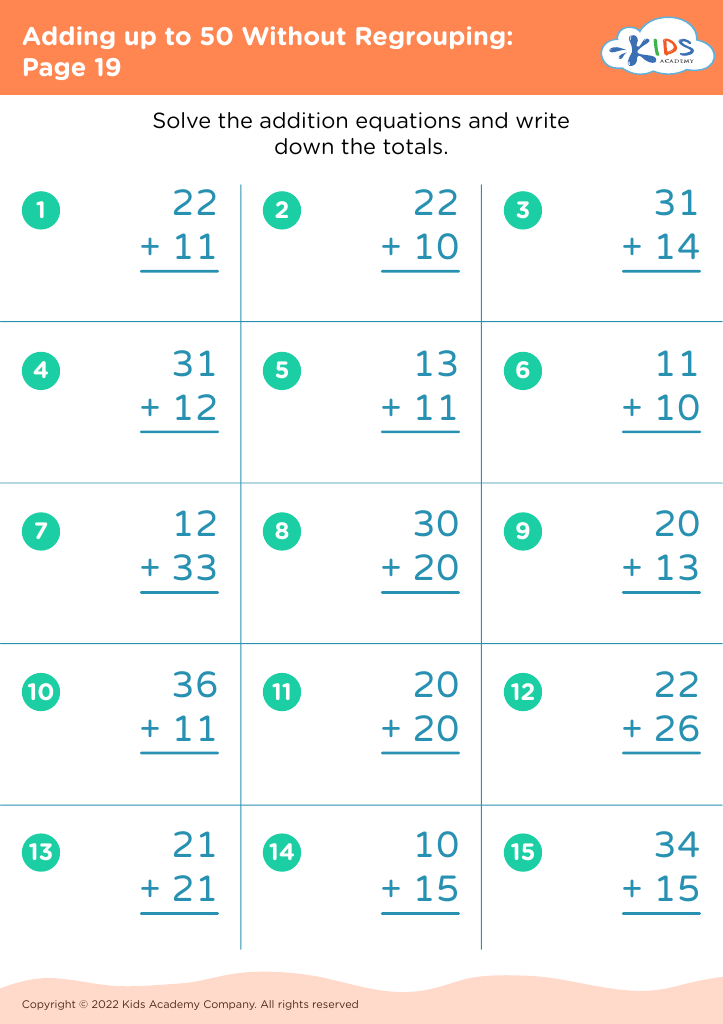
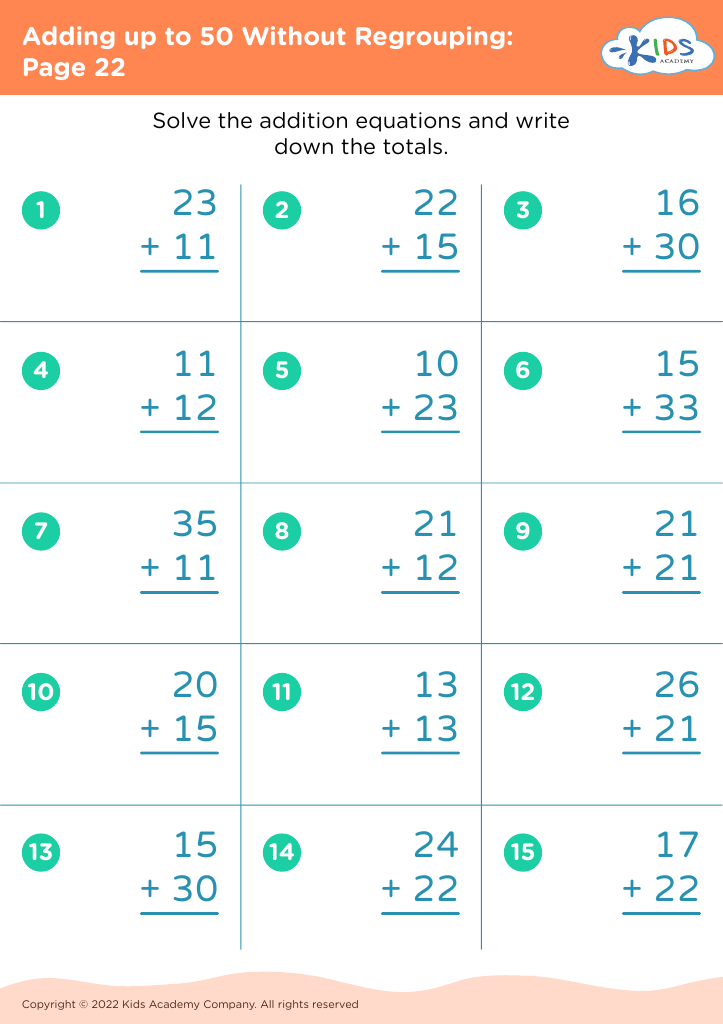
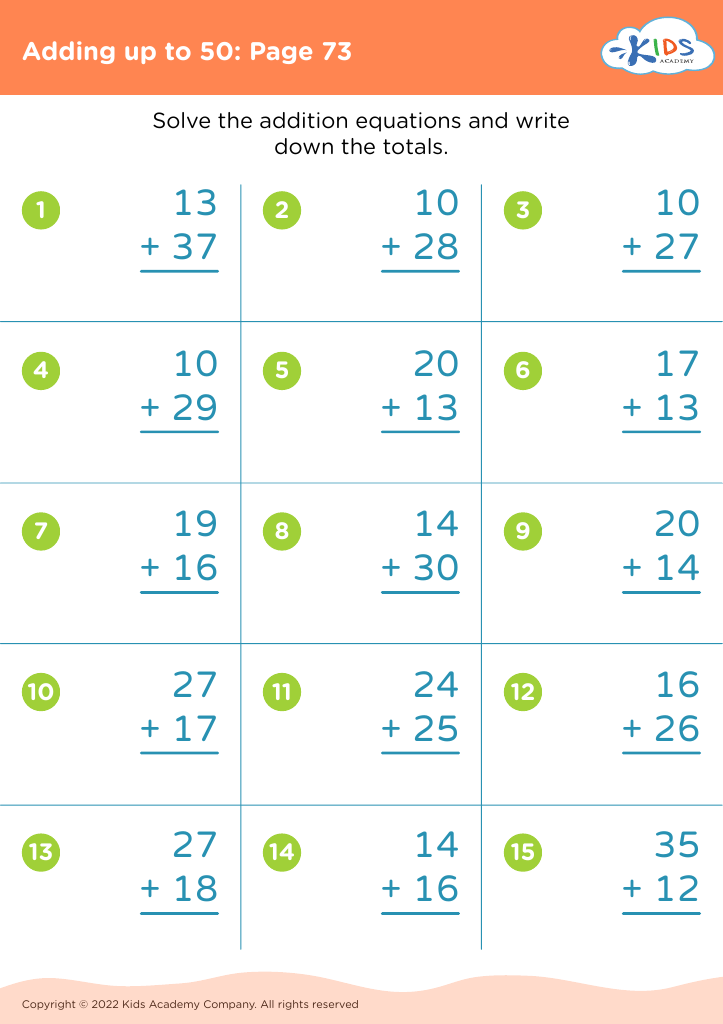
Unlock your child's full potential with our engaging "Color Recognition Adding Up to 50 Worksheets" designed for ages 3 to 7! This collection of printable worksheets combines color identification with essential math skills, offering a fun and interactive way for young learners to practice adding numbers up to 50. Our worksheets enhance critical thinking, fine motor skills, and visual discrimination while keeping children motivated through colorful illustrations and playful activities. Perfect for homeschooling, classroom use, or supplementary practice, these worksheets make learning enjoyable. Help your little ones master math concepts while exploring the vibrant world of colors with our expertly crafted resources!




Color recognition and basic addition are crucial skills for children aged 3-7, as they play a foundational role in early cognitive development. Understanding colors enhances a child's ability to categorize and differentiate between objects, fostering their observational skills and creativity. For teachers and parents, recognizing a child’s grasp of colors can reflect the child’s ability to process information and communicate ideas visually.
Adding numbers up to 50 introduces children to mathematical concepts essential for logical reasoning and everyday problem-solving. This foundational arithmetic skill builds confidence in dealing with numbers and lays the groundwork for more complex math later on. When children grasp color concepts and counting skills simultaneously, they develop a holistic understanding of their environment and the interconnected nature of knowledge.
Encouraging color recognition and the ability to add enhances memory development through vibrant visuals and engaging games. Such activities are not only educational but also enjoyable, making learning a positive experience. Teachers and parents play a crucial role in creating supportive environments that nurture these skills, ensuring children are better prepared for formal education, social interactions, and life's various challenges. Emphasizing these skills fosters a love for learning and predetermines future academic success.








