Counting objects Adding up to 50 Worksheets for Ages 3-7
4 filtered results
-
From - To
Introduce your young learners to the world of numbers with our "Counting Objects Adding Up to 50 Worksheets" designed specifically for children aged 3 to 7. These engaging worksheets make mastering counting and basic addition fun and interactive. Kids will enjoy counting a variety of objects, enhancing their numeracy skills, and building a strong mathematical foundation. With vibrant visuals and playful themes, each activity encourages exploration and reinforces key concepts. Perfect for home or classroom use, these worksheets will keep kids entertained while they learn to add up to 50, promoting both confidence and joy in learning math!
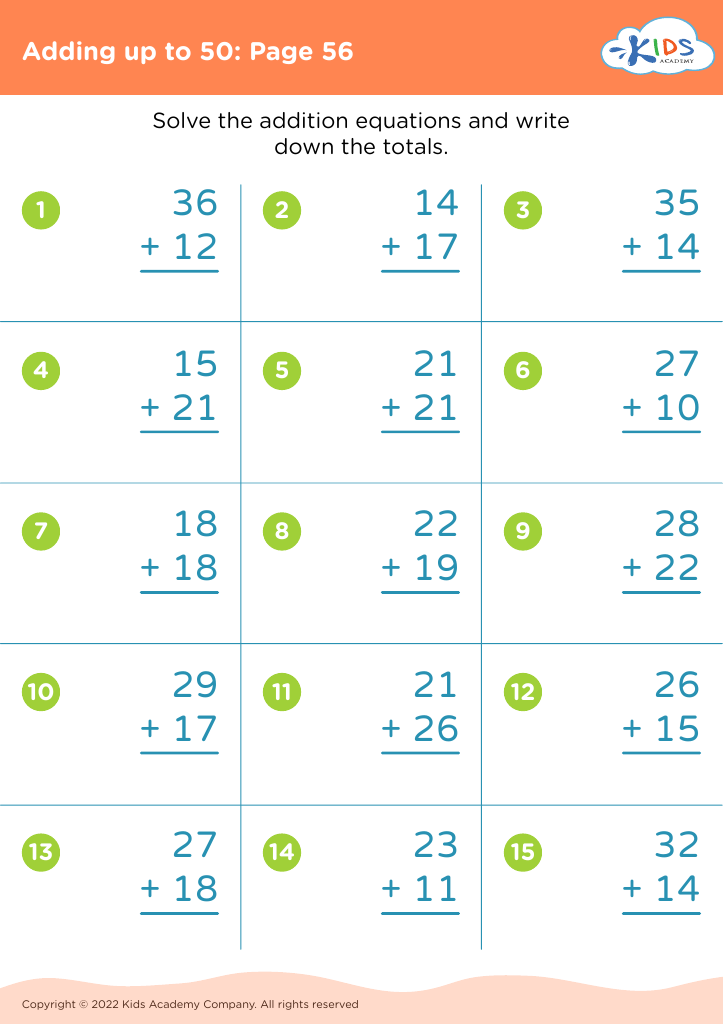
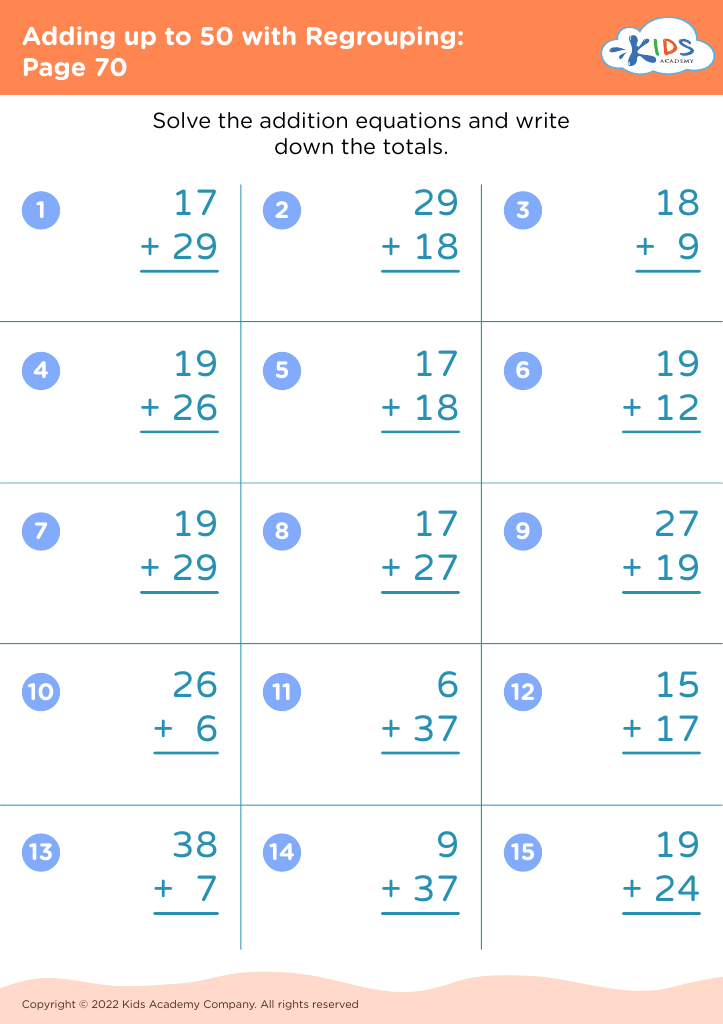
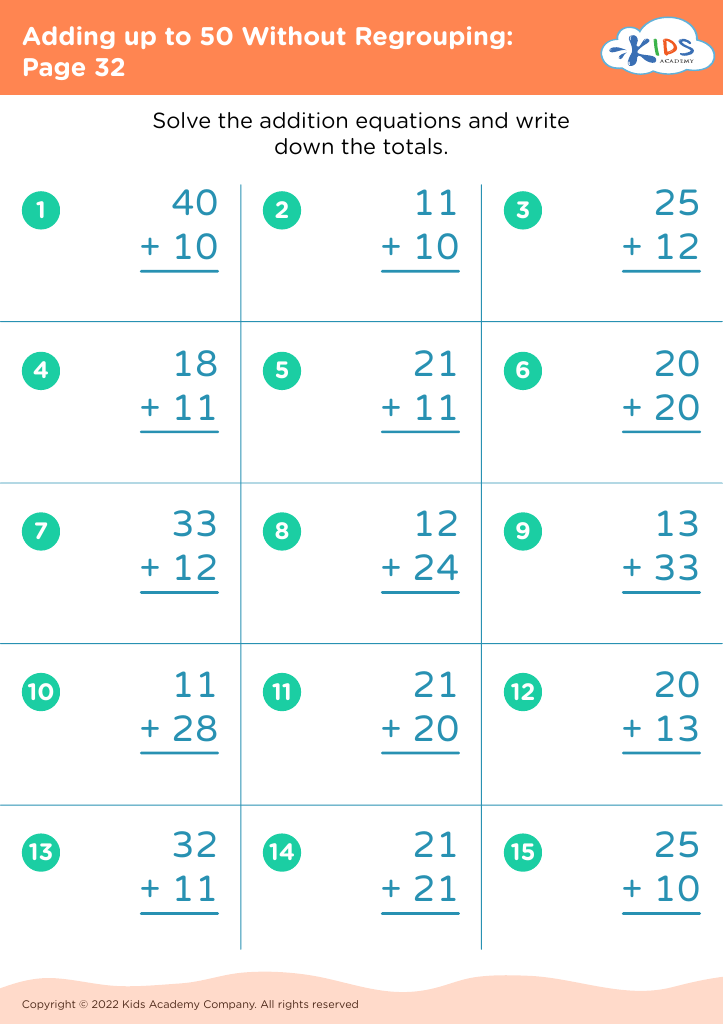
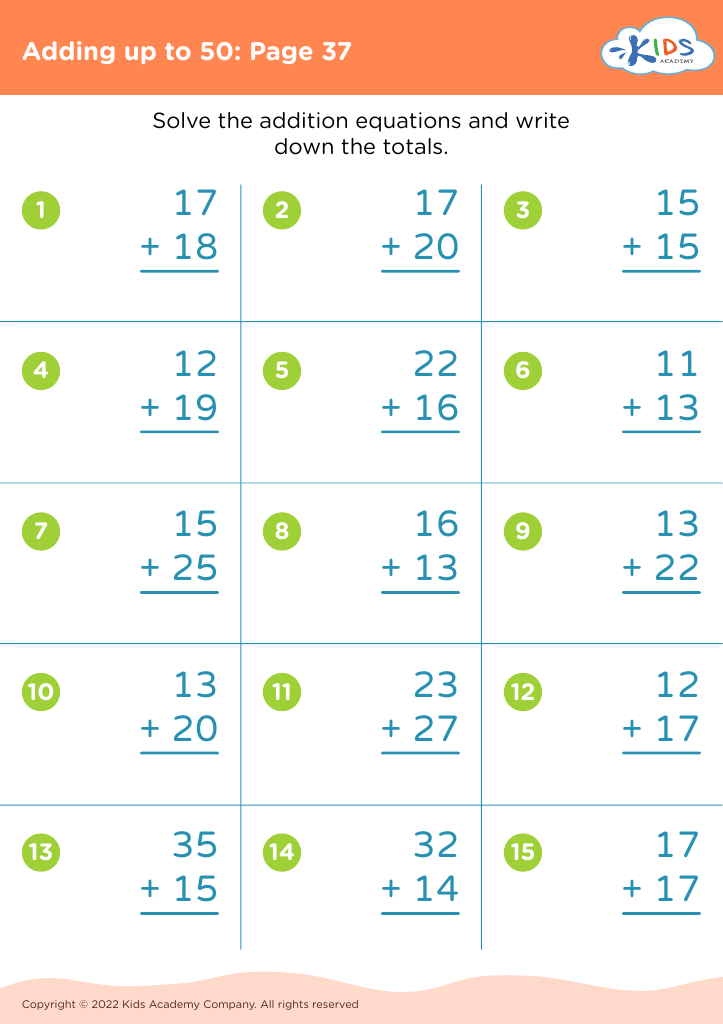




Counting objects and adding up to 50 is a crucial skill for children aged 3-7, as it lays the foundation for numerical understanding and mathematical reasoning. At this age, children are naturally curious and eager to learn, making it an ideal time to introduce them to basic math concepts. Cumulative counting enhances fine motor skills and memory, while reinforcing sequential learning.
Parents and teachers play a vital role in fostering these skills. By engaging children in activities involving counting objects, they promote active participation rather than passive absorption. This hands-on approach makes learning enjoyable and interactive, allowing children to grasp abstract math concepts through tangible experiences.
Moreover, counting and addition help develop critical thinking skills. Children learn to problem-solve as they figure out how many more objects are needed to reach a certain quantity or how to combine groups of objects. Introducing simple addition, such as combining two groups of objects, builds their foundational math skills and boosts confidence.
Ultimately, competency in counting and basic addition will support children's future academic success. It enables them to approach more complex math topics with ease while instilling a lifelong love for learning. Parents and teachers, therefore, should prioritize these essential early math skills.








