
Develop fine motor skills Adding up to 50 Worksheets for Ages 3-7
4 filtered results
Difficulty Level
Grade
Age
-
From - To
Subject
Activity
Standards
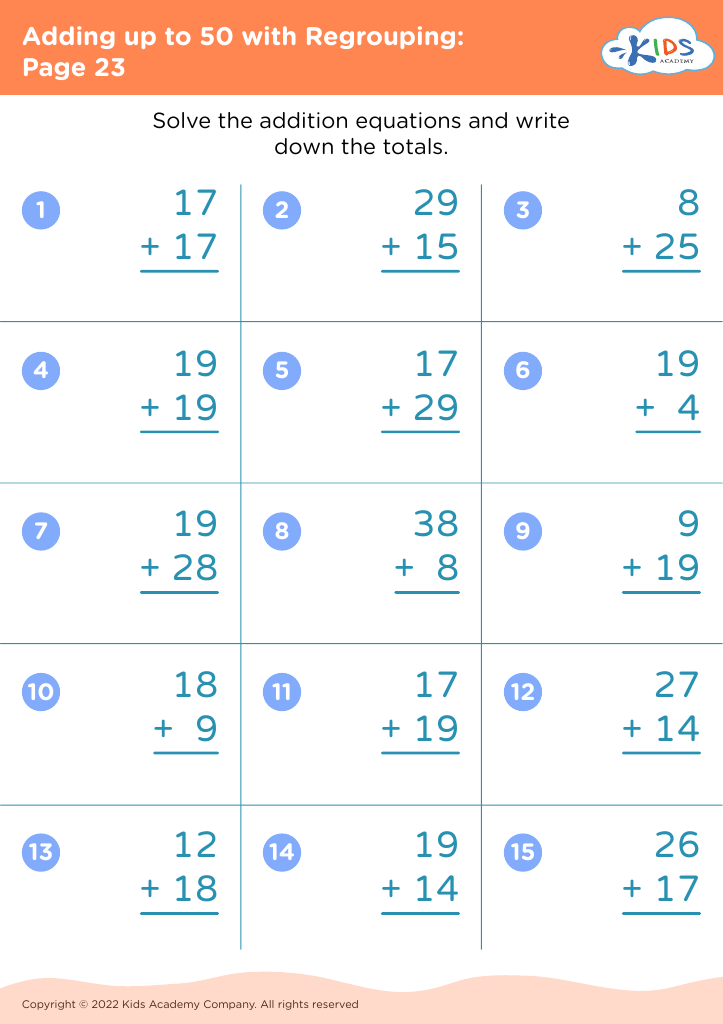
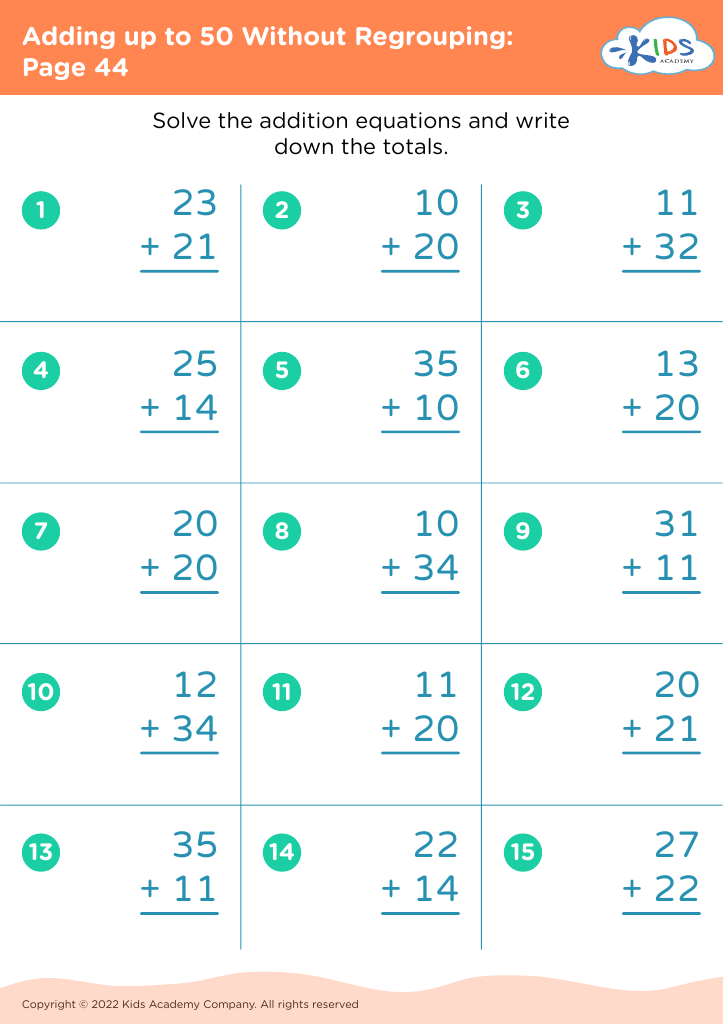
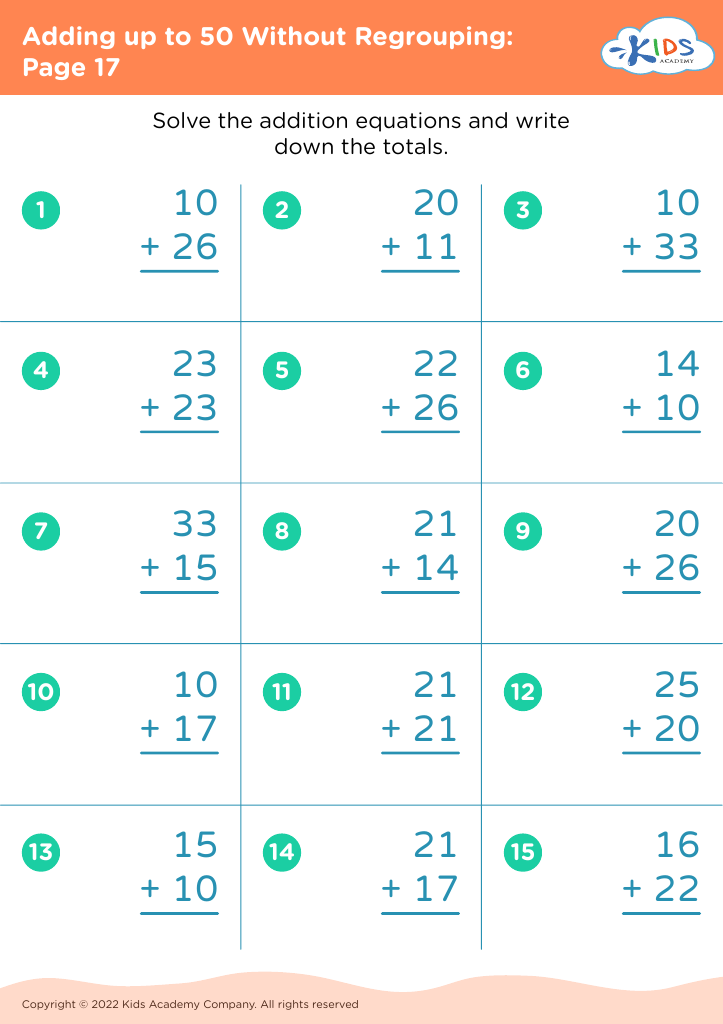
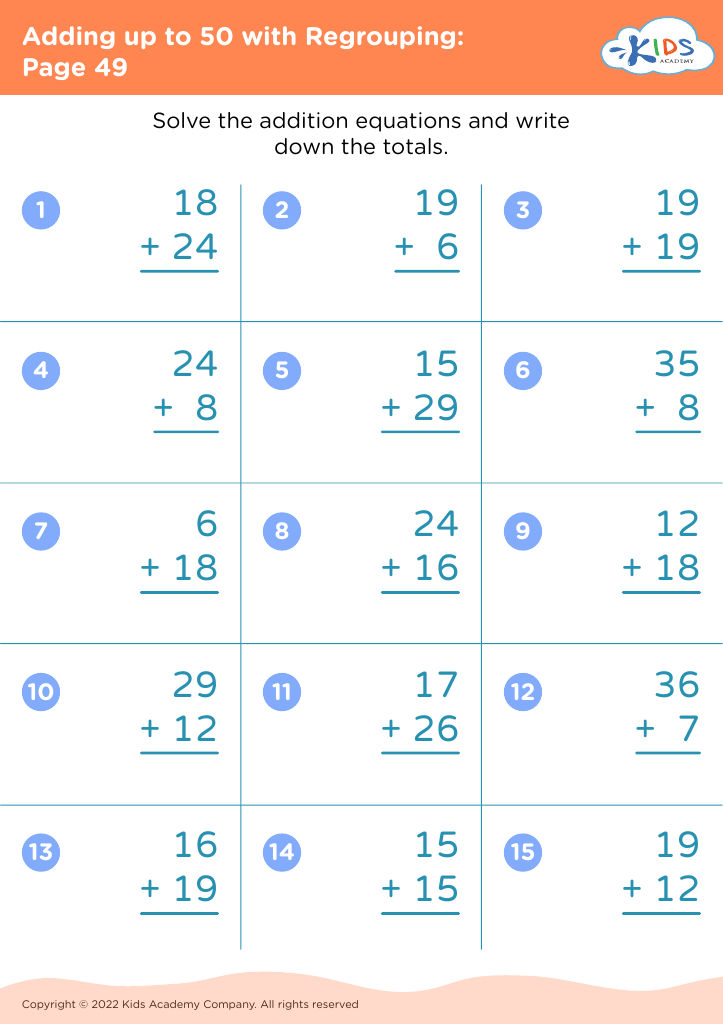
Unlock your child's potential with our "Develop Fine Motor Skills: Adding Up to 50 Worksheets" for ages 3-7. Our engaging activities blend math and skill-building, providing 100 specially designed worksheets that enhance fine motor skills while making learning fun. Each worksheet focuses on essential math concepts, helping young learners practice counting, addition, and number recognition with exciting illustrations and interactive tasks. By using pencils, crayons, and manipulatives, children will strengthen their hand-eye coordination and dexterity. Perfect for home or classroom use, these worksheets encourage exploration and growth while laying a strong foundation in math and motor skills development. Download now!
Favorites
With answer key
Interactive
Join Kids Academy for Free
Who is primarily going to use this learning content?




Developing fine motor skills in children aged 3-7 is crucial for their overall growth and learning. These skills, which involve the use of small muscles in the hands and fingers, are essential for tasks such as writing, drawing, and manipulating small objects. Parents and teachers should prioritize fine motor development as it is foundational for academic success and everyday functioning.
Fine motor skills enhance a child's ability to perform tasks that require precision and coordination, such as holding a pencil correctly or using scissors. This not only fosters independence but also builds confidence when navigating classroom activities. Moreover, fine motor development directly correlates with cognitive skills, aiding in problem-solving and hand-eye coordination.
Engaging children in activities that combine fine motor work with simple math concepts, such as adding numbers up to 50, can make learning enjoyable and interactive. For instance, using manipulatives like counters or blocks to visualize math problems while exercising fine motor skills reinforces both mathematical understanding and dexterity.
By focusing on fine motor skills, parents and teachers can support a child's readiness for future learning, helping them develop a well-rounded set of abilities that will serve them throughout their education and beyond.








