Enhance number recognition Adding up to 50 Worksheets for Ages 3-7
5 filtered results
-
From - To
Discover our "Enhance Number Recognition: Adding up to 50 Worksheets" designed specifically for children aged 3-7. These engaging worksheets help preschoolers and early learners develop essential math skills while boosting their confidence. With fun illustrations and interactive exercises, children will practice identifying numbers, understanding quantities, and mastering addition up to 50. Each worksheet promotes number recognition through playful activities, ensuring a stimulating learning experience. Ideal for homeschooling, classroom settings, or supplemental learning, these resources encourage cognitive development and foundational math skills essential for future success. Unlock your child’s potential with our targeted worksheets that make learning enjoyable and effective!
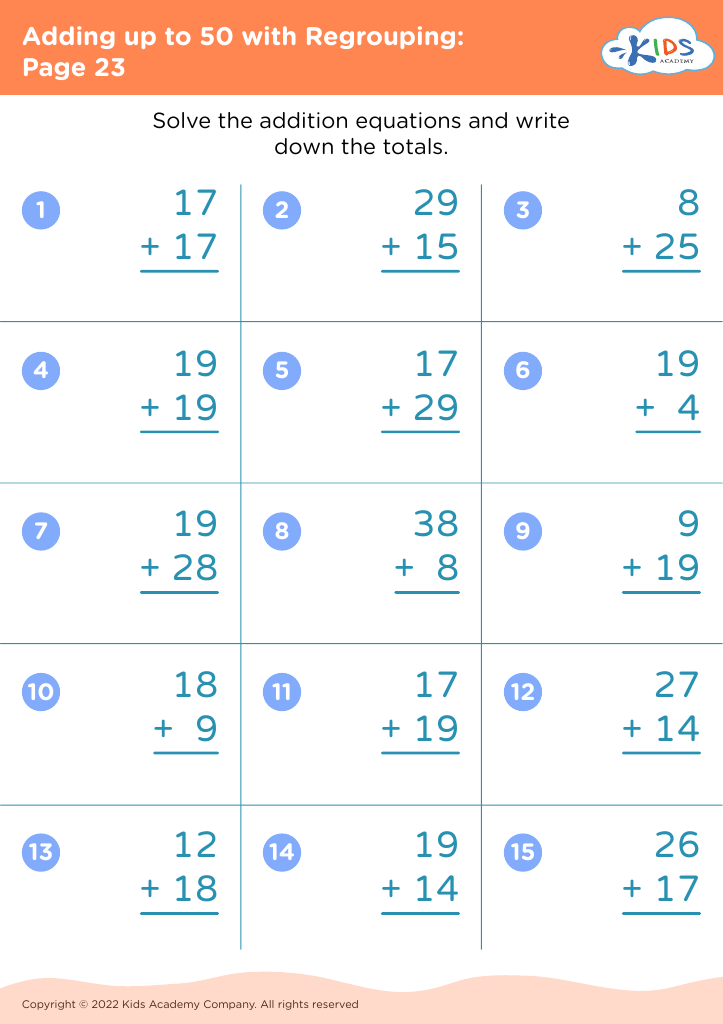
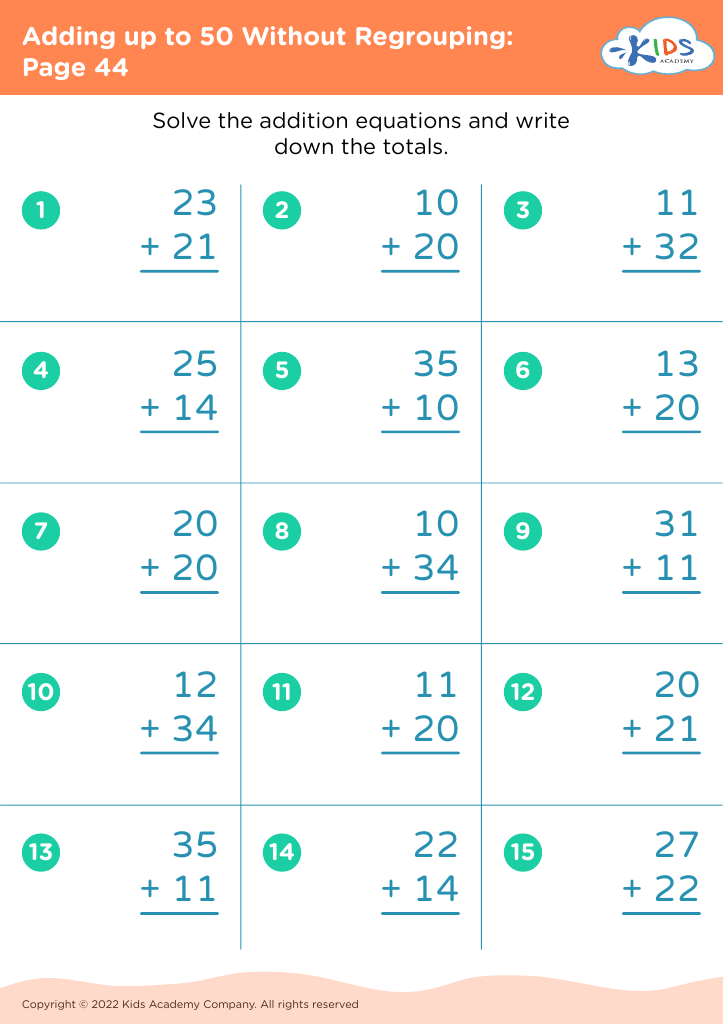
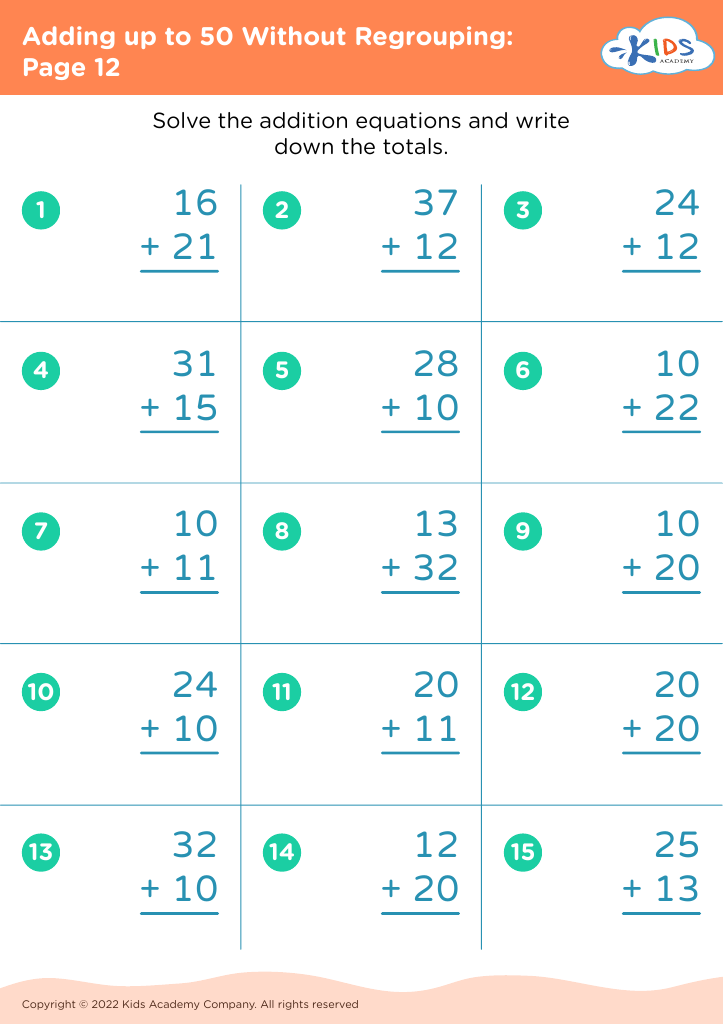
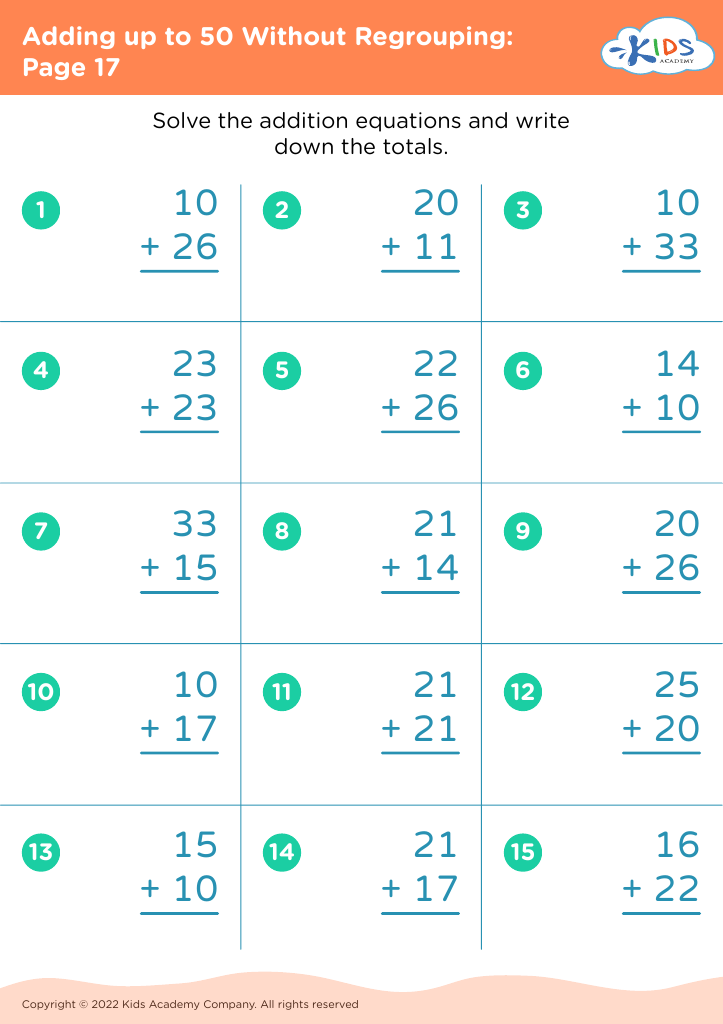
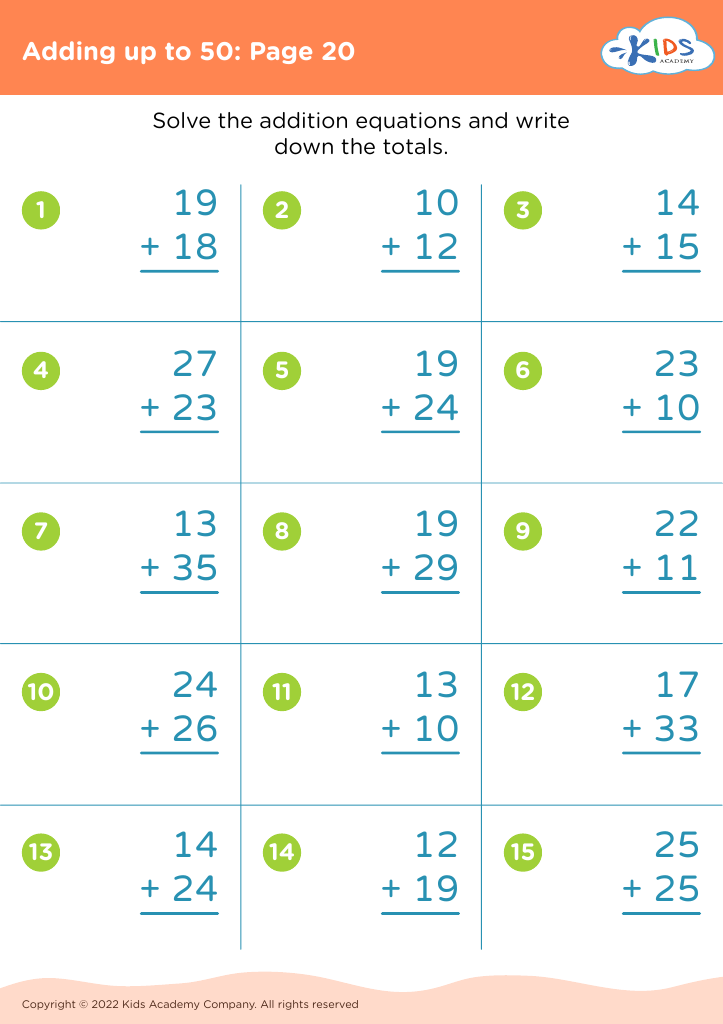




Enhancing number recognition and addition skills up to 50 for children aged 3-7 is crucial for numerous reasons. Firstly, early development in numeracy lays the groundwork for future mathematical understanding, promoting confidence and competence in the subject. Engaging with numbers helps children grasp fundamental concepts such as quantity, order, and value, which are essential as they progress academically.
Additionally, nurturing these skills fosters problem-solving abilities and critical thinking. When children learn to recognize numbers and perform simple additions, they develop perseverance and resourcefulness in tackling math-related challenges. This foundational knowledge expands their cognitive toolbox, preparing them for more complex concepts in later grades.
Parents and teachers play a vital role in this learning journey. By supporting number recognition and addition through games, manipulatives, and real-life applications, they make learning enjoyable and relatable. This early engagement also enhances children's ability to connect math with everyday experiences, such as counting fruits during snack time or adding toys before play.
Ultimately, by prioritizing numerical skills for young learners, parents and teachers set the stage for lifelong mathematical literacy, encouraging curiosity, creativity, and a positive attitude towards learning that can extend beyond mathematics into other subject areas as well.








