Enhancing problem-solving abilities Adding up to 50 Worksheets for Ages 3-7
3 filtered results
-
From - To
Unlock the power of problem-solving with our "Adding Up to 50" worksheets, designed for children ages 3-7. This engaging collection of 100 printable worksheets encourages young learners to develop essential math skills while enhancing their critical thinking abilities. Packed with fun and interactive exercises, each worksheet introduces concepts of addition and number recognition, fostering a solid foundation in math. As children work through these activities, they not only learn to solve addition problems but also boost their confidence and creativity in tackling challenges. Perfect for classroom use or at-home learning, our worksheets are a valuable resource for nurturing young minds.
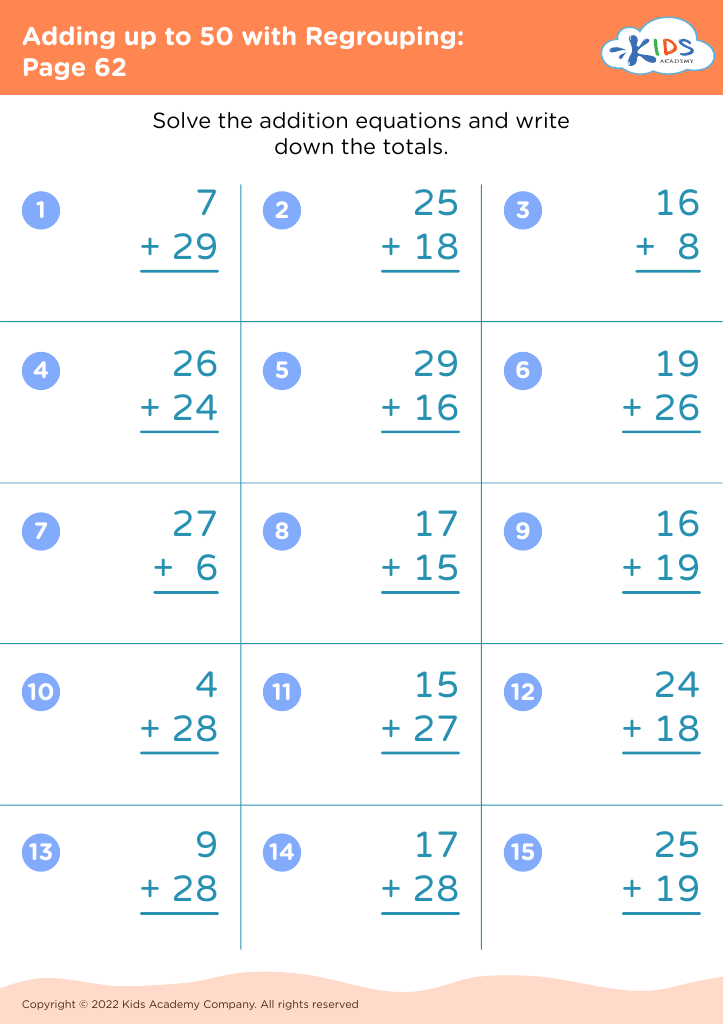
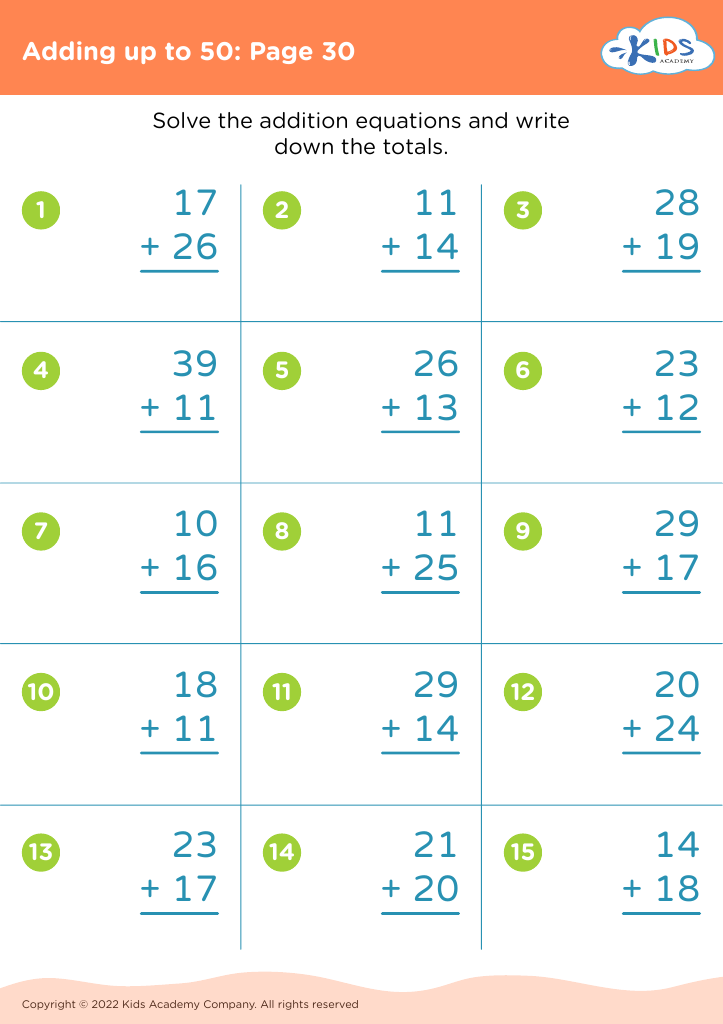
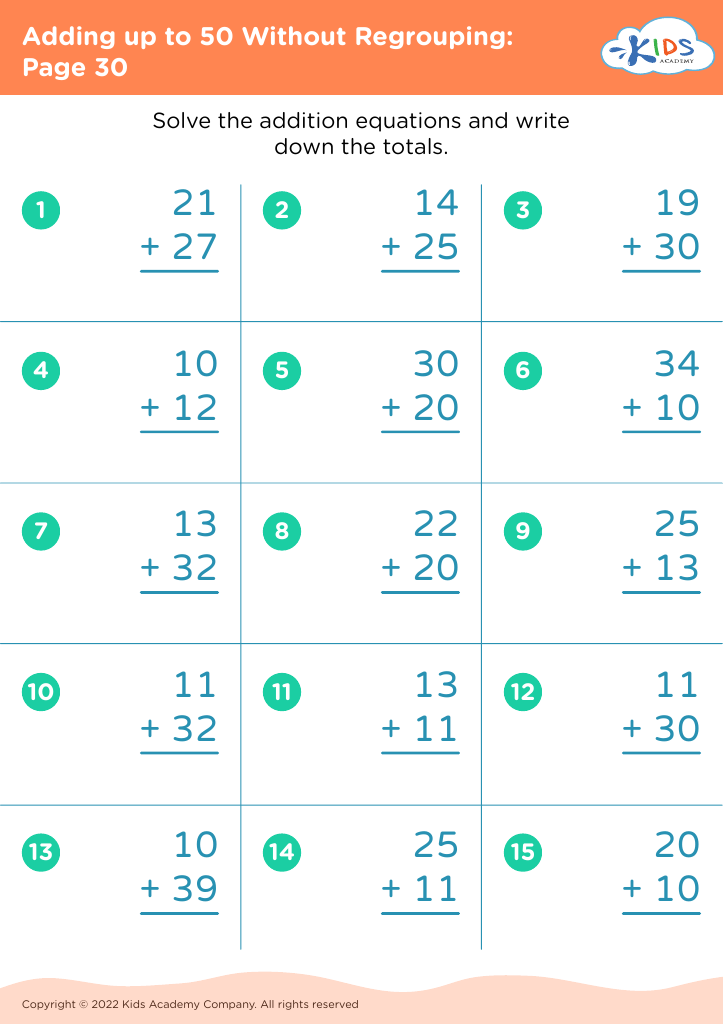




Enhancing problem-solving abilities in children aged 3-7 is crucial for their cognitive and social development. At this early stage, learning to solve problems fosters critical thinking skills, creativity, and resilience. Engaging children in activities that require them to combine numbers to reach a target, such as adding up to 50, supports their mathematical understanding and builds a foundation for future learning.
When parents and teachers prioritize problem-solving, they nurture a child's ability to think independently and approach challenges with confidence. Across various subjects, these skills translate into improved academic performance and enhance decision-making during play and everyday situations. Additionally, problem-solving encourages collaboration, as children often work together to find solutions, strengthening their social skills.
Fostering these abilities early on means children will be better equipped to tackle complex issues in later life, both academically and personally. Such skills are essential for success in the fast-paced world they will grow into, making it imperative for caregivers to integrate problem-solving exercises into daily activities. By investing time in enhancing these skills, parents and teachers play a vital role in preparing children for a bright future filled with opportunities and challenges.








