Fraction Addition Adding up to 50 Worksheets for Ages 3-7
5 filtered results
-
From - To
Discover our engaging "Fraction Addition Adding up to 50 Worksheets" designed specifically for children aged 3-7. These user-friendly worksheets introduce young learners to the fundamentals of fraction addition, promoting essential math skills through interactive and age-appropriate activities. With colorful visuals and relatable scenarios, children will build confidence as they practice adding fractions in a fun and supportive environment. Perfect for parents and educators, these worksheets simplify learning while making it enjoyable. Help your child master the basics of fractions and addition today! Download the worksheets and watch them thrive as they embark on their mathematical journey.
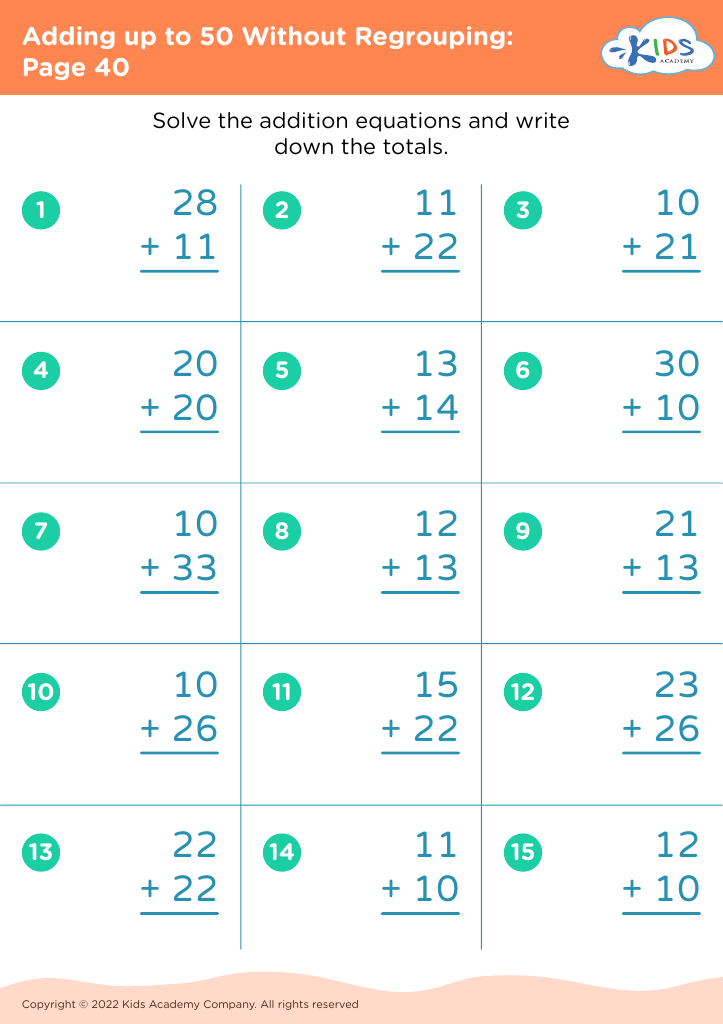
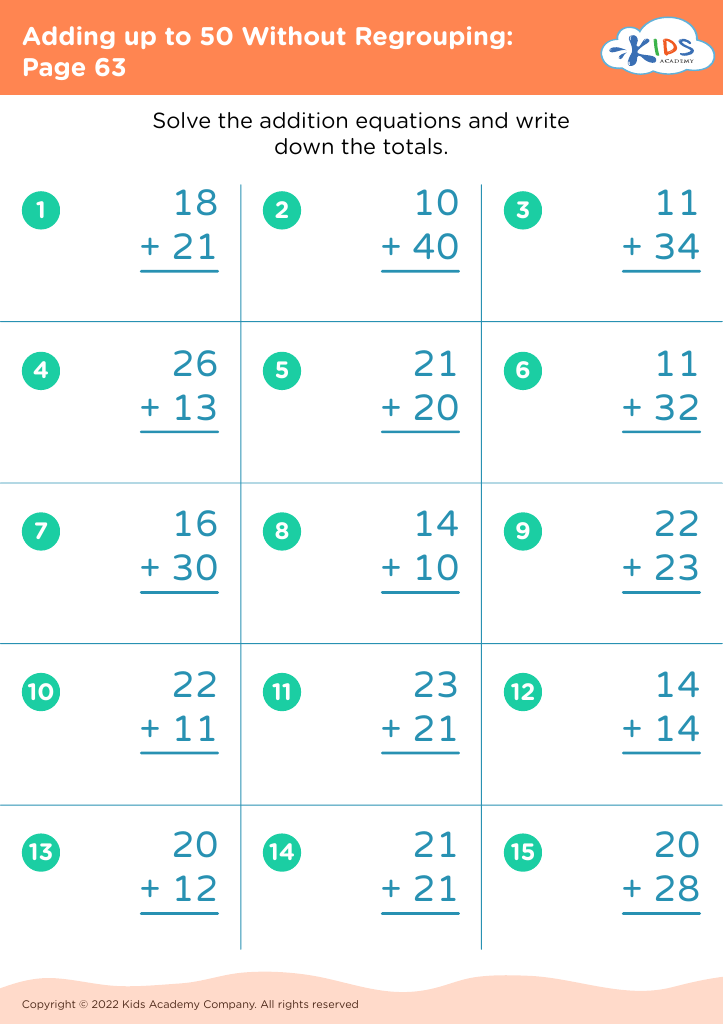
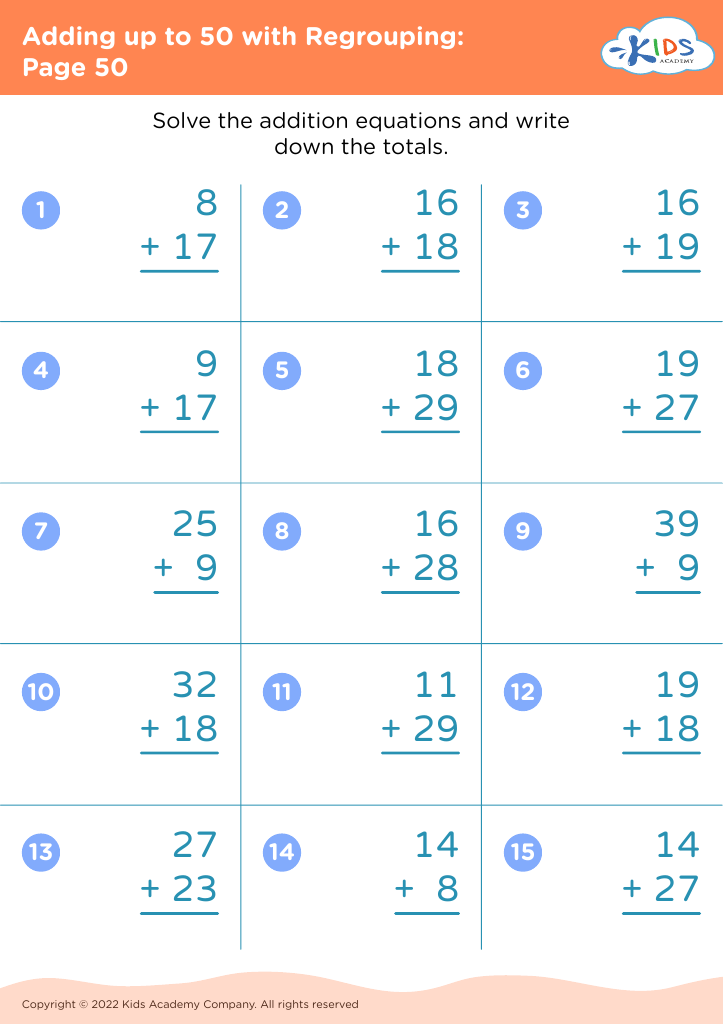
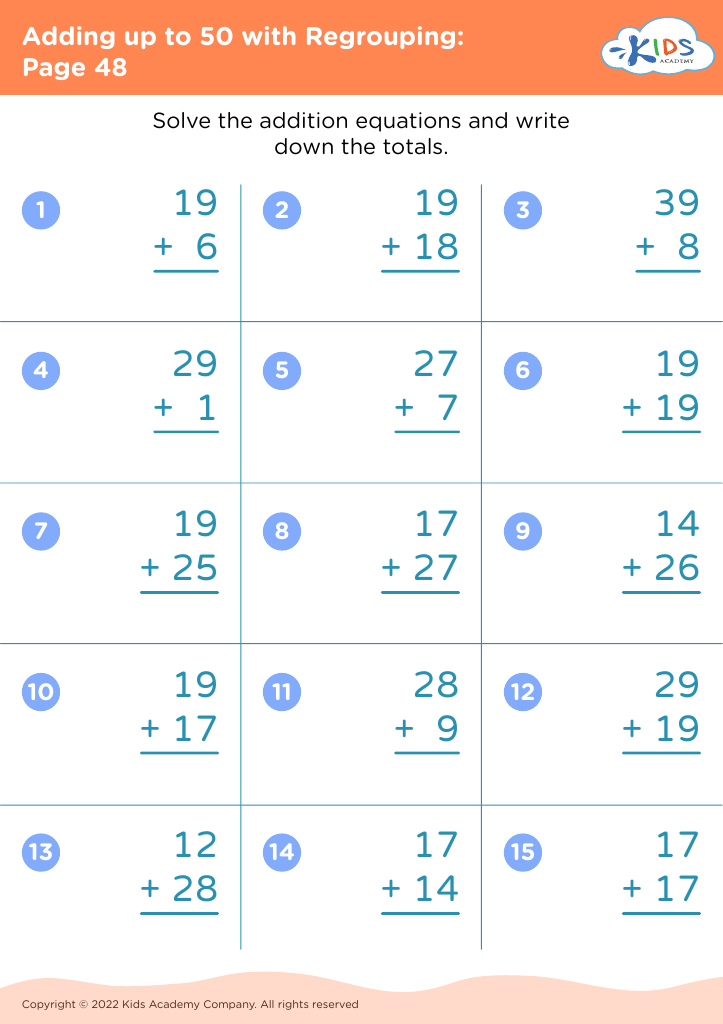
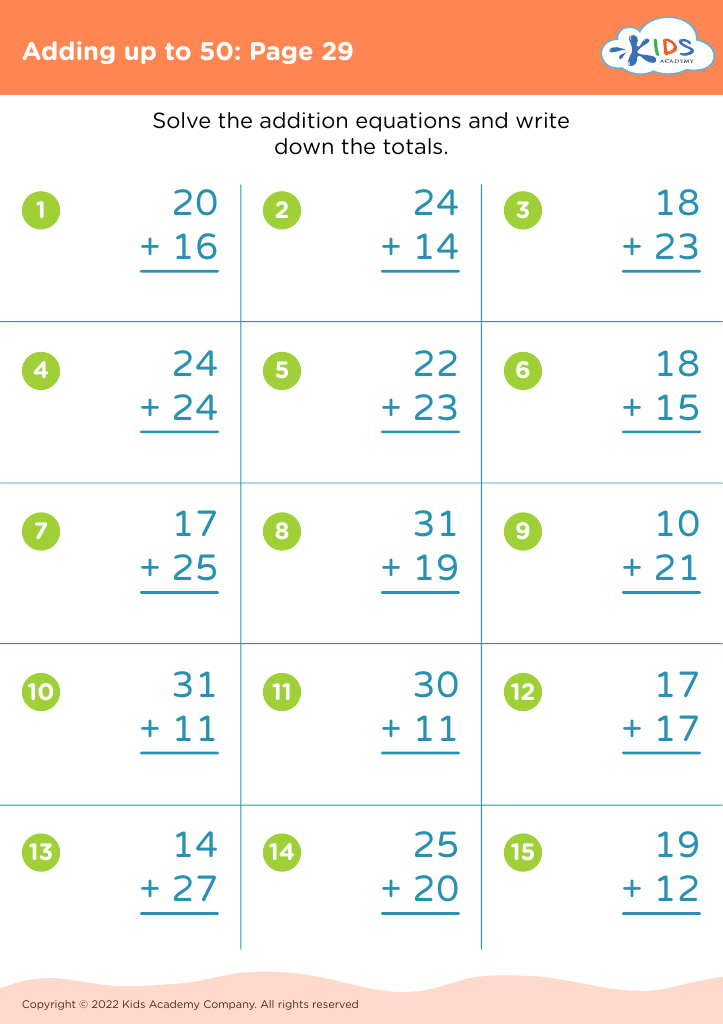




Understanding fraction addition, especially for children aged 3-7, is essential because it lays the groundwork for critical thinking and problem-solving skills that are fundamental in both mathematics and everyday life. Fractions represent parts of a whole, and grasping this concept at an early age helps children develop a better understanding of numbers and quantity.
When children learn to add fractions that combine to 50, they begin to explore mathematical relationships and patterns, fostering analytical skills. This process encourages logical reasoning, as they practice combining different fractions and seeing how they come together to form larger whole numbers.
Additionally, early experiences with fractions can demystify the subject and alleviate future math anxiety. By engaging with fractions in playful, age-appropriate ways, teachers and parents can make math fun and accessible, turning it into a positive experience.
Moreover, these skills are connected to real-life situations. For example, sharing food, measuring ingredients, or dividing items can demonstrate the practical applications of fraction addition. Therefore, by prioritizing fraction addition in early education, parents and teachers are equipping children with essential life skills while fostering a genuine interest in mathematics that can last a lifetime.








