Fraction identification Adding up to 50 Worksheets for Ages 3-7
3 filtered results
-
From - To
Introduce young learners to fractions with our engaging "Fraction Identification Adding up to 50 Worksheets for Ages 3-7" at Kids Academy! Designed specifically for early learners, these worksheets make the tricky concept of fractions easy and enjoyable. With the help of colorful visuals and interactive tasks, kids will identify, compare, and add fractions in a fun, playful manner. Perfect for reinforcing counting skills and enhancing numerical confidence, our worksheets ensure foundational math skills are built effectively. Ideal for both classroom activities and home practice, these resources ensure young minds grasp the basics of fractions seamlessly. Empower your child's math journey today!
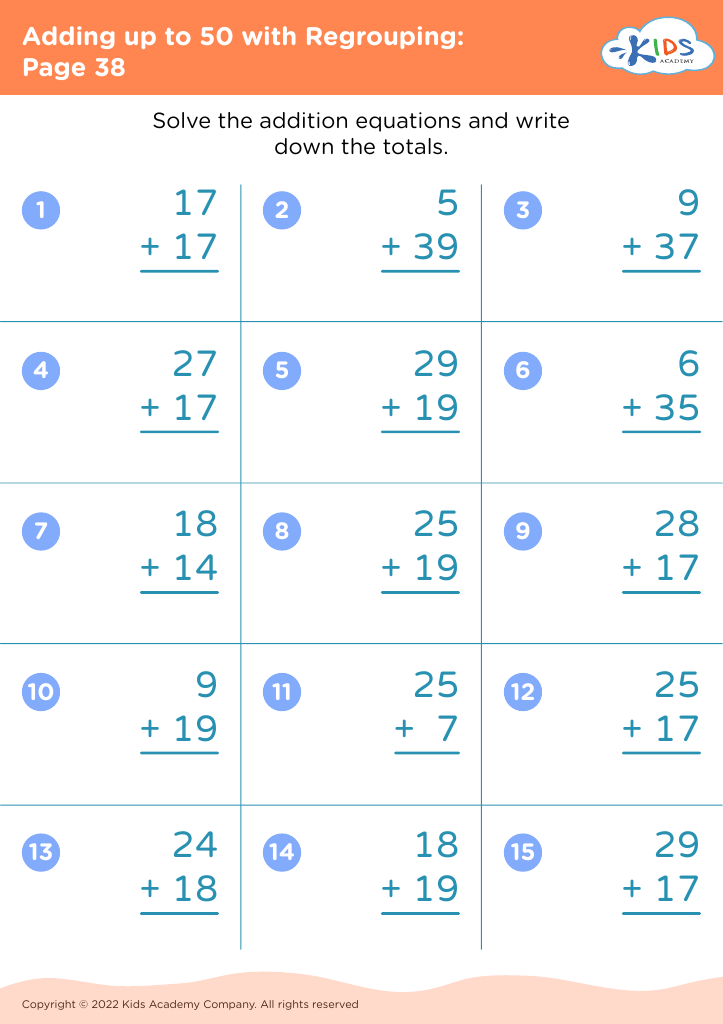
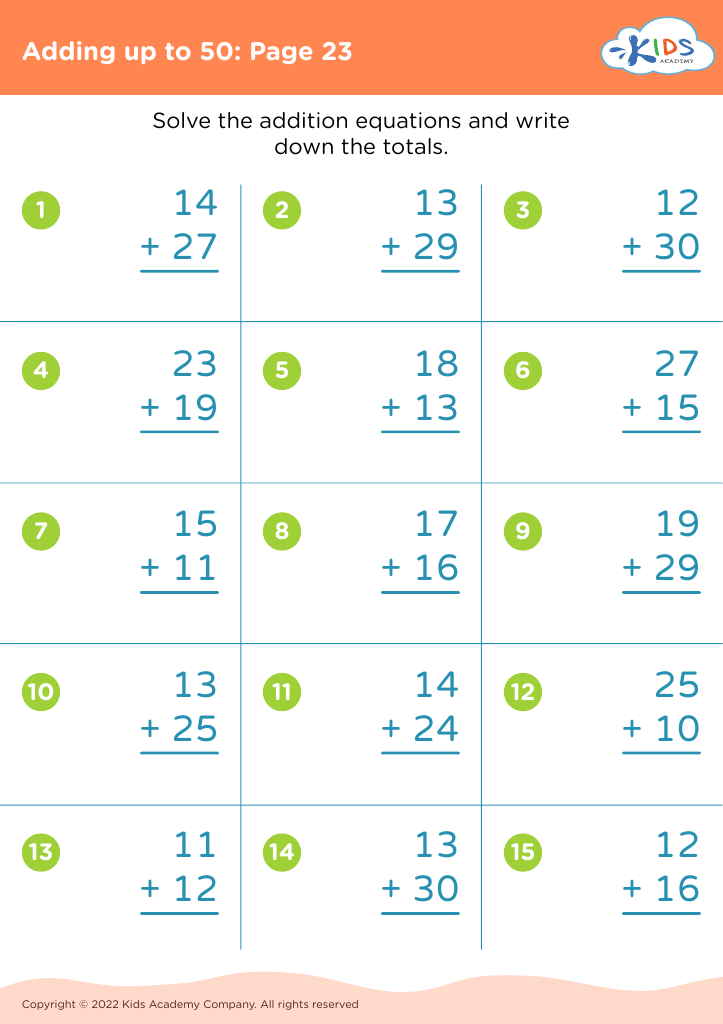
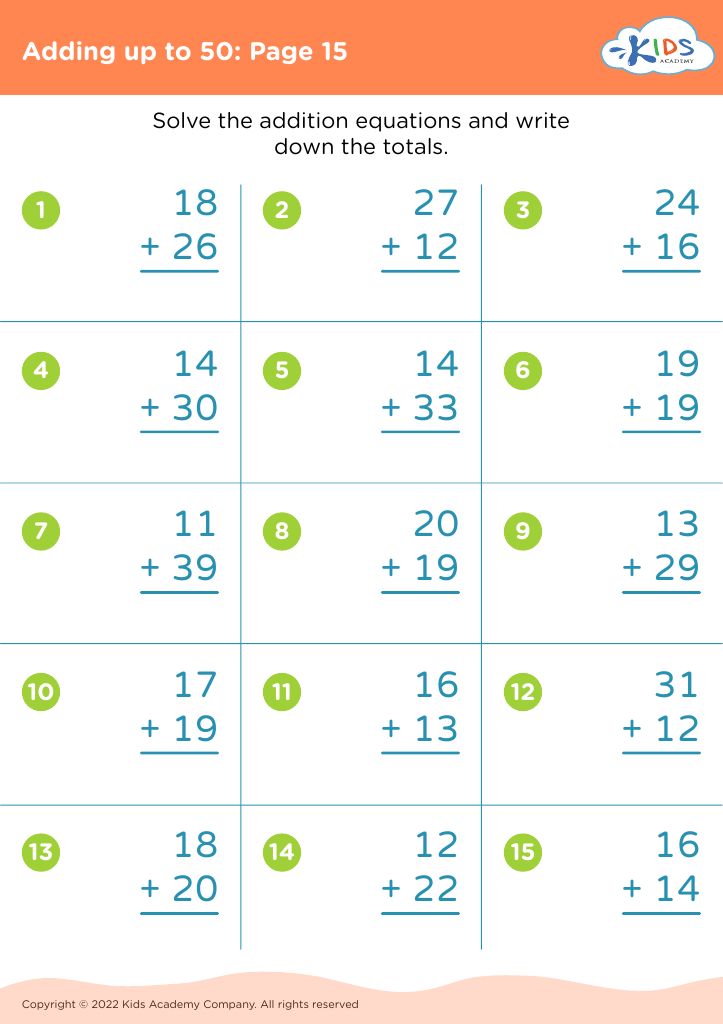




Introducing fractions and addition, even in small increments, to children aged 3-7 sets a strong mathematical foundation for their future learning. At this formative age, children are naturally curious and capable of grasping basic concepts through play and interactive activities. Fraction identification teaches them to understand parts of a whole, a fundamental concept that enhances their number sense and prepares them for more complex math problems.
By incorporating sums that add up to 50, children practice essential skills like counting, addition, and number recognition in a manageable range. This helps them become comfortable with larger numbers, while gradually improving their calculation skills. It also builds their confidence as they achieve small victories in solving math problems.
Teachers and parents should care about this early exposure because it promotes a positive attitude towards mathematics, dispelling the notion that math is difficult or boring. It fosters a love for numbers and logical thinking from a young age. Additionally, early competence in math is linked to academic success across various subjects, as it enhances problem-solving abilities and critical thinking. Engaging children in these activities at an early age helps cultivate a versatile and robust intellectual toolkit that benefits their overall educational journey.








