Filters

20 filtered results

Clear all filters
Favorites
With answer key
Interactive

20 filtered results

Difficulty Level

Grade


Discover our engaging "Fraction Simplification Adding Up to 50 Worksheets" designed for ages 3 to 7 at Kids Academy! These fun and educational worksheets introduce young learners to the basics of fractions and help them master the skill of simplifying fractions while adding numbers up to 50. Each activity is expertly crafted to blend learning with play, ensuring a delightful experience for kids as they build essential math skills. Perfect for both classroom use and at-home practice, these printable worksheets encourage independent learning and confidence in math. Start simplifying fractions with your little ones today!
Check out this FREE Trial Lesson on Adding up to 50 for age 3-7!

My Family

Favorites
With answer key
Interactive
  • 3-7
  • Fraction simplification
  • Adding up to 50
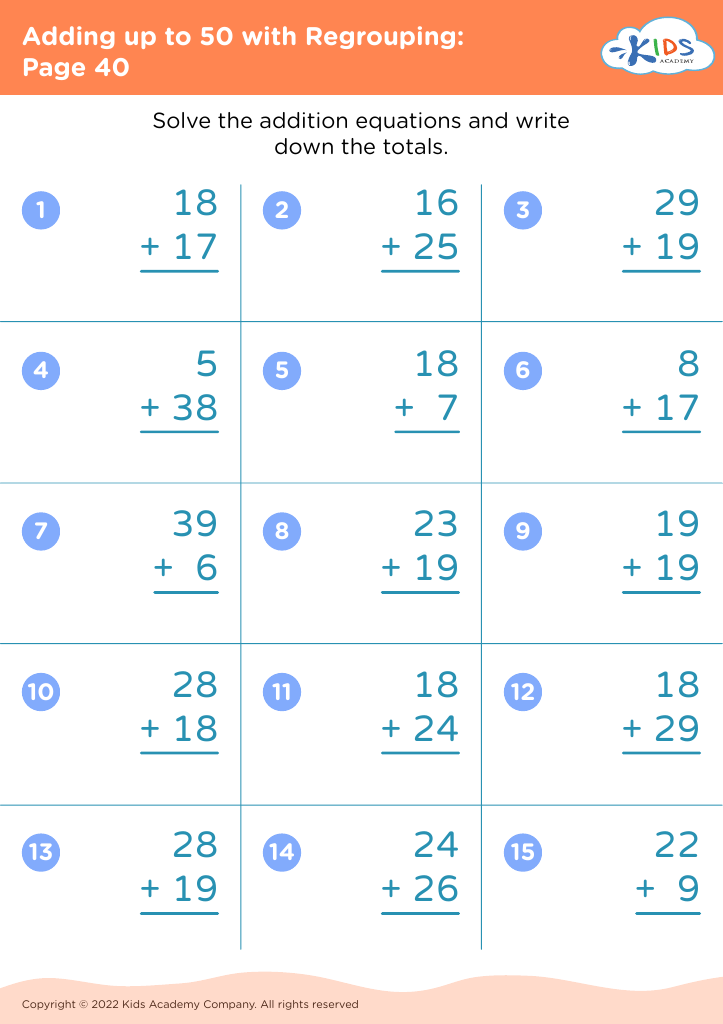
Adding up to 50 with Regrouping: Page 40
Worksheet
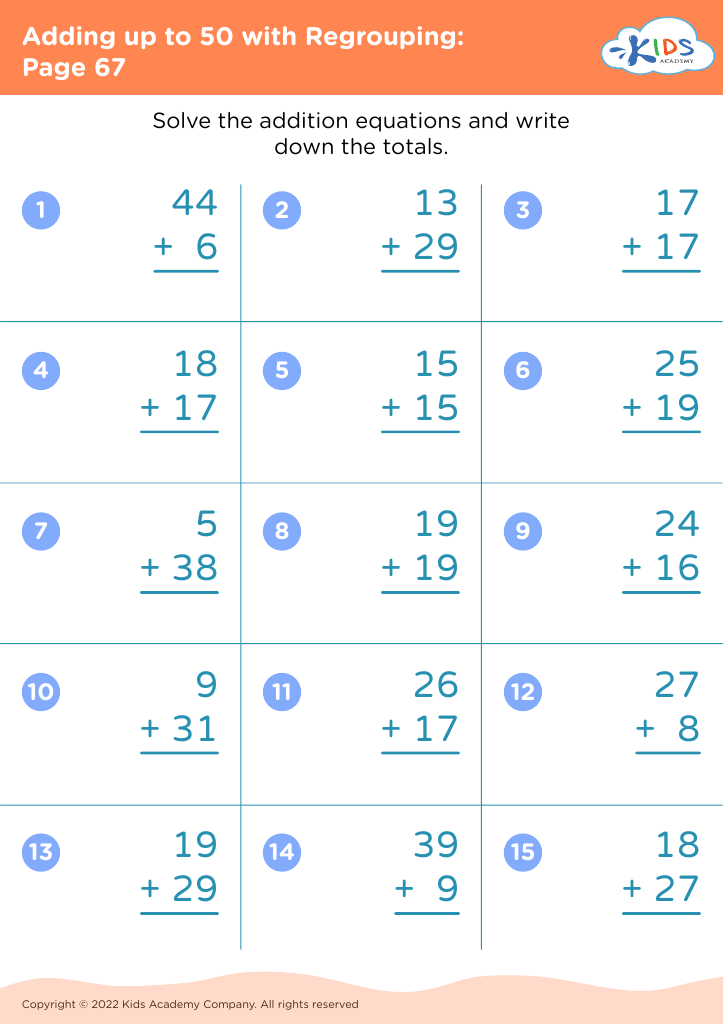
Adding up to 50 with Regrouping: Page 67
Worksheet
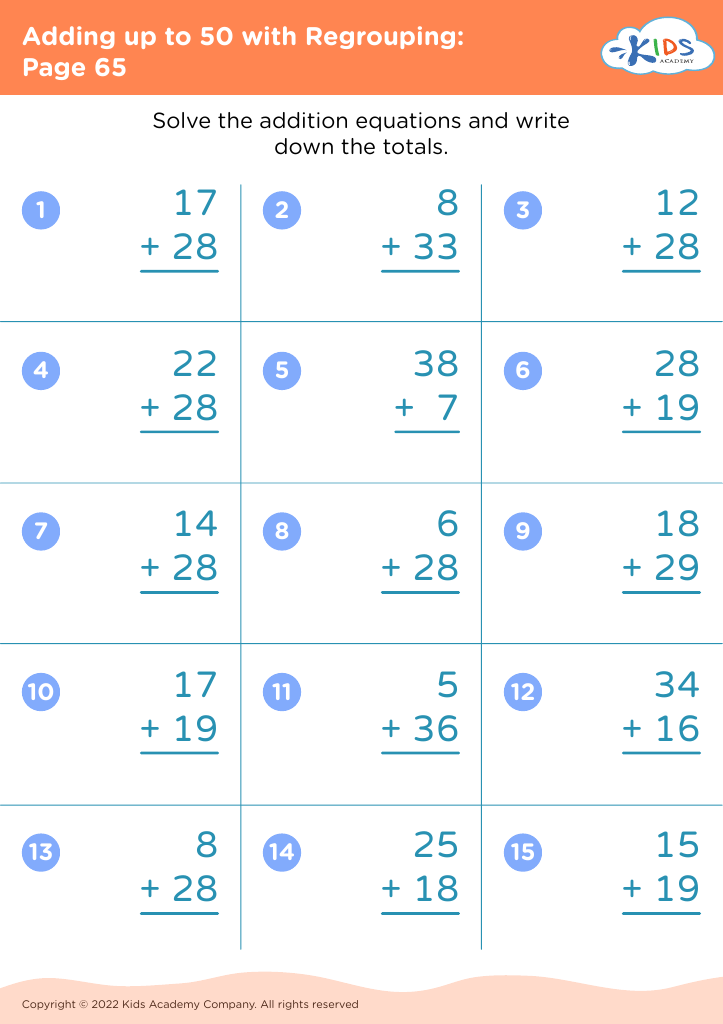
Adding up to 50 with Regrouping: Page 65
Worksheet
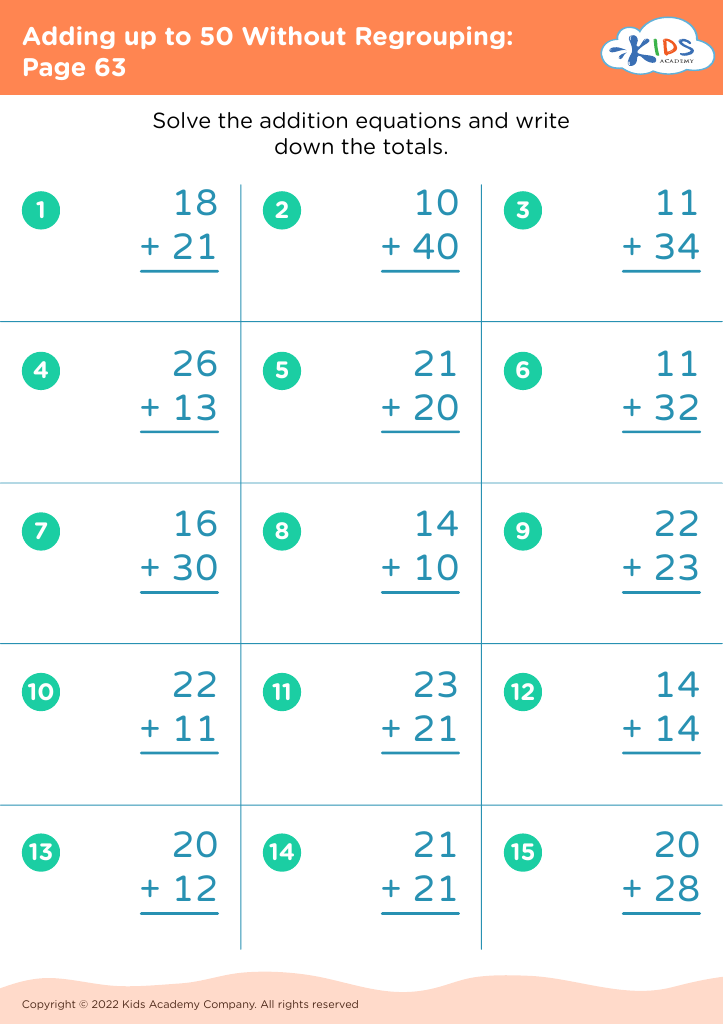
Adding up to 50 Without Regrouping: Page 63
Worksheet
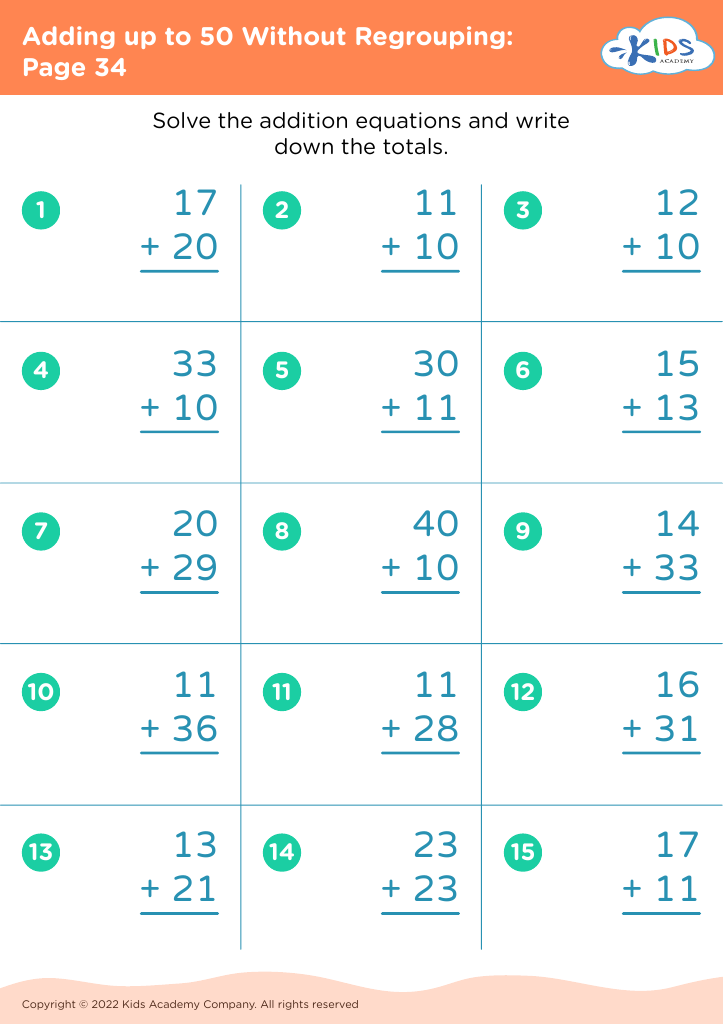
Adding up to 50 Without Regrouping: Page 34
Worksheet
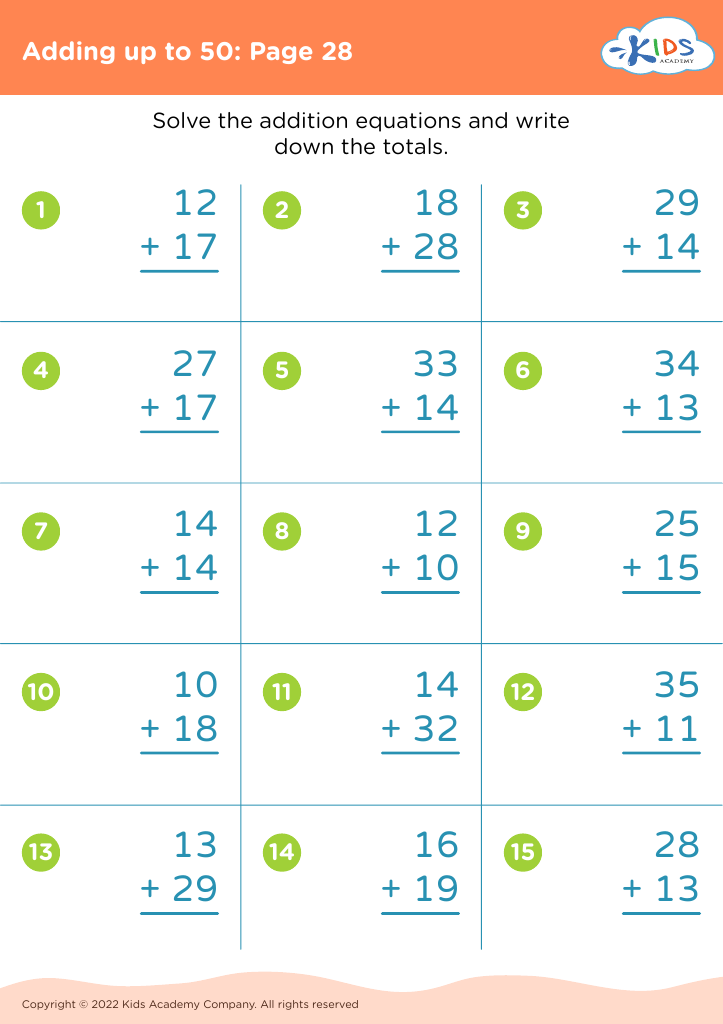
Adding up to 50: Page 28

Adding up to 50: Page 28

Adding up to 50: Page 28
Worksheet
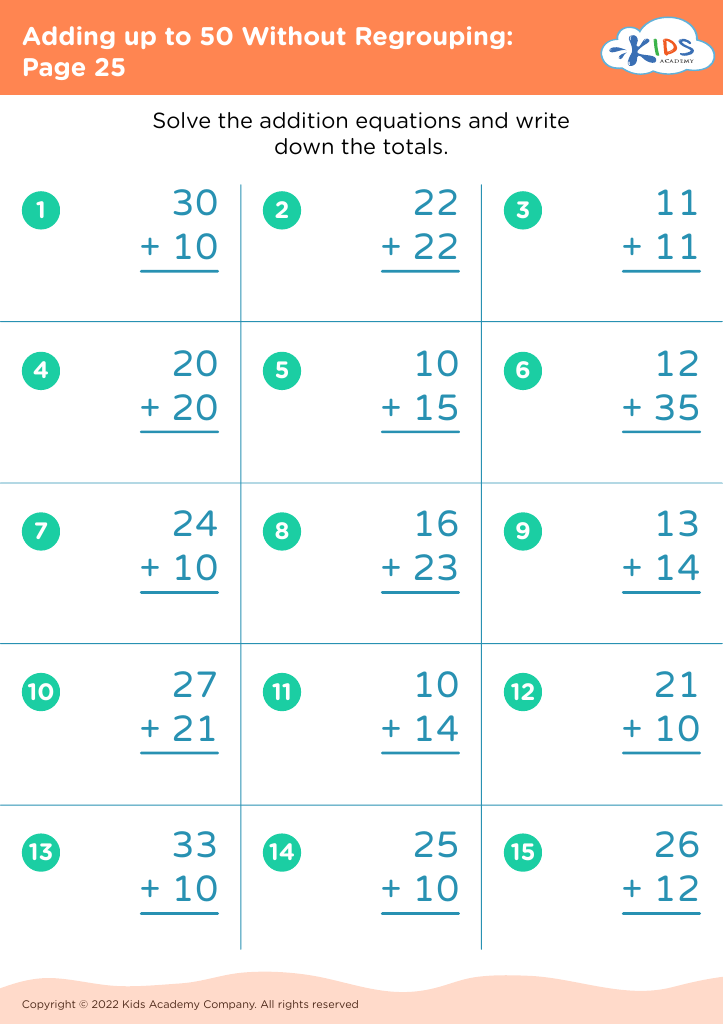
Adding up to 50 Without Regrouping: Page 25
Worksheet
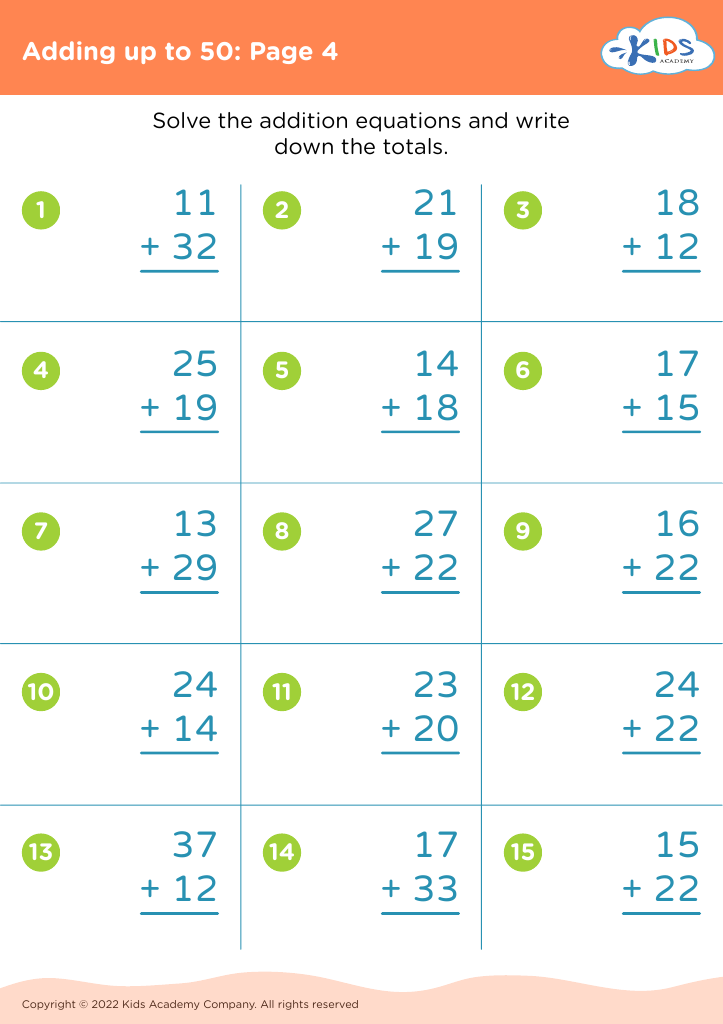
Adding up to 50: Page 4

Adding up to 50: Page 4

Adding up to 50: Page 4
Worksheet
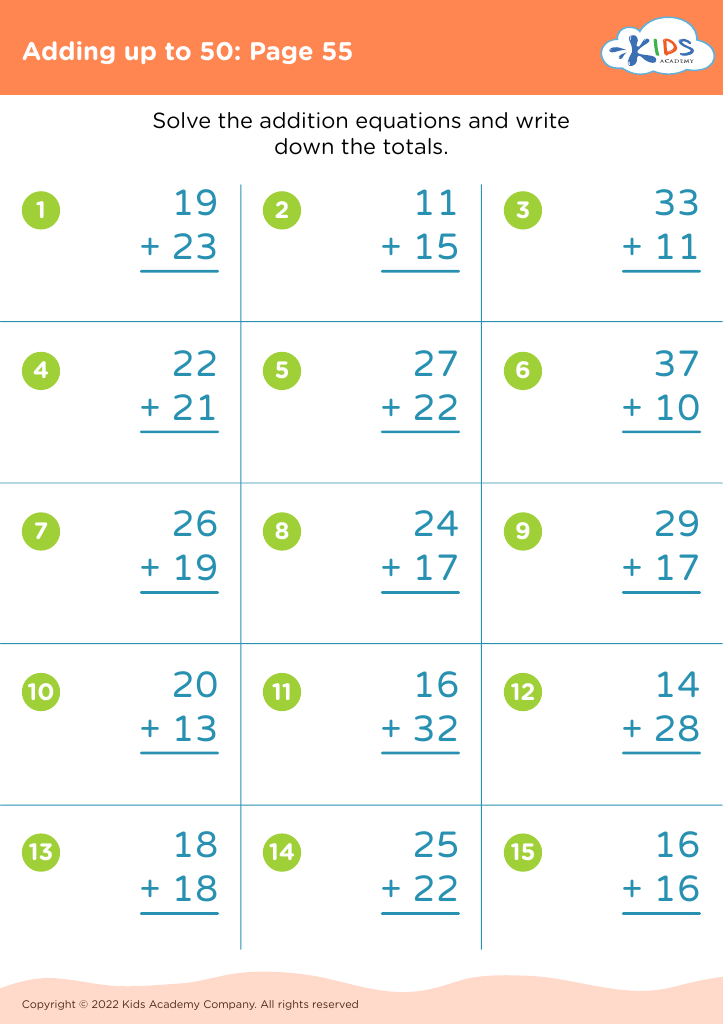
Adding up to 50: Page 55

Adding up to 50: Page 55

Adding up to 50: Page 55
Worksheet
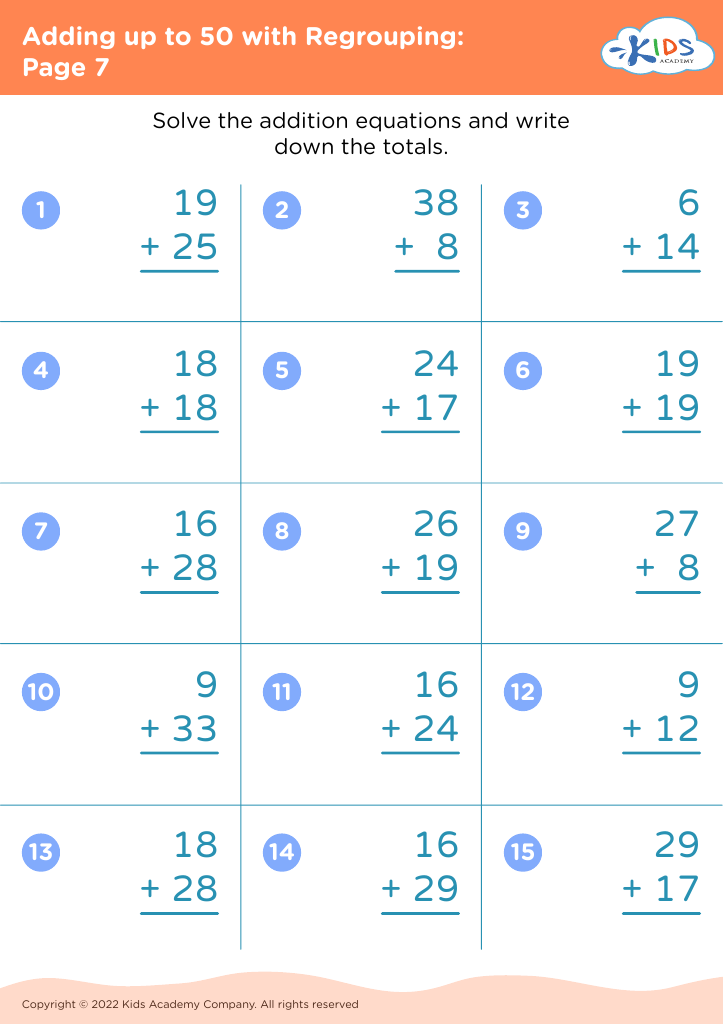
Adding up to 50 with Regrouping: Page 7
Worksheet
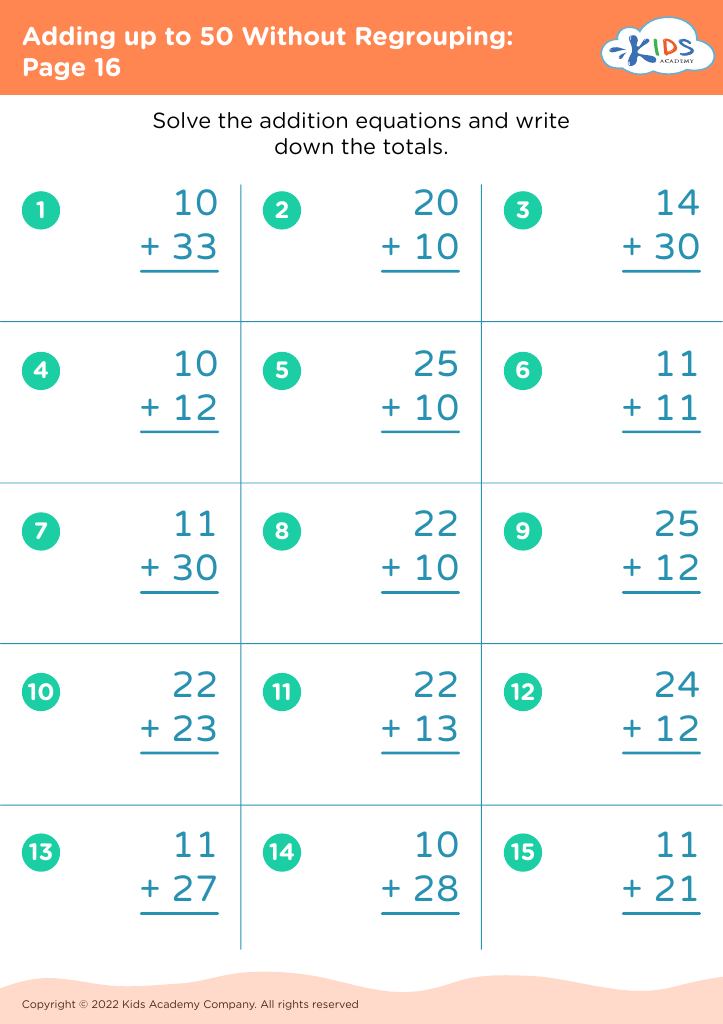
Adding up to 50 Without Regrouping: Page 16
Worksheet
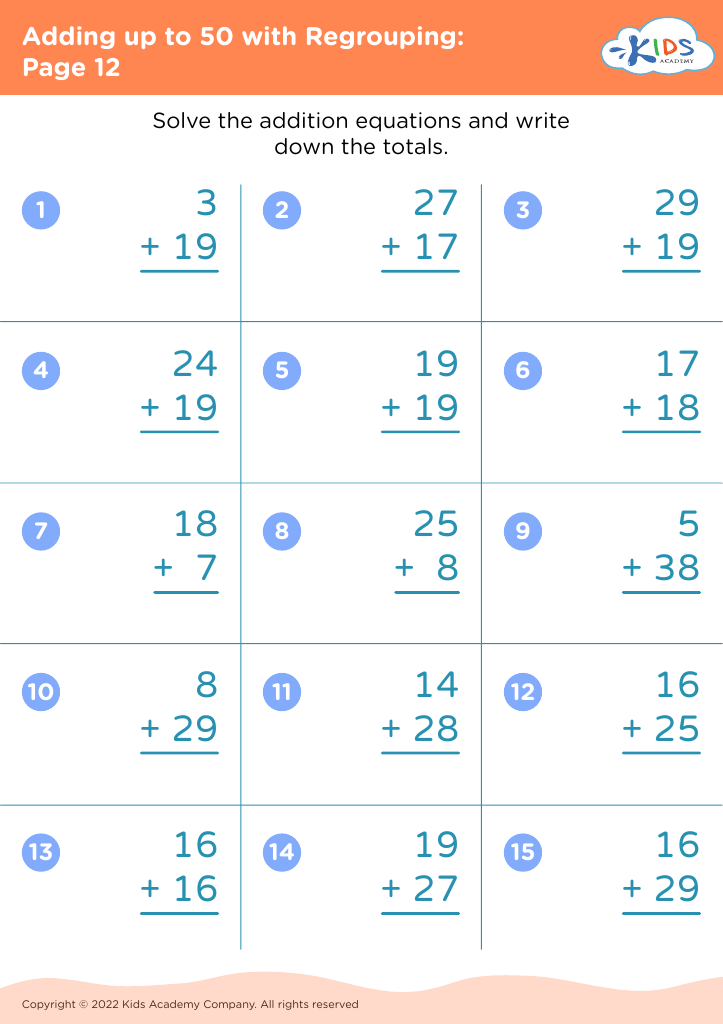
Adding up to 50 with Regrouping: Page 12
Worksheet
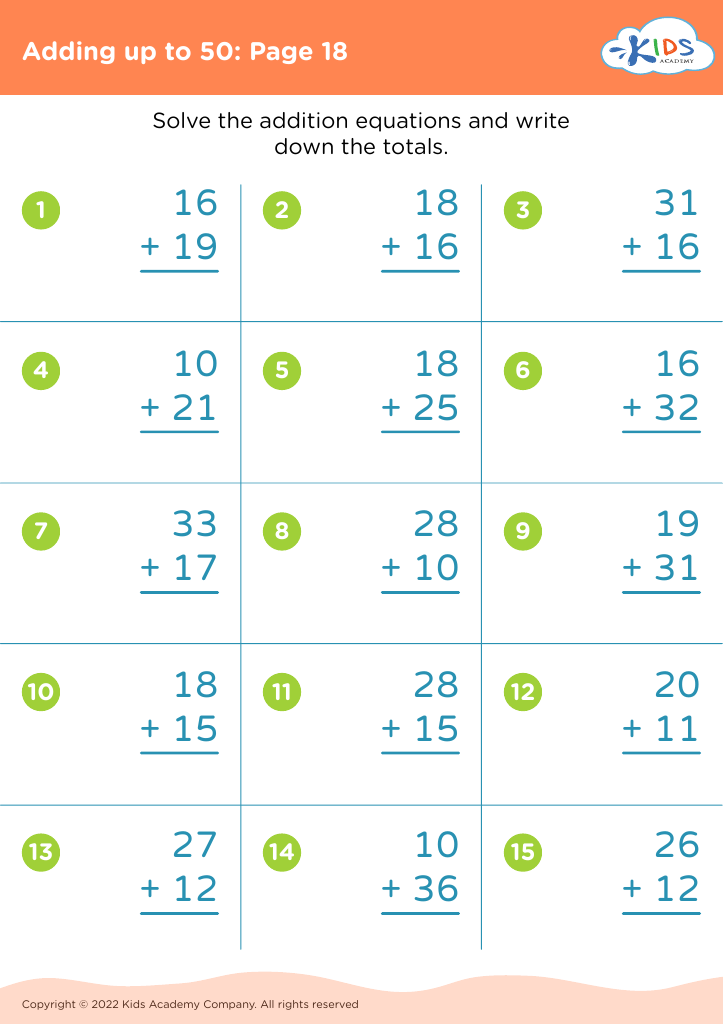
Adding up to 50: Page 18

Adding up to 50: Page 18

Adding up to 50: Page 18
Worksheet
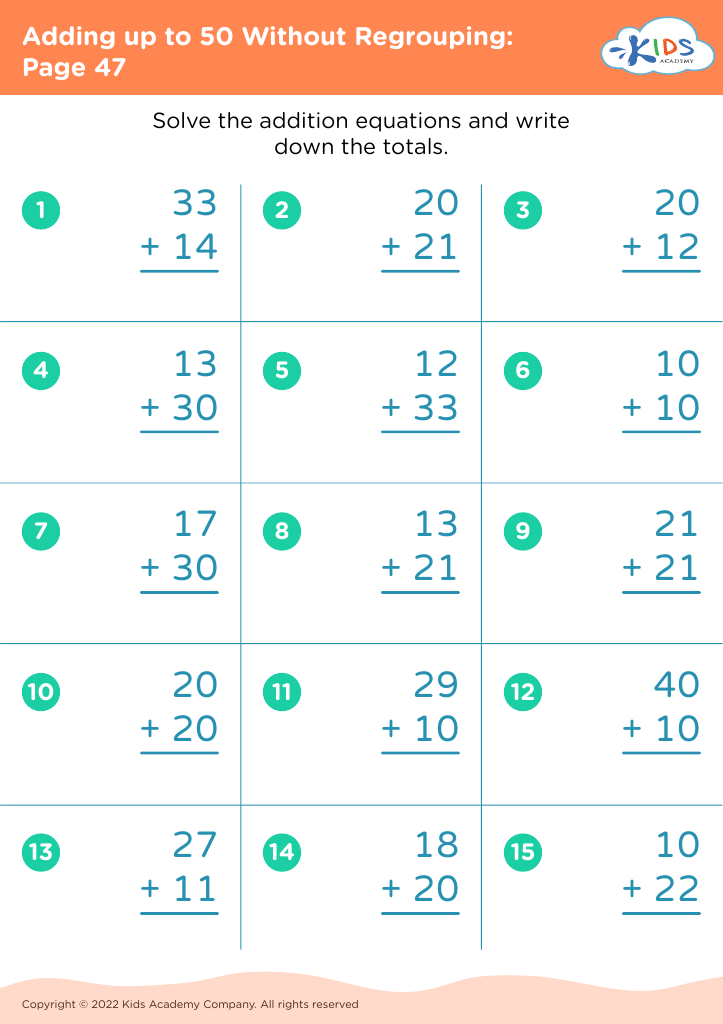
Adding up to 50 Without Regrouping: Page 47
Worksheet
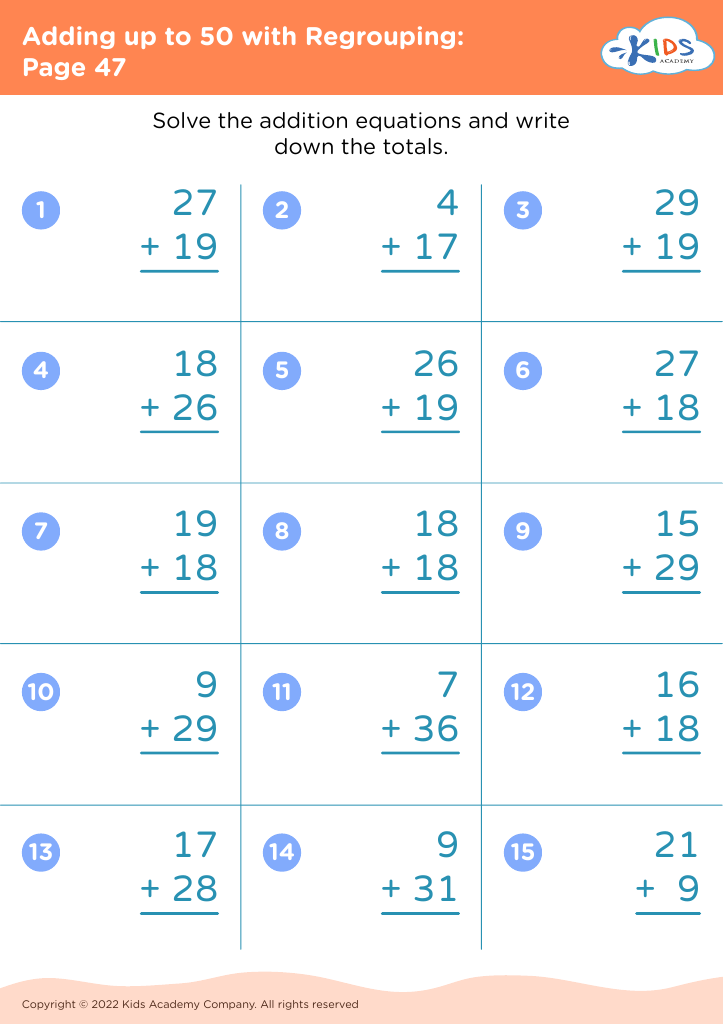
Adding up to 50 with Regrouping: Page 47
Worksheet
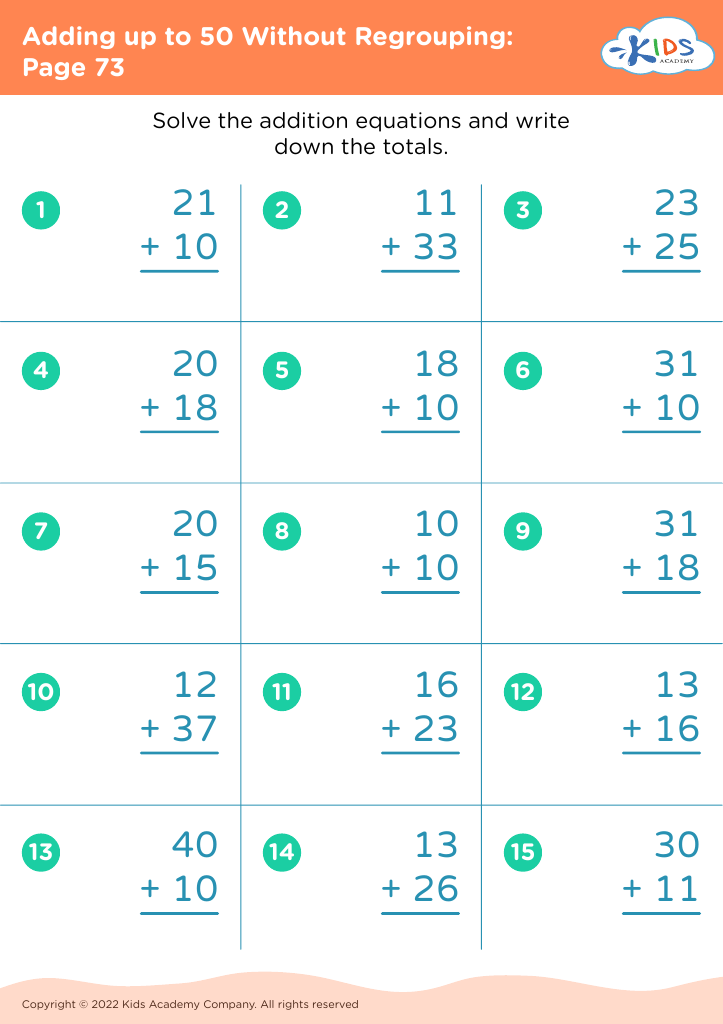
Adding up to 50 Without Regrouping: Page 73
Worksheet
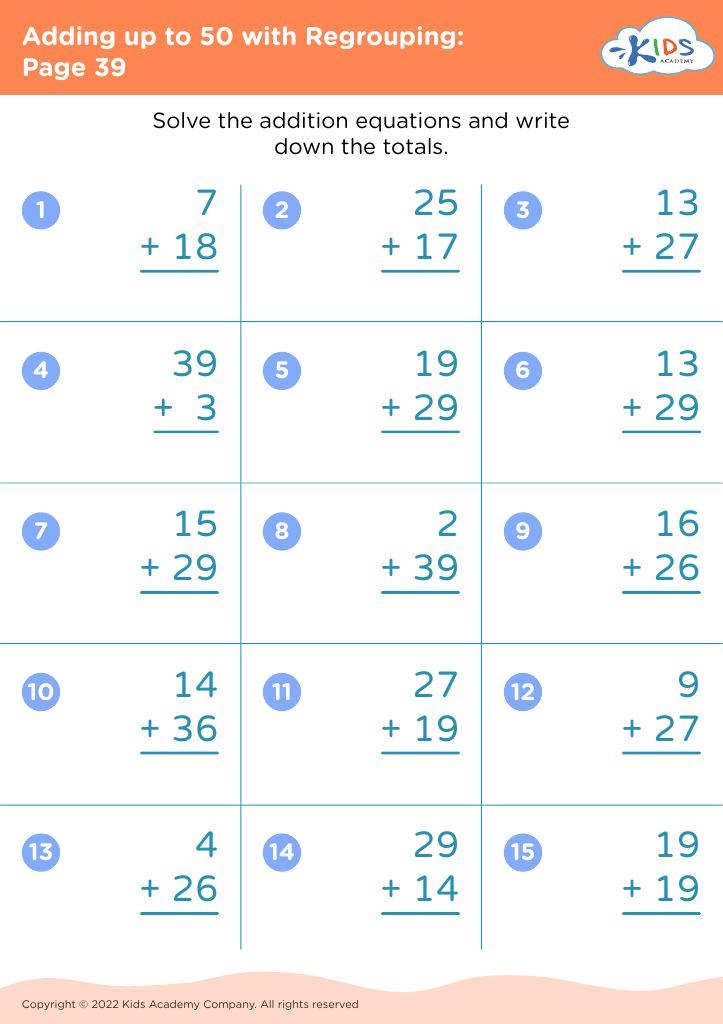
Adding up to 50 with Regrouping: Page 39
Worksheet
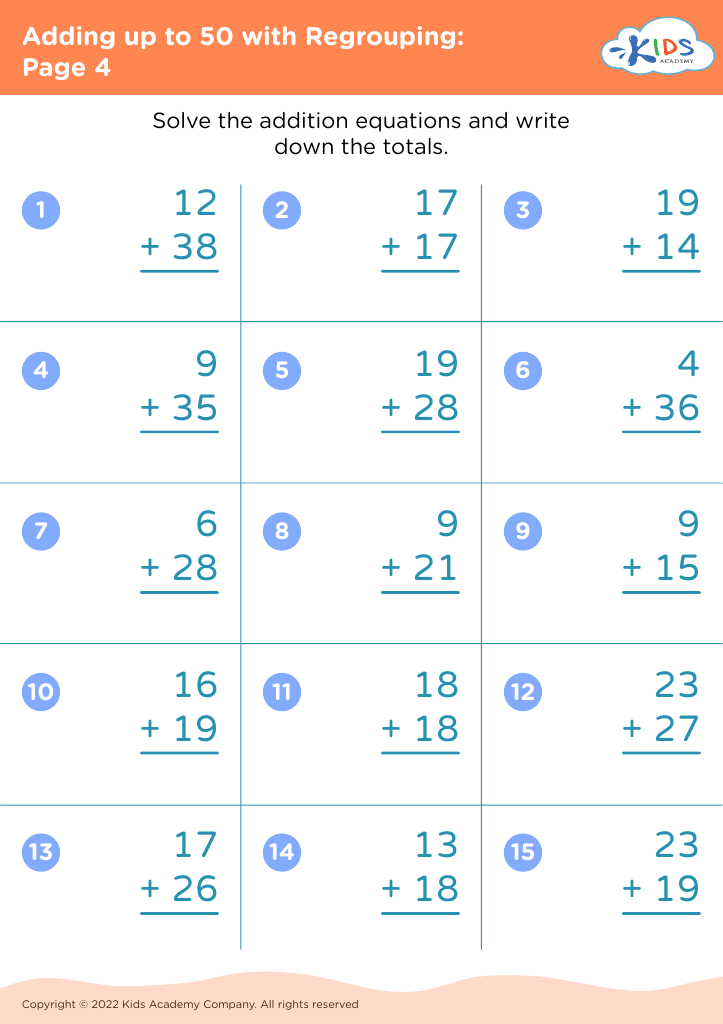
Adding up to 50 with Regrouping: Page 4
Worksheet
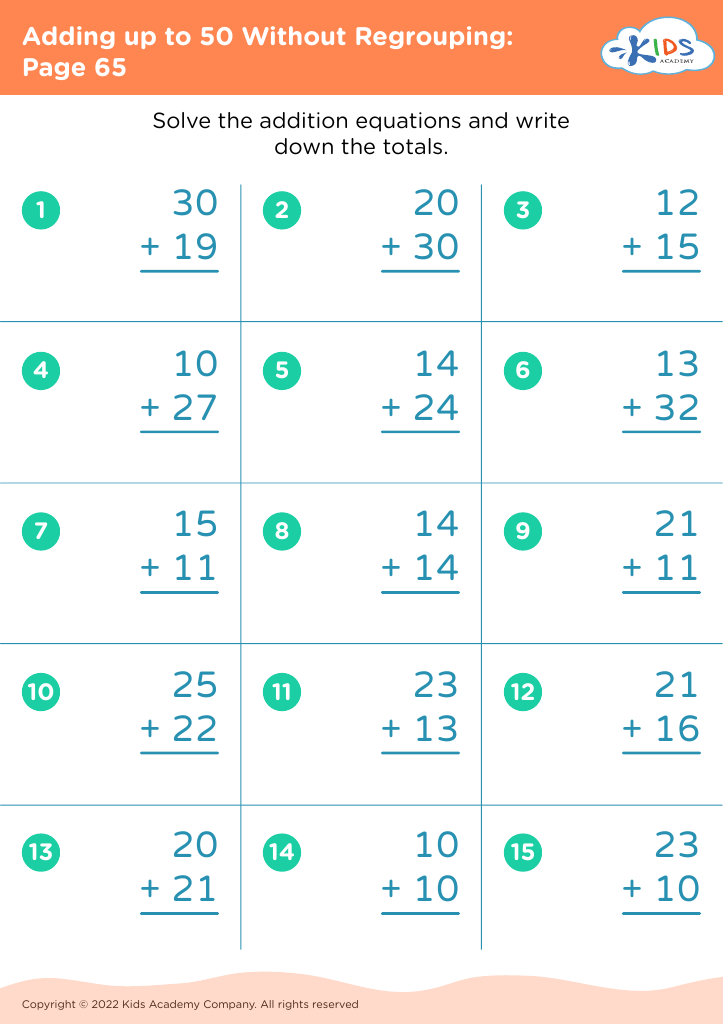
Adding up to 50 Without Regrouping: Page 65
Worksheet
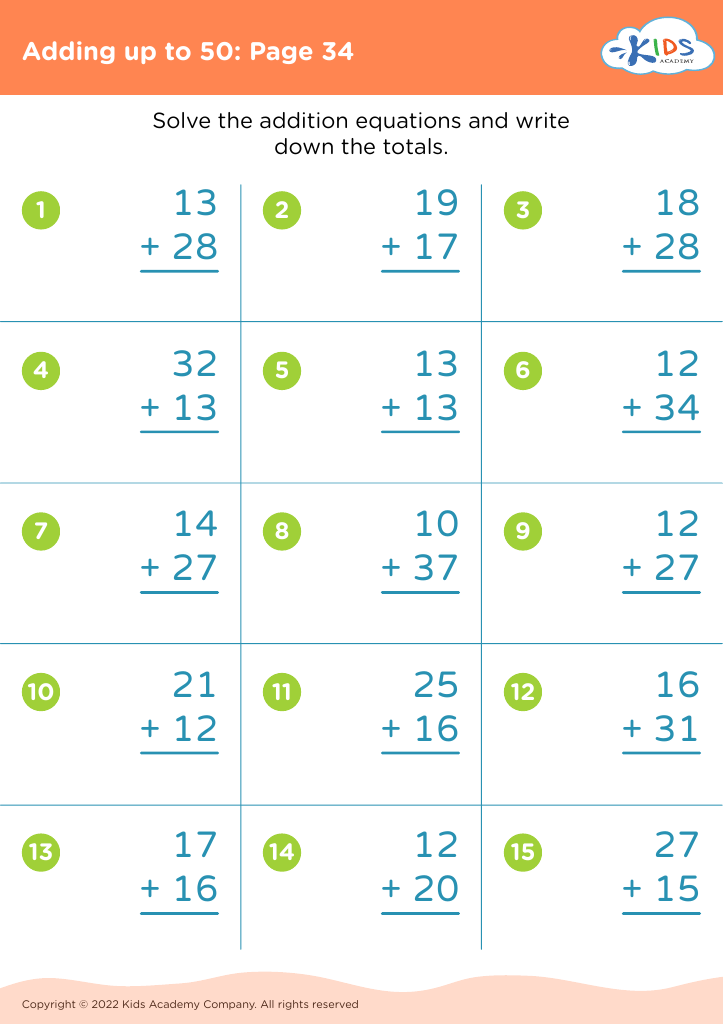
Adding up to 50: Page 34

Adding up to 50: Page 34

Adding up to 50: Page 34
Worksheet


While children aged 3-7 may initially seem too young to grasp the intricacies of fraction simplification, introducing basic math concepts early can be quite beneficial for their cognitive development. Understanding fractions helps in building a solid foundation for future math skills, ensuring that more complex topics become easier to tackle later on.

Fraction simplification specifically teaches children to recognize patterns, improve number sense, and develop problem-solving skills. Although simplification might initially seem advanced for toddlers, early exposure in a fun and engaging way prepares them for later challenges. For example, using visual aids like pie charts, colored blocks, or even food portions can turn abstract numbers into tangible, understandable ideas.

Adding fractions with sums up to 50 further extends early math skills by helping kids understand how numbers interact with each other. It encourages mental math and arithmetic fluency, essential for success in elementary school and beyond. Parents and teachers play crucial roles in shaping children's attitudes towards math. By making learning fractions simple and fun, both at home and in the classroom, they set up young learners for academic confidence and a positive lifelong relationship with mathematics. This educational head start offers long-term benefits far beyond just numbers: it enhances logical thinking and problem-solving abilities critical in everyday life.