Identifying shapes Adding up to 50 Worksheets for Ages 3-7
9 filtered results
-
From - To
Discover our "Identifying Shapes Adding Up to 50 Worksheets" designed for young learners aged 3-7! These engaging, printable worksheets help children develop vital math skills while recognizing and categorizing shapes. Each worksheet combines visual elements and simple addition exercises, encouraging an interactive learning experience. As kids practice adding numbers up to 50, they’ll also explore various geometric shapes, enhancing their spatial awareness. Ideal for classroom activities or home learning, our worksheets provide a fun and educational way to build foundational math knowledge. Perfect for parents and teachers looking to make learning enjoyable and interactive—download now to spark your child's curiosity!
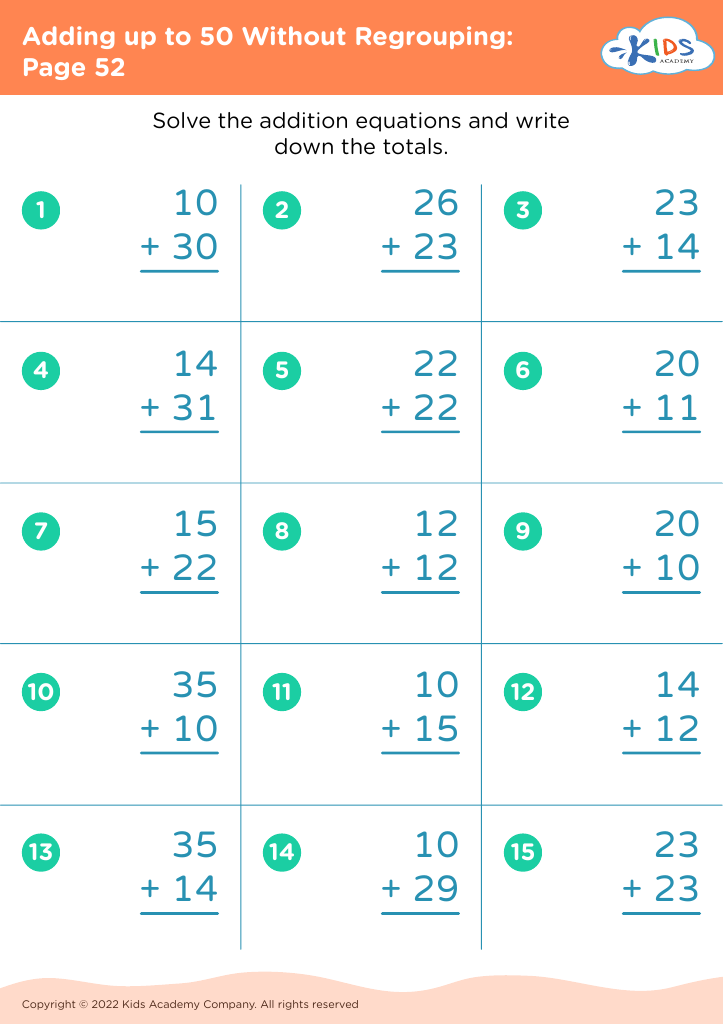
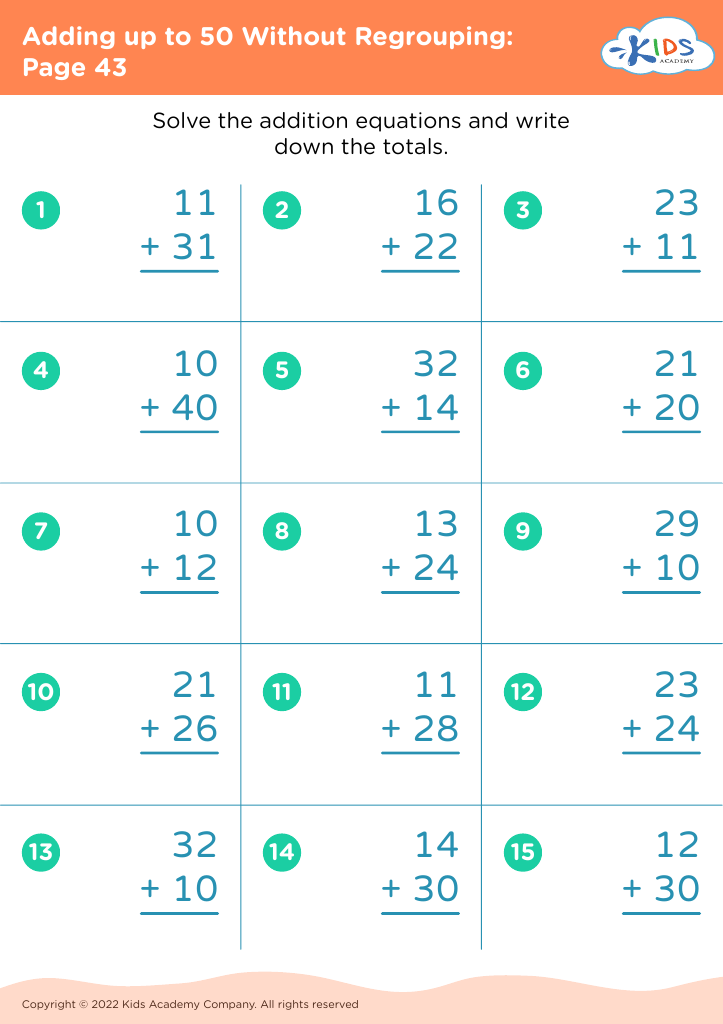
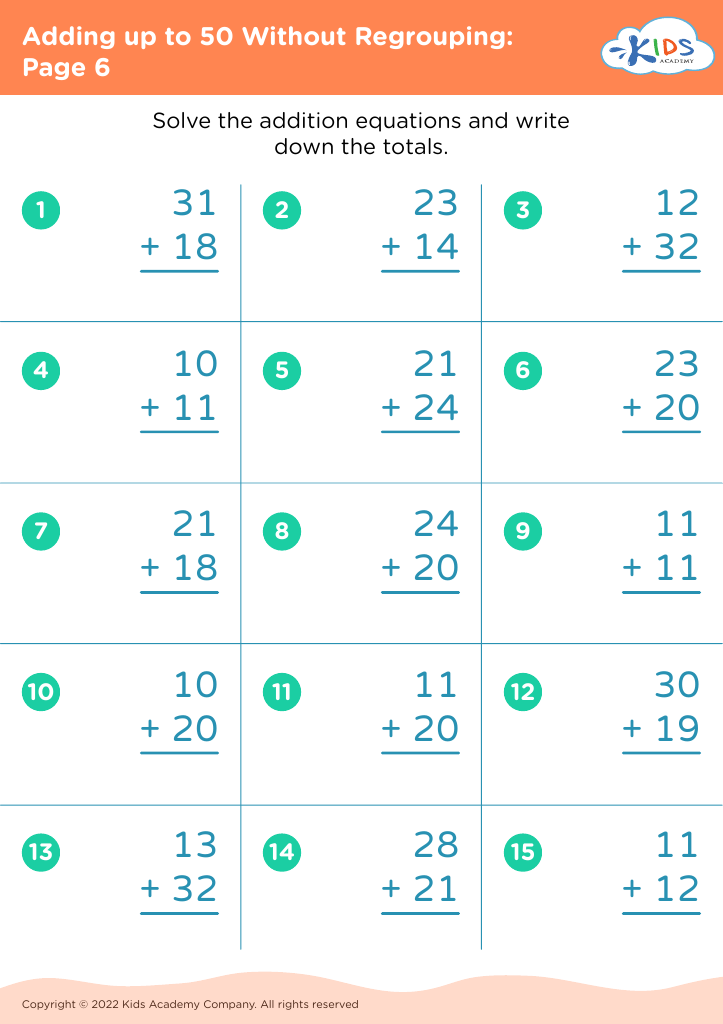
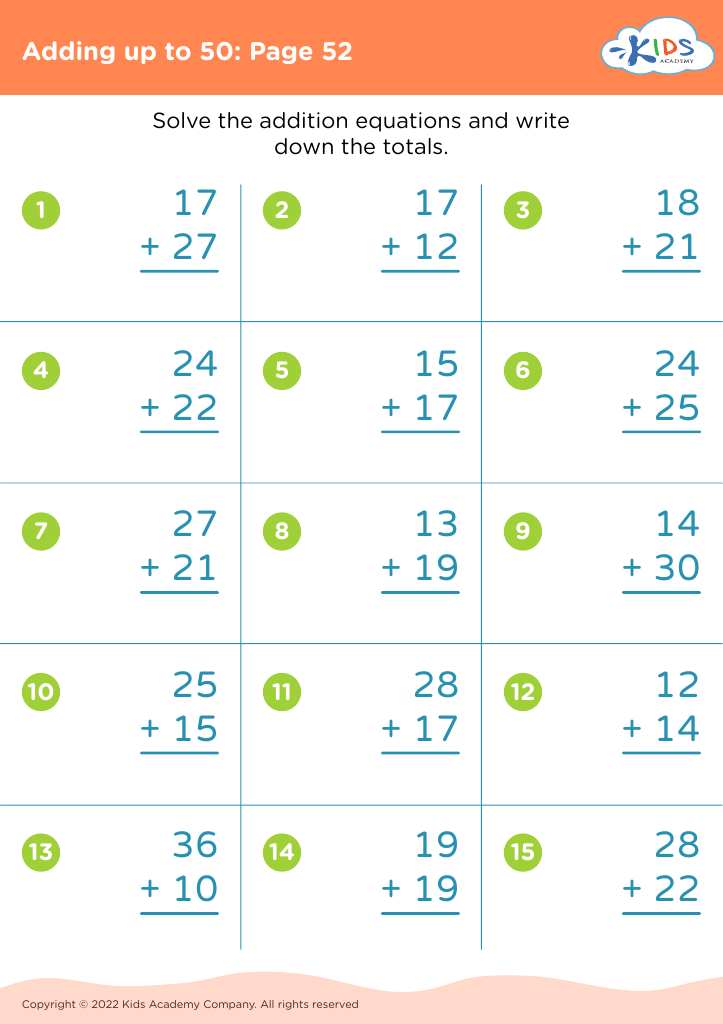
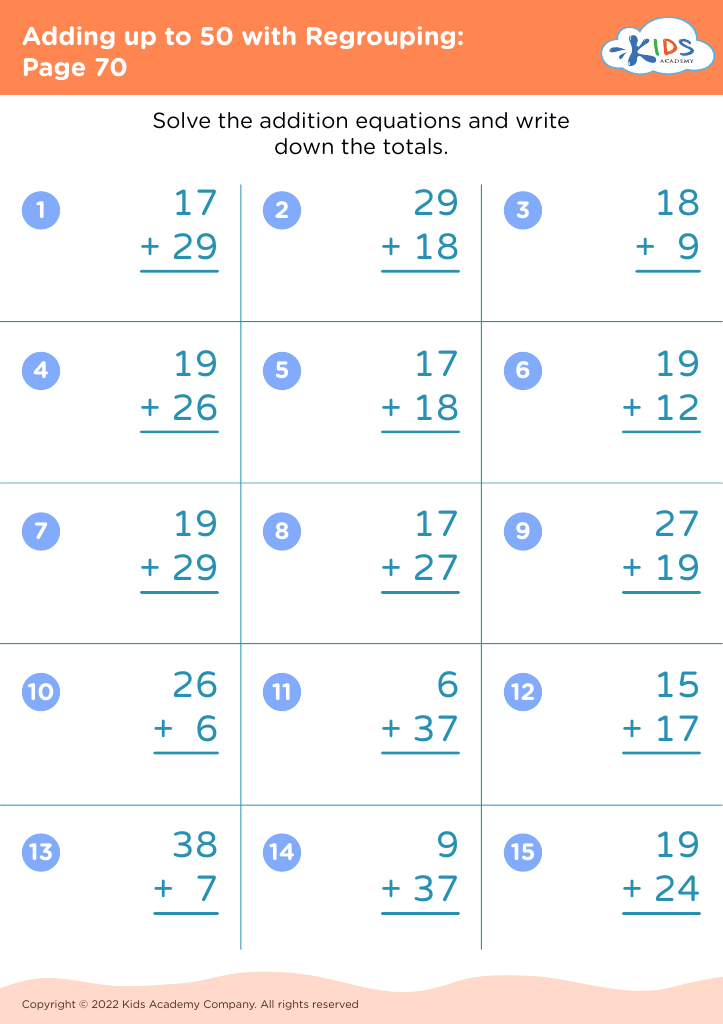
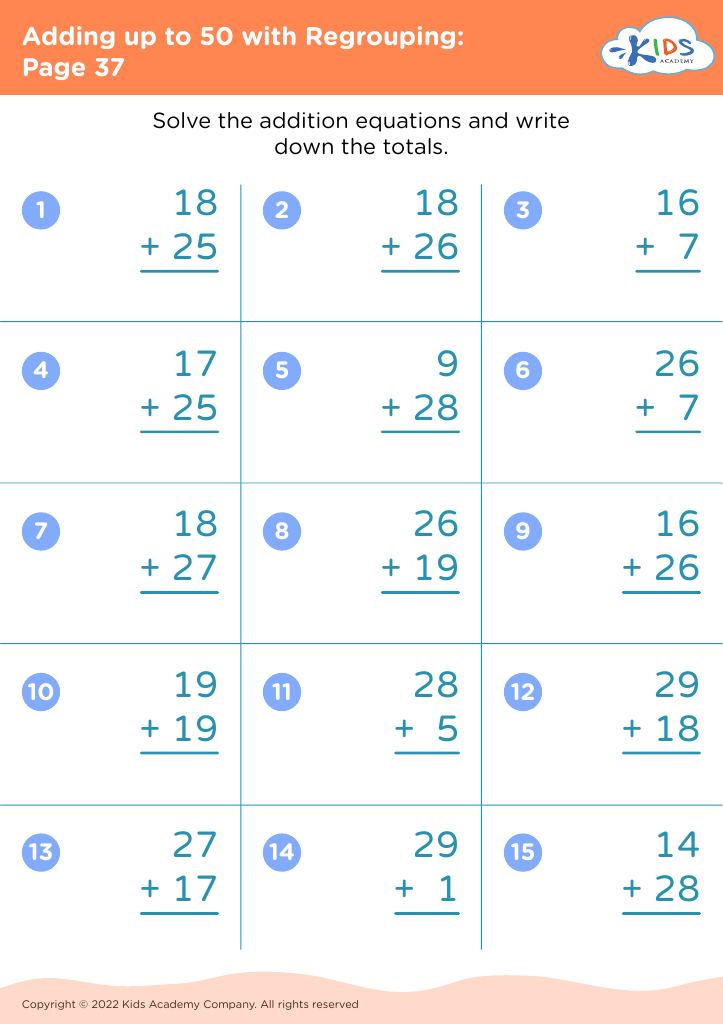
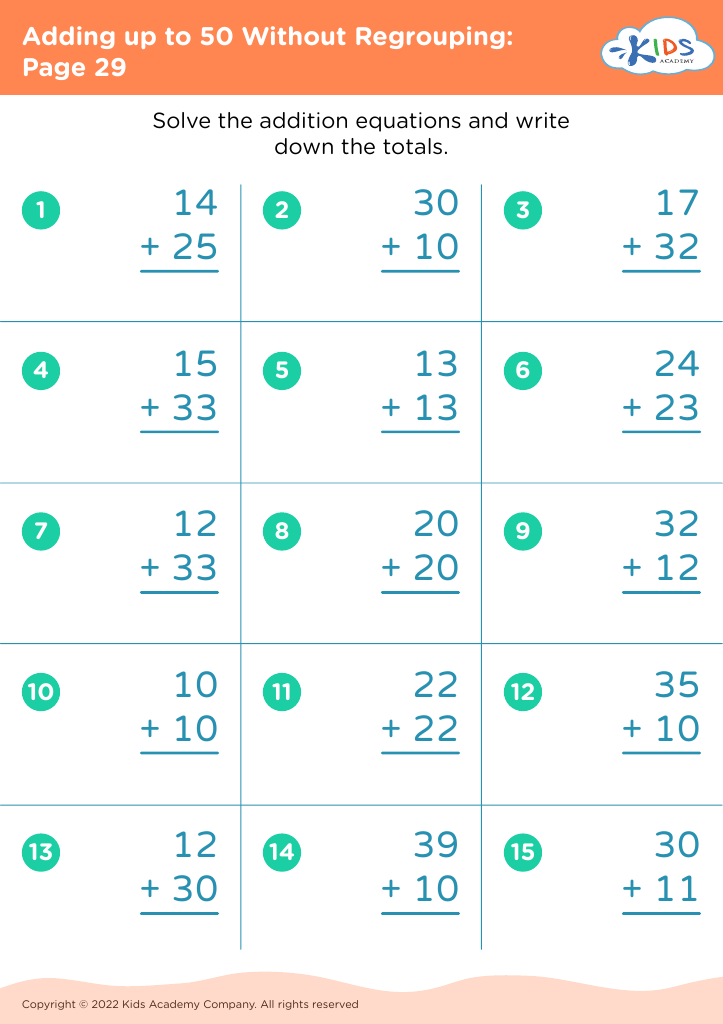
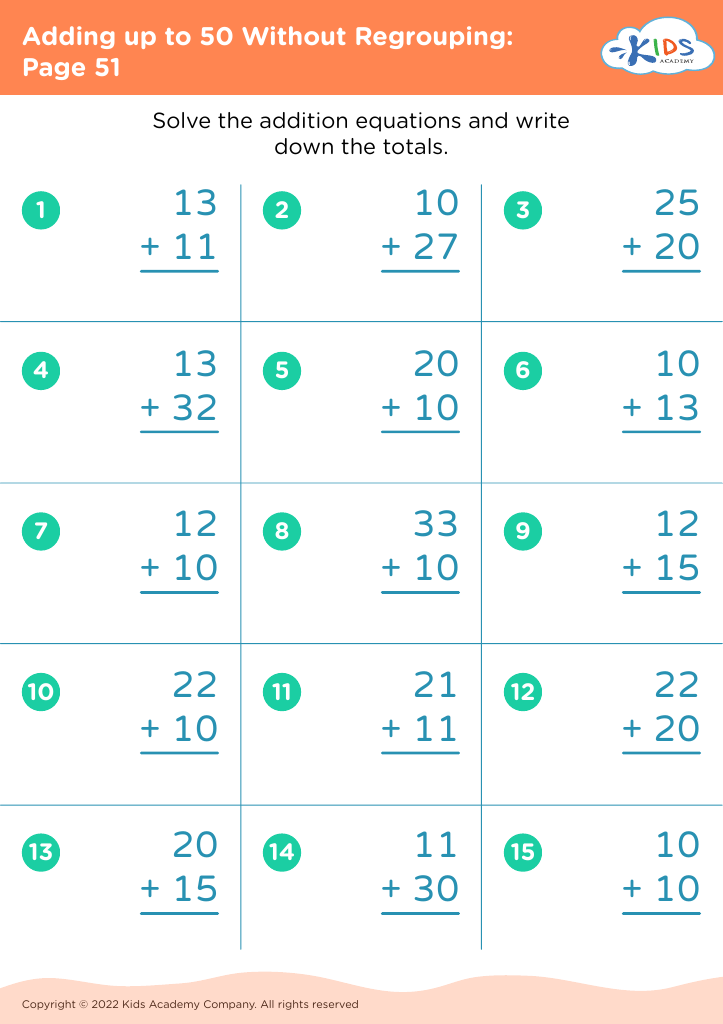
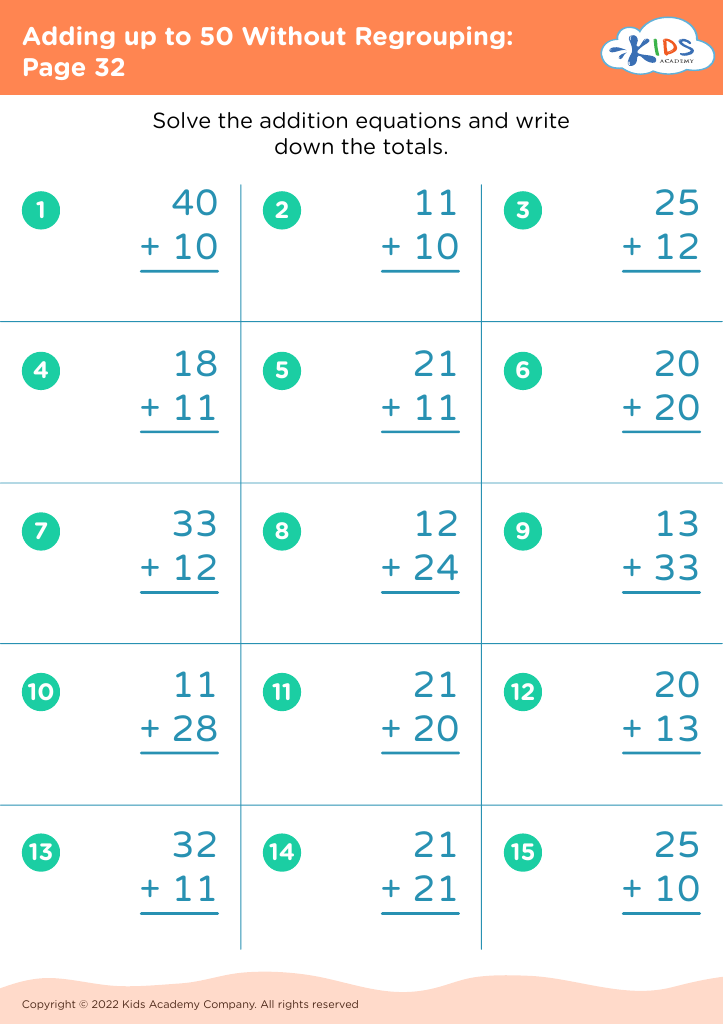




Identifying shapes and understanding numbers, especially adding up to 50, are foundational skills for children aged 3-7. Parents and teachers should care about these concepts because they significantly influence cognitive development and early literacy in mathematics. Recognizing shapes enhances a child's spatial awareness, which is crucial not only for math but also for reading and writing as they learn to distinguish letters and words.
Additionally, introducing addition through engaging activities fosters logical thinking and problem-solving skills. Mastery of numbers up to 50 allows children to build a solid numerical foundation, avoiding future difficulties in advanced math concepts. This foundational knowledge also aids in understanding real-life situations involving money, time, and measurements, promoting independence as they grow.
Moreover, such learning experiences promote social interaction when children work together on shape identification and math games, which enhances their communication and teamwork skills. The development of these abilities in the early years uniquely shapes a child's attitude towards learning and sets the tone for lifelong educational engagement. Ultimately, understanding shapes and basic addition can instill confidence, curiosity, and a love of learning, making it crucial for both parents and teachers to prioritize these skills in early childhood education.








