Improve math skills Adding up to 50 Worksheets for Ages 3-7
4 filtered results
-
From - To
Enhance your child’s math skills with our "Adding Up to 50 Worksheets," tailored for kids aged 3-7! These engaging worksheets provide a fun and effective way to help young learners master addition skills. With a variety of exercises, children will practice adding numbers up to 50, promoting number recognition, and improving their calculation abilities. Designed to be age-appropriate and captivating, these worksheets encourage independent learning while building confidence in math. Perfect for both classroom activities and home practice, our resources support early education and establish a strong foundation for future math success. Download now to start your child's math journey!
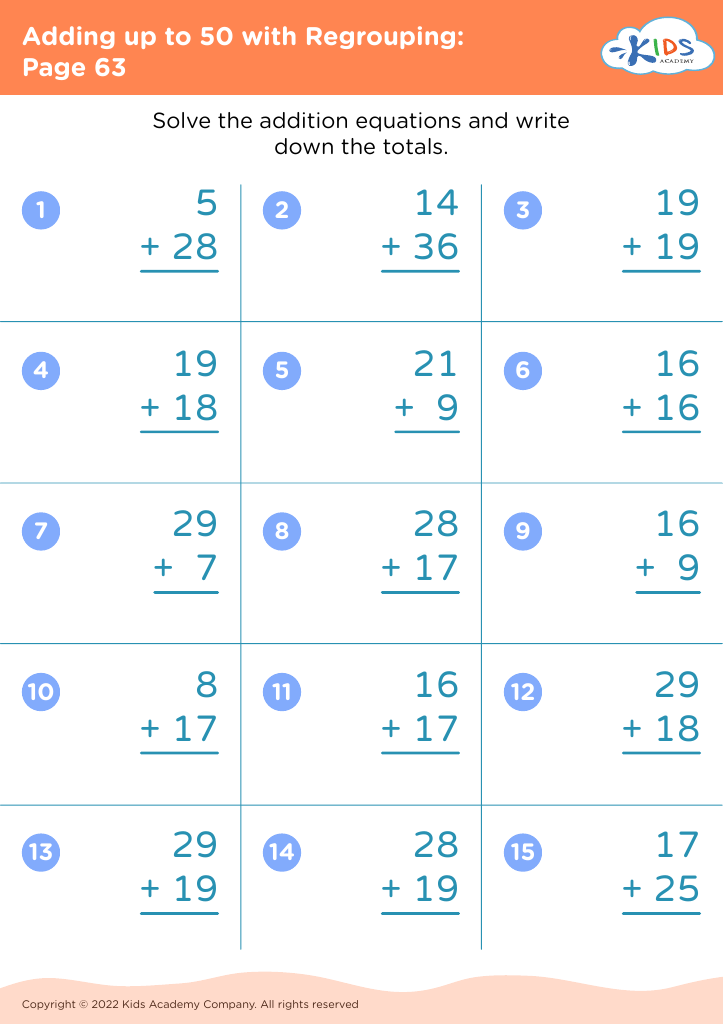
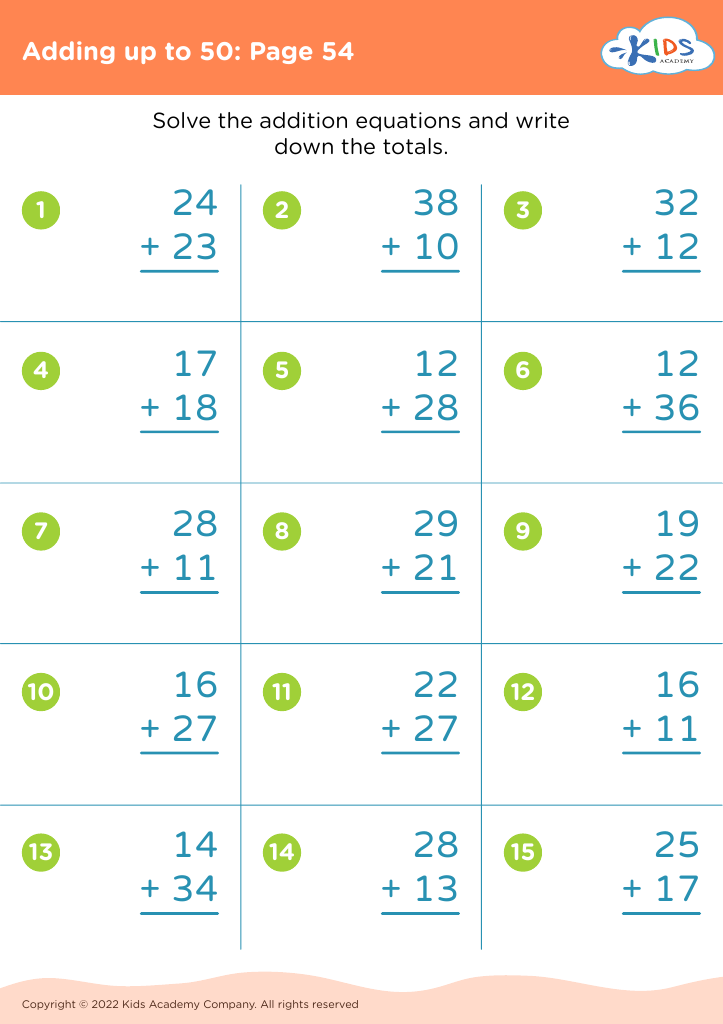
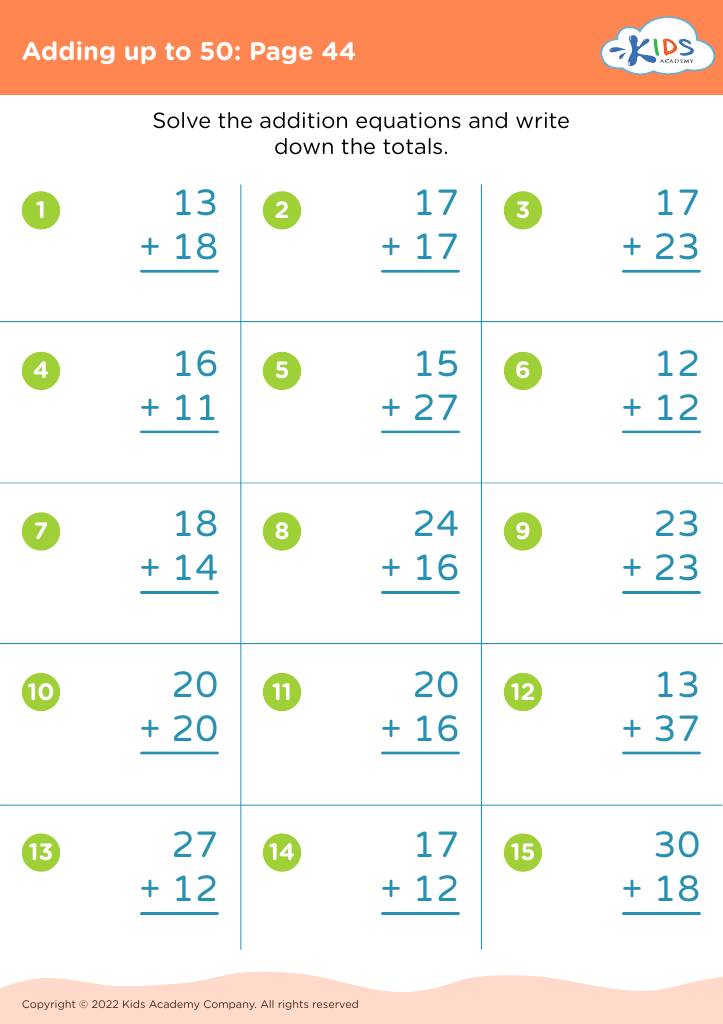
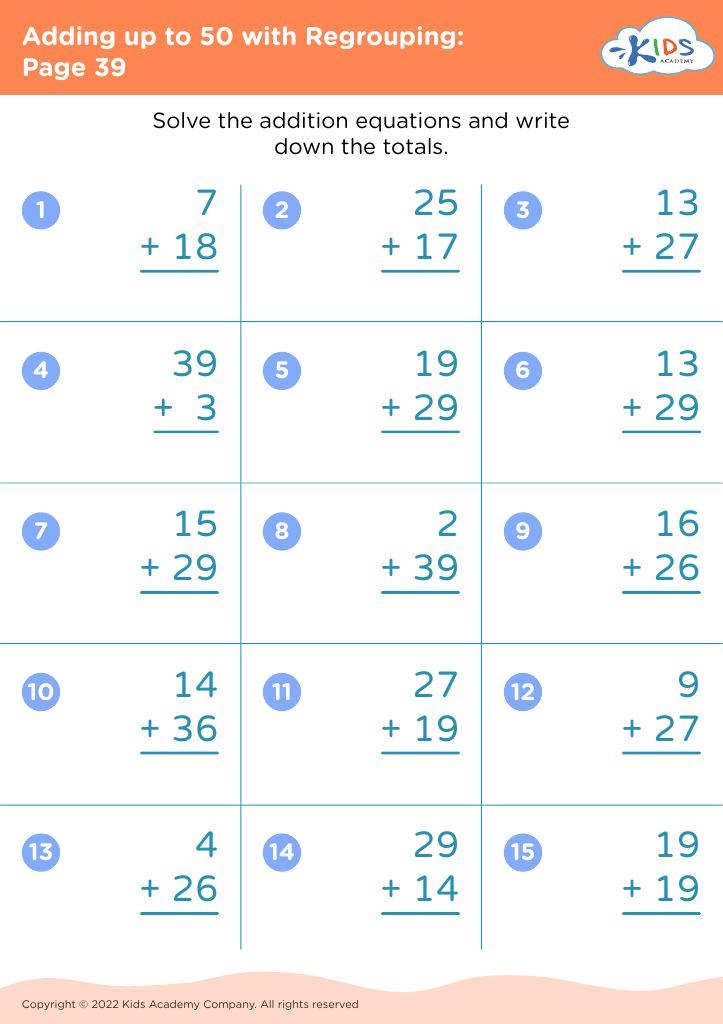




Improving math skills, particularly the ability to add up to 50, is crucial for children aged 3-7, as it forms the foundation for future learning and cognitive development. At this stage, kids are naturally curious and eager to learn. Fostering their mathematical abilities can enhance critical thinking and problem-solving skills that are essential in everyday life.
Early exposure to math concepts helps build confidence, which decreases the likelihood of math-related anxiety in later years. By mastering simple addition, children gain a sense of accomplishment that encourages them to take on more challenging material in the future.
Furthermore, skills like adding up to 50 are not just about numbers; they offer opportunities for children to learn about patterns, sequences, and relationships. This groundwork supports academic success across various subjects, including science and technology. Engaging parents and teachers in this process is essential, as they can introduce fun, interactive activities and everyday scenarios that reinforce these concepts, facilitating a positive learning environment. Overall, equipping young children with strong mathematical skills sets them up for success both academically and personally, ultimately steering them toward lifelong learning and achievement.








