Improve number recognition Adding up to 50 Worksheets for Ages 3-7
5 filtered results
-
From - To
Enhance your child's number recognition skills with our engaging "Improving Number Recognition: Adding Up to 50" worksheets, specifically designed for ages 3-7. These interactive activities feature colorful illustrations and fun exercises that help children learn and identify numbers while developing essential math skills. As they practice adding numbers up to 50, young learners will boost their confidence and foundation in mathematics. Our worksheets provide a perfect balance of challenge and enjoyment, making learning an exciting adventure! With easy-to-follow instructions, parents and teachers can effortlessly guide children through their mathematical journey. Download these worksheets today and watch your little ones thrive!
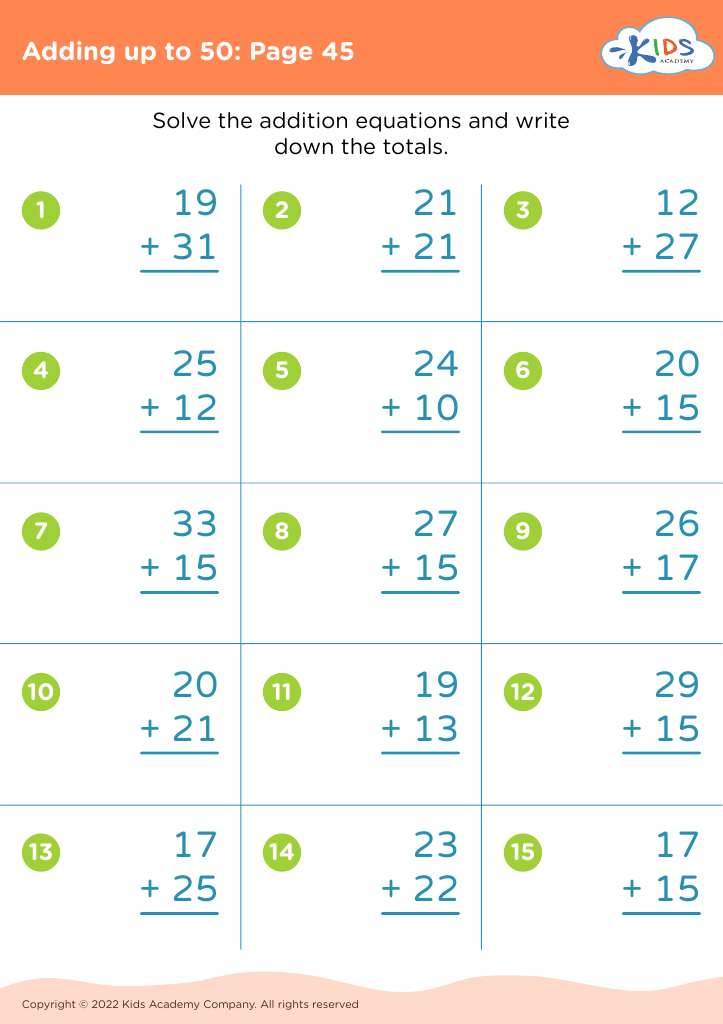
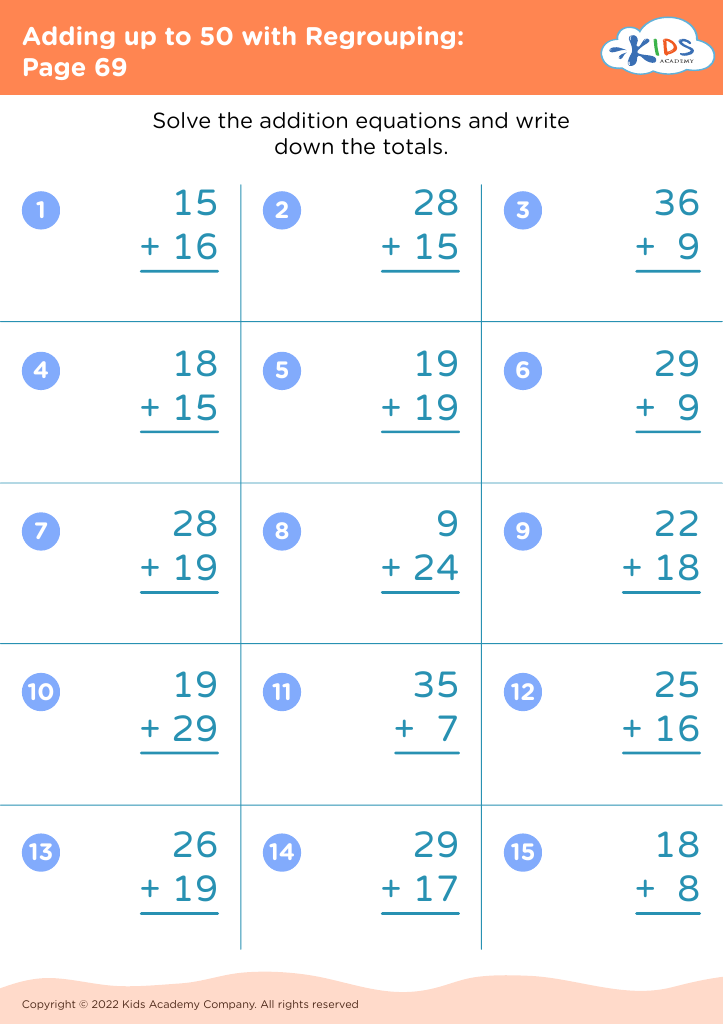
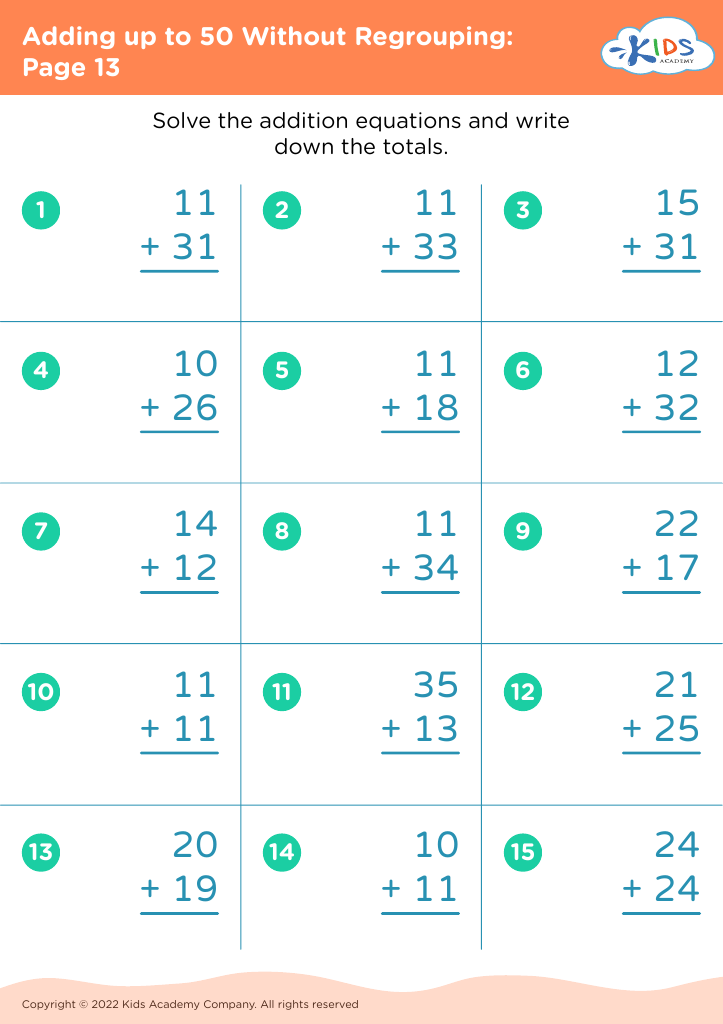
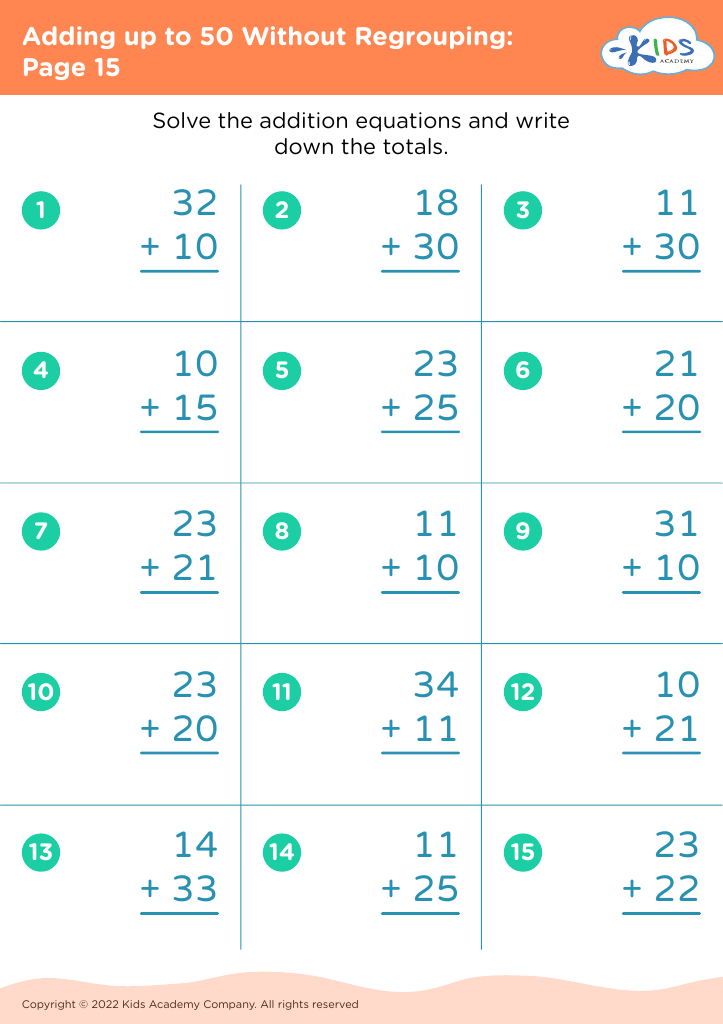
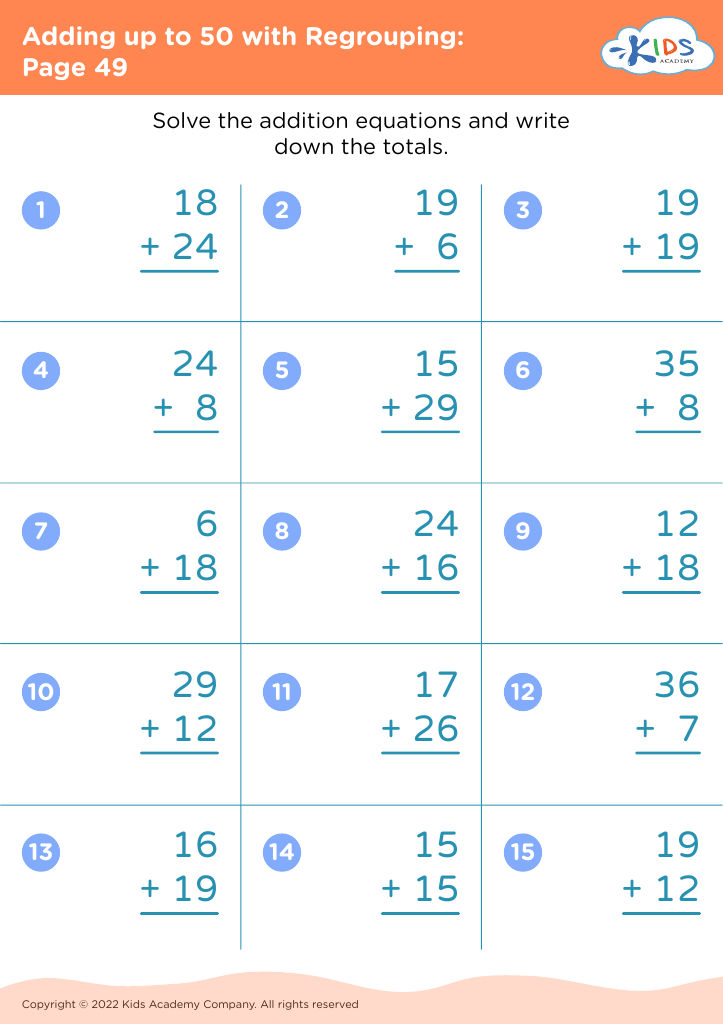




Improving number recognition and the ability to add up to 50 for children aged 3-7 is crucial for several reasons. First, foundational math skills directly contribute to a child's overall academic success. Number recognition helps children identify numerical symbols, which sets the stage for more complex mathematical concepts they will encounter later in school. By mastering these skills early, children can build confidence and a positive attitude towards math, reducing anxiety as subjects become more challenging.
Additionally, strong number recognition aids in developing problem-solving abilities. It encourages logical thinking and enhances cognitive skills as children learn to analyze and approach mathematical challenges systematically. For parents and teachers, fostering this development empowers children to utilize math in everyday contexts, from counting objects to managing money, promoting practical life skills.
Moreover, engaging children in activities that enhance number recognition can strengthen the home-school connection, as parents and teachers collaborate in their educational journey. This cooperation creates a supportive learning environment, reinforcing the importance of mathematics in daily life. Overall, prioritizing number recognition and basic addition fosters a love for learning and sets students on a path toward long-term mathematical proficiency and critical thinking skills essential for their future success.








