Improve reading comprehension Adding up to 50 Worksheets for Ages 3-7
4 filtered results
-
From - To
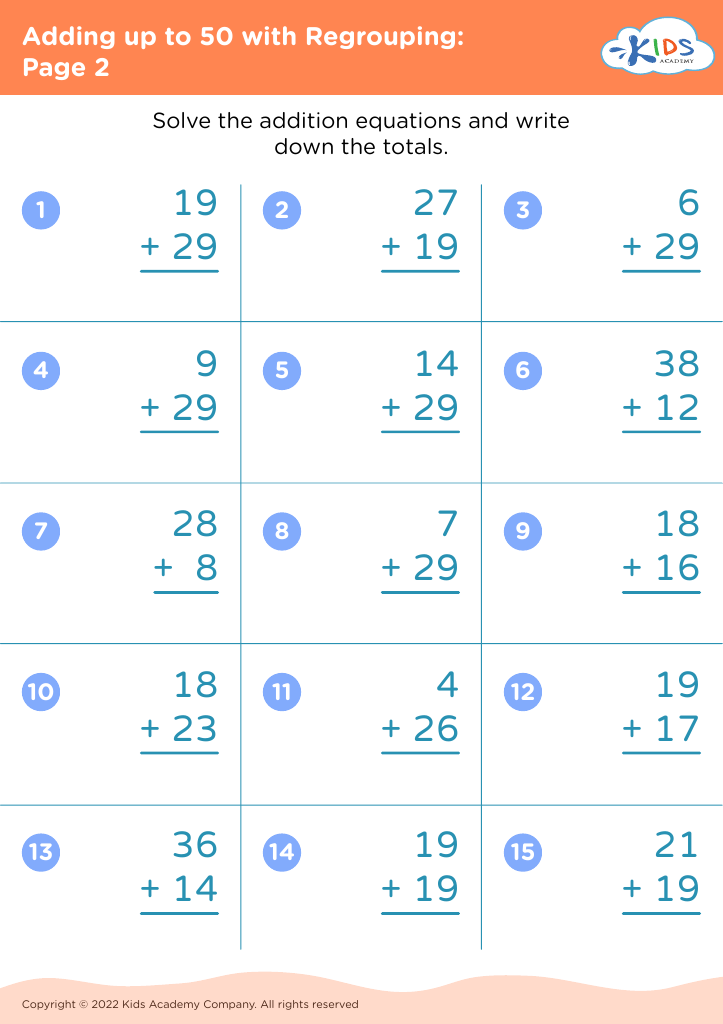
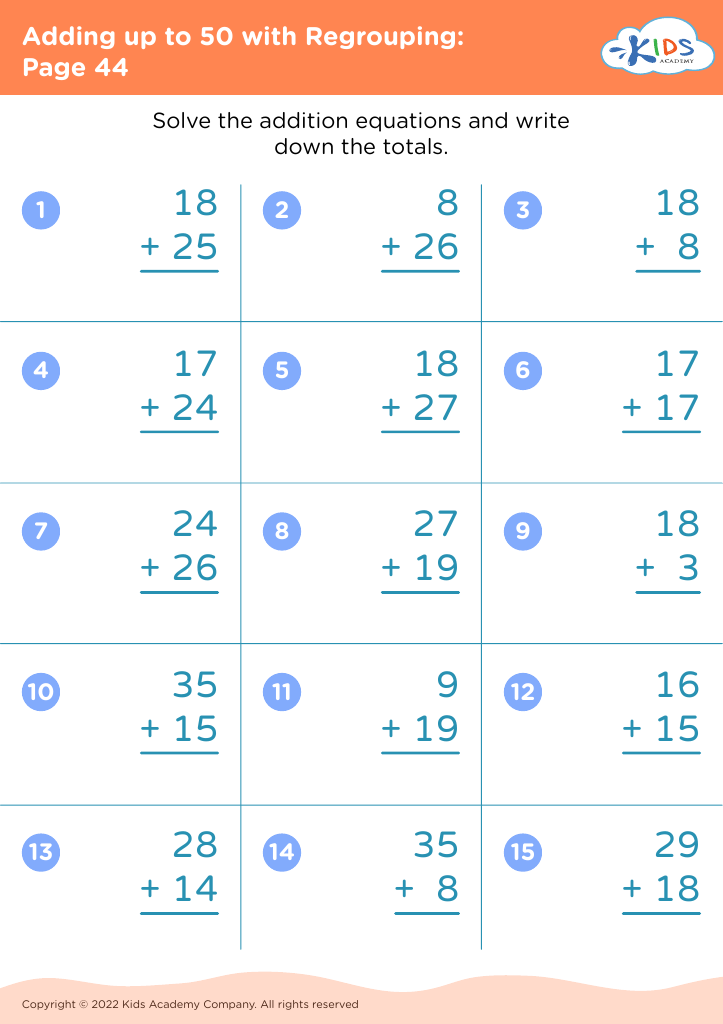
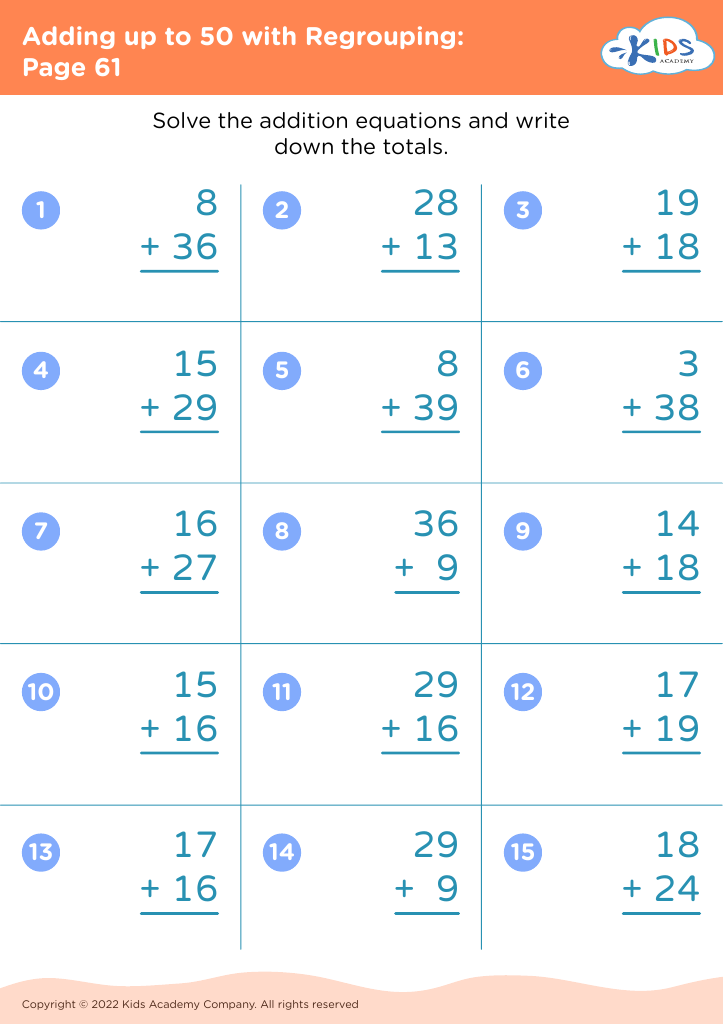
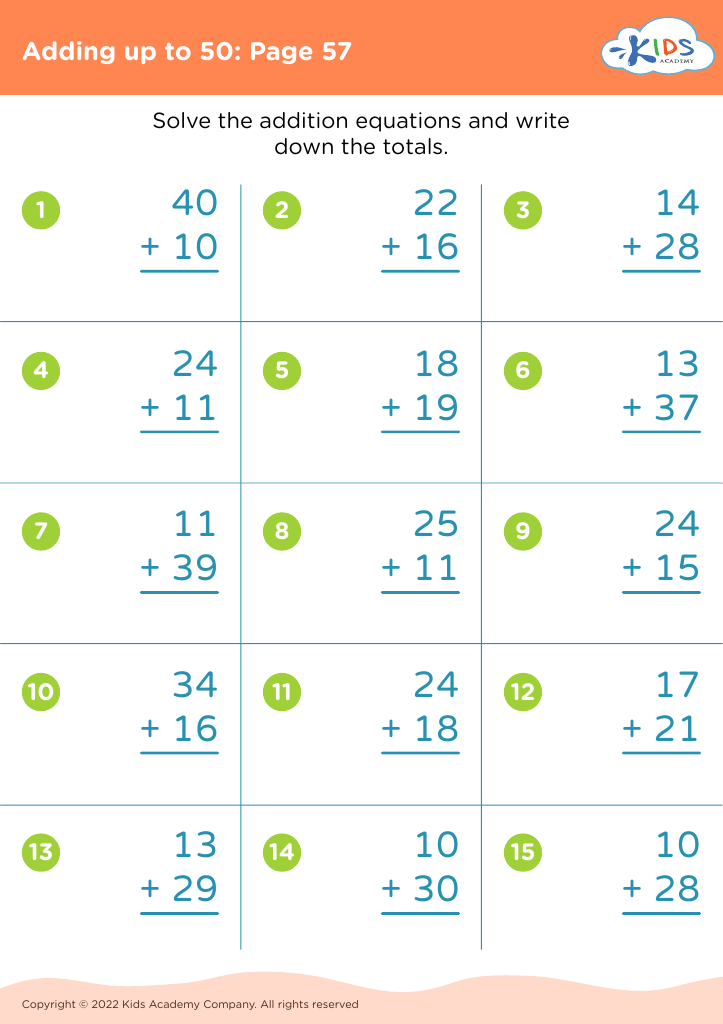
Enhance your child's reading comprehension with our specialized "Adding up to 50 Worksheets for Ages 3-7"! These printables are designed to seamlessly blend early math skills with reading improvement, making learning both fun and effective. Each worksheet offers engaging addition problems that promote numerical confidence while integrated stories and questions boost understanding and retention. Perfect for children aged 3-7, these exercises not only develop essential math abilities but also advance comprehension skills crucial for academic success. With bright illustrations and captivating content, these worksheets keep young learners motivated and eager to explore both math and reading. Start your educational adventure today!




Developing strong reading comprehension skills in early childhood is crucial for several reasons. For children aged 3-7, this foundational ability serves as a gateway to future academic success and lifelong learning. At this developmental stage, young minds are incredibly malleable and primed to absorb new information. By fostering reading comprehension early, parents and teachers can significantly enhance a child's linguistic abilities, cognitive development, and critical thinking skills.
Reading comprehension helps young learners grasp core concepts in stories, follow sequences of events, and understand cause-and-effect relationships. Moreover, it encourages empathy and cultural awareness as children begin to recognize diverse perspectives through different characters and settings. This skill also bridges the gap to more complex subjects, acting as a building block for all future learning. A strong reading comprehension foundation assists children in tackling math word problems, understanding scientific phenomena, and following instructions.
Furthermore, improving comprehension while they learn arithmetic up to 50 can foster an integrated learning approach. It can help children in ages 3-7 connect numerical skills with verbal instructions, making learning more holistic and comprehensive. This dual-focus development can reduce future academic struggles, instilling confidence and enthusiasm for learning—key components for long-term educational engagement and success.








