Logical thinking Adding up to 50 Worksheets for Ages 3-7
3 filtered results
-
From - To
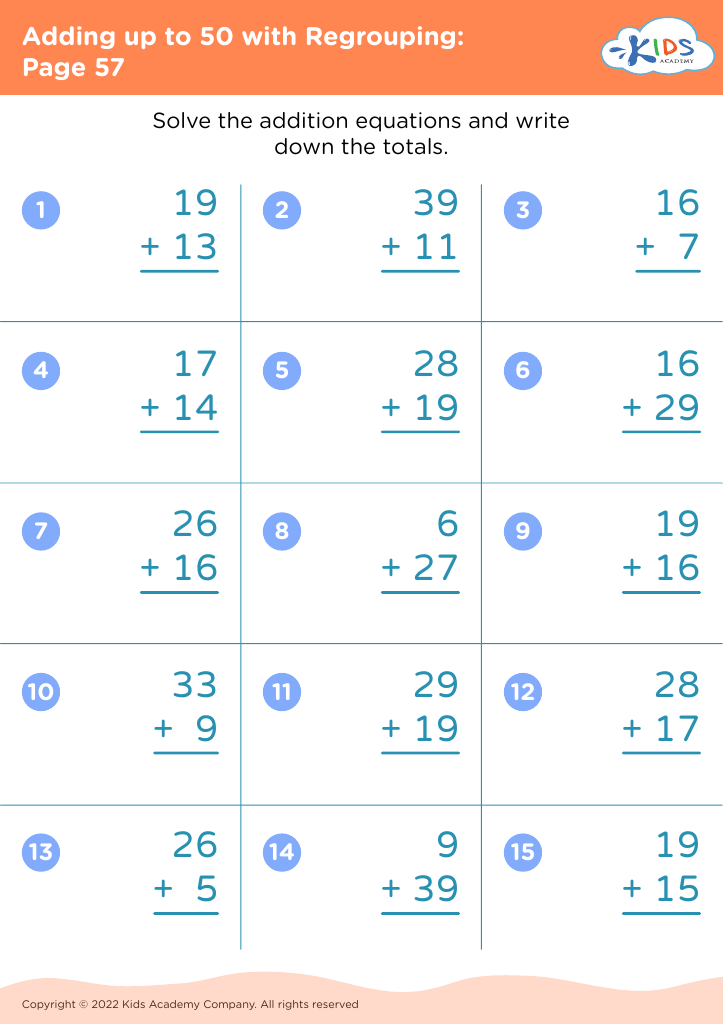
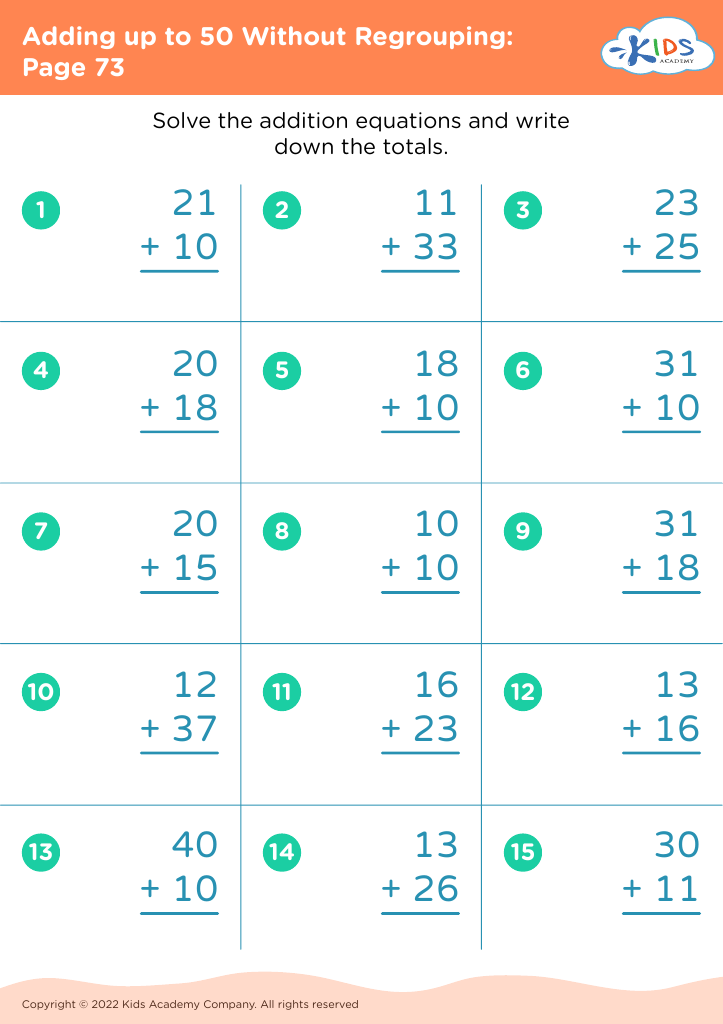
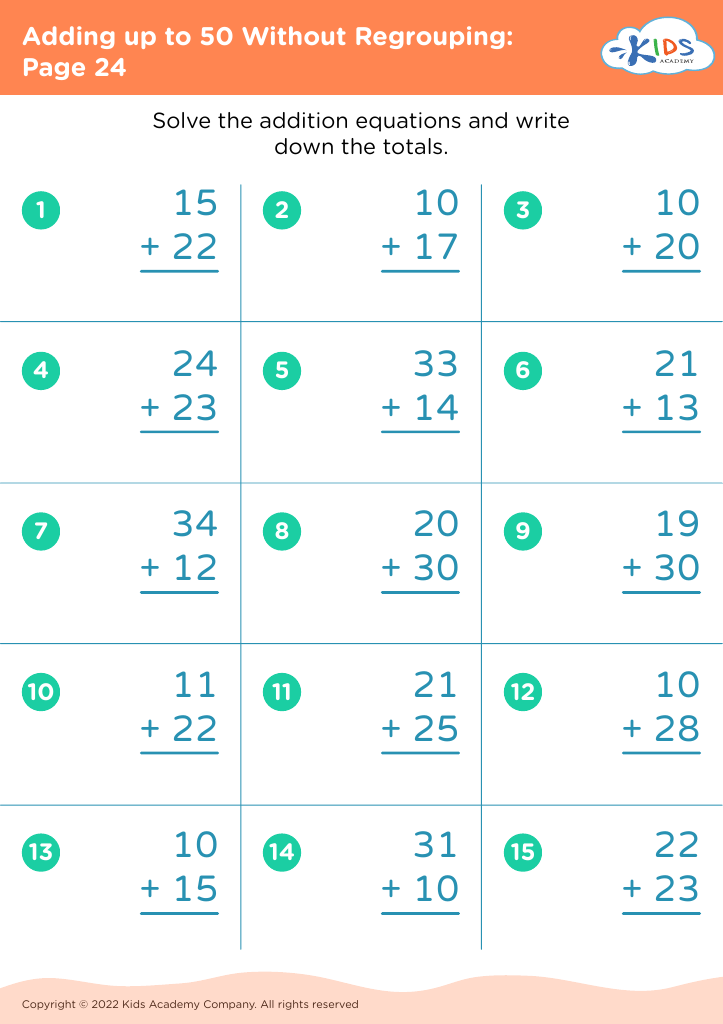
Enhance your child's logical thinking skills with our "Adding Up to 50 Worksheets" designed for ages 3-7! These engaging and interactive worksheets foster a strong foundation in basic math while promoting critical reasoning and problem-solving abilities. Children will explore adding numbers and concepts through fun, colorful activities that capture their imagination. Ideal for home or classroom use, each worksheet encourages kids to think critically and develop confidence in their mathematical skills. Perfect for early learners, our thoughtfully created resources set the stage for lifelong learning in math. Discover the joy of numbers today and watch your little ones thrive!




Logical thinking is a vital skill that nurtures a child's cognitive development, especially for those aged 3-7. Incorporating activities that involve adding up to 50 enhances a child's ability to think critically and solve problems, which are essential skills for lifelong learning.
Firstly, instructional activities focused on adding cultivate mathematical skills. Understanding numbers and how they relate to one another lays a foundation for future arithmetic concepts. As children practice this skill, they learn to recognize patterns, sequences, and the value of numbers.
Moreover, logical thinking activities also promote reasoning skills. When children approach problems like reaching the sum of 50, they need to devise strategies, analyze information, and evaluate different solutions. This process enhances their decision-making abilities and boosts their confidence when tackling new tasks.
Lastly, developing these skills early fosters a love of learning. When children experience success in logical thinking and math challenges, they develop a positive mindset towards education and problem-solving. This can lead to academic success in the long term.
In sum, supporting children's logical thinking and mathematical skills not only equips them for immediate challenges but also sets them up for a bright educational future.








