Mathematical reasoning Adding up to 50 Worksheets for Ages 3-7
4 filtered results
-
From - To
Explore our engaging "Mathematical Reasoning: Adding Up to 50" worksheets, designed for children aged 3-7! These interactive resources help young learners develop essential math skills while enhancing their reasoning abilities. Through a variety of fun exercises, kids will practice addition within 50, fostering a solid understanding of numerical relationships. Our worksheets are visually appealing and cater to different learning styles, making math both accessible and enjoyable. Encourage your child's critical thinking and problem-solving skills with these carefully crafted activities that promote independent learning and confidence in mathematics. Start their journey toward mastering math concepts today!
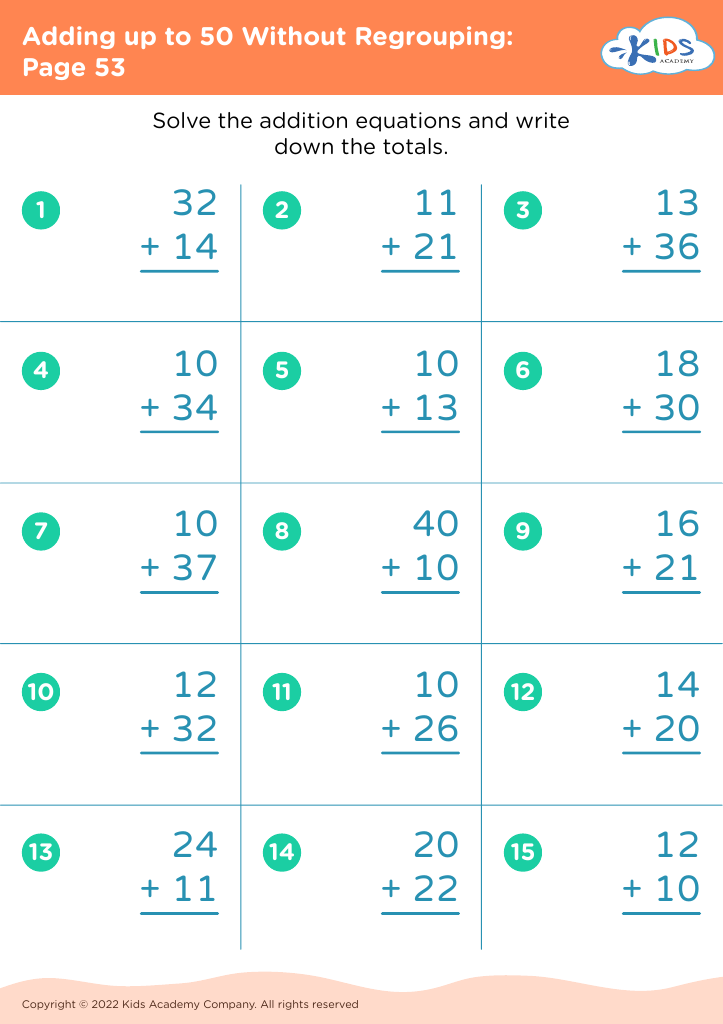
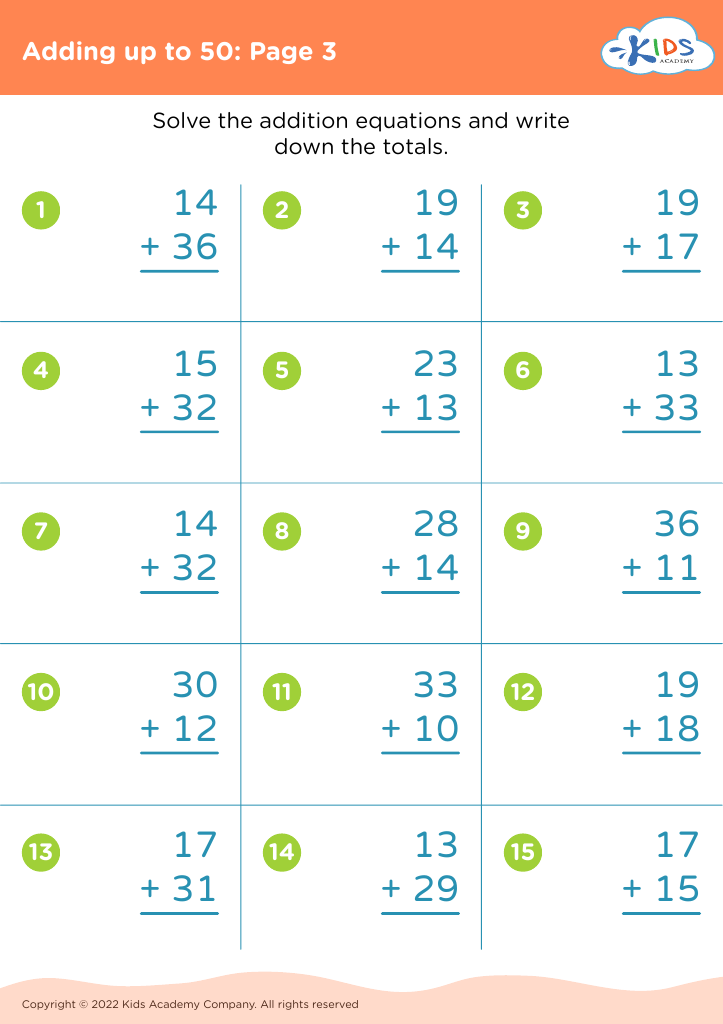
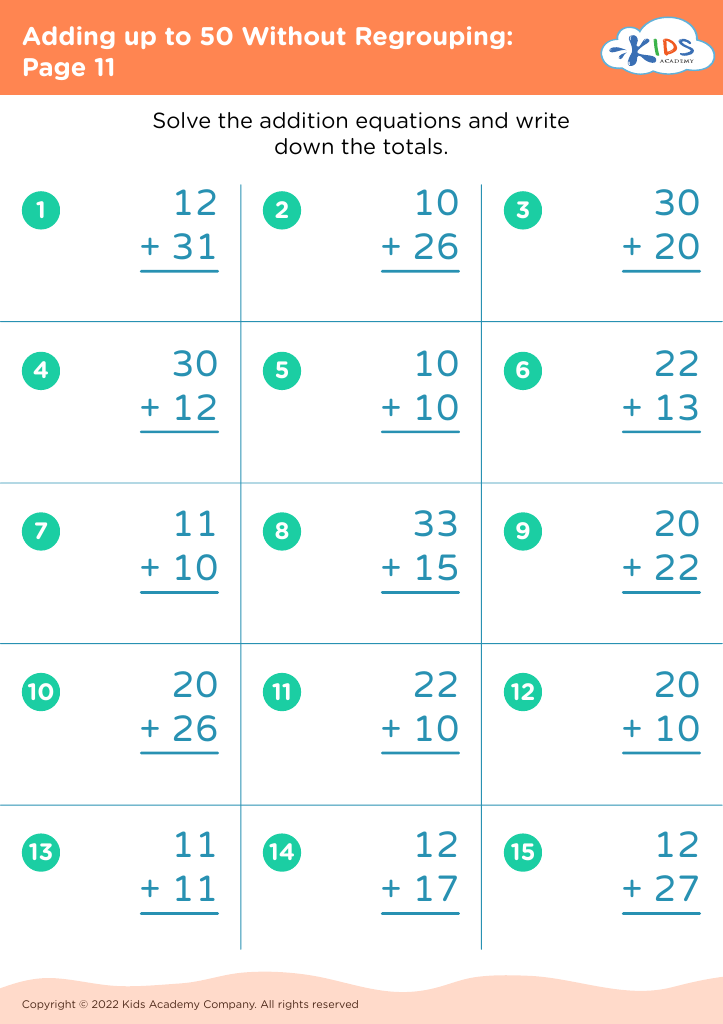
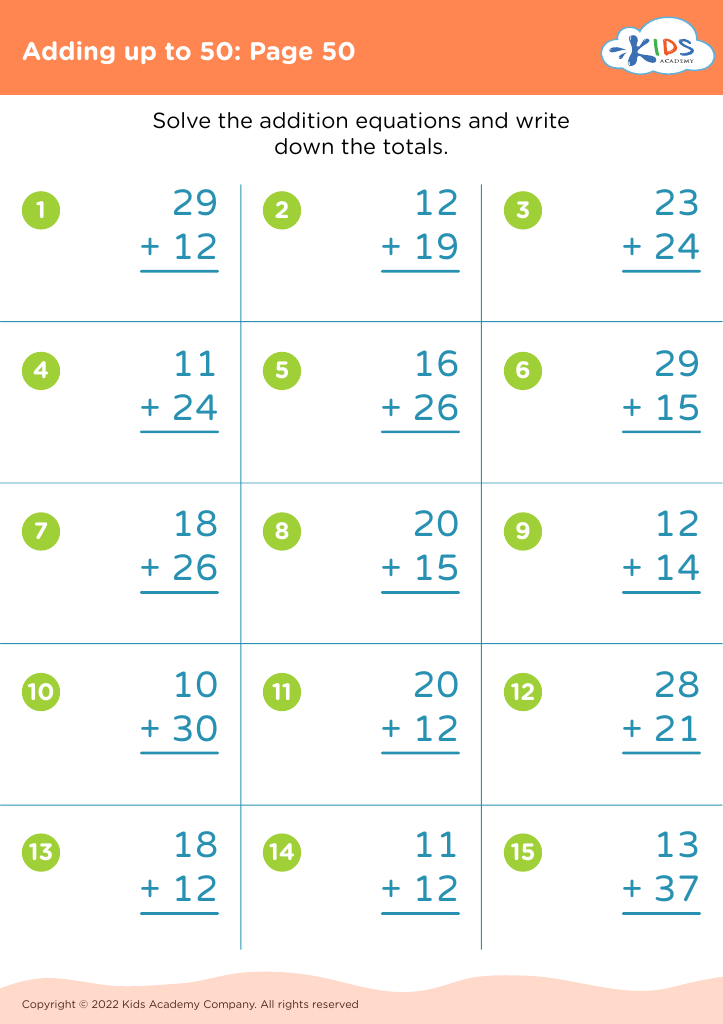




Mathematical reasoning, particularly the ability to add up to 50, is essential for children aged 3-7 as it lays a critical foundation for their overall mathematical development. Developing strong mathematical reasoning skills at a young age helps children understand number concepts, patterns, and relationships, which are fundamental for advanced math learning. For parents and teachers, fostering these skills in early childhood promotes confidence and problem-solving abilities in young learners.
Moreover, early mastery of addition not only supports future mathematical concepts but also enhances cognitive abilities such as critical thinking and logical reasoning. Engaging children with fun, hands-on activities and games that incorporate adding up to 50 encourages a deep understanding of numbers and how they relate to each other in everyday contexts.
Furthermore, children who can competently add numbers can better navigate financial literacy skills in the future, laying the groundwork for responsible decision-making. By actively supporting the development of mathematical reasoning, parents and teachers empower children, equipping them with the tools needed for academic success and everyday life, fostering a sense of accomplishment and a positive attitude toward learning. Thus, nurturing mathematical reasoning in these early years is invaluable for lifelong educational growth.








