Number Writing Practice Adding up to 50 Worksheets for Ages 3-7
4 filtered results
-
From - To
Enhance your child's math skills with our "Number Writing Practice Adding up to 50" worksheets, designed for ages 3-7. These engaging, interactive worksheets provide essential practice in number writing while reinforcing addition concepts up to 50. Perfect for early learners, our resources foster confidence and proficiency in numbers through playful activities and colorful designs. Children will enjoy tracking numbers, solving simple addition problems, and honing their writing skills in a fun and encouraging environment. With a focus on building a strong mathematical foundation, these worksheets are ideal for both classroom settings and home learning. Start your child's numerical journey today!
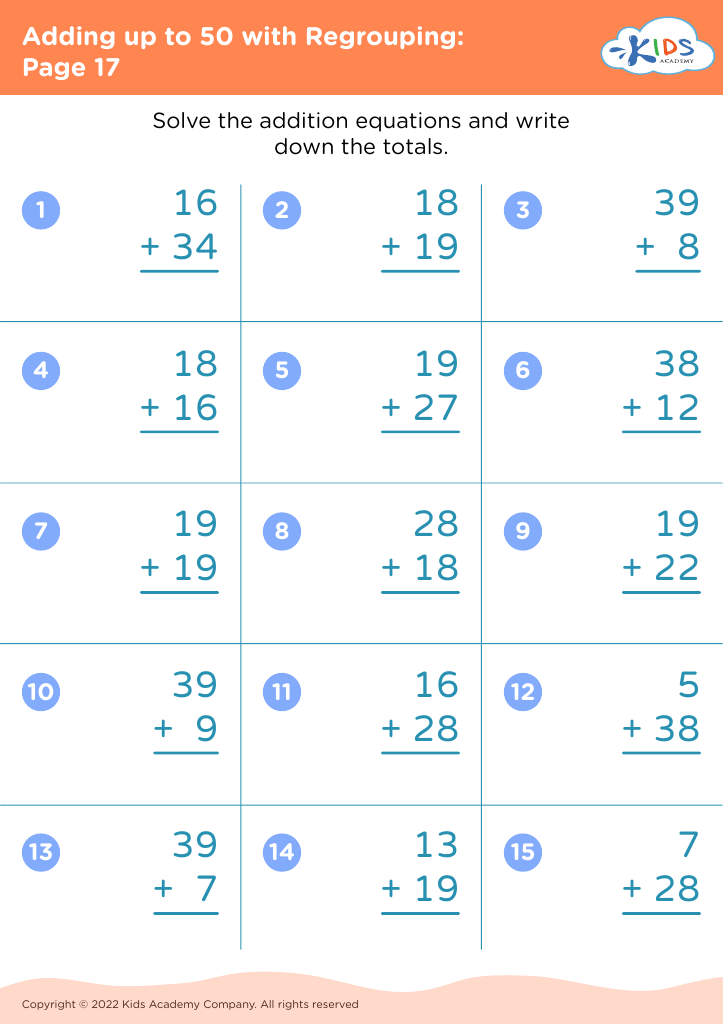
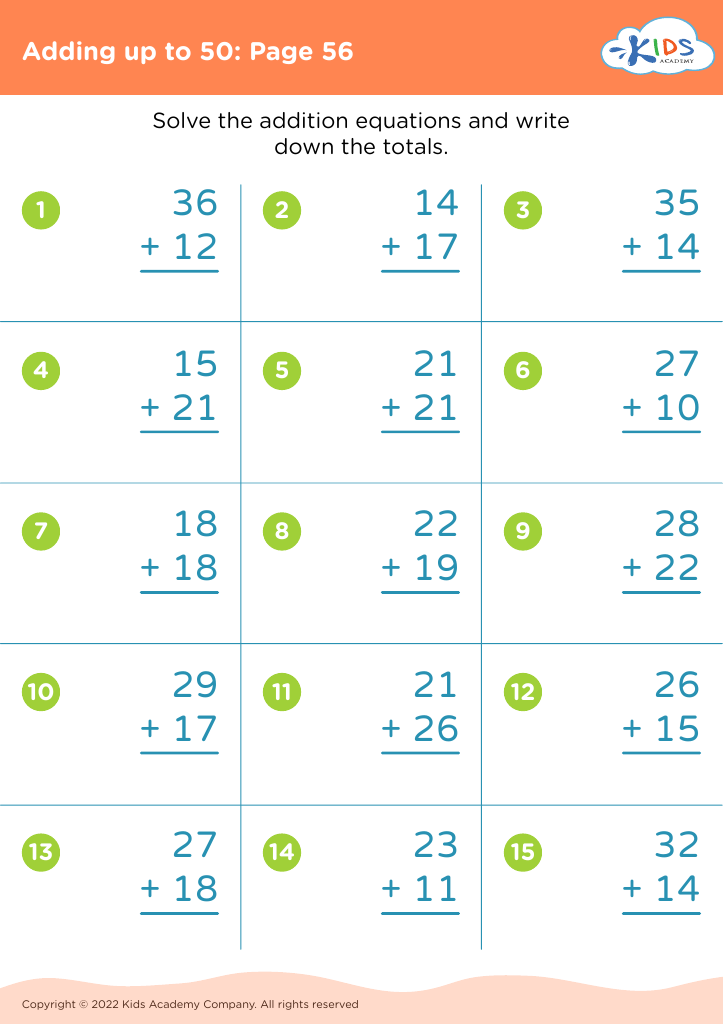
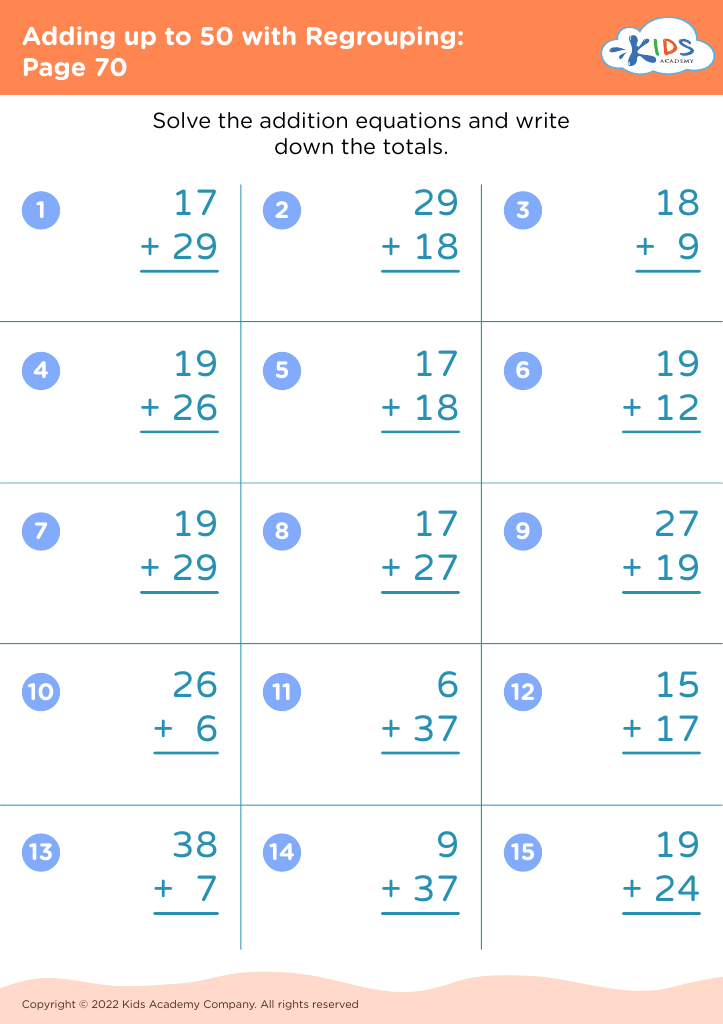
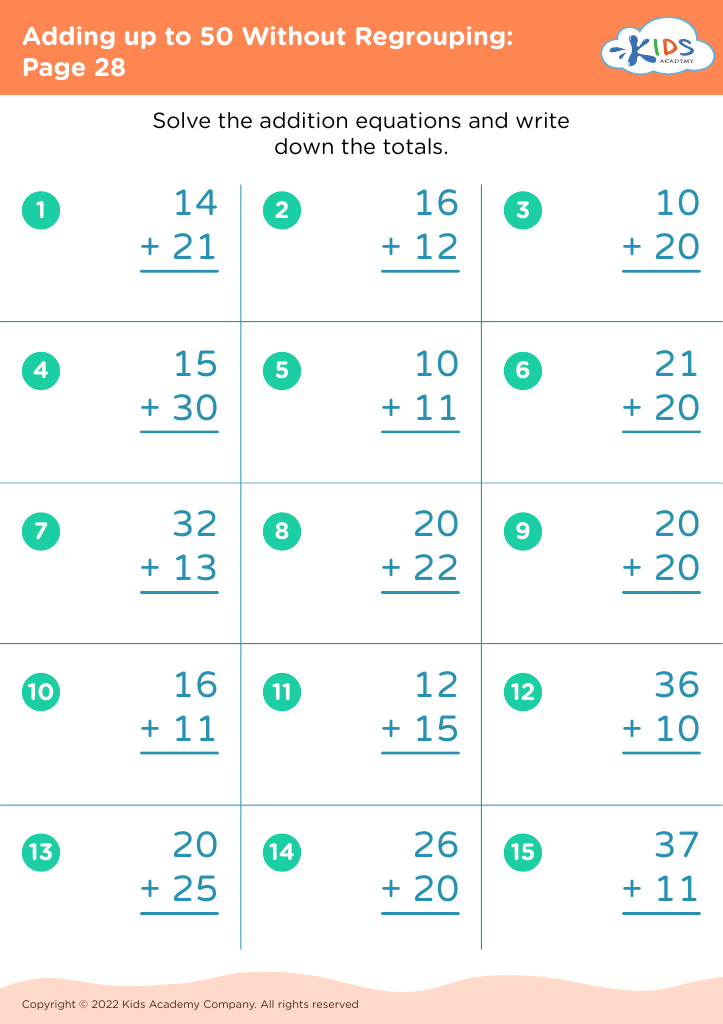




Parents and teachers should prioritize number writing practice that adds up to 50 for children aged 3-7 for several important reasons. Firstly, early numerical fluency sets the foundation for future mathematical learning. By practicing writing numbers up to 50, children enhance their counting skills and gain familiarity with numerals, which boosts their confidence in handling math concepts as they progress.
Furthermore, number writing practice develops fine motor skills essential for overall writing proficiency. As children practice writing numbers, they refine their hand-eye coordination and dexterity. This is crucial not only for math but for all forms of handwriting.
Additionally, engaging with numbers introduces young learners to patterns and sequences, critical components of mathematical understanding. This practice can be made fun through games and playful activities, solidifying the concept that learning math is enjoyable.
Lastly, fostering a positive attitude towards math early on can help alleviate math anxiety in older years. When young children receive support in their numerical journey, they are more likely to become capable, confident learners ready for future challenges. Therefore, structured number writing practice should be a cornerstone of early education and home learning, laying the groundwork for lifelong mathematical skills and confidence.








