Problem Solving Adding up to 50 Worksheets for Ages 3-7
3 filtered results
-
From - To
Discover our engaging "Problem Solving Adding Up to 50 Worksheets," designed for children aged 3-7! These worksheets support early math skills by guiding young learners through addition problems that total up to 50. Perfectly crafted to enhance problem-solving abilities, our worksheets encourage critical thinking and help reinforce core mathematical concepts. Each activity combines colorful visuals and interactive exercises, making learning fun and effective. Enhance your child's confidence in math as they tackle puzzles and challenges that stimulate their curiosity. Ideal for home or classroom use, they’re perfect for developing essential skills in an enjoyable way. Download now and watch your child thrive!
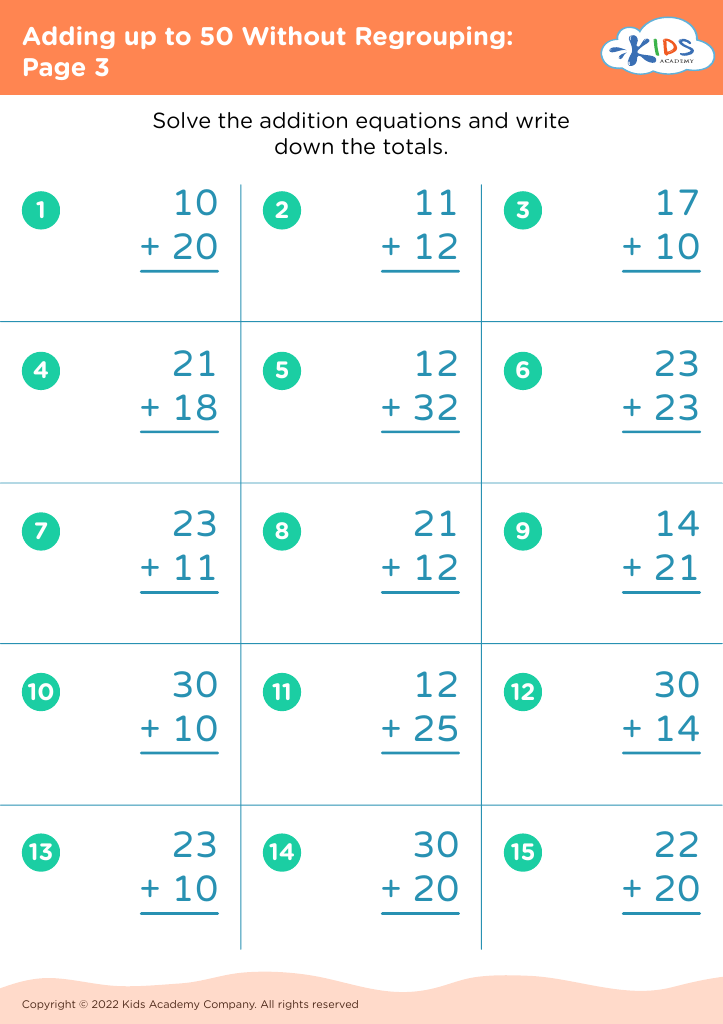
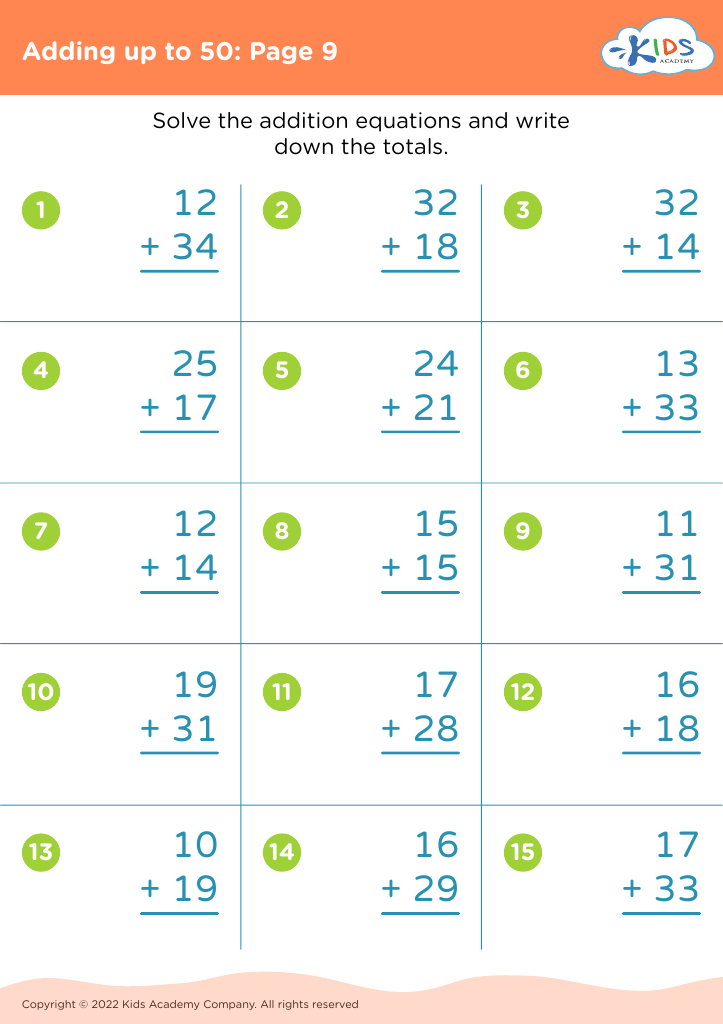
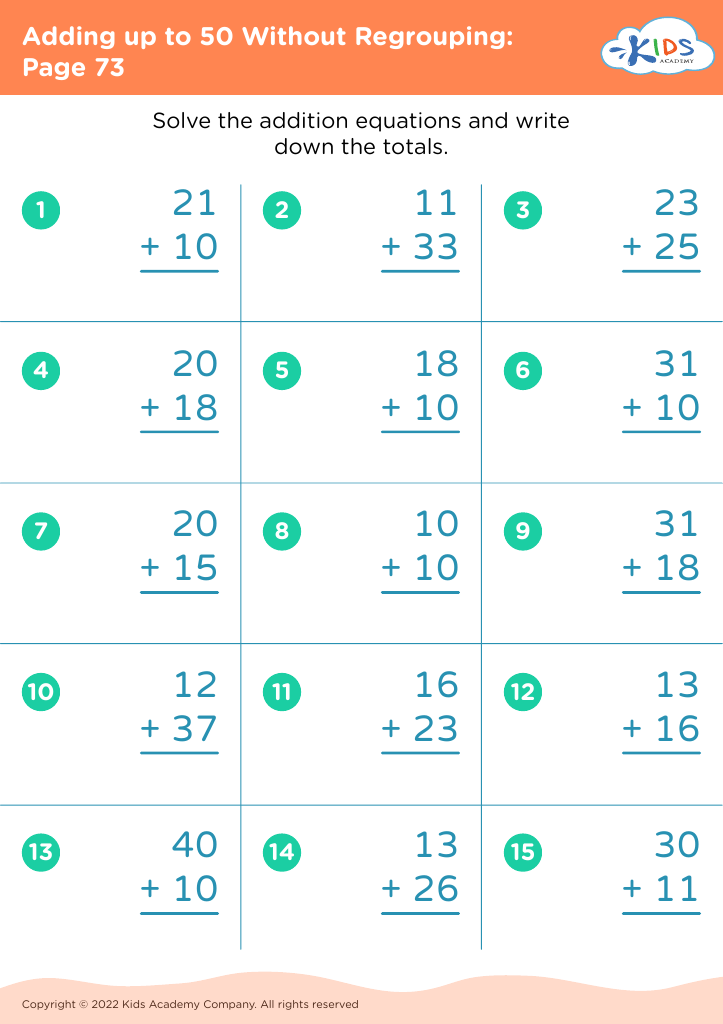




Problem solving, particularly the concept of adding up to 50, is crucial for children aged 3 to 7 as it lays a foundation for essential mathematical skills and cognitive development. At this age, children are naturally curious and eager to explore numbers, making it an ideal time to introduce them to problem-solving activities that involve adding. Engaging in these activities not only enhances their numeracy skills but also fosters critical thinking, creativity, and perseverance.
Through structured problem-solving tasks, children learn to identify relationships between numbers and develop strategies to reach solutions. This not only boosts their confidence in mathematics but also equips them with valuable life skills such as reasoning, decision-making, and the ability to tackle challenges. Moreover, when teachers and parents actively participate in these learning experiences, they strengthen the parent-child or teacher-student bond, facilitating a supportive environment where children feel safe to express their thoughts and explore new concepts.
Additionally, early math skills are linked to future academic success, highlighting the importance of parents and teachers working together to create an engaging and stimulating atmosphere that prioritizes problem-solving skills. Ultimately, nurturing these capabilities at a young age sets students on a path toward lifelong learning and achievement.








