Problem-solving abilities Adding up to 50 Worksheets for Ages 3-7
4 filtered results
-
From - To
Enhance your child’s problem-solving skills with our "Adding Up to 50 Worksheets," perfect for ages 3-7! Designed to foster critical thinking, these engaging worksheets introduce fundamental math concepts through fun, interactive exercises. As children tackle problems involving addition and number recognition, they cultivate patience and persistence while boosting their confidence in math. Each worksheet balances educational value with enjoyment, encouraging learners to connect mathematics with everyday scenarios. Ideal for home and classroom activities, these resources promote a love of learning and help young mathematicians reach their potential. Dive into a world of numbers and make learning a joyful experience!
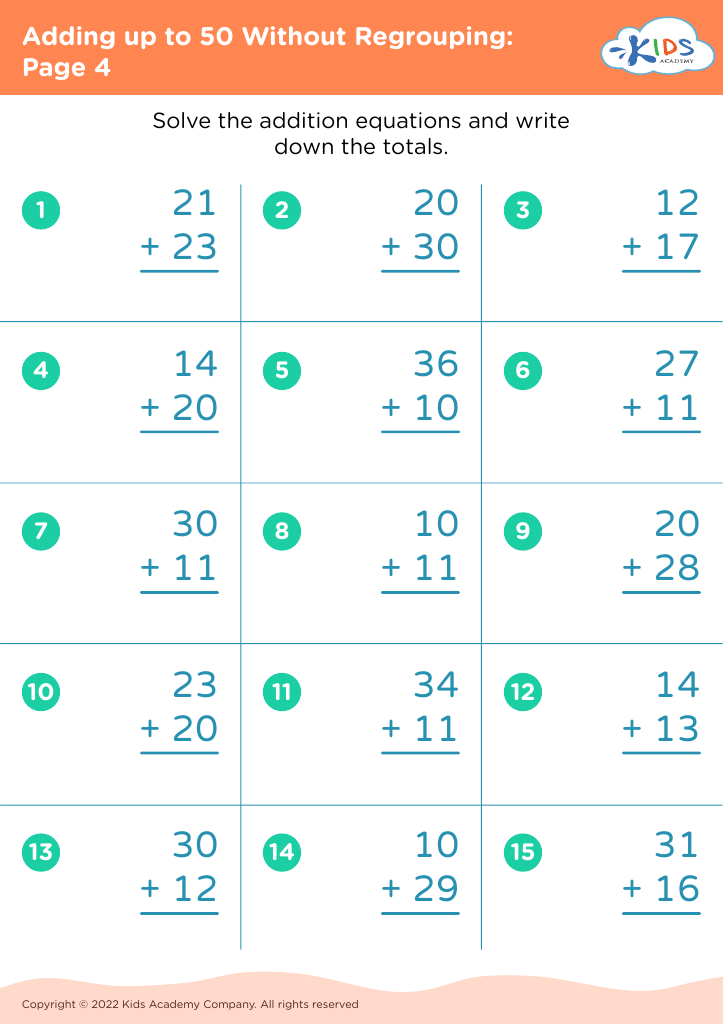
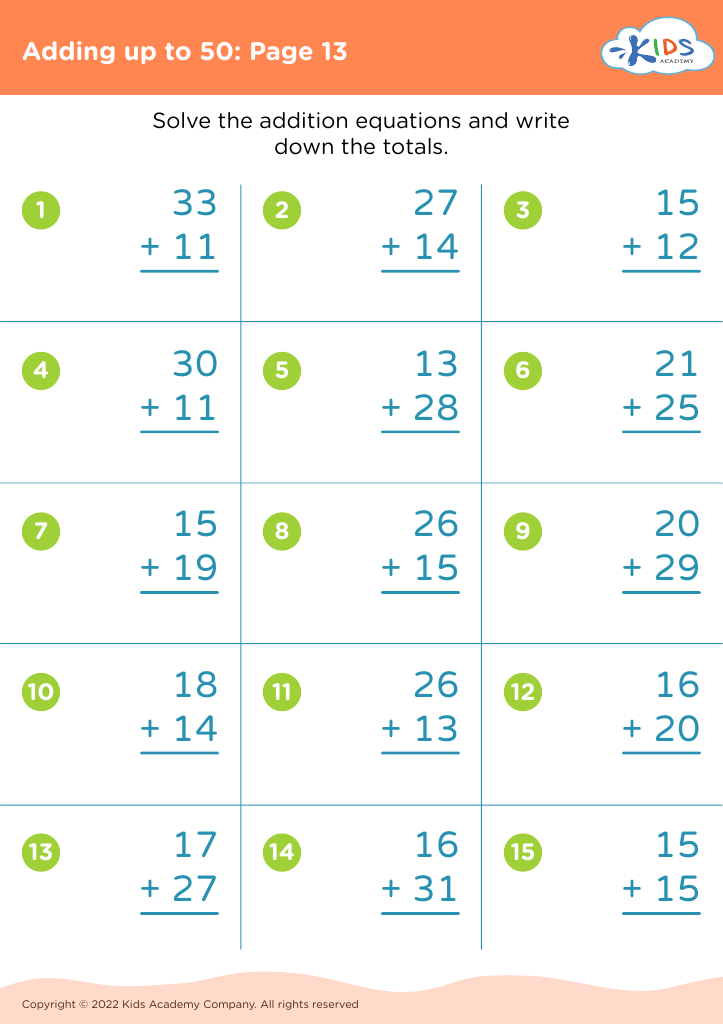
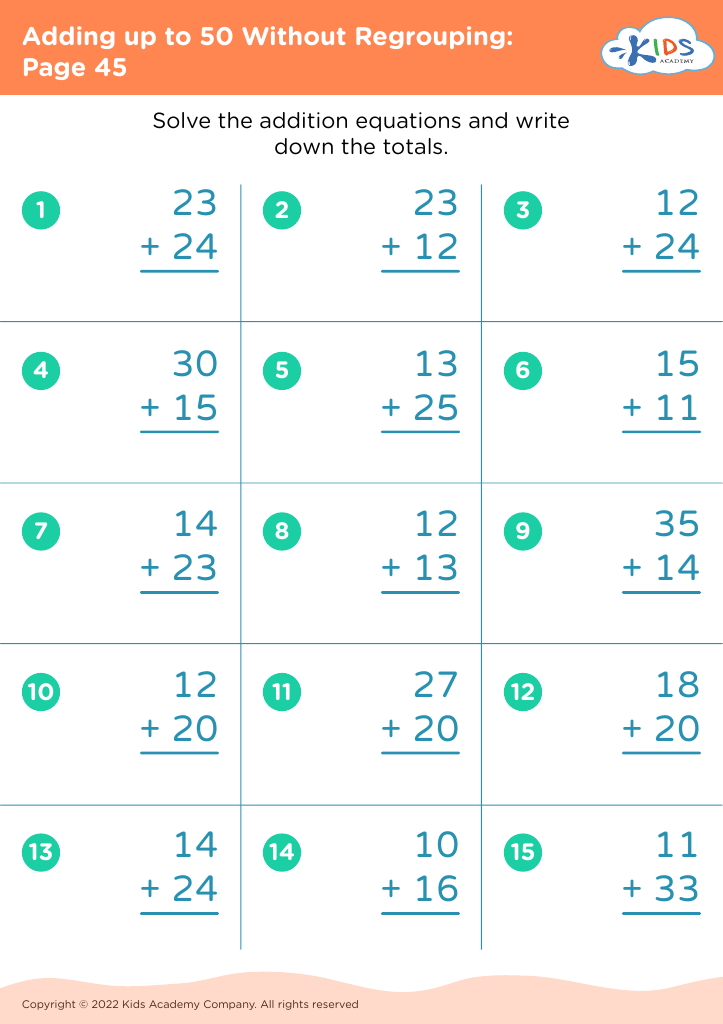
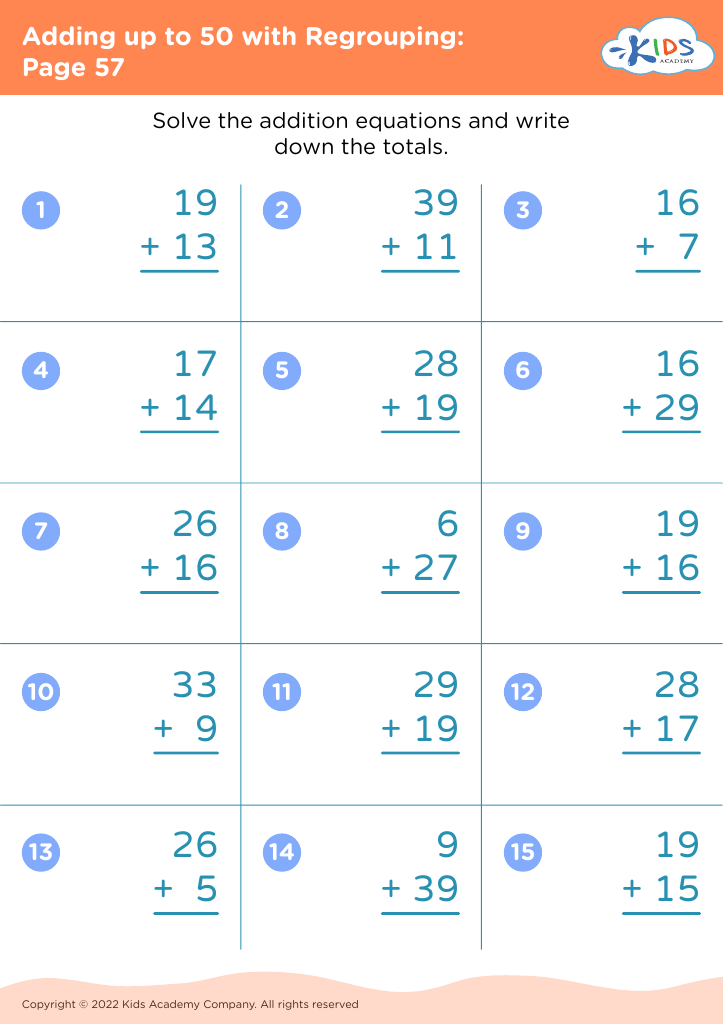




Problem-solving abilities are crucial for children aged 3-7, as they form the foundation of critical thinking and creativity. Engaging young learners in activities that promote these skills, such as adding up to 50, enhances their cognitive development and lays the groundwork for future academic success.
Parents and teachers should prioritize problem-solving skills because they encourage children to approach challenges with a positive mindset and develop persistence. When children learn how to strategize, experiment, and refine their approaches to reaching a solution, they not only build confidence but also learn invaluable life skills.
Involving children in fun, hands-on activities that incorporate concepts like addition fosters a love for learning and numeracy skills. As they work through mathematical puzzles and play games that require addition, they improve their ability to think critically and make connections between numbers.
Additionally, problem-solving activities can enhance social skills, as children often work collaboratively, sharing ideas and solutions with peers. Observing and supporting this collaborative energy helps instill teamwork and communication skills.
Ultimately, prioritizing problem-solving abilities in early childhood education not only sets the stage for formal learning but also equips children with the resilience and adaptability they will need in the future.








