Problem-solving practice Adding up to 50 Worksheets for Ages 3-7
3 filtered results
-
From - To
Explore creative Problem-solving Practice Adding up to 50 Worksheets ideal for children ages 3–7! These engaging activities help develop essential math skills while fostering critical thinking and reasoning abilities. Designed for early learners, each worksheet includes fun challenges that promote addition techniques, encourage independent learning, and build a solid foundation in mathematics. Kids will enjoy solving problems related to real-life scenarios, enhancing their comprehension of numbers in various contexts. Perfect for classroom or home use, these worksheets provide an effective way to inspire a love for math while ensuring children grasp key concepts. Start your child's math journey today!
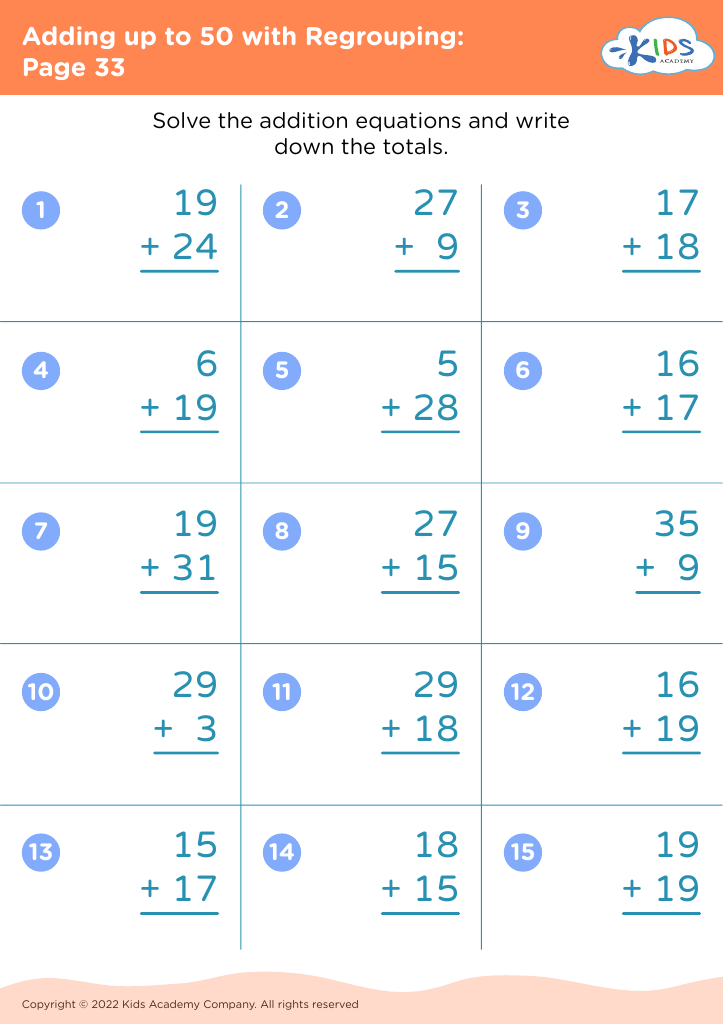
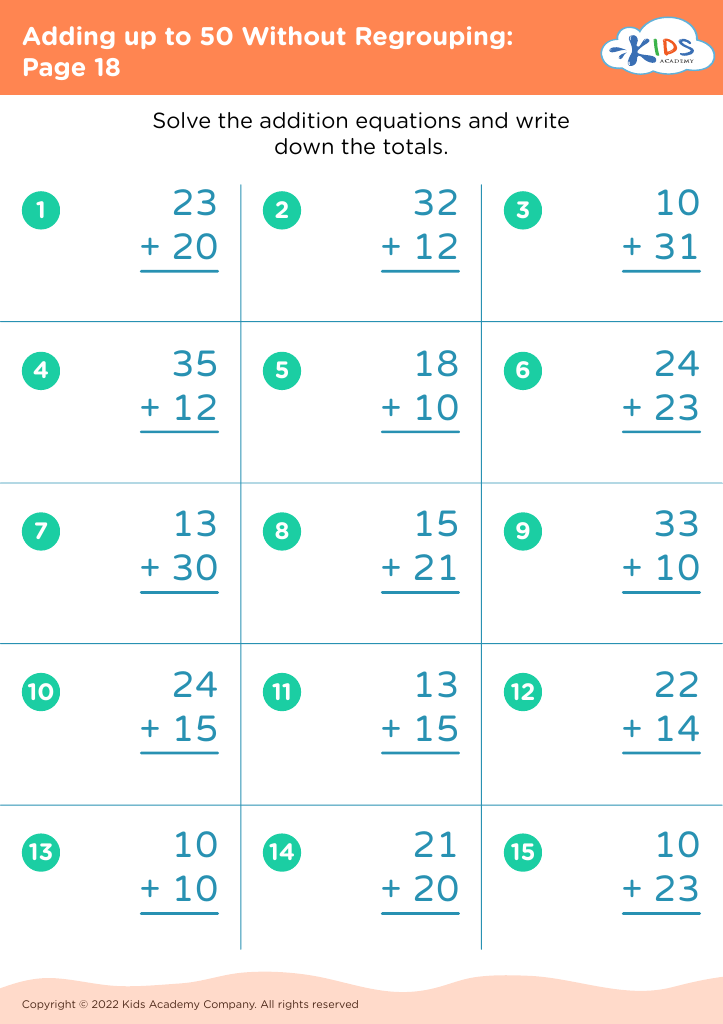
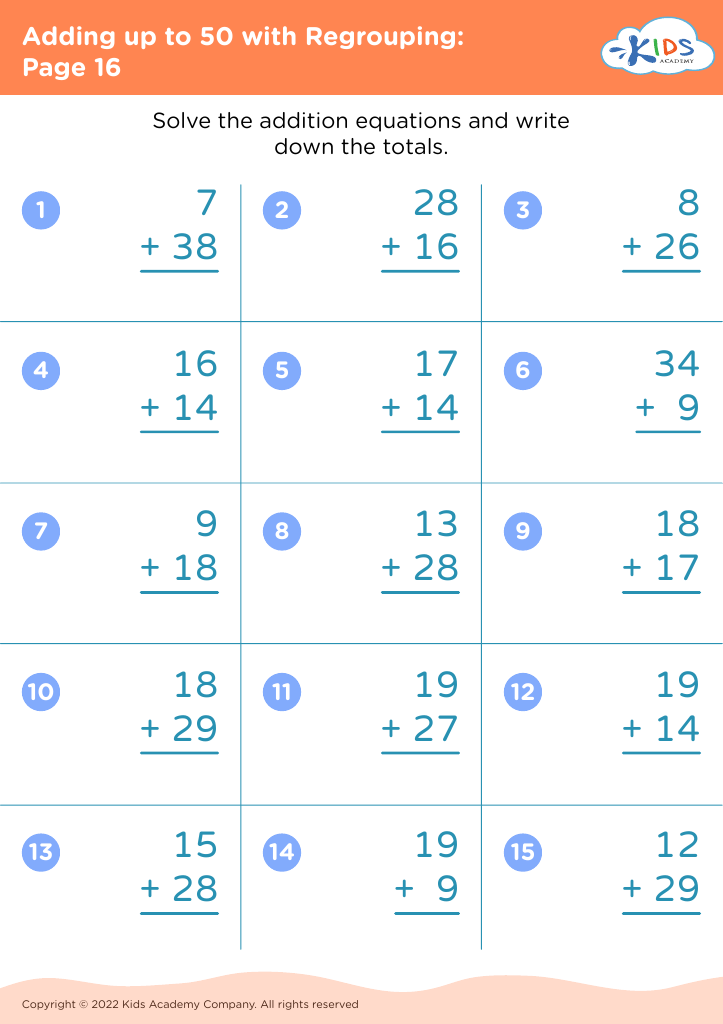




Problem-solving practice, particularly activities focused on adding up to 50, is essential for children aged 3-7 as it lays a strong mathematical foundation and fosters critical thinking skills. At this age, children are naturally curious and eager to explore their surroundings, making it an opportune time to introduce basic math concepts. Engaging in problem-solving activities helps enhance their numerical understanding while promoting cognitive development.
When children learn to count and add numbers to reach a target, they develop essential skills such as reasoning, pattern recognition, and logic. These activities not only build mathematical proficiency but also boost confidence, as children feel accomplished when solving problems. Furthermore, collaborative problem-solving exercises encourage social interaction, teaching teamwork and communication.
For parents and teachers, focusing on problem-solving practice can create a stimulating learning environment that values curiosity and critical thinking. It prepares children for more complex mathematical concepts in later years and equips them with skills applicable across all subject areas. Ultimately, fostering these skills early on promotes a lifelong love of learning, ensuring that children not only reach academic milestones but also thrive personally and socially.








