Problem-Solving Skills Adding up to 50 Worksheets for Ages 3-7 - Page 2
26 filtered results
-
From - To
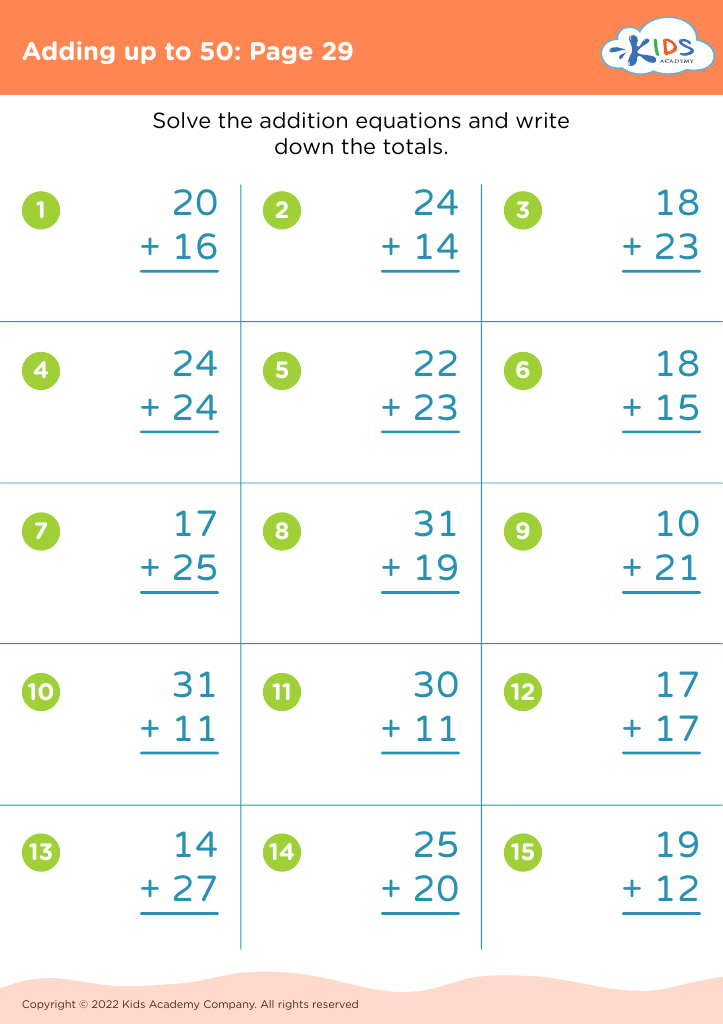
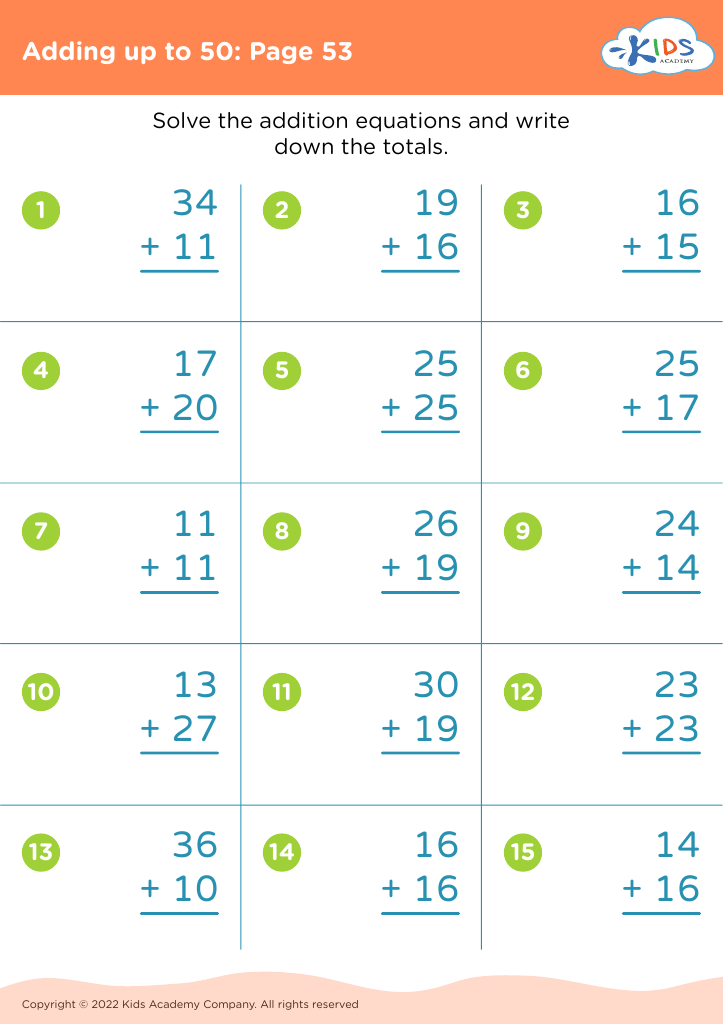




Developing problem-solving skills in children aged 3-7 is crucial for their cognitive and emotional growth. These foundational years are vital as young brains undergo rapid development, and fostering problem-solving abilities can significantly enhance their critical thinking and reasoning skills. Engaging children in activities that require them to add up to 50, be it through puzzles, games, or real-life scenarios, encourages them to think creatively and strategically.
Parents and teachers play an essential role in this development by providing a supportive environment where children can explore different solutions and learn from their mistakes. Such challenges promote resilience, helping children understand that setbacks are part of the learning process. Furthermore, problem-solving skills are closely linked to better academic performance and social interactions.
As children work towards achieving simple goals, they build confidence in their abilities, which is integral for their mental well-being. Teaching problem-solving skills also cultivates teamwork and communication, essential components for successful interactions with peers. In a world increasingly driven by complexity, early investment in these skills equips children with the tools they need to navigate challenges throughout their lives. In essence, nurturing problem-solving abilities today lays the groundwork for a brighter, more capable future.








