Subtraction practice Adding up to 50 Worksheets for Ages 3-7
3 filtered results
-
From - To
Enhance your child's math skills with our "Subtraction Practice Adding up to 50 Worksheets" designed for ages 3-7. These engaging printables help young learners build a solid foundation in subtraction, encouraging the development of critical thinking and problem-solving abilities. With colorful, fun exercises, kids can subtract numbers up to 50 seamlessly while enjoying the process. Created by professional educators, these worksheets cater to various learning styles, ensuring each child has a rewarding learning experience. Perfect for classroom or home practice, they are an excellent resource to motivate young minds to master subtraction in a playful yet educational way.
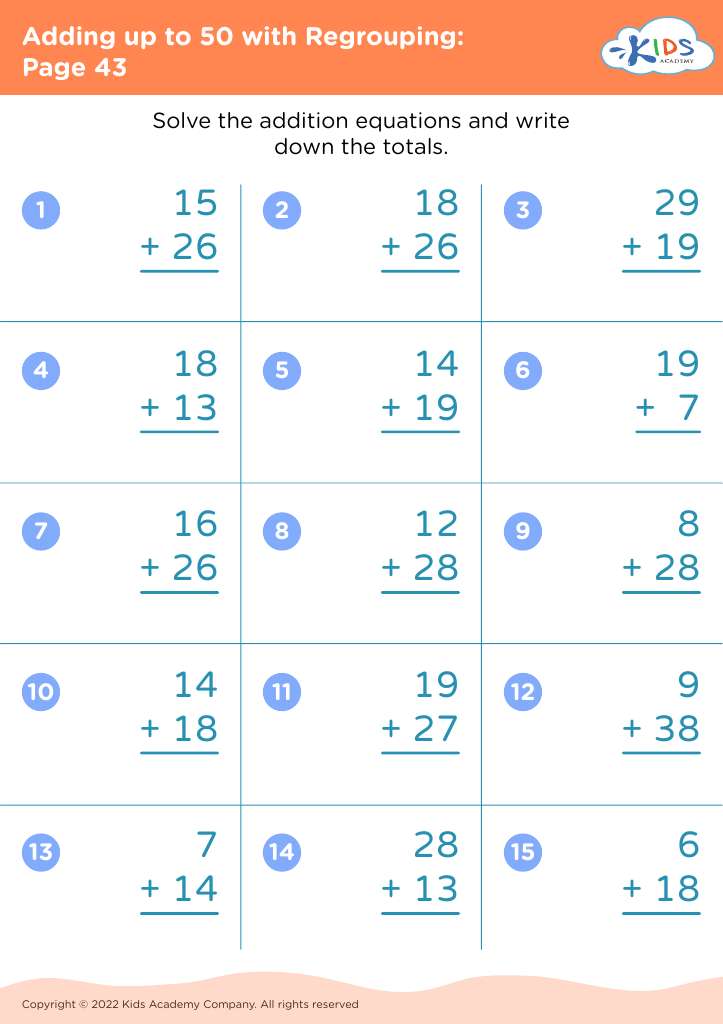
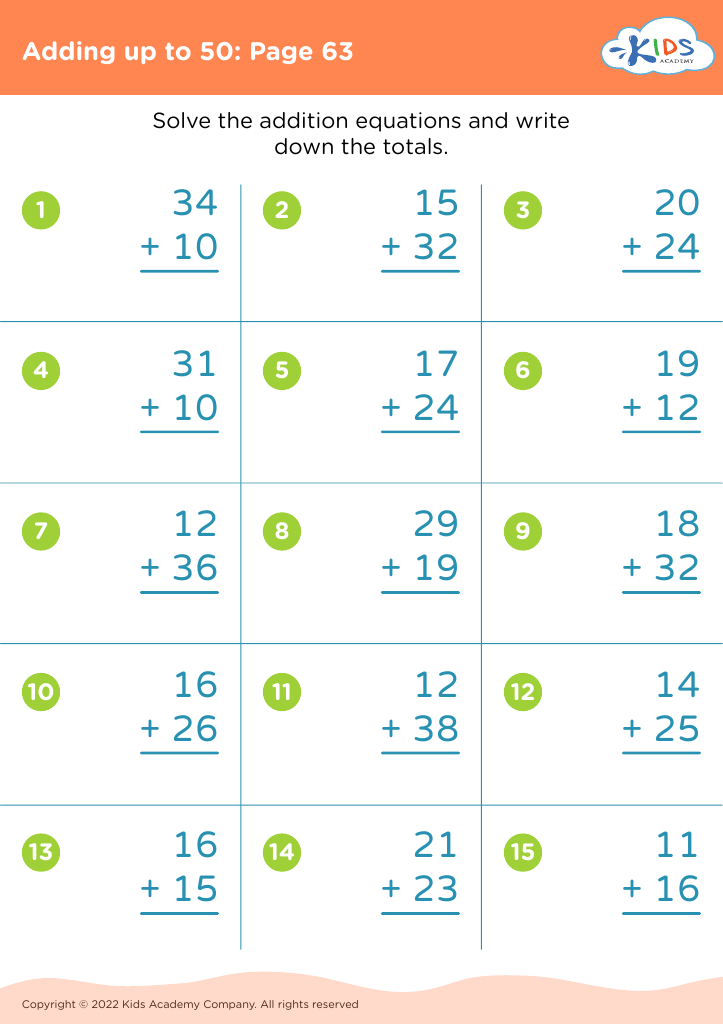
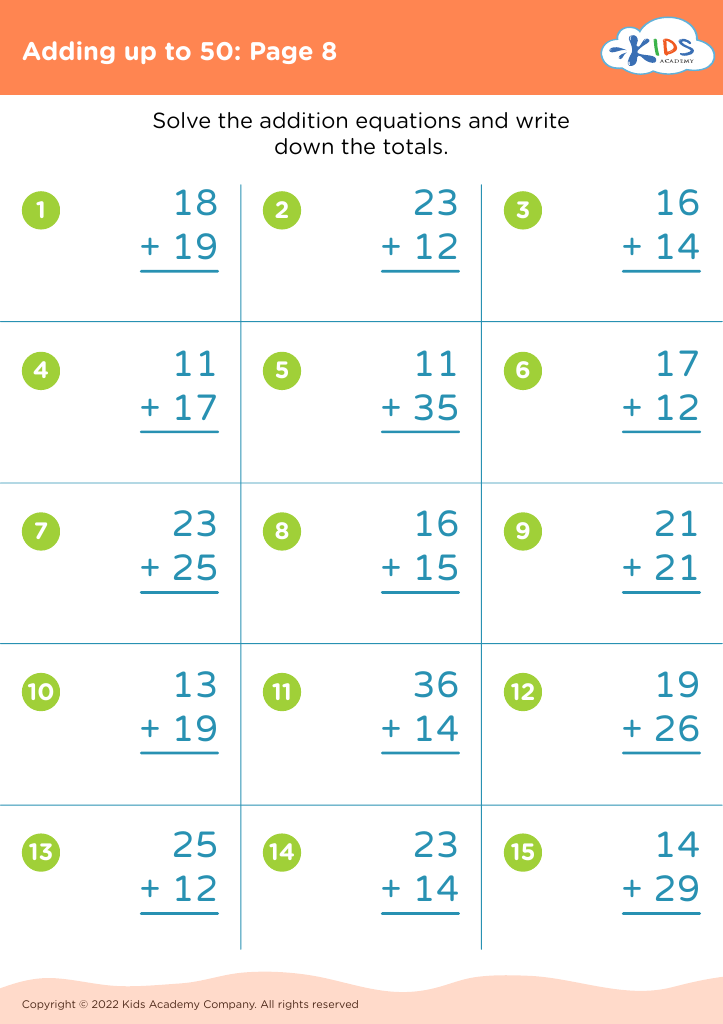




Subtraction practice adding up to 50 for children ages 3-7 is critical for developing foundational math skills, which are essential for everyday problem-solving and academic success. Early exposure to subtraction helps kids understand the concept of "taking away," improving their number sense and ability to visualize quantities and operations mentally. At this age, young minds are exceptionally receptive and able to form neural connections more quickly. Frequent practice helps solidify these connections, making future math concepts easier to grasp.
Moreover, practicing subtraction within the range of 0-50 provides a manageable challenge that aligns with their cognitive development. It also fosters critical thinking and analytical skills as they determine how to manipulate numbers. These exercises boost confidence and tackle math anxiety by offering chances for repeated success. Importantly, arithmetic skills form the basis for more advanced topics such as multiplication, division, and algebra.
For parents and teachers, facilitating these practices offers valuable one-on-one or small group instructional moments to tailor support and encouragement to each child's unique pace and learning style. Incorporating fun, hands-on activities and games can further enhance engagement, making math both enjoyable and educational. Investing in these formative years sets up a positive trajectory for lifelong learning and numeracy skills.








