Subtraction skills Adding up to 50 Worksheets for Ages 3-7
3 filtered results
-
From - To
Enhance your child's math skills with our "Subtraction Skills Adding Up to 50" worksheets, designed specifically for ages 3-7. These engaging, colorful worksheets make learning subtraction fun and effective, helping young learners understand the concept of taking away while working within the framework of numbers up to 50. Each worksheet promotes critical thinking and problem-solving, allowing children to practice subtraction in interactive and enjoyable ways. Perfect for home or classroom use, these resources foster early math aptitude, boost confidence, and encourage a love for learning. Get started today and watch your child's subtraction skills flourish!
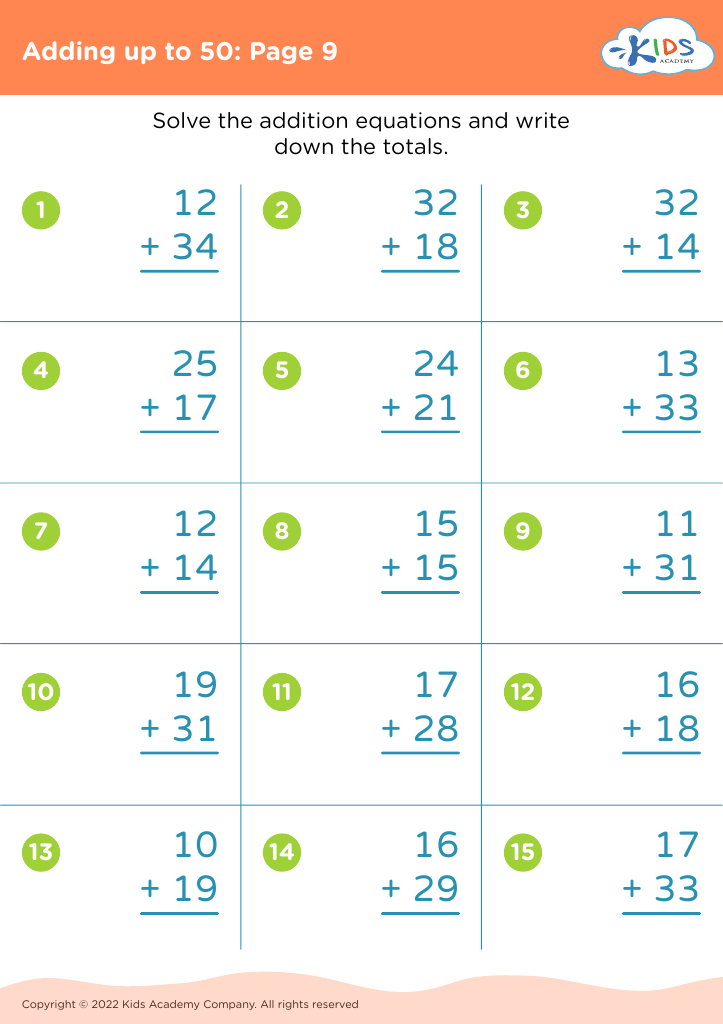
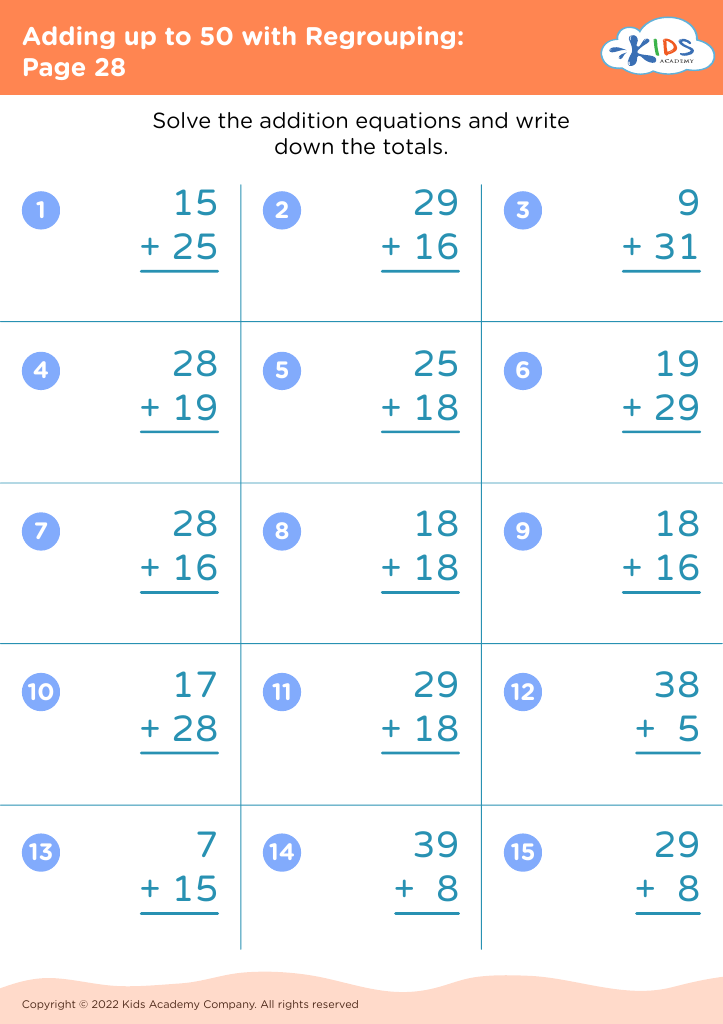
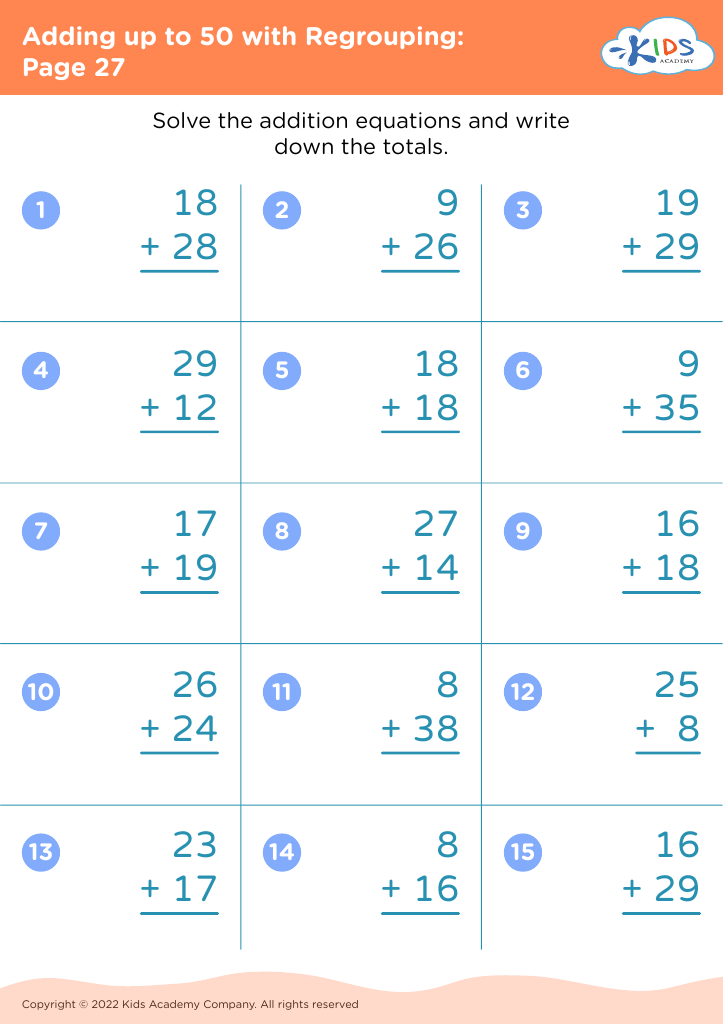




Subtraction skills, particularly the ability to subtract up to 50, are foundational for children aged 3-7 and play a crucial role in their overall cognitive development. Understanding subtraction lays the groundwork for mathematical reasoning, problem-solving, and critical thinking. When children learn to subtract, they develop number sense—the ability to comprehend quantities, relationships between numbers, and numerical concepts, which can extend to addition and later arithmetic operations.
Moreover, mastering subtraction up to 50 promotes confidence and encourages a positive attitude towards math, reducing anxiety related to math challenges in later years. These skills also have practical applications in daily life, such as counting money, measuring ingredients during cooking, or understanding time. The two-way nature of addition and subtraction aids in comprehension, making it easier for children to grasp more complex mathematical ideas in the future.
Parents and teachers should prioritize subtraction skills because children who struggle with math concepts early may face difficulties in later grades, impacting their academic trajectories. By fostering strong subtraction abilities, parents and teachers can help ensure children develop a solid mathematical foundation that supports their learning and personal development for years to come.








