Filters

47 filtered results

Clear all filters
Favorites
With answer key
Interactive

47 filtered results

Difficulty Level

Grade


Welcome to our "Understanding Fractions: Adding up to 50" worksheets, specially designed for children ages 3-7! These engaging and interactive worksheets help young learners grasp the concept of fractions while mastering addition up to 50. Each activity encourages hands-on learning through colorful visuals, playful exercises, and real-world examples. Our resources aim to make learning enjoyable, fostering a solid foundational understanding of math. With a focus on developing critical thinking skills, these worksheets will aid in building confidence as children conquer fractions and addition. Explore our fun-filled, educational content to support your child's math journey today!
Check out this FREE Trial Lesson on Adding up to 50 for age 3-7!

P

Favorites
With answer key
Interactive
  • 3-7
  • Understanding fractions
  • Adding up to 50
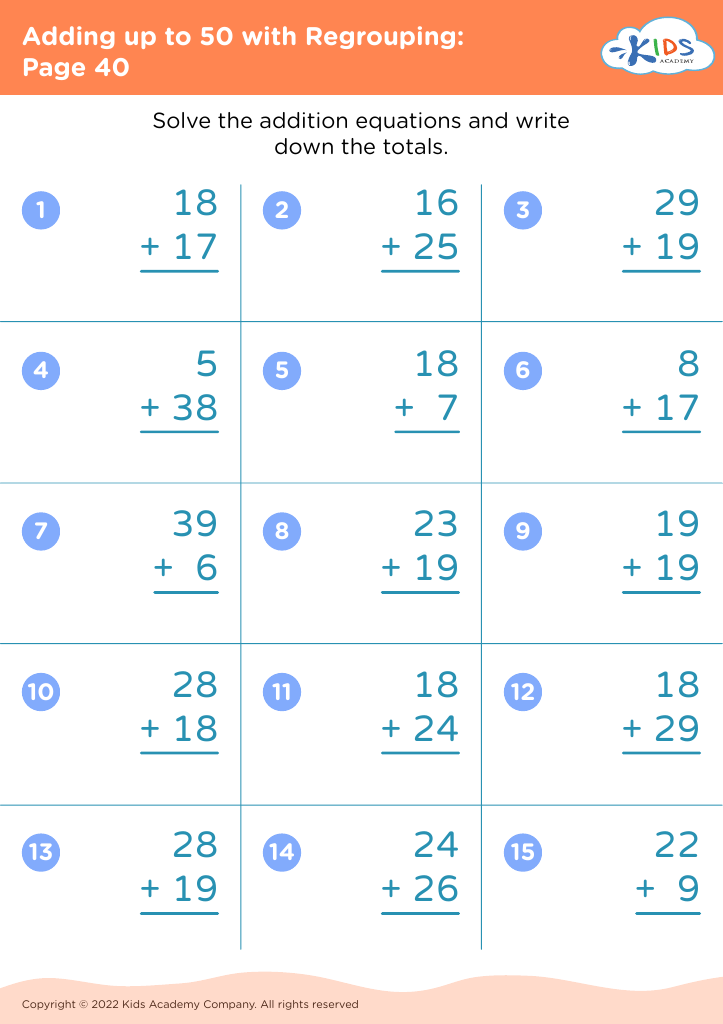
Adding up to 50 with Regrouping: Page 40
Worksheet
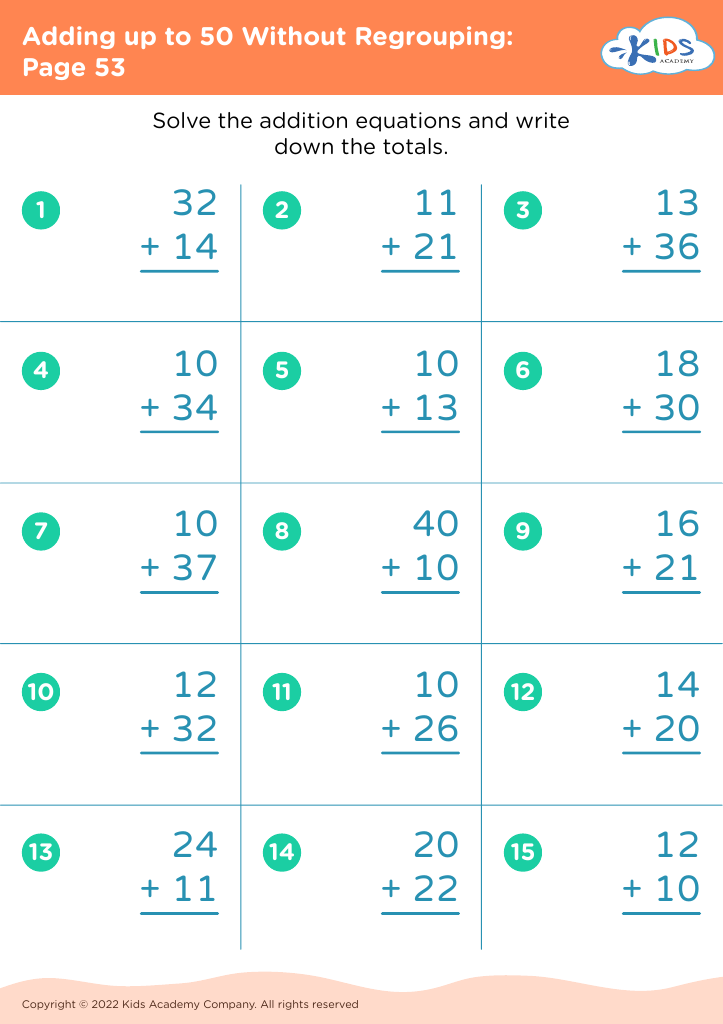
Adding up to 50 Without Regrouping: Page 53
Worksheet
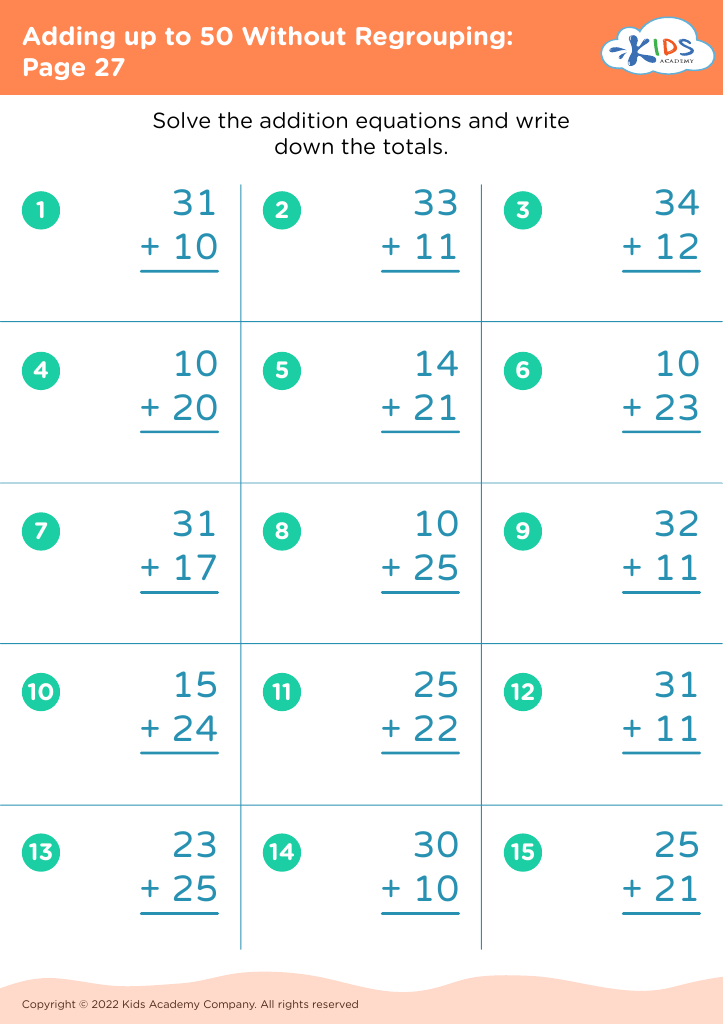
Adding up to 50 Without Regrouping: Page 27
Worksheet
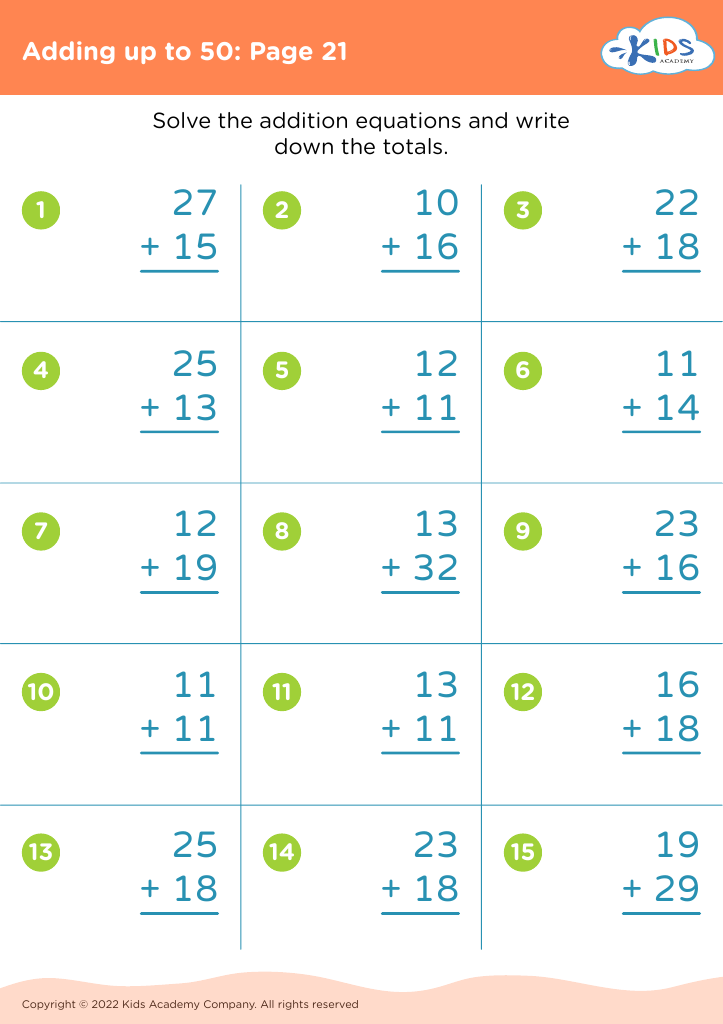
Adding up to 50: Page 21

Adding up to 50: Page 21

Adding up to 50: Page 21
Worksheet
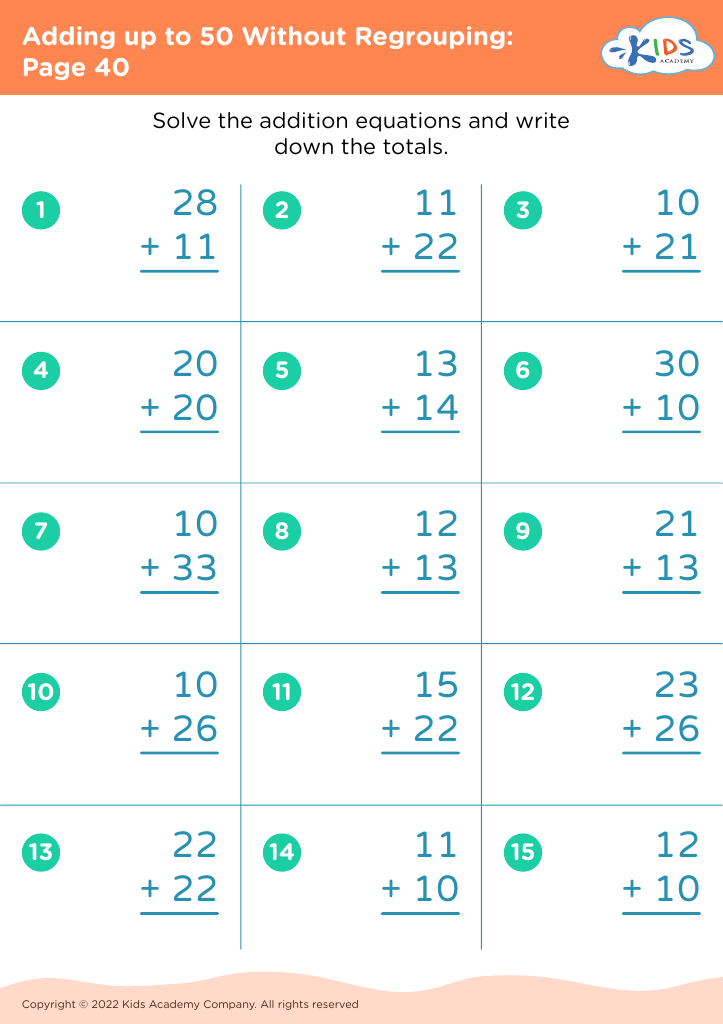
Adding up to 50 Without Regrouping: Page 40
Worksheet
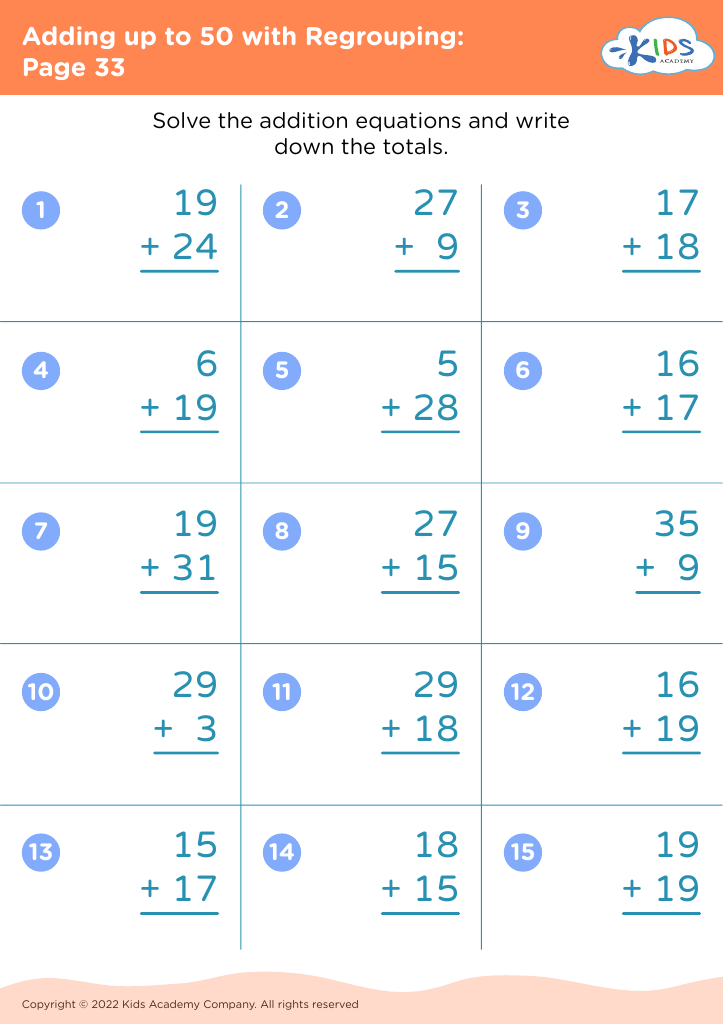
Adding up to 50 with Regrouping: Page 33
Worksheet
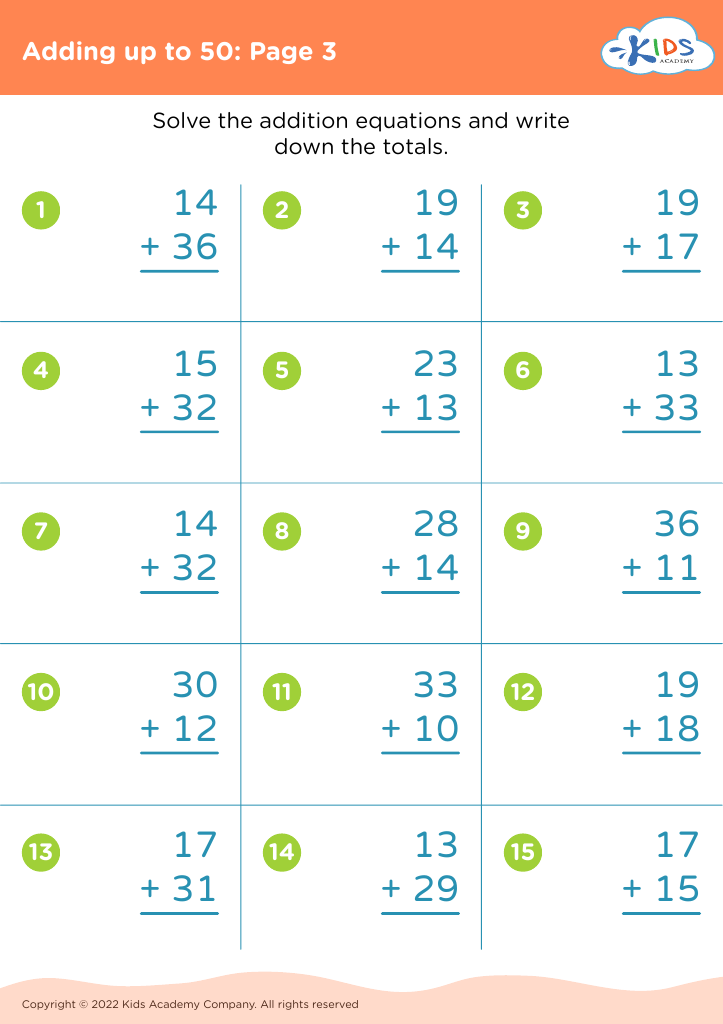
Adding up to 50: Page 3

Adding up to 50: Page 3

Adding up to 50: Page 3
Worksheet
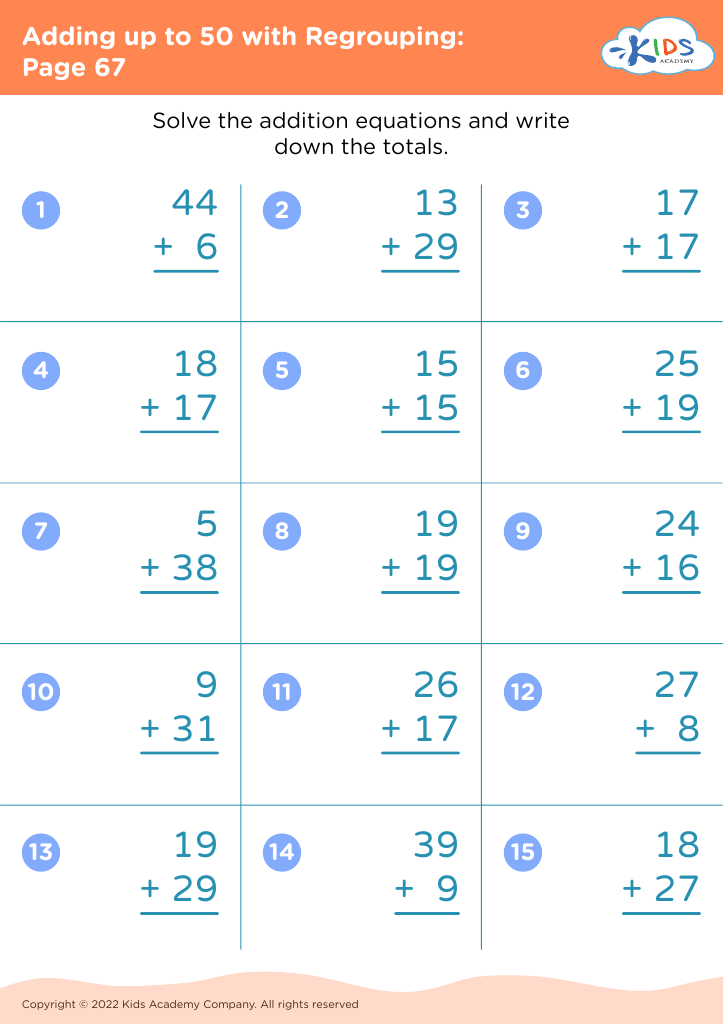
Adding up to 50 with Regrouping: Page 67
Worksheet
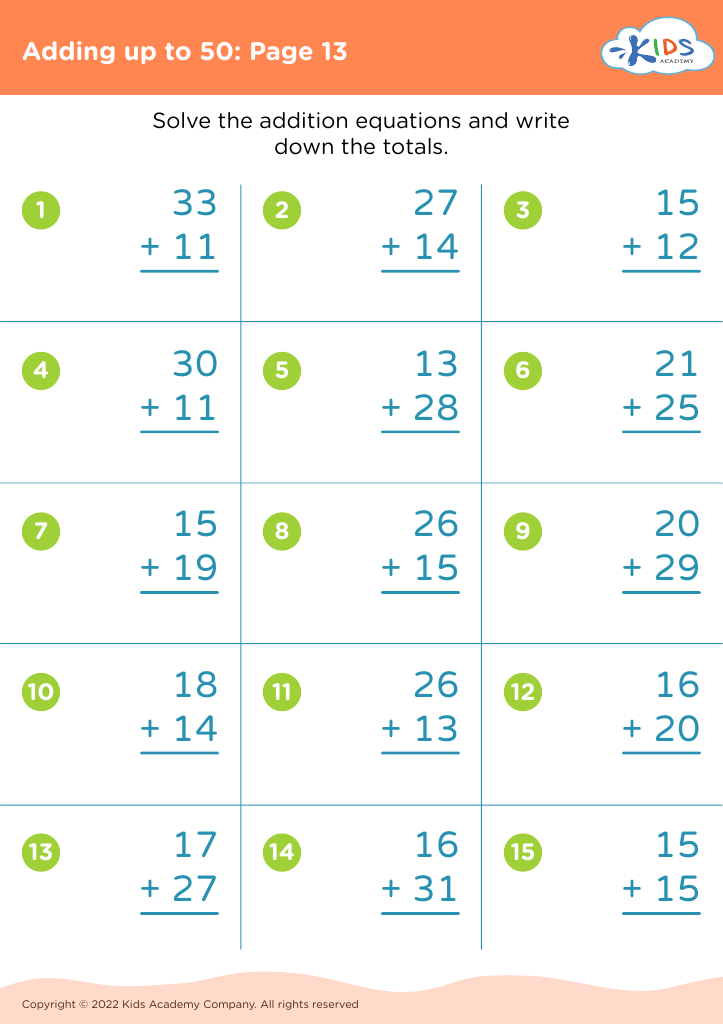
Adding up to 50: Page 13

Adding up to 50: Page 13

Adding up to 50: Page 13
Worksheet
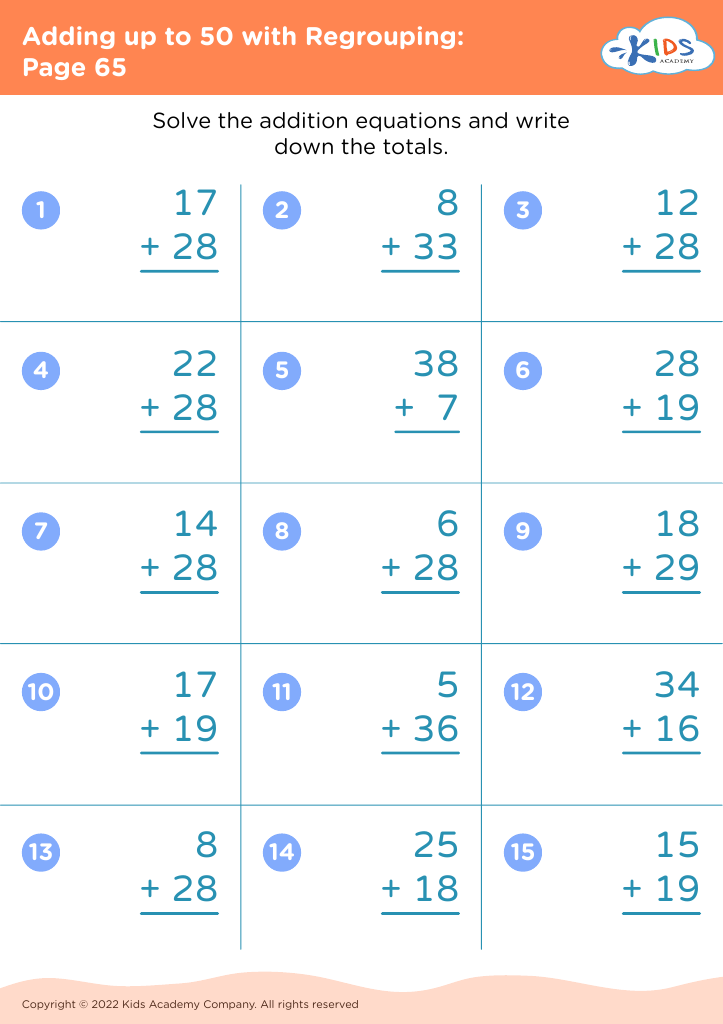
Adding up to 50 with Regrouping: Page 65
Worksheet
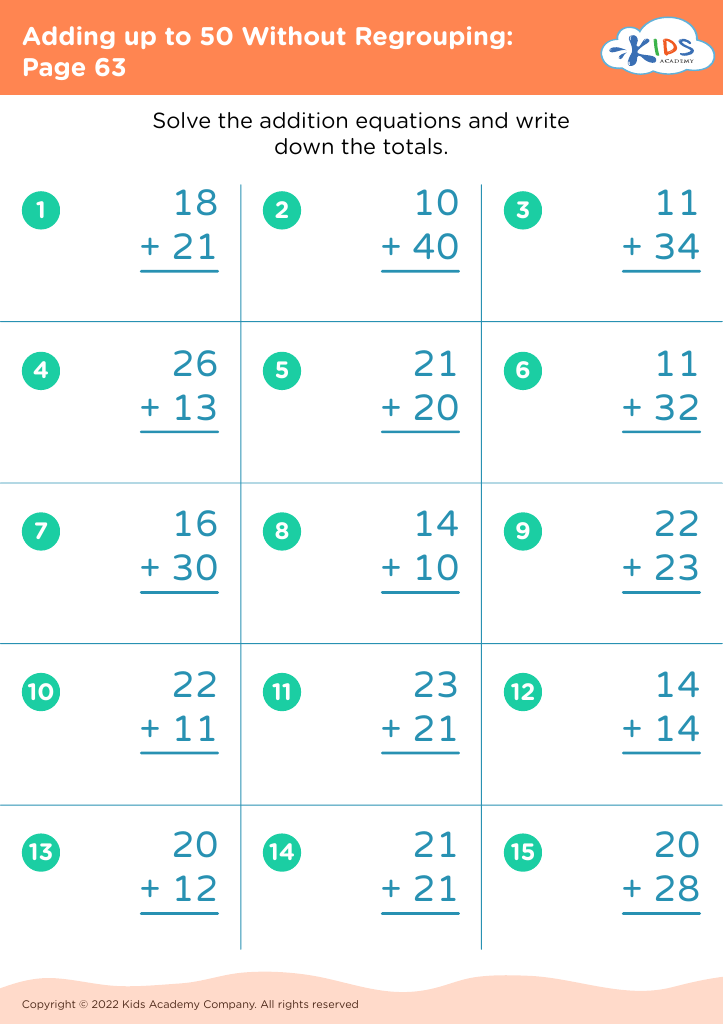
Adding up to 50 Without Regrouping: Page 63
Worksheet
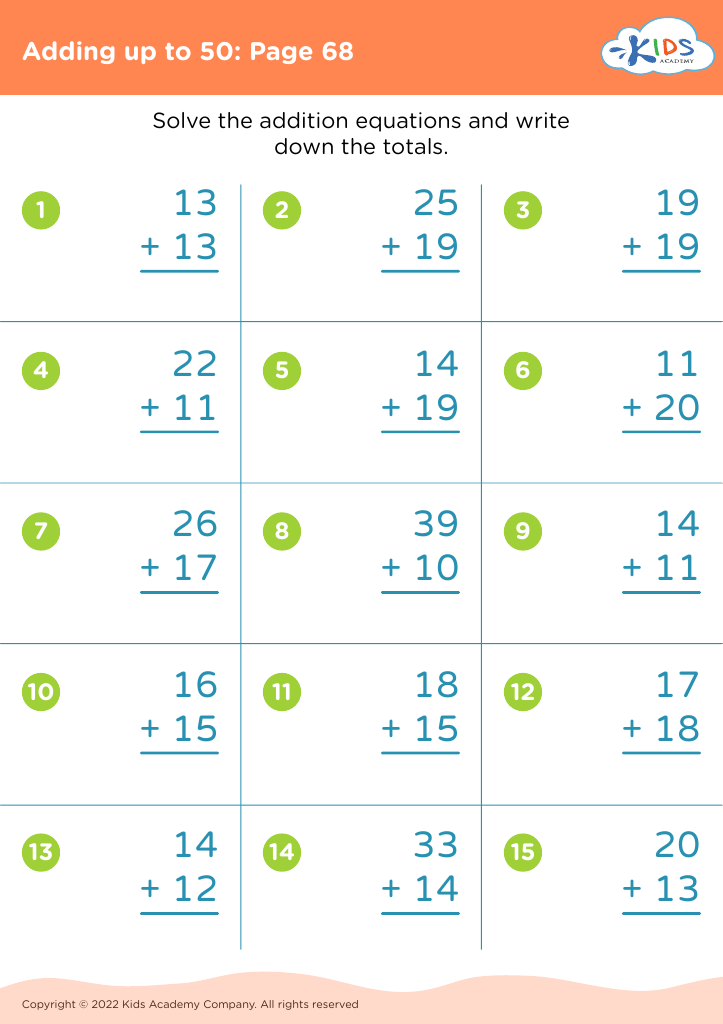
Adding up to 50: Page 68

Adding up to 50: Page 68

Adding up to 50: Page 68
Worksheet
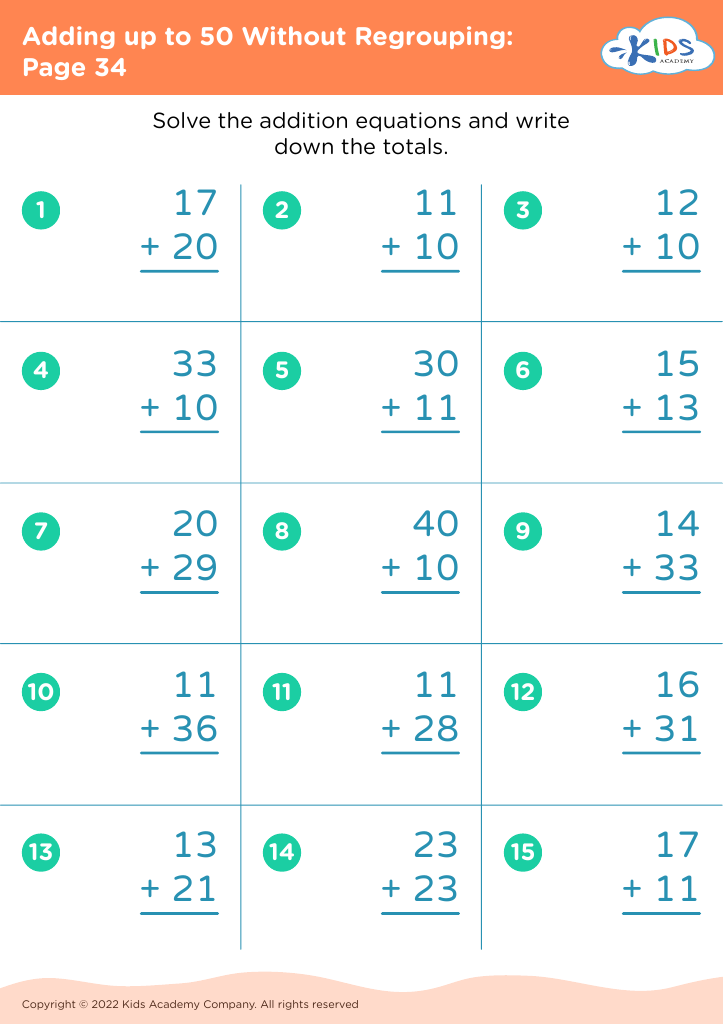
Adding up to 50 Without Regrouping: Page 34
Worksheet
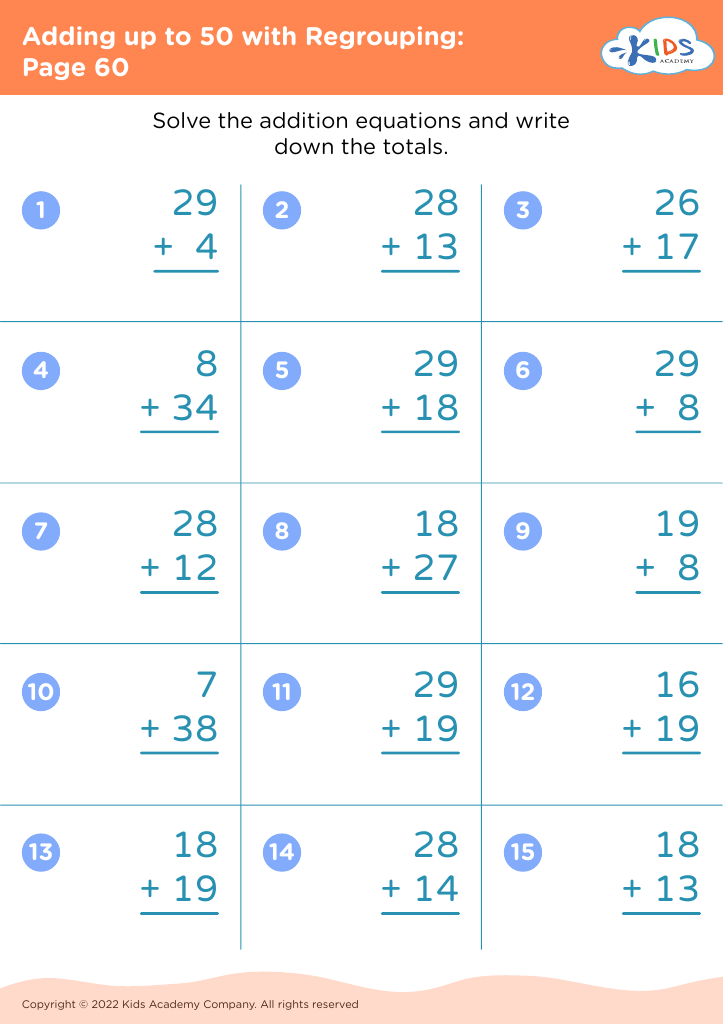
Adding up to 50 with Regrouping: Page 60
Worksheet
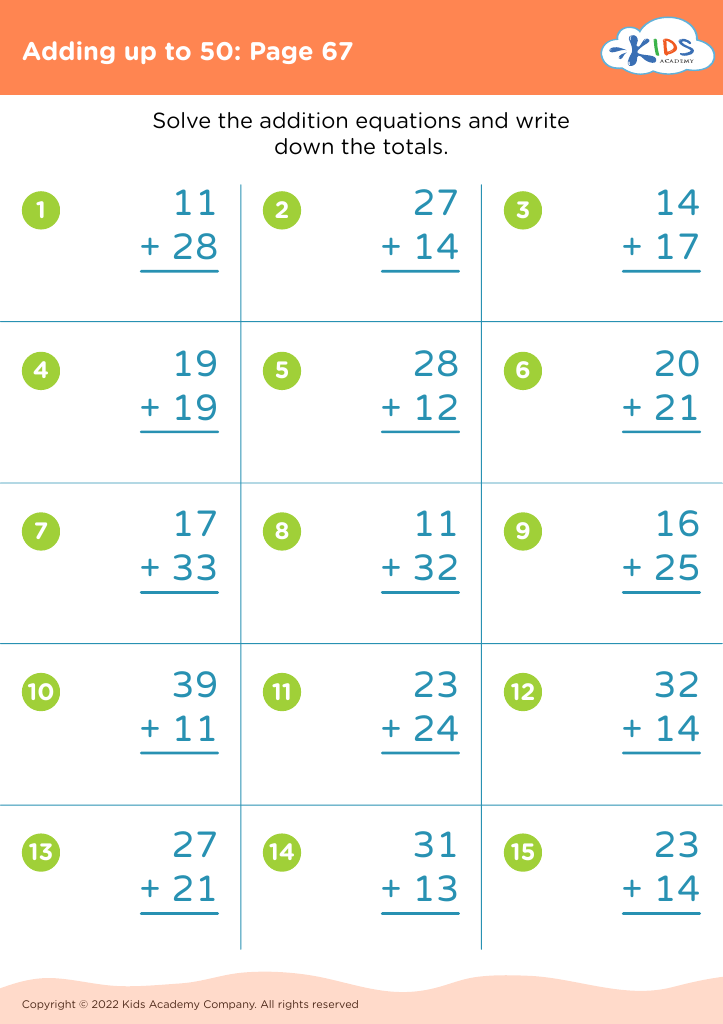
Adding up to 50: Page 67

Adding up to 50: Page 67

Adding up to 50: Page 67
Worksheet
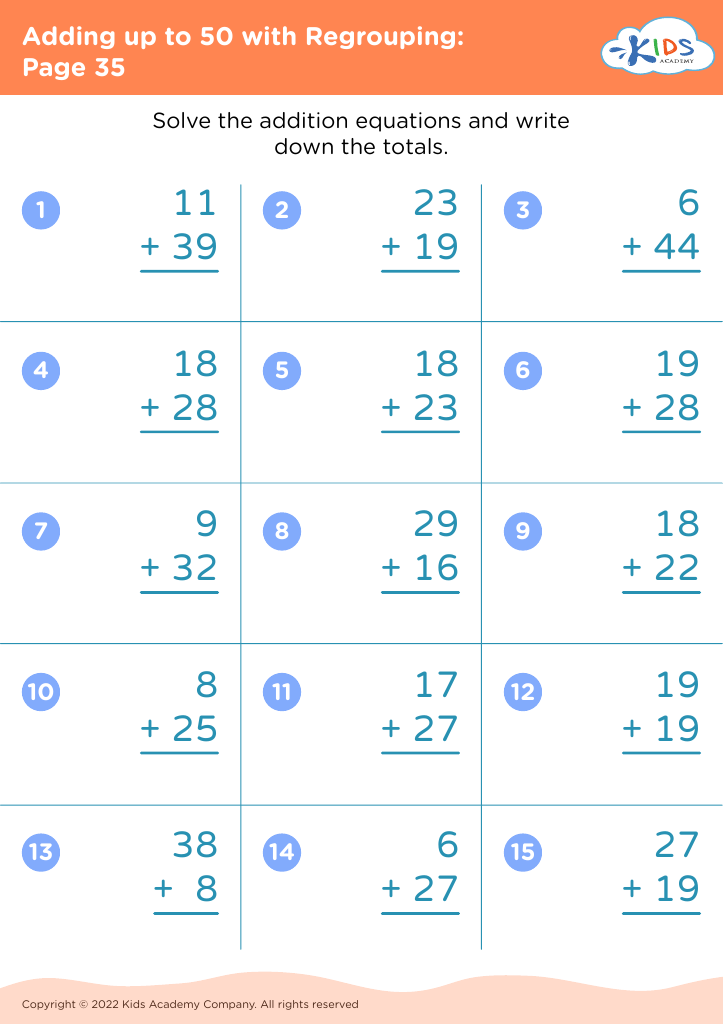
Adding up to 50 with Regrouping: Page 35
Worksheet
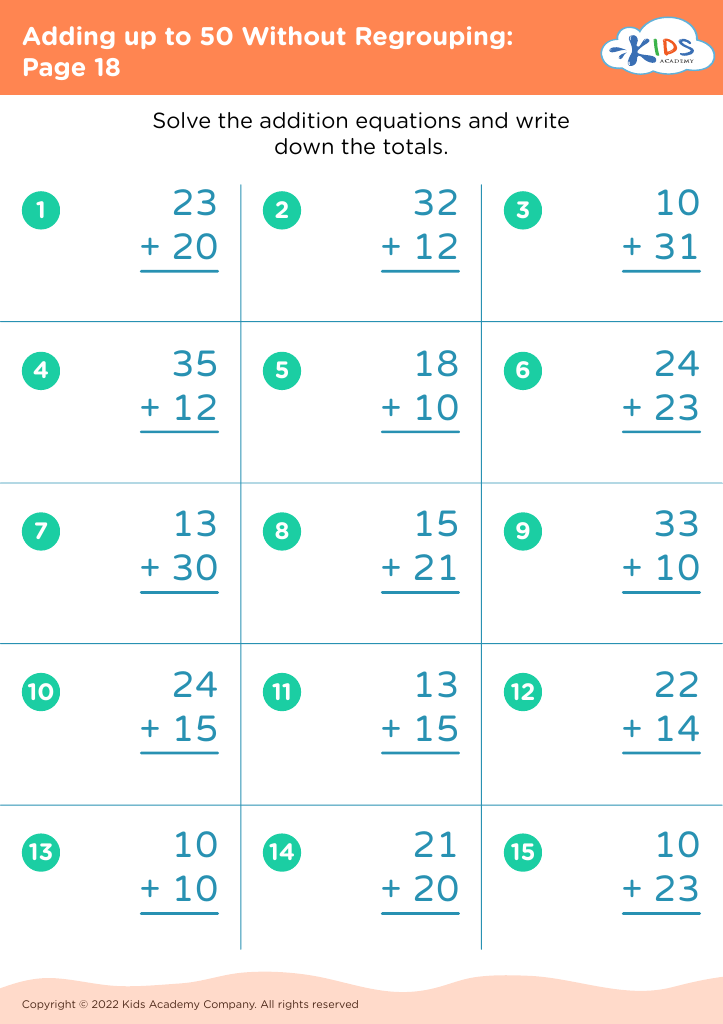
Adding up to 50 Without Regrouping: Page 18
Worksheet
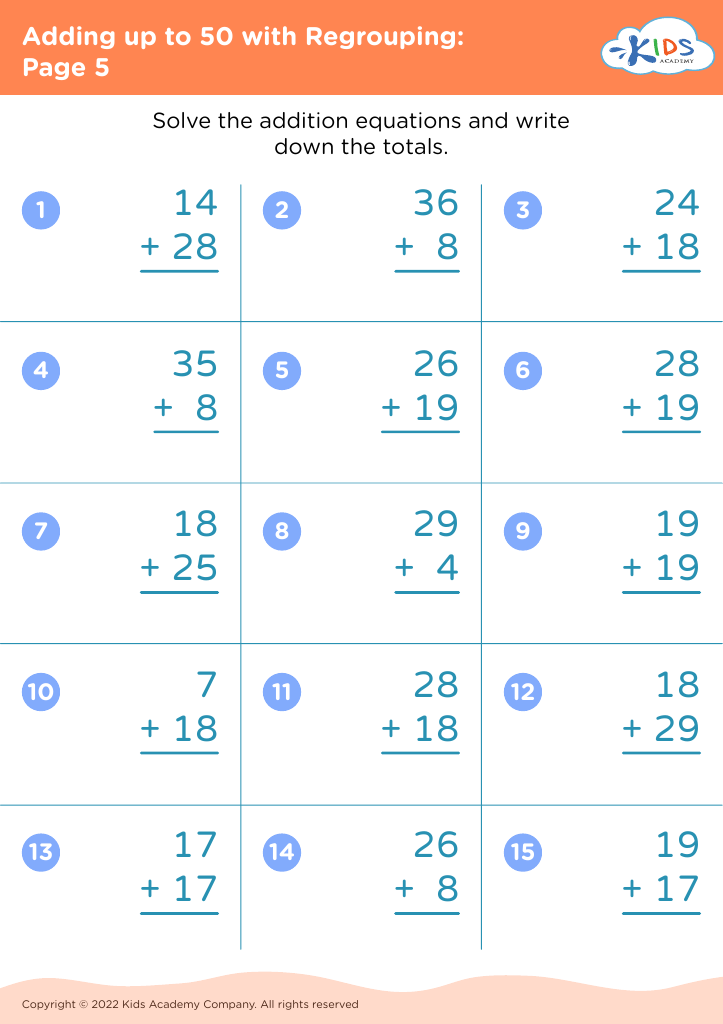
Adding up to 50 with Regrouping: Page 5
Worksheet
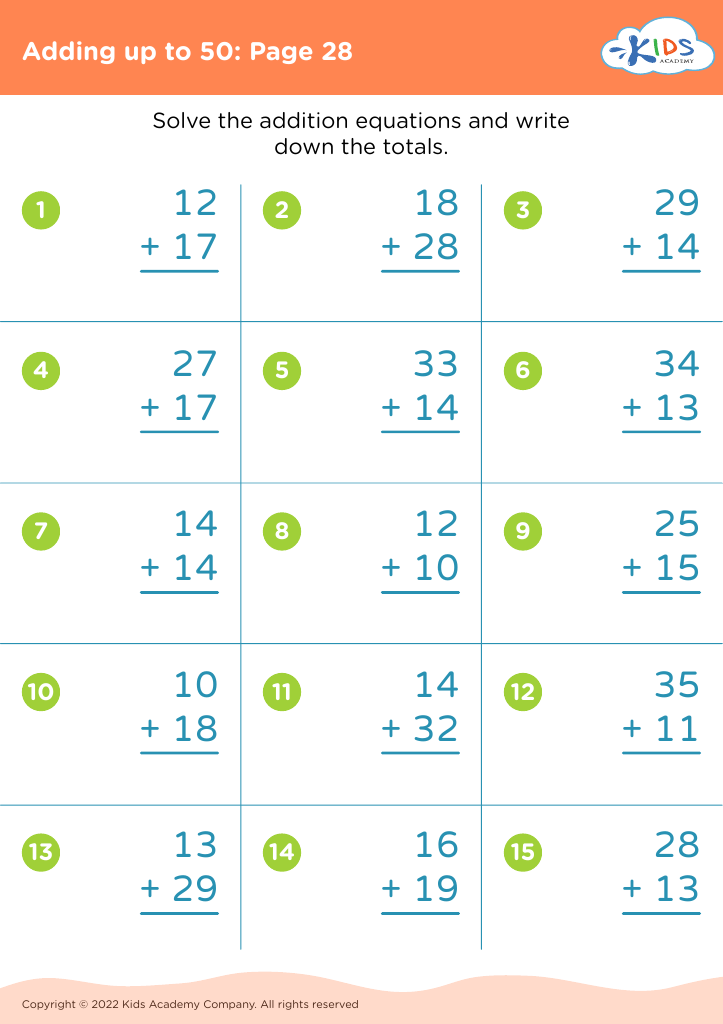
Adding up to 50: Page 28

Adding up to 50: Page 28

Adding up to 50: Page 28
Worksheet
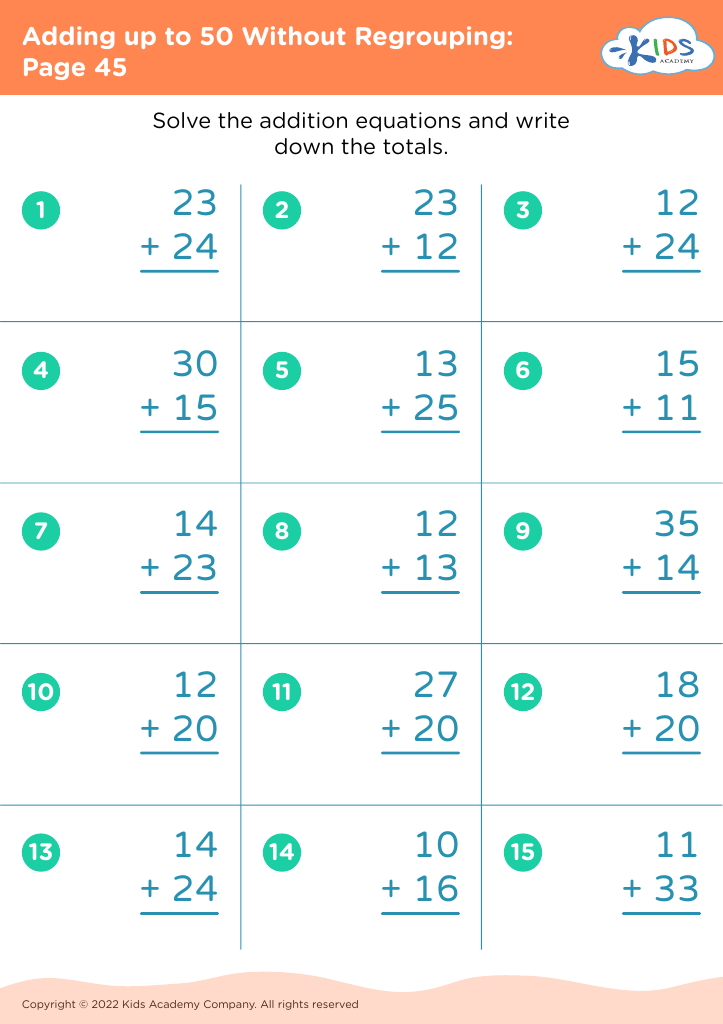
Adding up to 50 Without Regrouping: Page 45
Worksheet
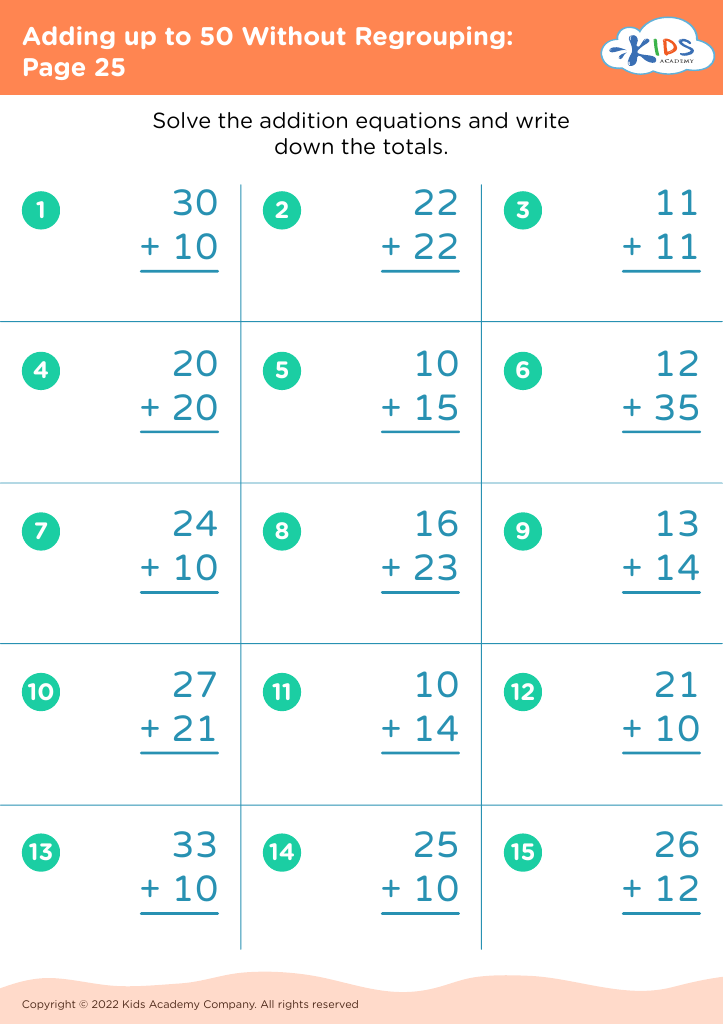
Adding up to 50 Without Regrouping: Page 25
Worksheet
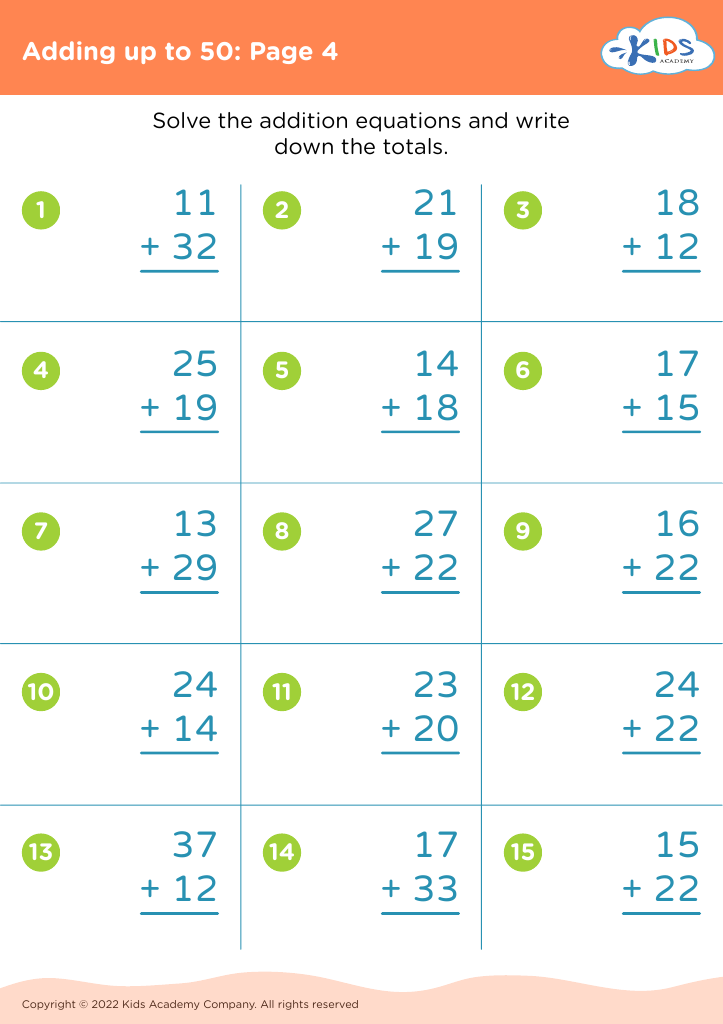
Adding up to 50: Page 4

Adding up to 50: Page 4

Adding up to 50: Page 4
Worksheet
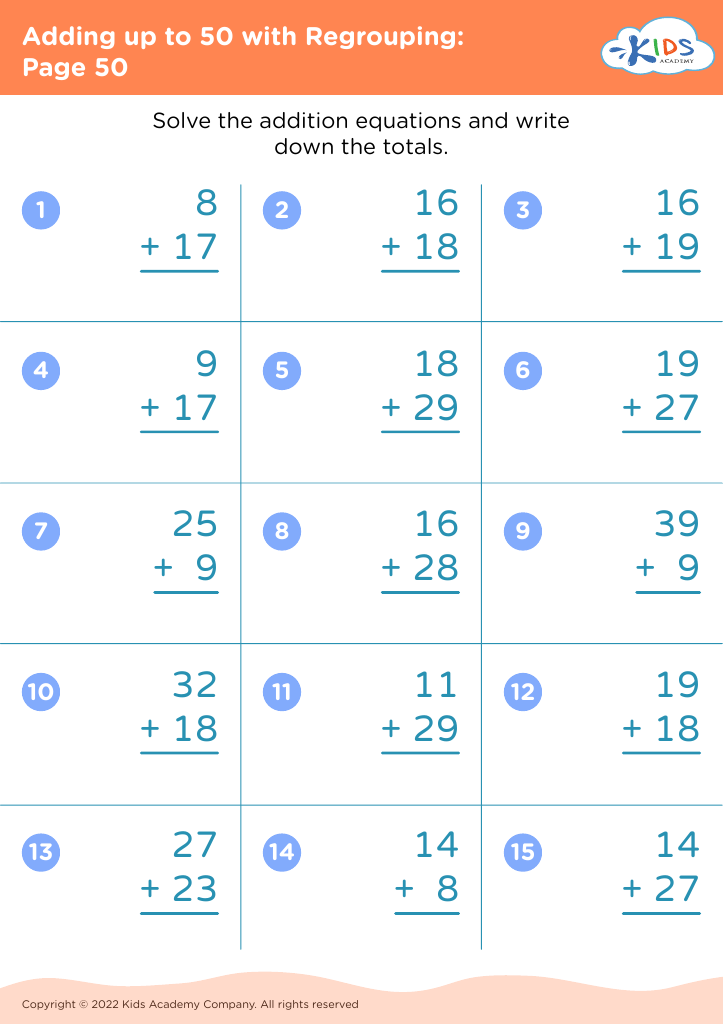
Adding up to 50 with Regrouping: Page 50
Worksheet
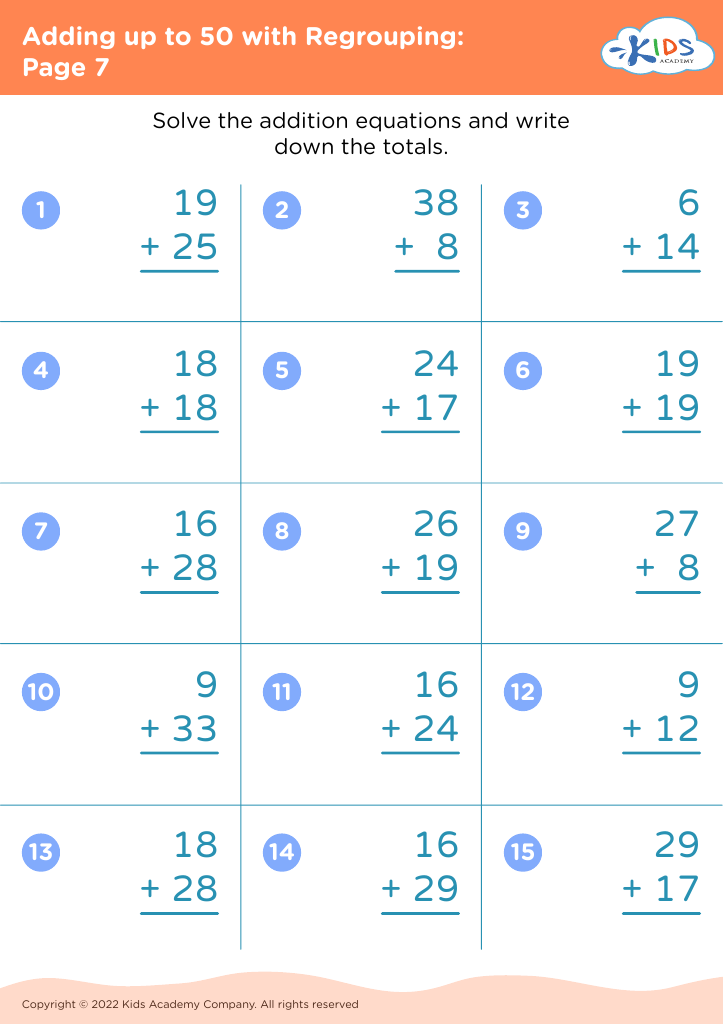
Adding up to 50 with Regrouping: Page 7
Worksheet


Understanding fractions and their relation to a whole is an essential mathematical concept for children aged 3-7, establishing a foundational skill that will aid in future learning. Early conceptualization of fractions encourages the development of critical thinking and problem-solving abilities, paving the way for more complex mathematical concepts down the line.

For parents and teachers, emphasizing the understanding of fractions in primary education not only boosts numeracy skills but also enhances daily life applications. Children learn to recognize and categorize parts of a whole, whether they are dividing pizza slices, measuring ingredients, or sharing toys. Integrating fractions into fun, hands-on activities fosters engagement and nurtures a love for mathematics.

Additionally, understanding fractions helps in building number sense. When children grasp how two halves make a whole or how four quarters add up to one whole, they develop spatial awareness and ordering skills. This lays the groundwork for future learning in more advanced topics such as division and ratios.

Involvement by parents and teachers in fostering this understanding sets a positive tone for children’s educational experiences and provides them with essential tools to navigate both academic challenges and real-life scenarios effectively.