Addition of fractions Addition & Subtraction Worksheets for Ages 3-7
3 filtered results
-
From - To
Explore our engaging Addition of Fractions Worksheets designed for young learners ages 3-7! These interactive resources introduce the fundamental concepts of adding and subtracting fractions in a fun and approachable way. Tailored to support early math skills, our worksheets feature colorful illustrations and easy-to-follow instructions that make learning enjoyable. Kids will develop their understanding of fractions through hands-on activities that blend creativity with education. Perfect for both classroom settings and at-home practice, our printable worksheets help children build confidence in math while fostering a love for learning. Join us on this educational journey and watch your little ones excel in their math skills!
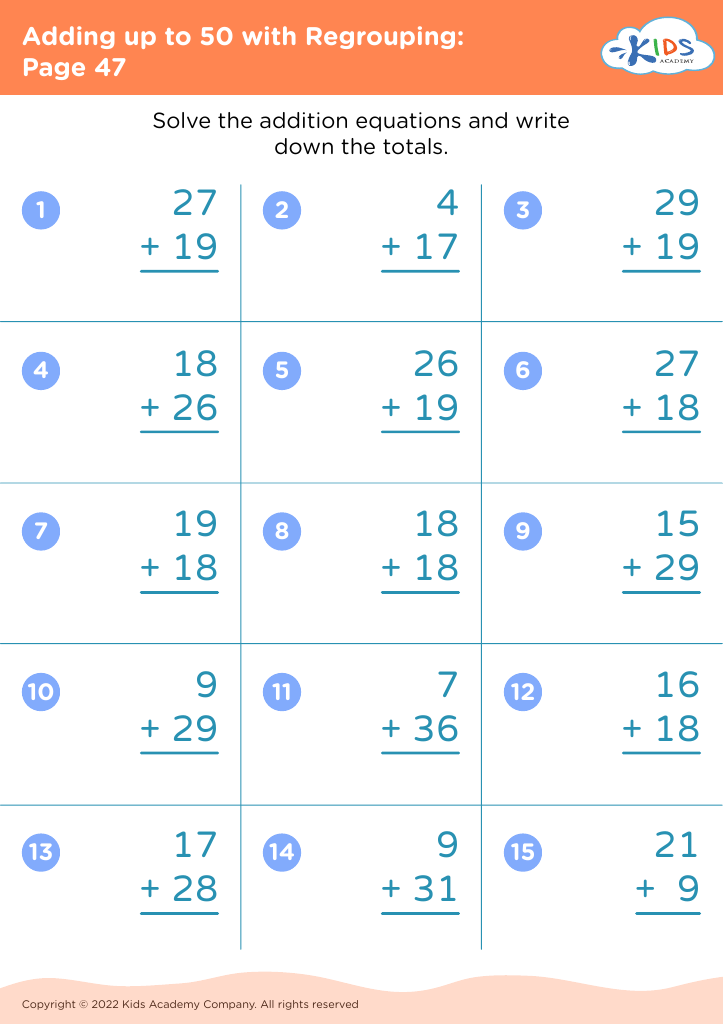
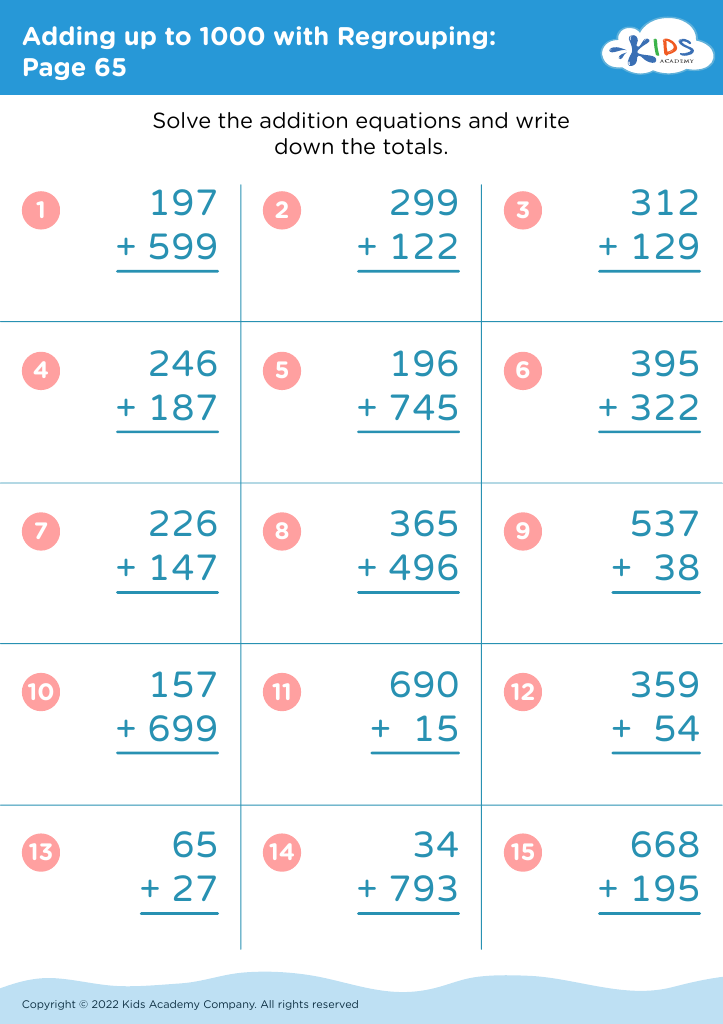
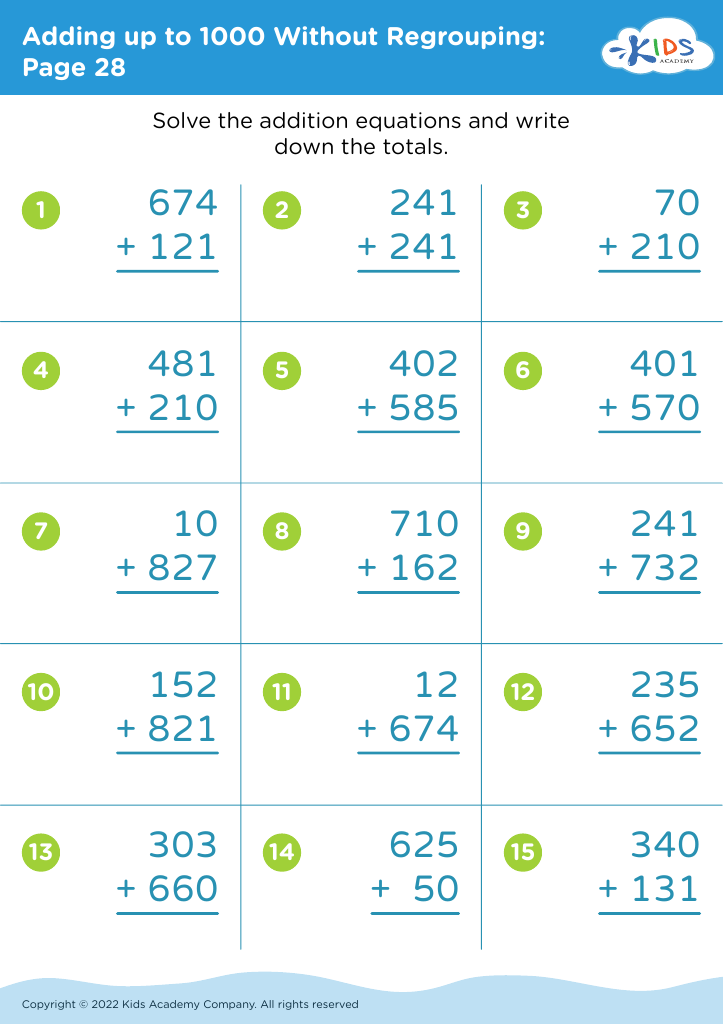








Parents and teachers should care about the addition and subtraction of fractions for children aged 3-7 because it lays a critical foundation for mathematical understanding. At this young age, children are developing their cognitive skills, and introducing concepts like fractions helps them grasp more complex ideas later on. Understanding fractions enhances their problem-solving abilities and critical thinking skills, essential for navigating everyday situations, such as splitting a pizza or measuring ingredients for a recipe.
Additionally, learning about addition and subtraction of fractions promotes a sense of numerical fluency. It encourages children to visualize numbers as parts of a whole, fostering their ability to work with proportions and ratios, which are key concepts in mathematics. These fraction skills also align with early mathematics curricula, helping children excel academically.
Furthermore, integrating practical activities and manipulatives in teaching fractions can make mathematics enjoyable and engaging for young learners. When educators and parents prioritize this form of mathematical learning, they cultivate a positive attitude towards math, laying the groundwork for lifelong mathematical confidence and competence. Understanding how to manipulate fractions empowers children to see the relevance of math in their lives, promoting perseverance and curiosity in their educational journeys.








