
Basic math learning Addition & Subtraction Worksheets for Ages 3-7
3 filtered results
Difficulty Level
Grade
Age
-
From - To
Subject
Activity
Standards
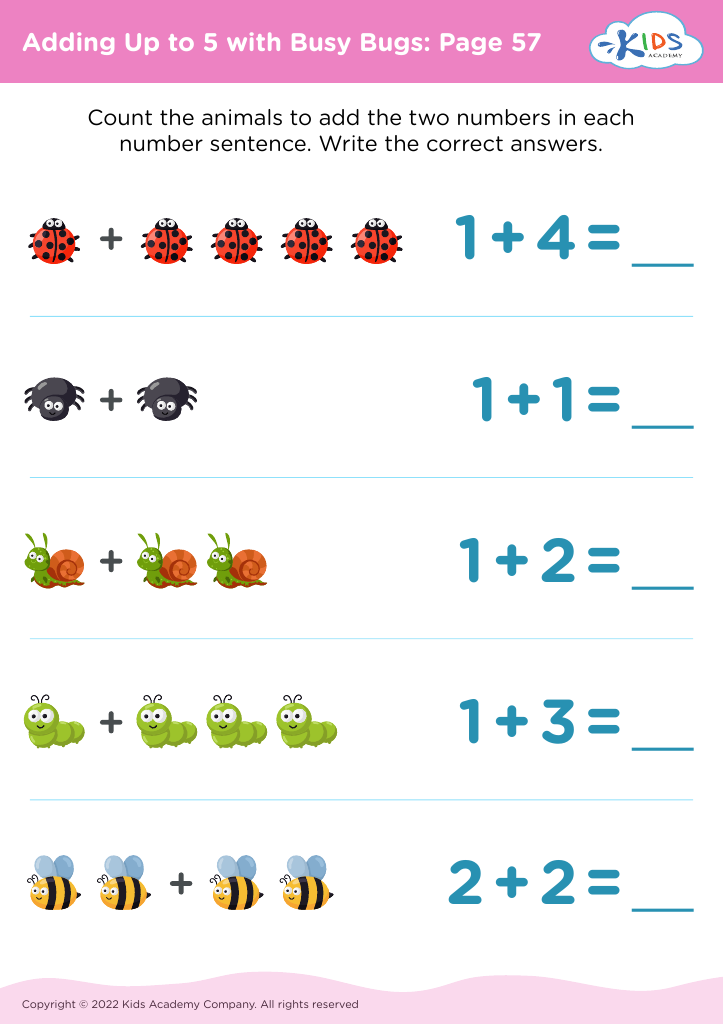
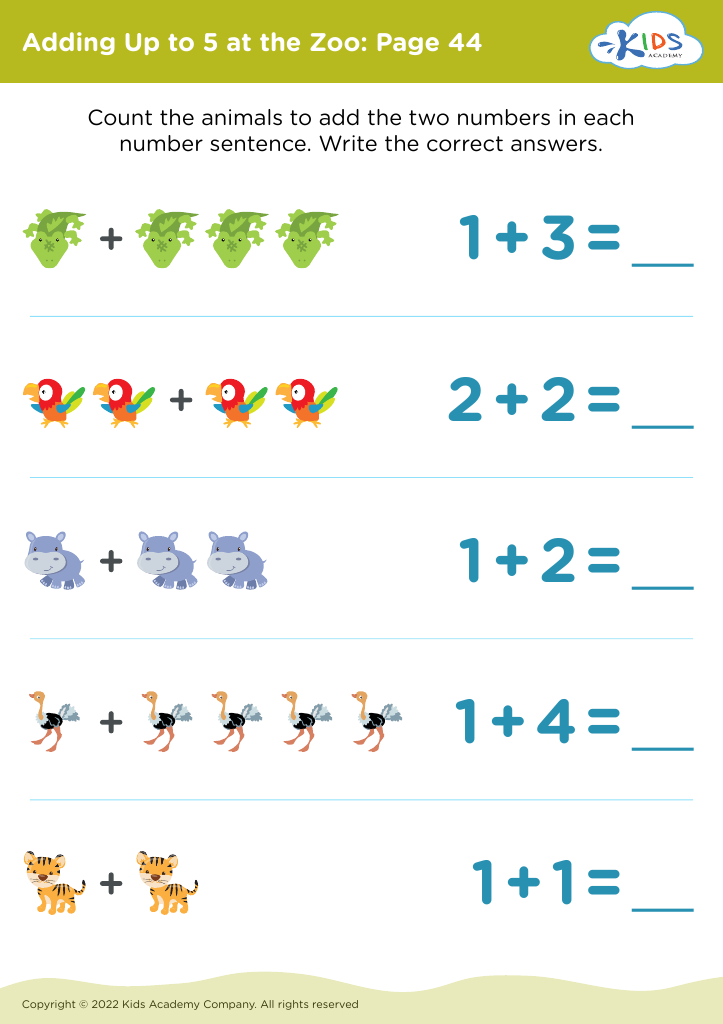
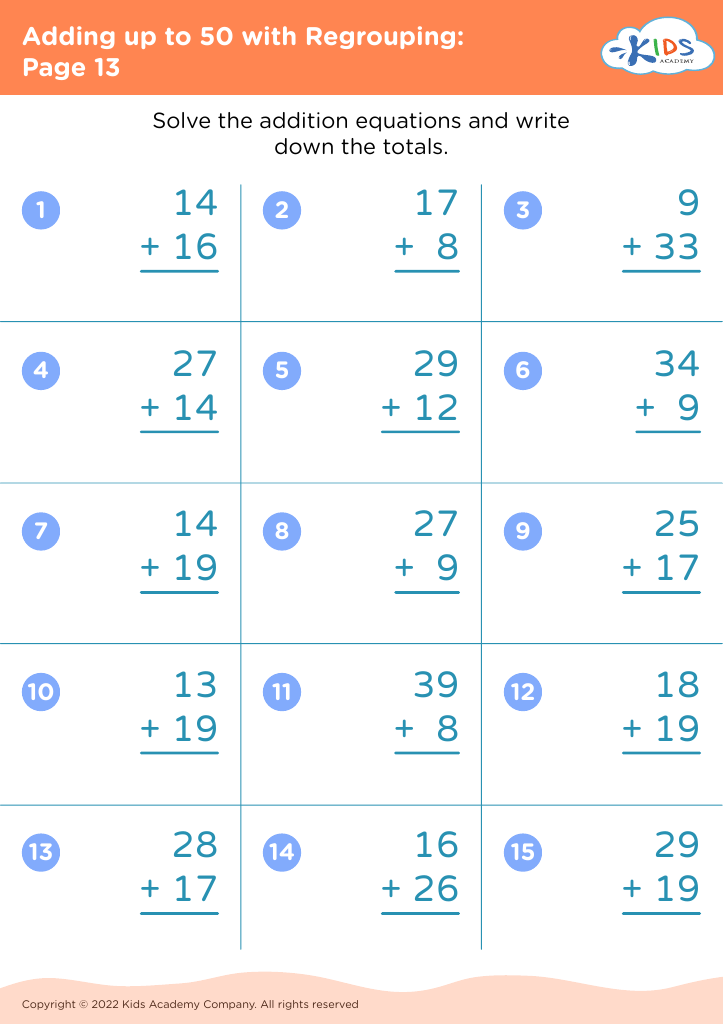
Discover engaging addition and subtraction worksheets designed specifically for children aged 3 to 7 at Kids Academy! Our printable resources ensure early math learners develop essential skills in a fun and interactive way. These worksheets foster a solid understanding of basic math concepts through colorful illustrations, hands-on activities, and guided practice. Perfect for parents and teachers alike, our worksheets support young learners as they explore counting, number recognition, and problem-solving. Set your child on the path to math mastery and watch their confidence grow with these expertly crafted materials tailored to make learning enjoyable and effective!
Favorites
With answer key
Interactive
Join Kids Academy for Free
Who is primarily going to use this learning content?








Basic math skills like addition and subtraction form the foundation for a child's future mathematical understanding and overall academic success. For children aged 3 to 7, early experiences with these concepts are crucial for cognitive development and problem-solving skills. Engaging children with simple math tasks helps develop their critical thinking abilities and boosts confidence in their analytical capabilities. Furthermore, these fundamental skills are not just academic; they are relevant in daily life situations, promoting practical understanding and application of mathematics.
Parents and teachers have a unique opportunity to nurture a positive attitude toward mathematics at an early age. Young children learn best through play and interactive experiences; incorporating fun games or story-based activities can make learning addition and subtraction enjoyable. This early exposure lays the groundwork for more complex math concepts in the future.
Additionally, understanding addition and subtraction helps children grasp patterns and relationships, enhancing their ability to reason quantitatively. It further supports their language development as they learn to articulate math problems and solutions. By fostering basic math learning, parents and teachers can empower children to be confident, competent problem solvers, equipping them with essential skills needed for lifelong learning and everyday challenges.








