
Basic math practice Addition & Subtraction Worksheets for Ages 3-7
4 filtered results
Difficulty Level
Grade
Age
-
From - To
Subject
Activity
Standards
Discover our engaging Basic Math Practice Addition & Subtraction Worksheets, designed specifically for children ages 3-7! Stimulate young minds with fun, age-appropriate exercises that build essential math skills. Our printable worksheets feature colorful illustrations and simple instructions to make learning enjoyable and effective. These activities help kids develop a strong foundation in basic arithmetic, promote critical thinking, and boost problem-solving abilities. Ideal for both classroom and home use, our resources support early math proficiencies and encourage a love for numbers. Visit our site to explore a variety of interactive worksheets tailored to your child’s learning level!
Favorites
With answer key
Interactive
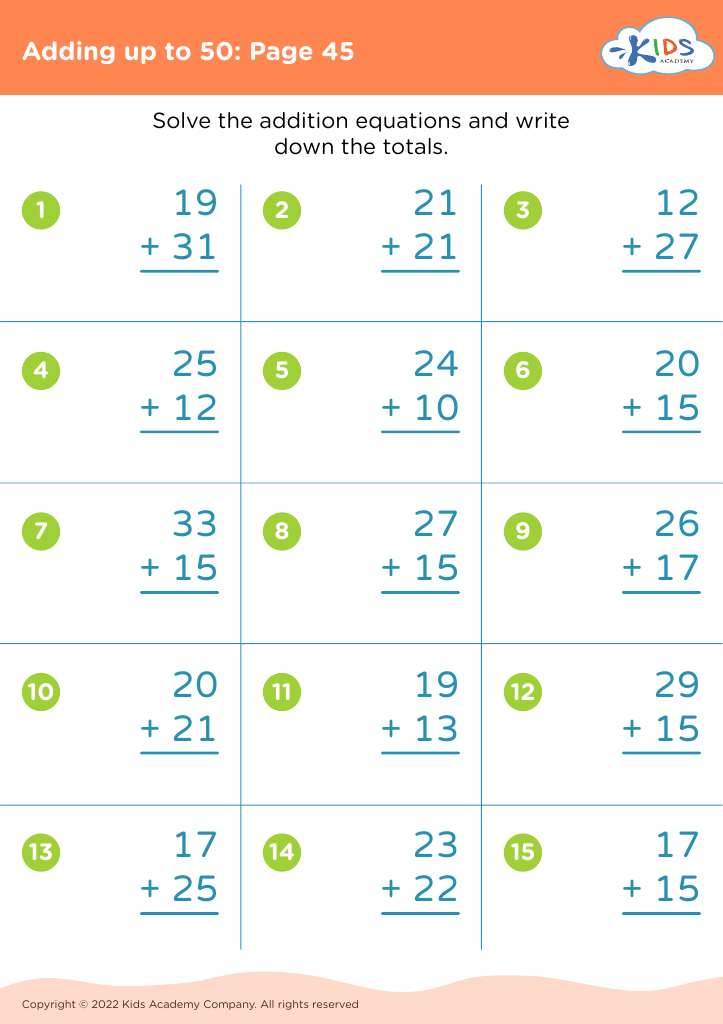
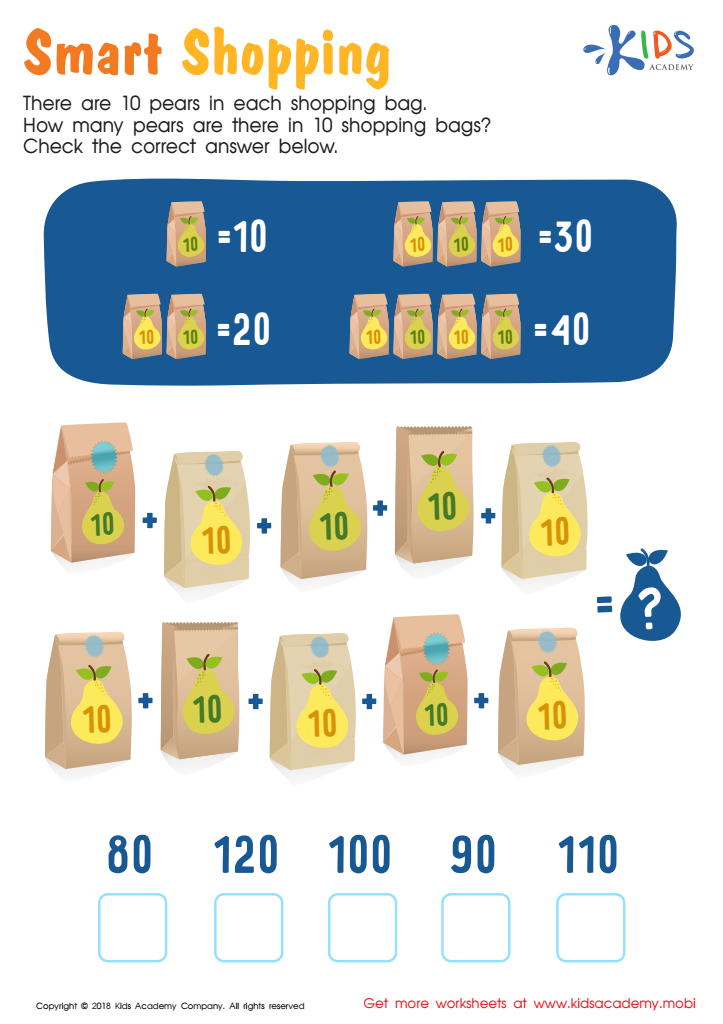
Smart Shopping: Trade Tens for a Hundred Worksheet
Use this worksheet to test counting skills: each bag has 10 pears. Ask your child how many pears are in 10 bags. Guide them as they count through the printout and check the answer below. See if they got it right!
 Assign to My Students
Smart Shopping: Trade Tens for a Hundred Worksheet
Worksheet
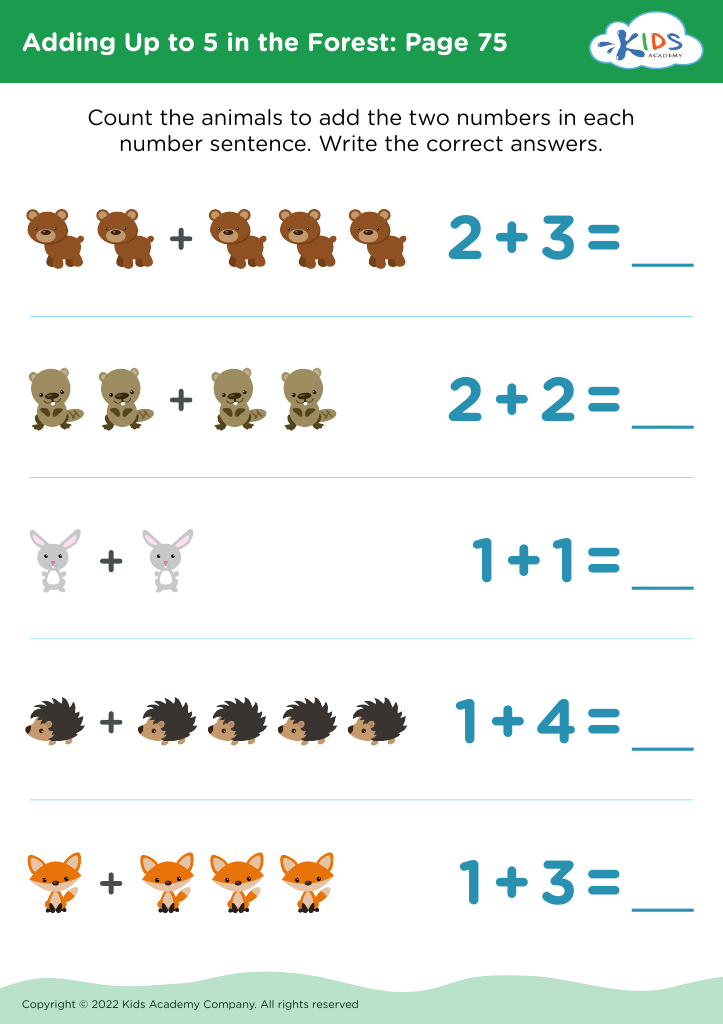
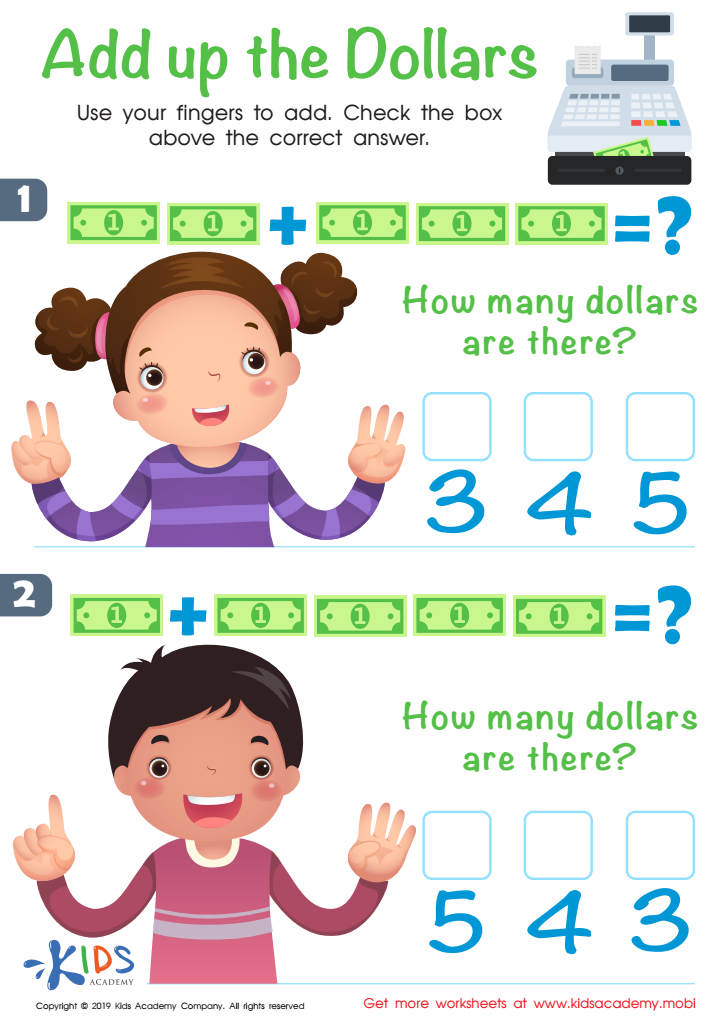
Add up the Dollars Worksheet
Money is key in life. It buys what we love and need. Get students to learn with exercises full of colour and familiar items like this worksheet. It shows two kids and some money. Ask pupils to use their fingers to add the money and check the box with the right answer.
Add up the Dollars Worksheet
Worksheet
Join Kids Academy for Free
Who is primarily going to use this learning content?








Basic math practice, particularly in addition and subtraction, is crucial for children ages 3-7, forming the foundation of their numerical understanding and problem-solving skills. Early exposure to these concepts is essential, as it fosters a deep cognitive development during these formative years when children's brains are exceptionally receptive to new information.
For parents and teachers, emphasizing basic math skills sets the stage for future academic success. Mastering addition and subtraction at a young age builds confidence and competence, encouraging positive attitudes towards math and preventing future anxiety related to the subject. These skills are not just academic; they are applied in everyday situations, teaching children about measuring, sharing, and shopping, forming life skills valuable beyond the classroom.
Engaging in regular math practice enhances logical thinking and enhances abilities in pattern recognition, which in turn benefits reading and overall intellectual capabilities. Furthermore, early math proficiency has been correlated with better performance in higher-grade levels. It is not merely about number crunching; it’s about embedding a structured way of thinking, discipline, and attention to detail.
Teachers and parents who prioritize these fundamental math skills help children develop a solid foundation that supports further learning and instills a lifelong love for mathematics. Ensuring consistent practice using engaging and age-appropriate activities makes learning fun and yield significant dividends in a child's education journey.








