Develop number recognition Addition & Subtraction Worksheets for Ages 3-7
6 filtered results
-
From - To
Introduce young learners to the world of numbers with our engaging addition and subtraction worksheets, designed specifically for ages 3-7. Our expertly crafted worksheets foster number recognition, helping children build a strong mathematical foundation. Kids will enjoy colorful activities that make learning fun and interactive. With a variety of exercises, these worksheets aim to bolster kids’ counting skills, number comprehension, and confidence, ensuring they grasp essential math concepts early on. Ideal for both classroom and at-home practice, our resources are perfect for nurturing budding math enthusiasts. Start sparking your child’s love for math today with our engaging learning tools!
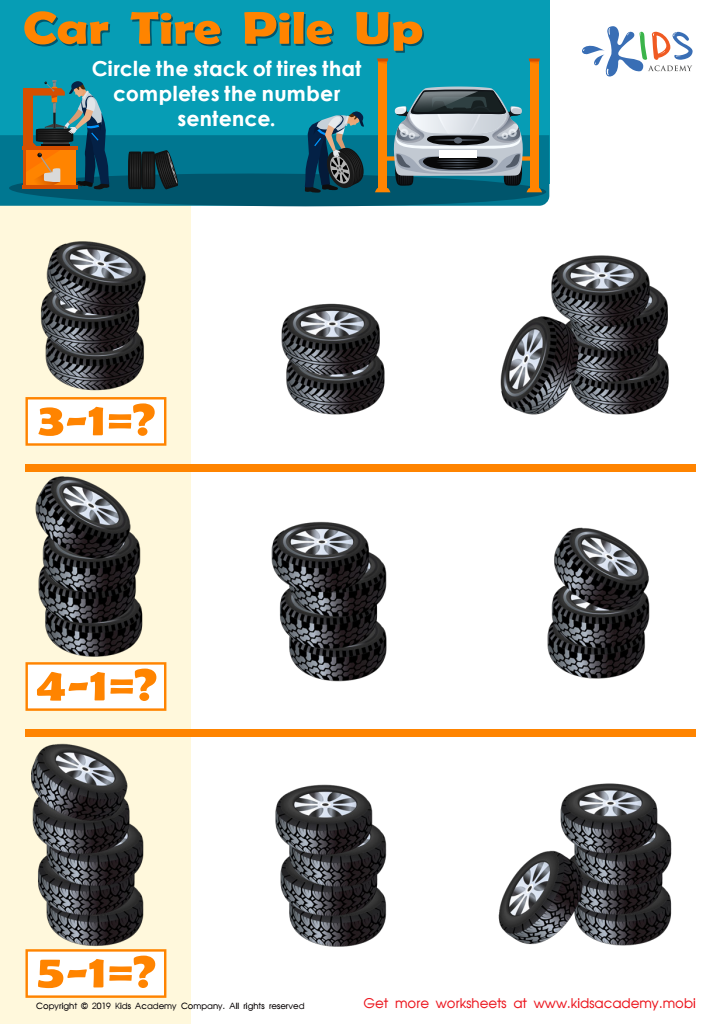
Car Tire Pile Up Worksheet
 Assign to My Students
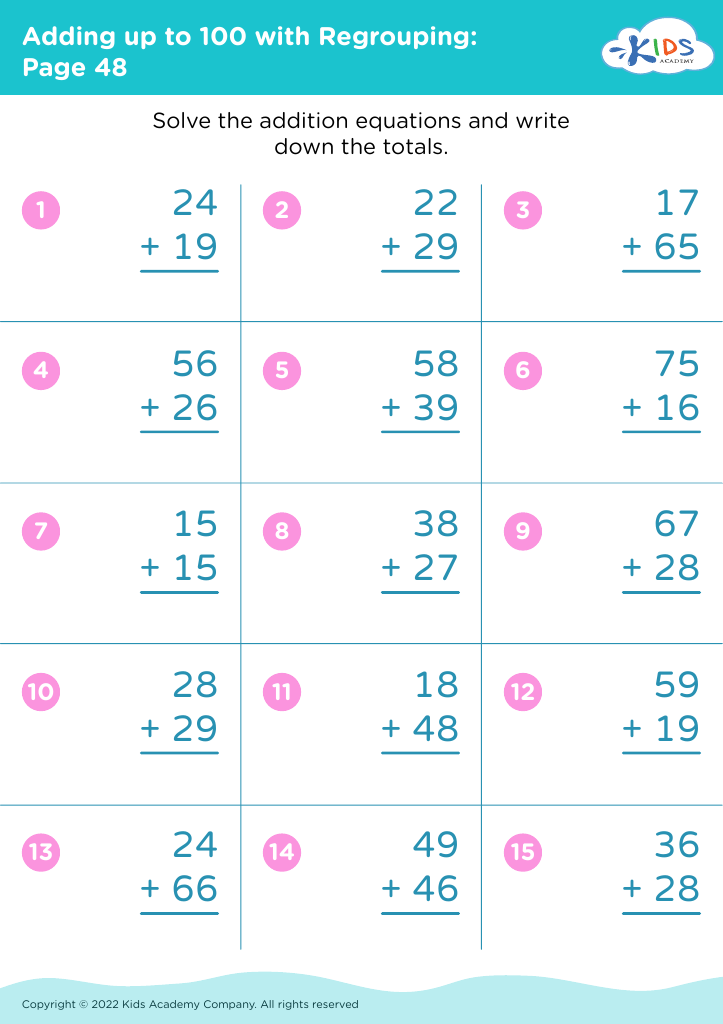
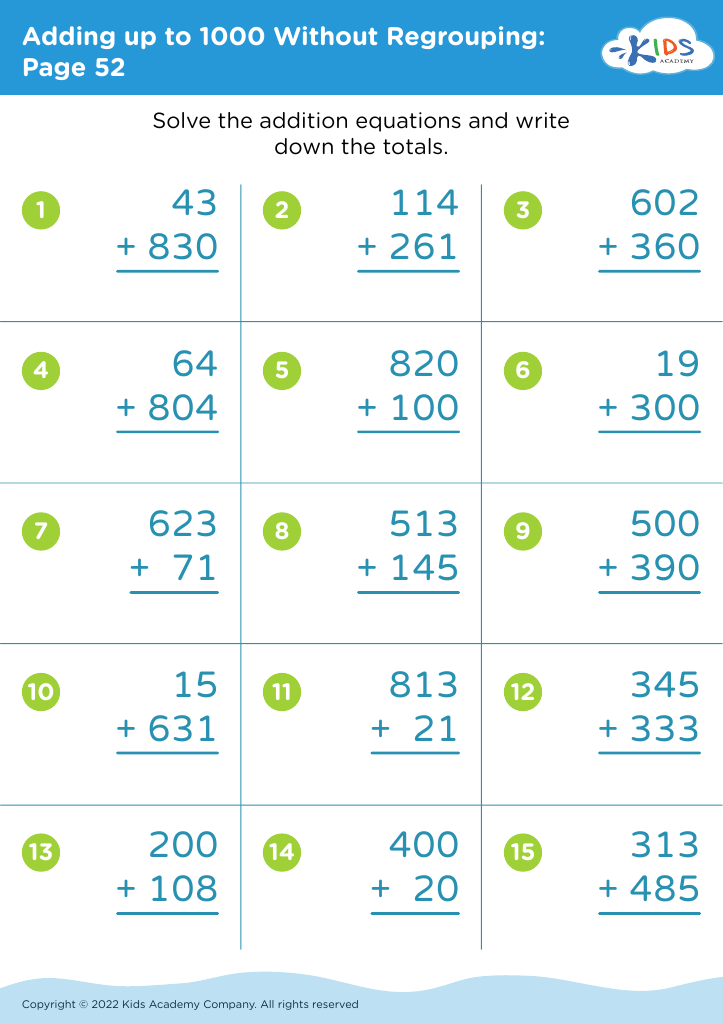
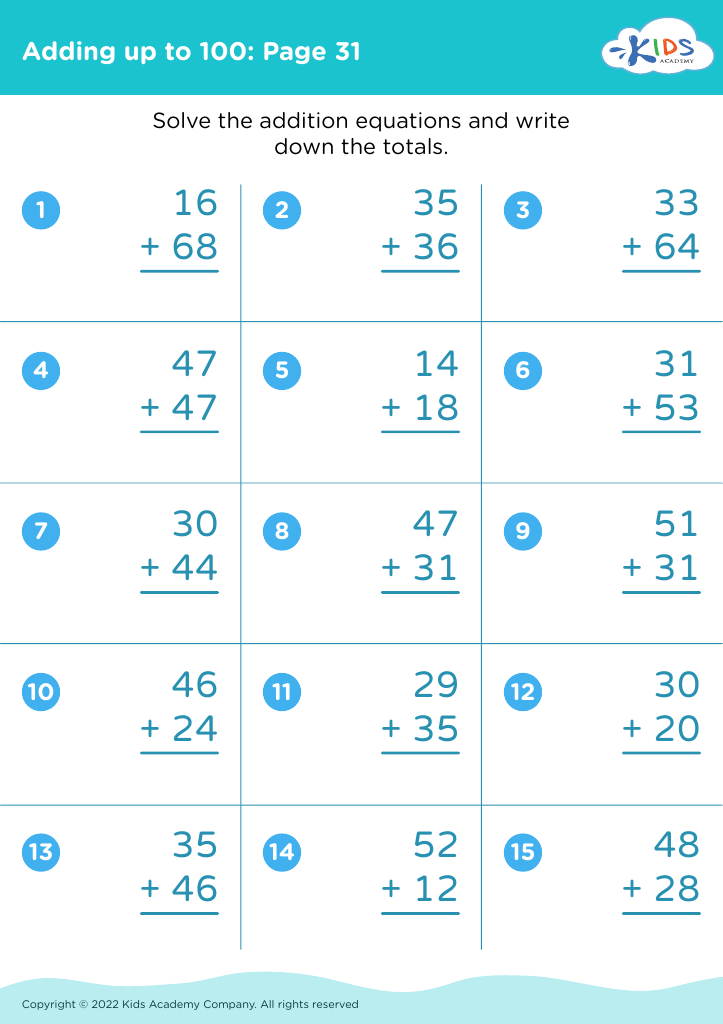
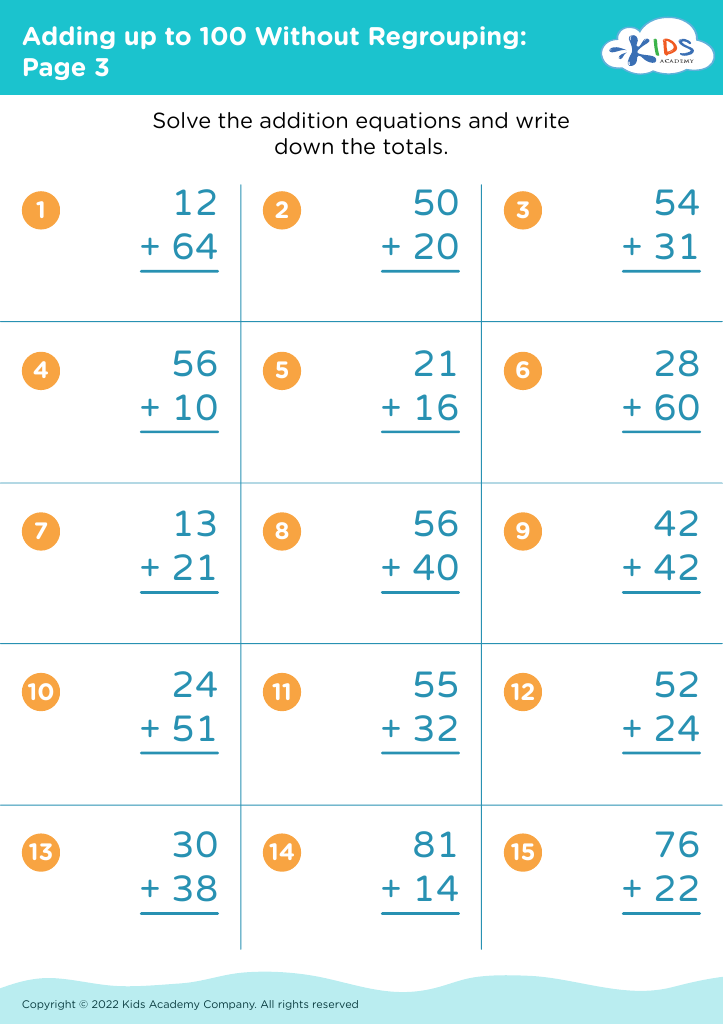
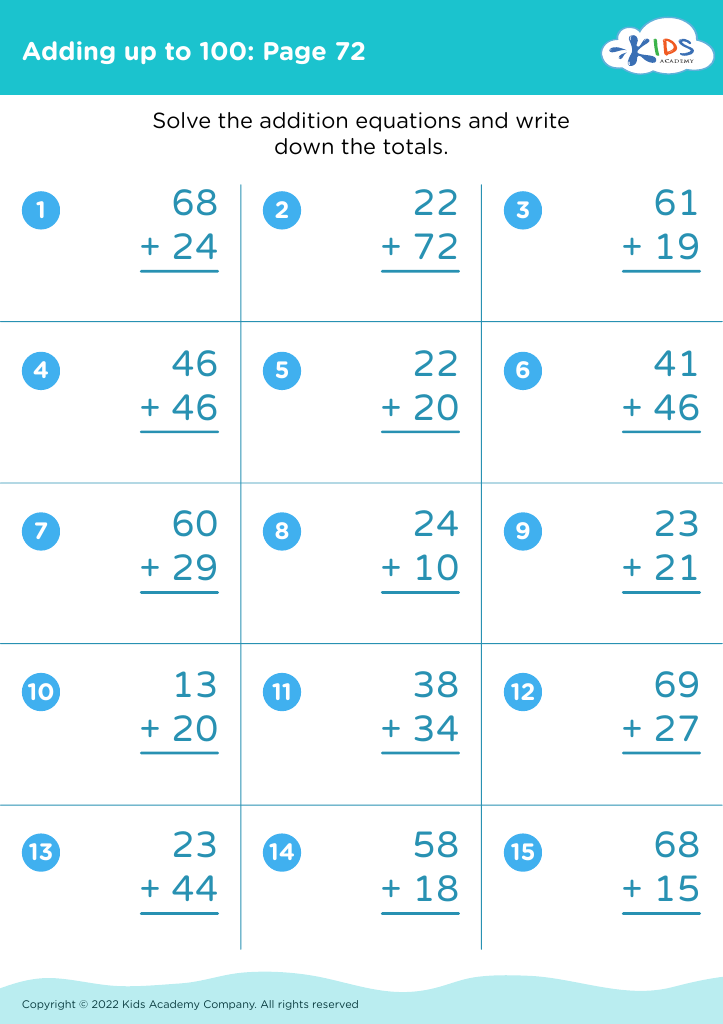








Parents and teachers play a crucial role in helping young children develop foundational math skills such as number recognition, and basic addition and subtraction. For children ages 3–7, early engagement with these concepts fosters crucial cognitive development and establishes a strong basis for more advanced mathematical learning.
Firstly, developing number recognition helps children understand and identify numbers, which is essential for everyday tasks like counting objects, reading clocks, and navigating calendars. It is the stepping stone to comprehending more complex mathematical concepts and fosters a sense of numerical literacy from a young age.
Addition and subtraction are the building blocks of arithmetic. Early mastery of these skills encourages problem-solving abilities and logical thinking. Introducing young children to addition and subtraction in practical, engaging ways—such as through games or hands-on activities—makes math fun and relevant, therefore increasing their enthusiasm for learning.
Moreover, proficiency in these basic math skills promotes self-confidence. When children realize they can tackle math problems, they gain a sense of accomplishment that can motivate them to embrace future learning challenges. Lastly, early math skills are strong predictors of academic success in later years. By emphasizing these skills, parents and teachers equip children with tools essential for lifelong learning and future educational achievements.








