Enhances counting skills Addition & Subtraction Worksheets for Ages 3-7
5 filtered results
-
From - To
Enhance your child’s counting skills with our engaging Addition & Subtraction Worksheets designed for ages 3-7! These worksheets provide fun, interactive activities that promote basic math concepts. Filled with colorful illustrations, these resources make learning enjoyable and effective. Children will practice counting, adding, and subtracting through vibrant exercises that encourage critical thinking. Perfect for at-home learning or classroom use, each worksheet caters to different skill levels, ensuring every child can grow at their own pace. Help your little learners build a solid foundation in math, boosting their confidence and readiness for future academic challenges. Start their mathematical journey today!
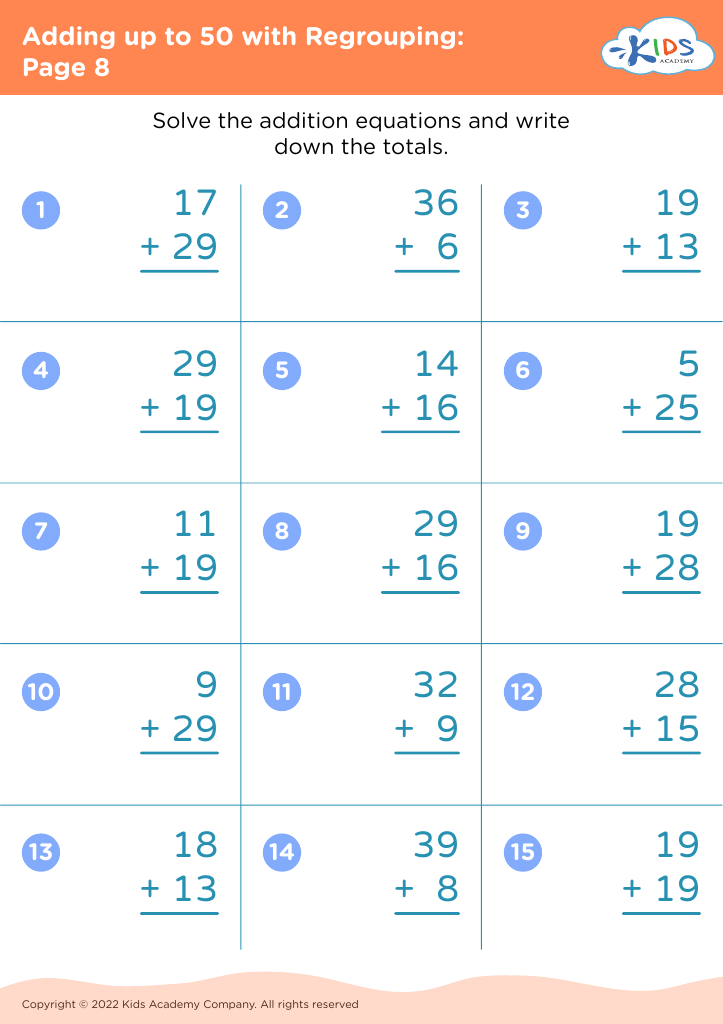
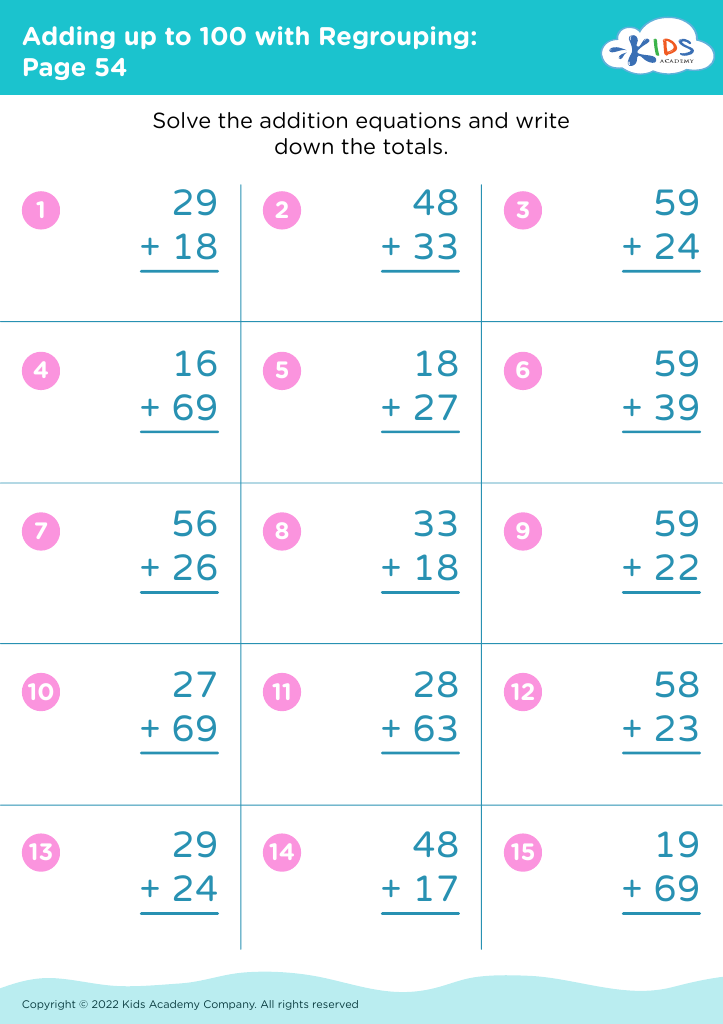
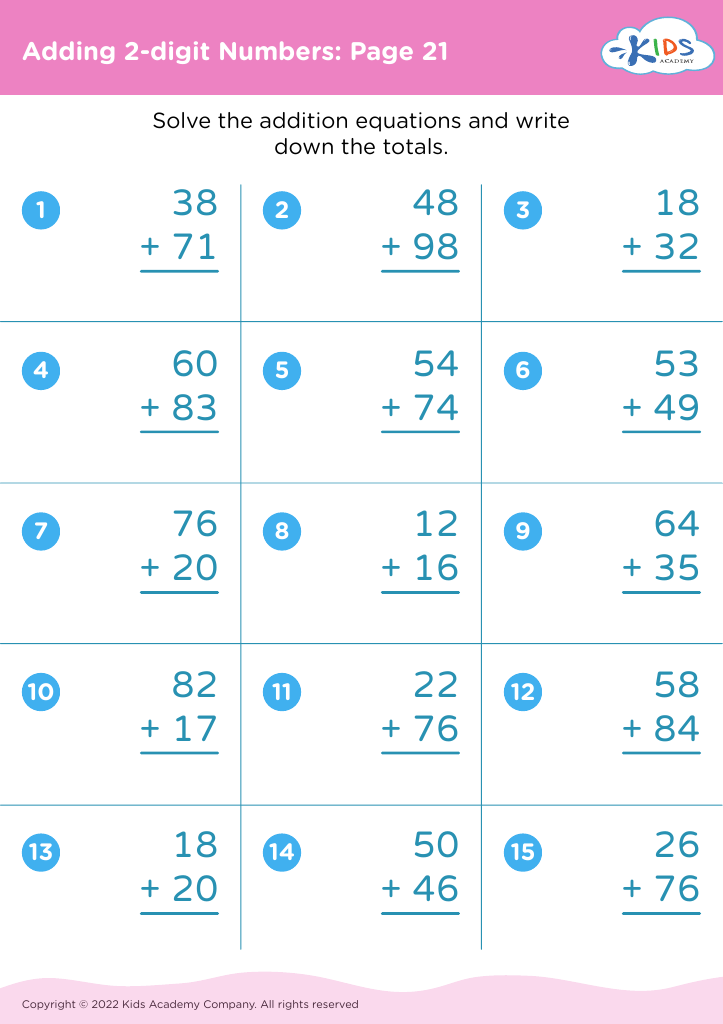
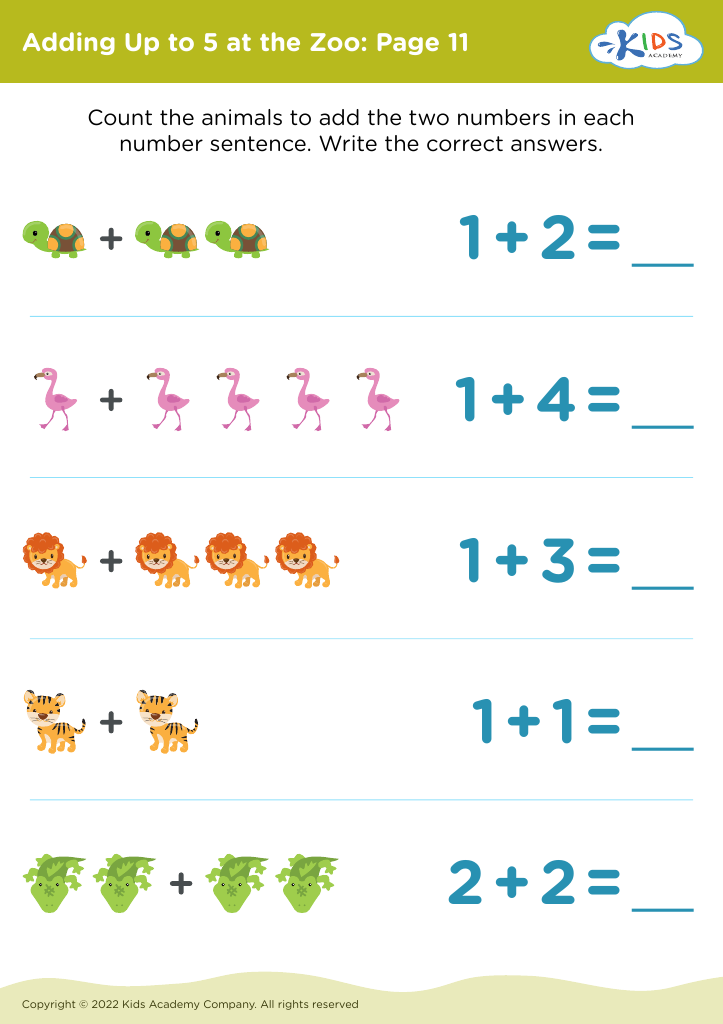
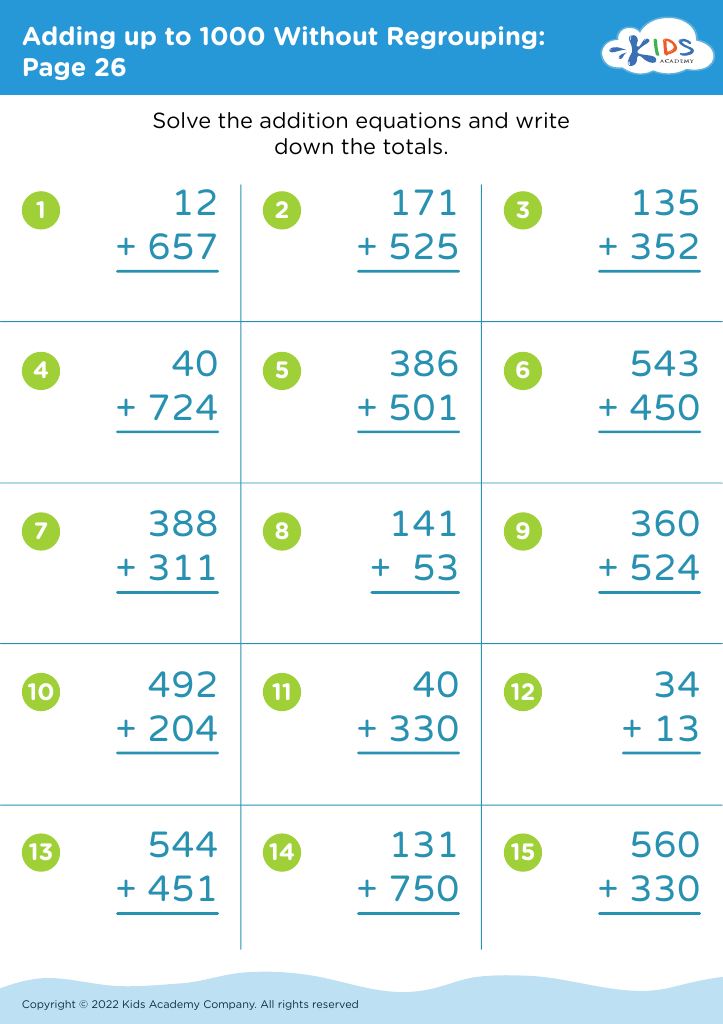








Enhancing counting skills and the fundamentals of addition and subtraction for children aged 3-7 is crucial for their cognitive and emotional development. At this formative age, children are like sponges, absorbing knowledge quickly. Strong counting skills lay the foundation for future mathematical concepts, promoting critical thinking and problem-solving abilities. When parents and teachers prioritize these foundational skills, they foster confidence in students, making them eager to participate in classroom activities.
Understanding addition and subtraction is essential for day-to-day life applications, such as handling money, measuring ingredients in cooking, or determining time. This early exposure can lead to improved academic performance in later years, making transitions into more complex math concepts smoother.
Moreover, mastery of these skills encourages a positive attitude toward learning. When children achieve success in basic concepts, it primes them for a lifelong interest in mathematics and empowers them to explore more challenging subjects with enthusiasm. By nurturing these skills collaboratively at home and in educational settings, parents and teachers create a supportive environment, encouraging a strong mathematical foundation that will sustain children throughout their academic journey. Ultimately, enhanced counting skills contribute not only to personal growth but also positively impact a child’s social and emotional well-being.








