Enhances number recognition Addition & Subtraction Worksheets for Ages 3-7
4 filtered results
-
From - To
Unlock your child's mathematical potential with our "Enhances Number Recognition Addition & Subtraction Worksheets" designed specifically for ages 3 to 7. These engaging worksheets are crafted to strengthen number recognition skills while providing essential practice in addition and subtraction. Children will enjoy colorful, interactive activities that make learning fun and effective. With various difficulty levels, our worksheets cater to different skill levels, ensuring every child can progress at their own pace. Foster a love for math and boost confidence with these invaluable resources that pave the way for future academic success. Start your child's learning journey today!
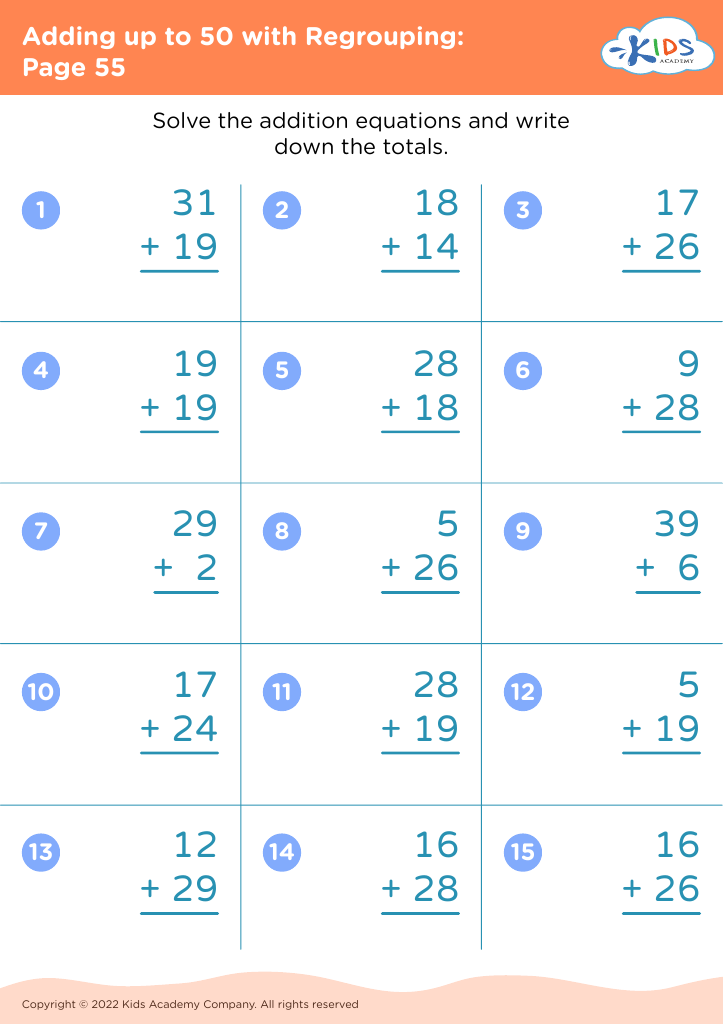
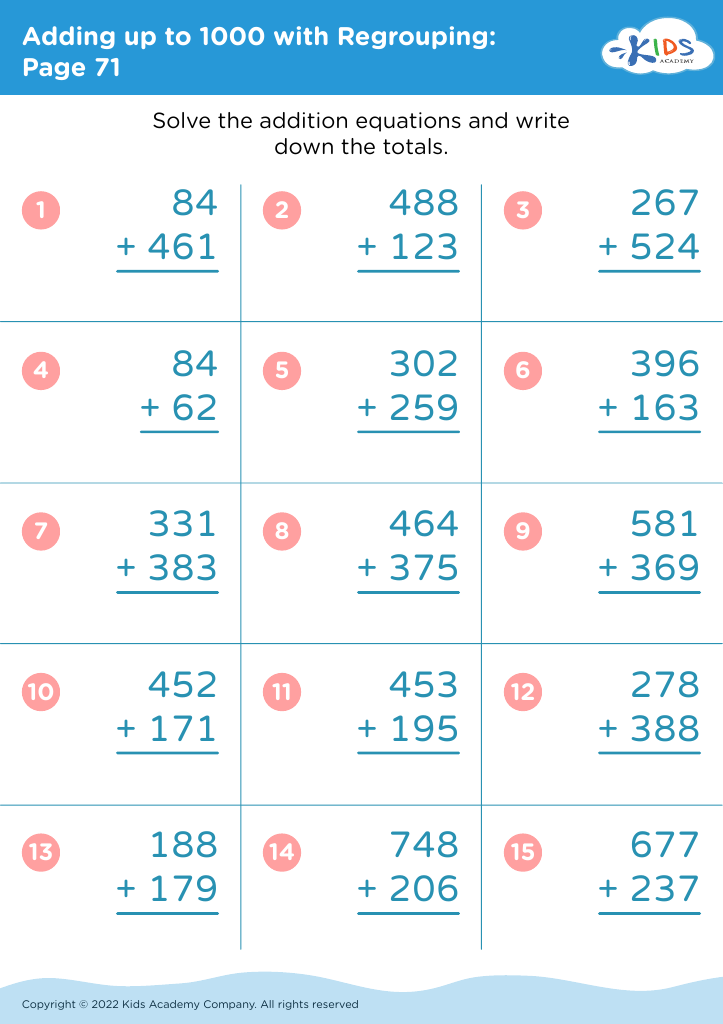
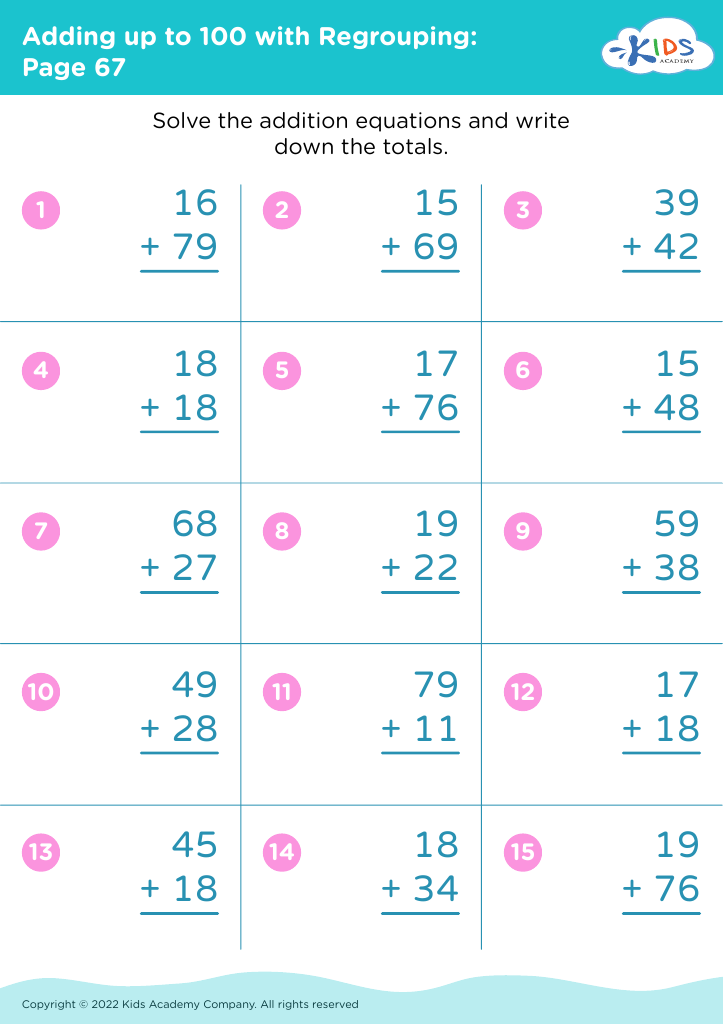
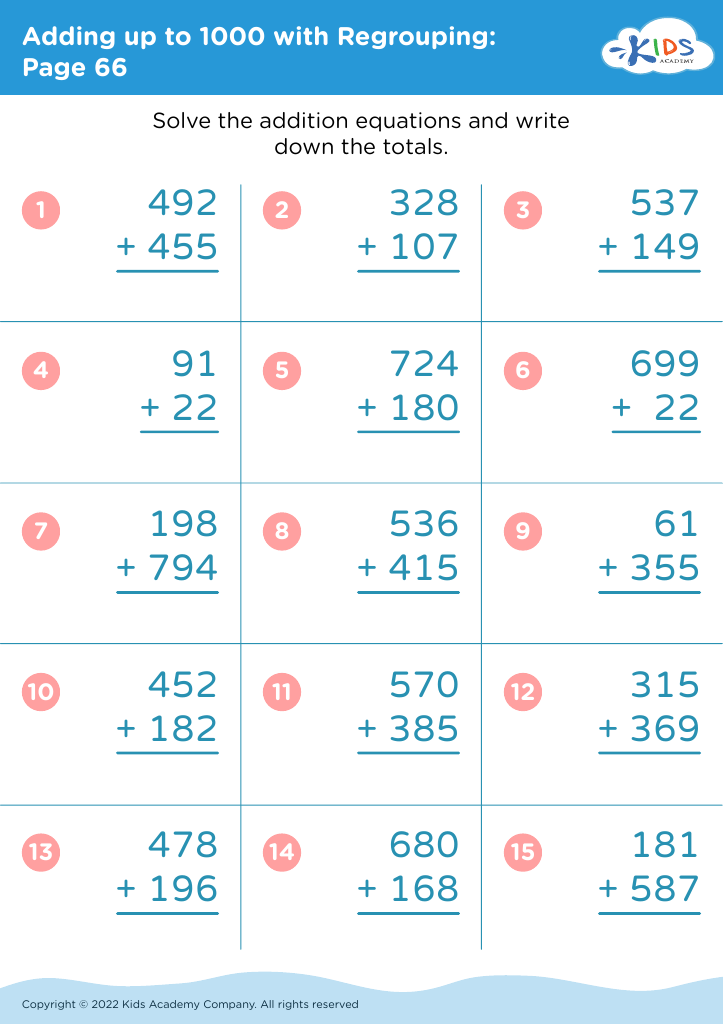








Parents and teachers should prioritize enhancing number recognition, addition, and subtraction skills in children aged 3-7 as these foundational concepts serve as the building blocks for future mathematical understanding. Early math skills are not only crucial for academic success but also develop critical thinking and problem-solving abilities. Children who recognize numbers and understand basic operations develop confidence, which encourages them to engage further with mathematics.
At this age, children are naturally curious and eager to learn. By focusing on number recognition and simple arithmetic, parents and teachers can use playful and engaging methods like games, storytelling, and hands-on activities to make learning enjoyable. This approach can help instill a positive attitude towards mathematics, reducing math anxiety later in life.
Moreover, these skills are interconnected with various cognitive developments such as language acquisition and spatial awareness. As children learn to manipulate numbers, they also enhance their reasoning and memory. Finally, equipping children with strong numeracy skills lays a solid academic foundation that supports their education as they progress into higher grades. By investing time and resources in early math education, we empower children with the tools they need for lifelong learning and success in an increasingly data-driven world.








