
Enhancing observation skills Addition & Subtraction Worksheets for Ages 3-7
3 filtered results
Difficulty Level
Grade
Age
-
From - To
Subject
Activity
Standards
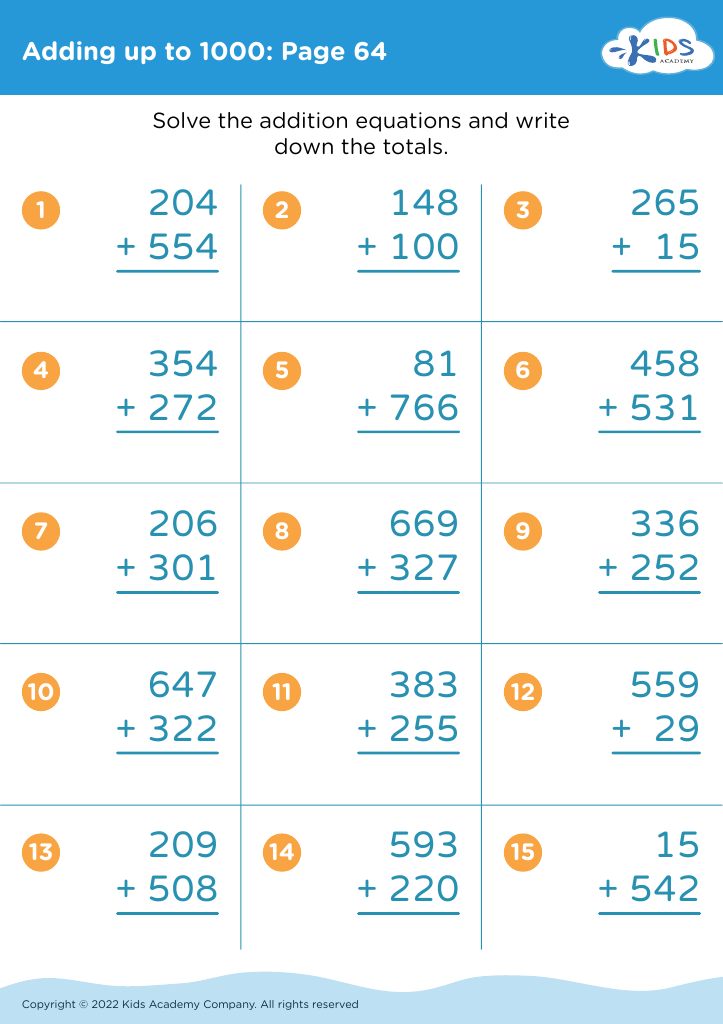
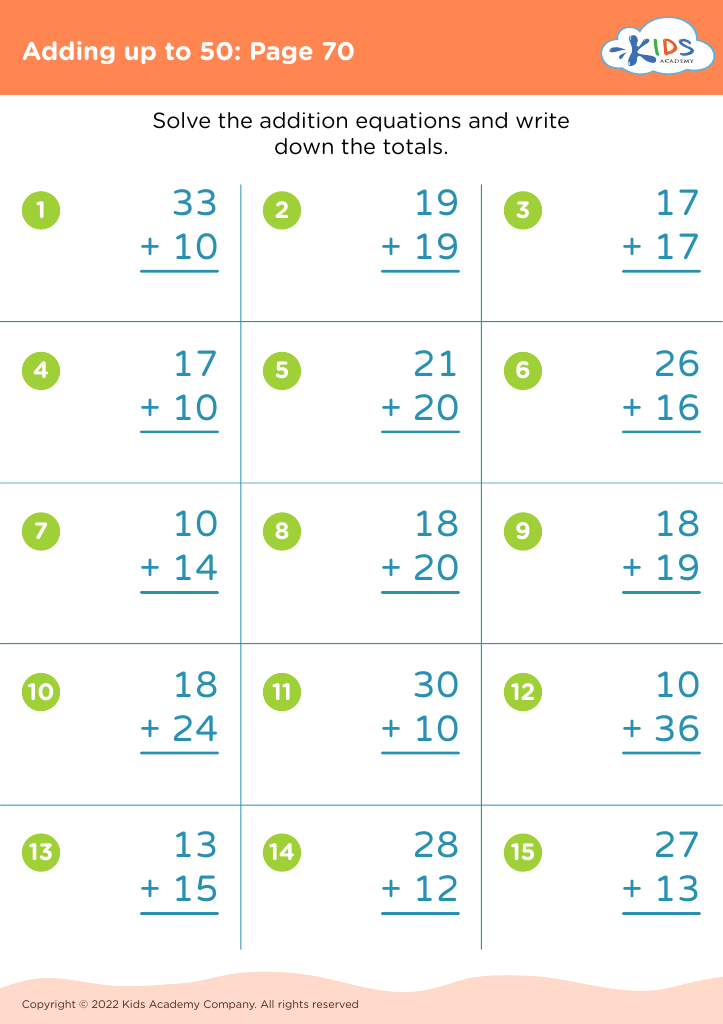
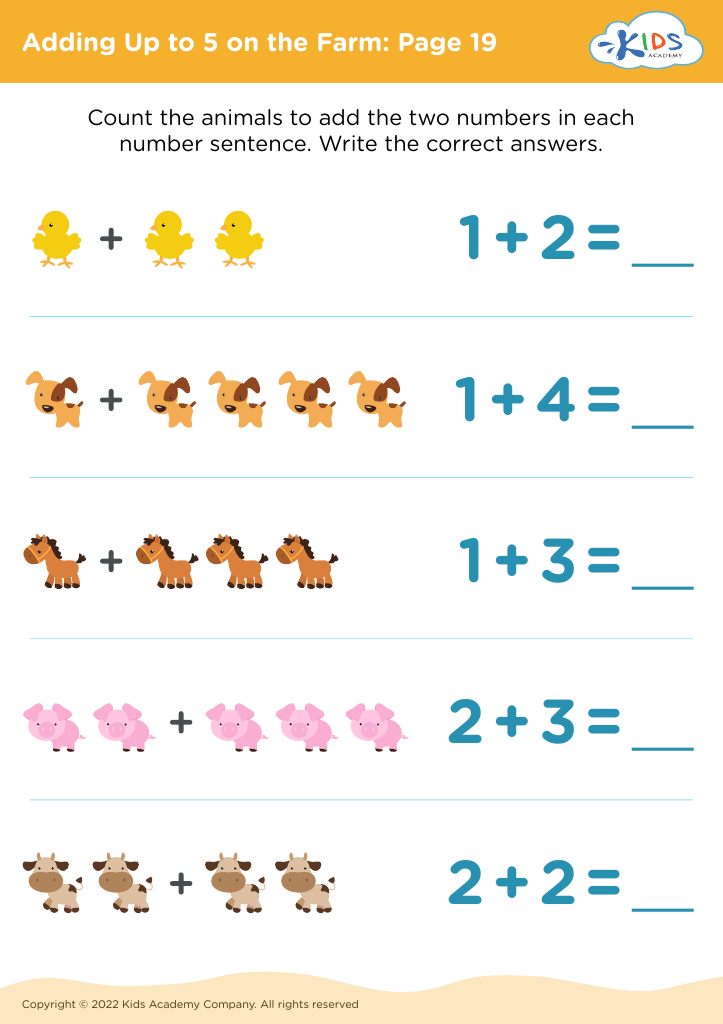
Introduce your little learners to our engaging "Enhancing Observation Skills Addition & Subtraction Worksheets" designed for ages 3-7. These fun and interactive sheets not only build foundational math skills but also sharpen your child's observational abilities. Each worksheet features vibrant, relatable images that encourage kids to observe, count, and compute, creating a dual benefit of improving both math fluency and attention to detail. With a variety of themes and difficulty levels, these worksheets keep young minds active and entertained while they learn. A perfect blend of education and enjoyment, watch your child thrive with our expertly crafted resources!
Favorites
With answer key
Interactive
Join Kids Academy for Free
Who is primarily going to use this learning content?








Enhancing observation skills in young children is fundamental, especially when focusing on key academic areas like addition and subtraction. For ages 3-7, developing robust observation skills is a cornerstone of early learning that captures attention to details, patterns, and sequences—all crucial for mathematical reasoning.
Firstly, observation skills lay the groundwork for understanding and mastering addition and subtraction. These mathematical operations require recognizing quantities, understanding numerical relationships, and discerning changes accomplished through processes of adding or subtracting. By honing observational skills, children become adept at noticing how groups of objects change, fostering a foundational grasp of these mathematical principles.
Secondly, enhanced observation helps cultivate critical thinking and problem-solving abilities. When children actively observe their environment and objects within it, they learn to analyze information, make comparisons, and develop strategies. These cognitive processes directly support their ability to handle basic math problems and later, more complex problem-solving scenarios.
Lastly, fostering these skills early on instills confidence in children. As they successfully use observation to navigate addition and subtraction tasks, their sense of achievement bolsters self-esteem and encourages a positive attitude towards learning, which is vital for their ongoing academic journey.
In essence, focusing on observation skills creates a ripple effect that improves not only mathematical competency but also broader educational outcomes, making it a crucial priority for parents and teachers alike.








