Identifying equivalent fractions Addition & Subtraction Worksheets for Ages 3-7
7 filtered results
-
From - To
Boost your child's math skills with our comprehensive "Identifying Equivalent Fractions: Addition & Subtraction Worksheets" designed for ages 3-7. These engaging, easy-to-follow worksheets focus on helping young learners understand and master the concept of equivalent fractions through fun addition and subtraction exercises. Perfect for early grade students, our printable activities foster confidence and proficiency in fractions, setting a strong foundation for future math success. Ideal for both classroom and home use, these worksheets make learning fractions enjoyable and effective. Explore our extensive collection today and support your child's mathematical journey with Kids Academy!
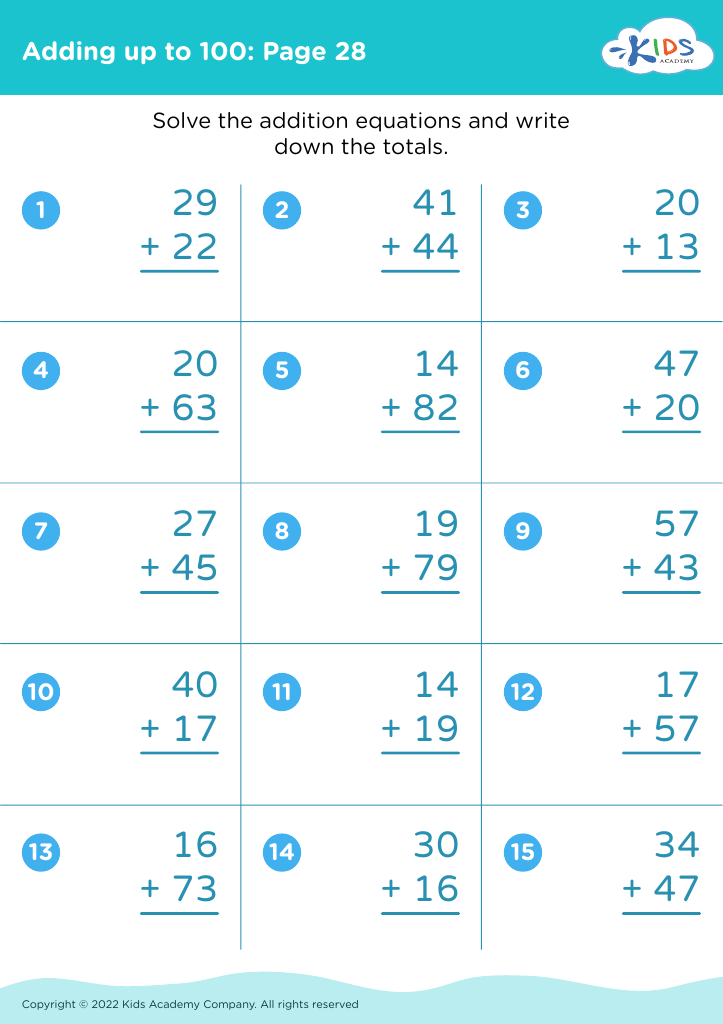
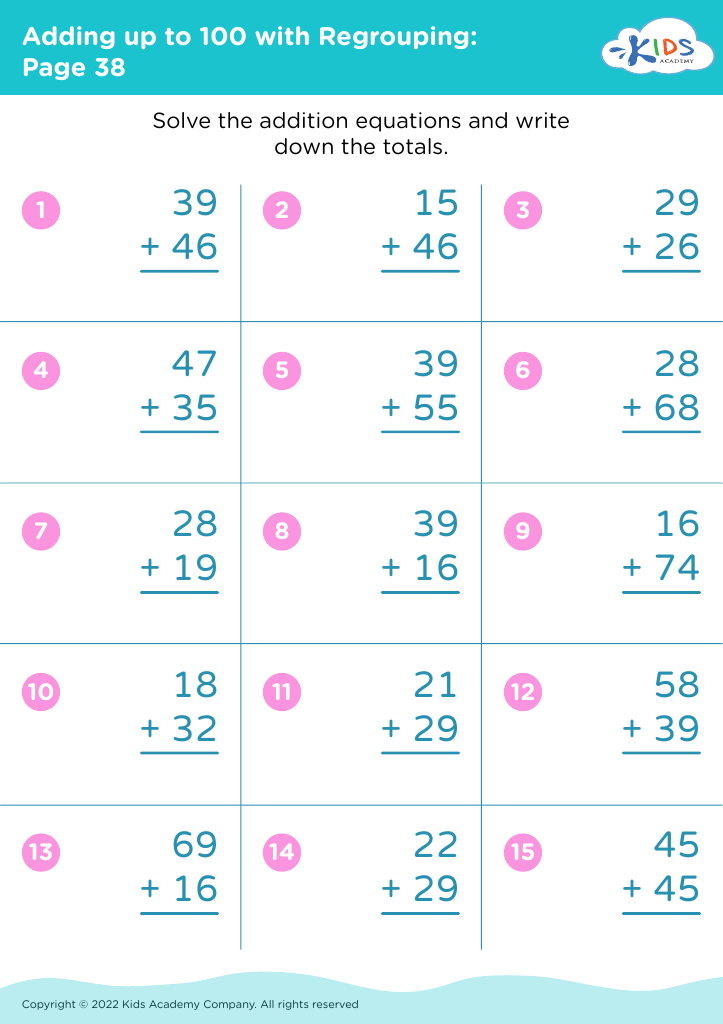
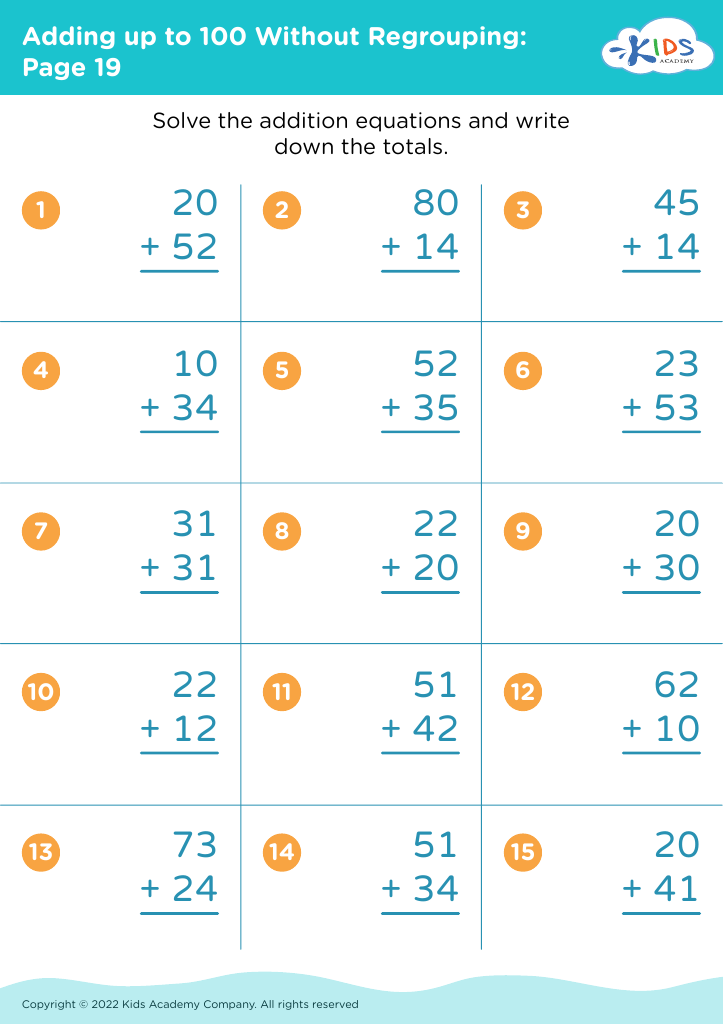
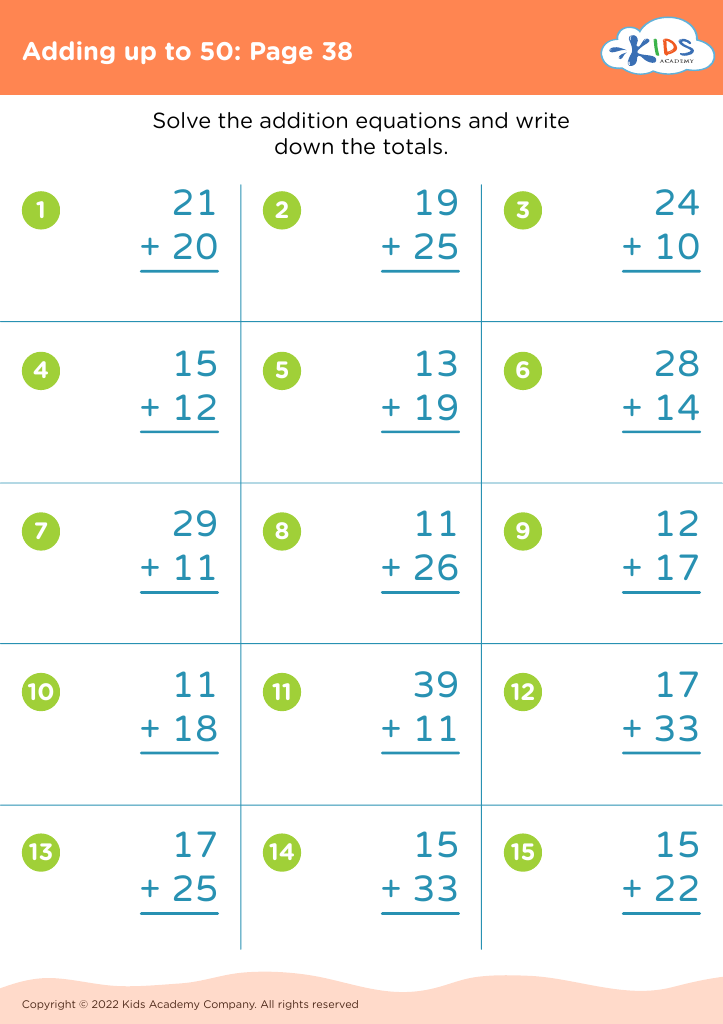
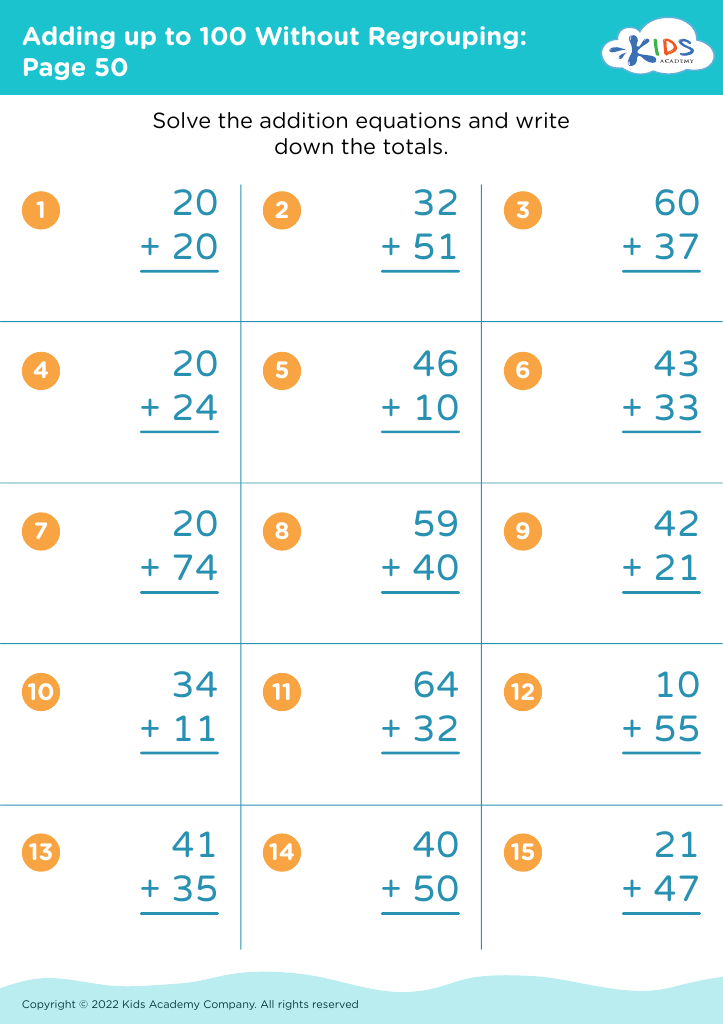
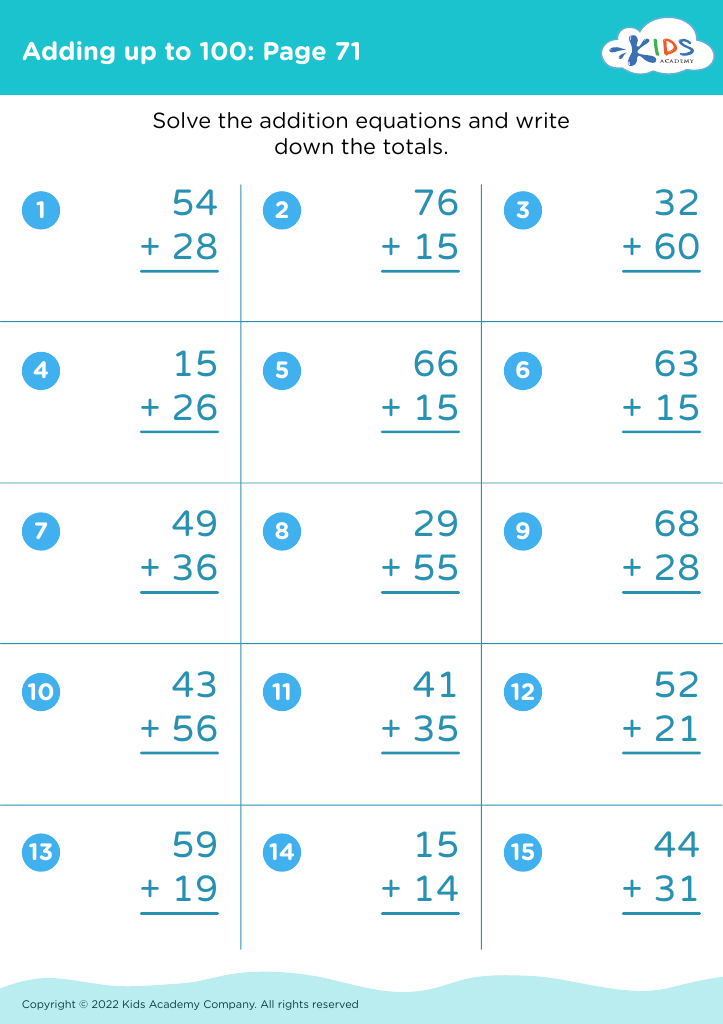
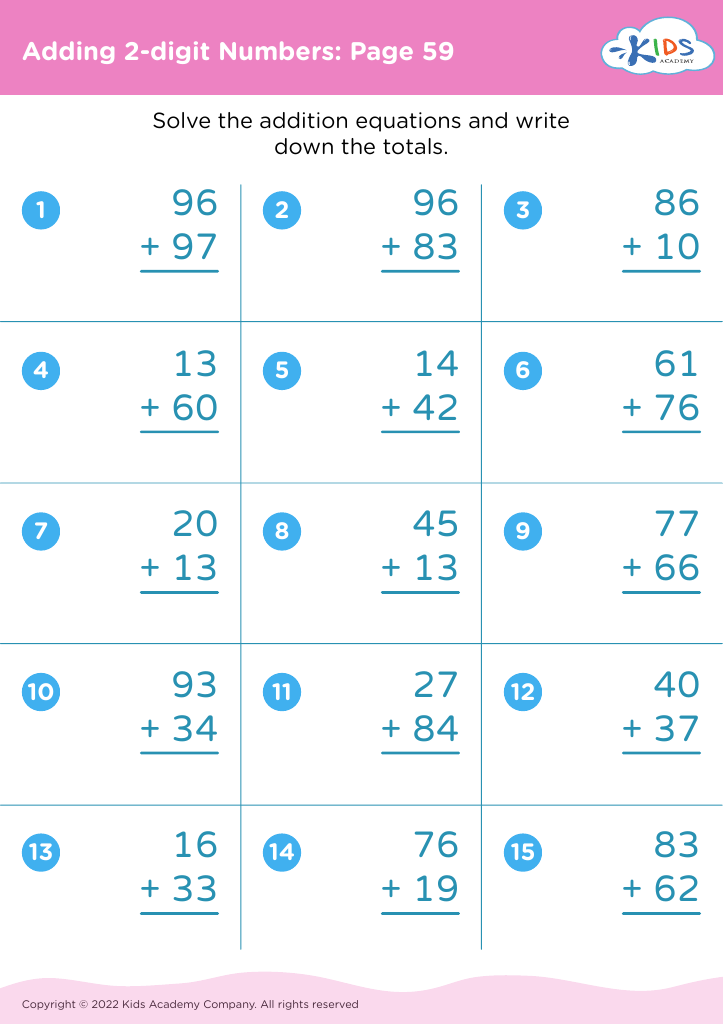








Identifying equivalent fractions and understanding basic addition and subtraction are foundational skills crucial for young children aged 3-7. These concepts lay the groundwork for future math proficiency, which is essential for academic success and everyday problem-solving. When parents and teachers emphasize these skills early on, children develop a strong number sense and a better understanding of relationships between numbers.
Introducing equivalent fractions at a young age helps children recognize that different fractions can represent the same portion of a whole. This understanding is important for developing flexibility in thinking and fostering mathematical reasoning. Teaching addition and subtraction is equally important, as these are fundamental operations that children will use throughout their lives in various contexts such as measurement, money management, and even when following recipes.
Furthermore, identifying equivalent fractions and mastering basic operations enhance cognitive skills, such as logical thinking, pattern recognition, and the ability to follow multi-step processes. Early competence in these areas builds confidence, which encourages a positive attitude towards math and learning in general. Therefore, investing time in teaching these mathematical basics can have long-lasting benefits, setting children on a path towards academic success and equipping them with vital life skills.








