
Improve counting Addition & Subtraction Worksheets for Ages 3-7
3 filtered results
Difficulty Level
Grade
Age
-
From - To
Subject
Activity
Standards
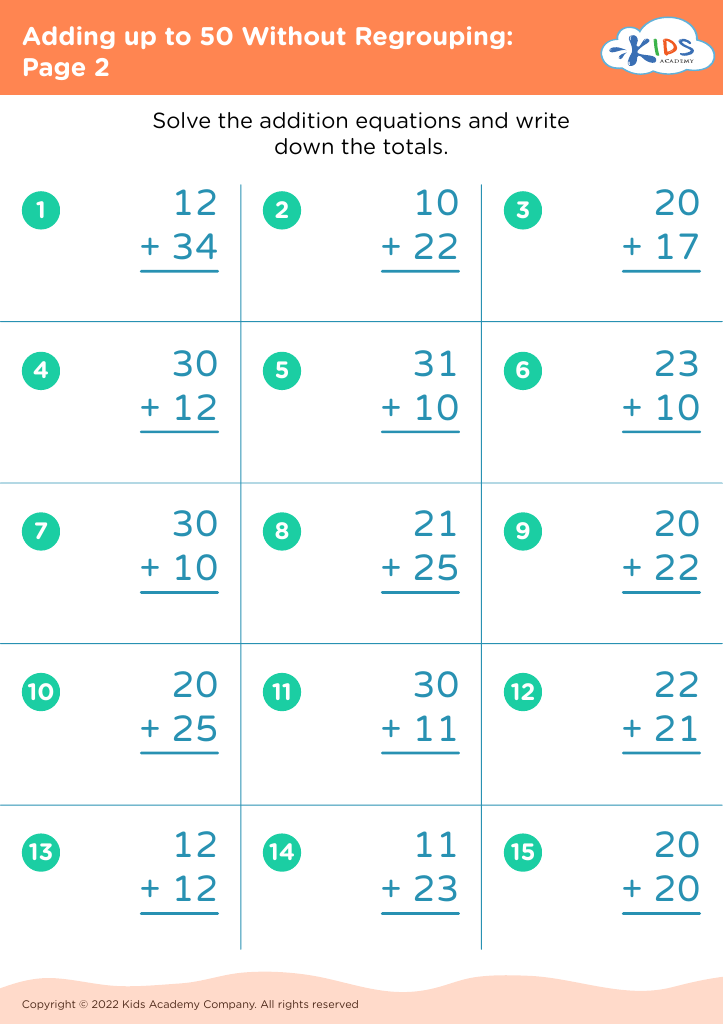
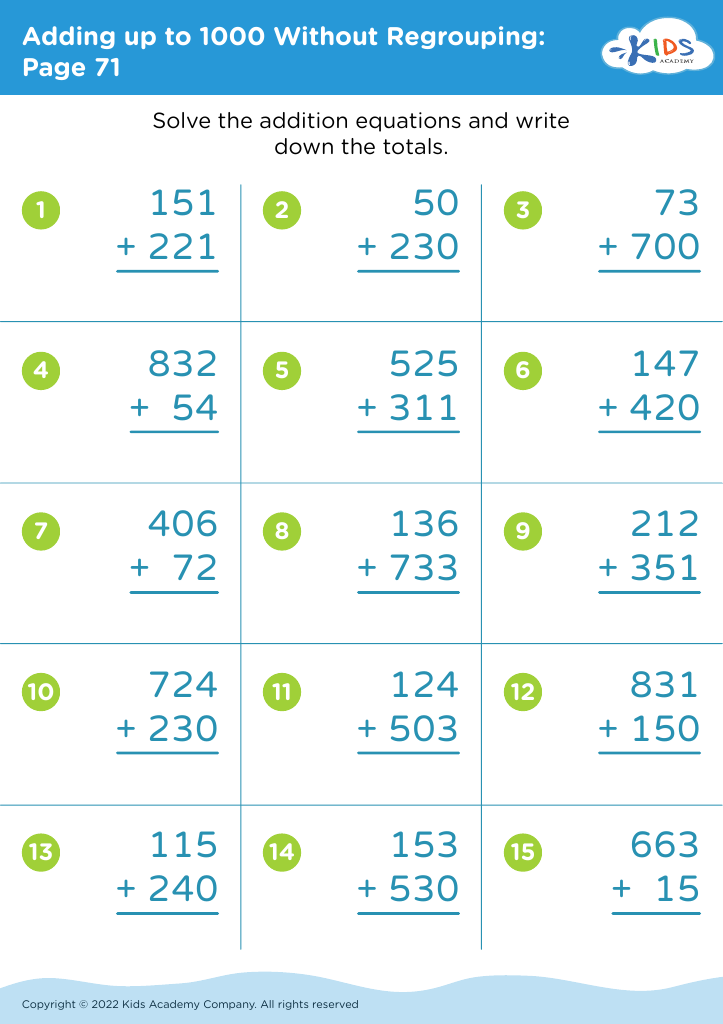
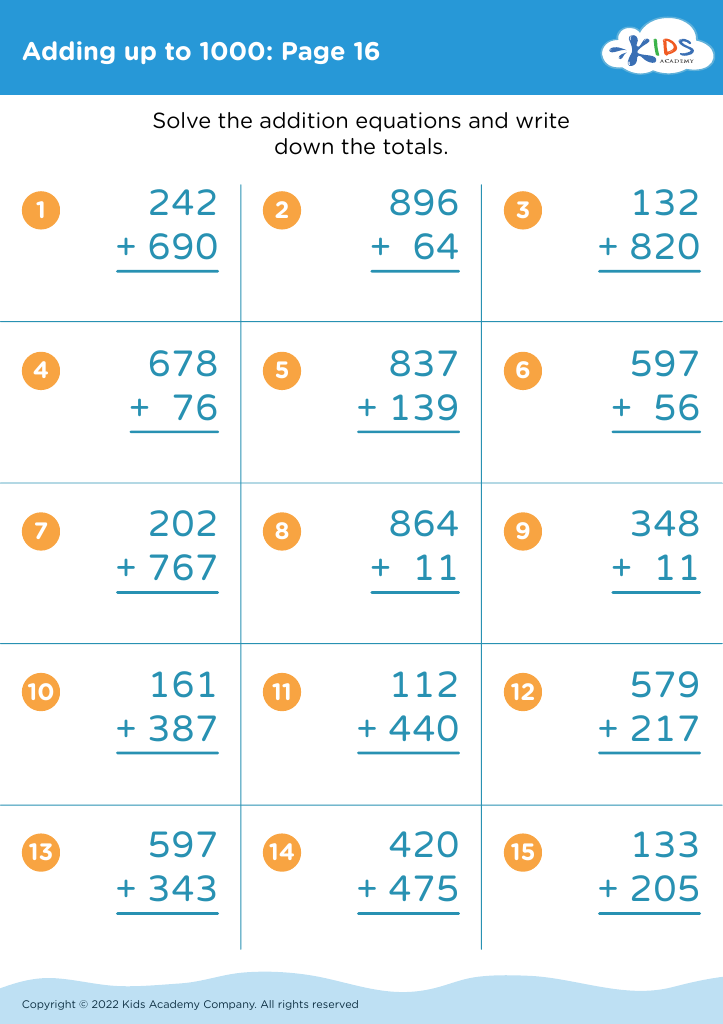
Unlock your child's mathematical potential with our "Improve Counting Addition & Subtraction Worksheets" for ages 3-7! Designed to enhance early math skills, these engaging worksheets help young learners develop counting proficiency alongside addition and subtraction concepts. Each worksheet is crafted with colorful visuals and age-appropriate exercises to make learning fun and interactive. Perfect for homeschooling or classroom use, these resources support children as they grow confident in their mathematical abilities. From basic counting to simple addition and subtraction problems, our worksheets are a valuable tool to foster a strong foundation in math. Dive into the fun of learning today!
Favorites
With answer key
Interactive
Join Kids Academy for Free
Who is primarily going to use this learning content?








Improving counting, addition, and subtraction skills in children aged 3-7 is crucial for several reasons. Firstly, these foundational math skills are essential for everyday life. They help children understand quantities, make sense of money, and develop time management skills. For instance, when kids learn to count, they can grasp the basics of budgeting their allowance or deciding when to have playtime.
Secondly, a strong foundation in these math concepts supports cognitive development. Engaging with numbers fosters critical thinking and problem-solving skills, which are transferable to other academic areas and future learning. Activities focusing on counting and simple arithmetic encourage children to think logically and develop a growth mindset.
Furthermore, early math proficiency correlates with success in later academic endeavors. Studies show that children who build strong number sense in their early years are more likely to excel in more complex math as they progress in school.
Lastly, enhancing these skills can be a fun bonding activity between parents and children or teachers and students. Engaging games, songs, and hands-on activities can nurture a positive attitude towards learning. Overall, prioritizing counting, addition, and subtraction contributes not only to academic success but also to social and emotional development.








