Improving reading skills Addition & Subtraction Worksheets for Ages 3-7
4 filtered results
-
From - To
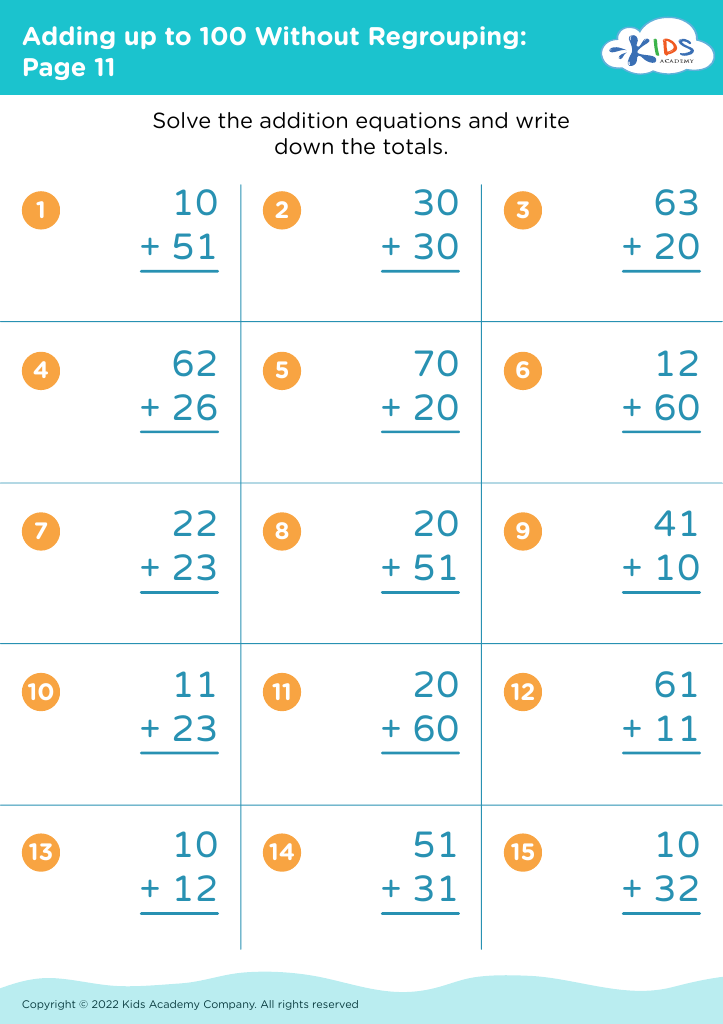
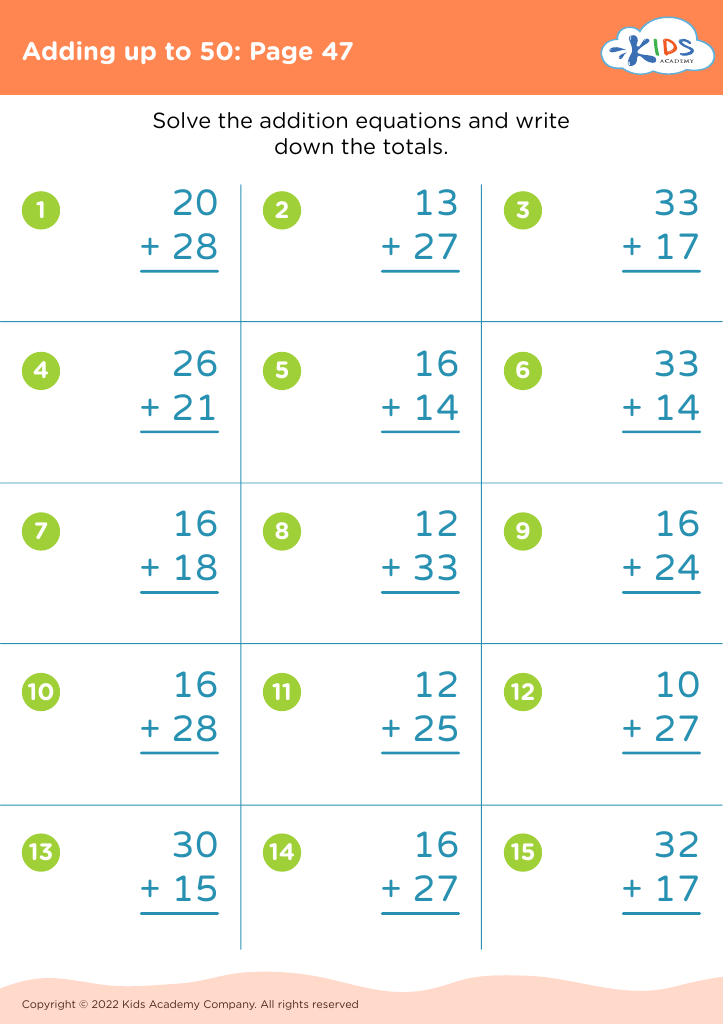
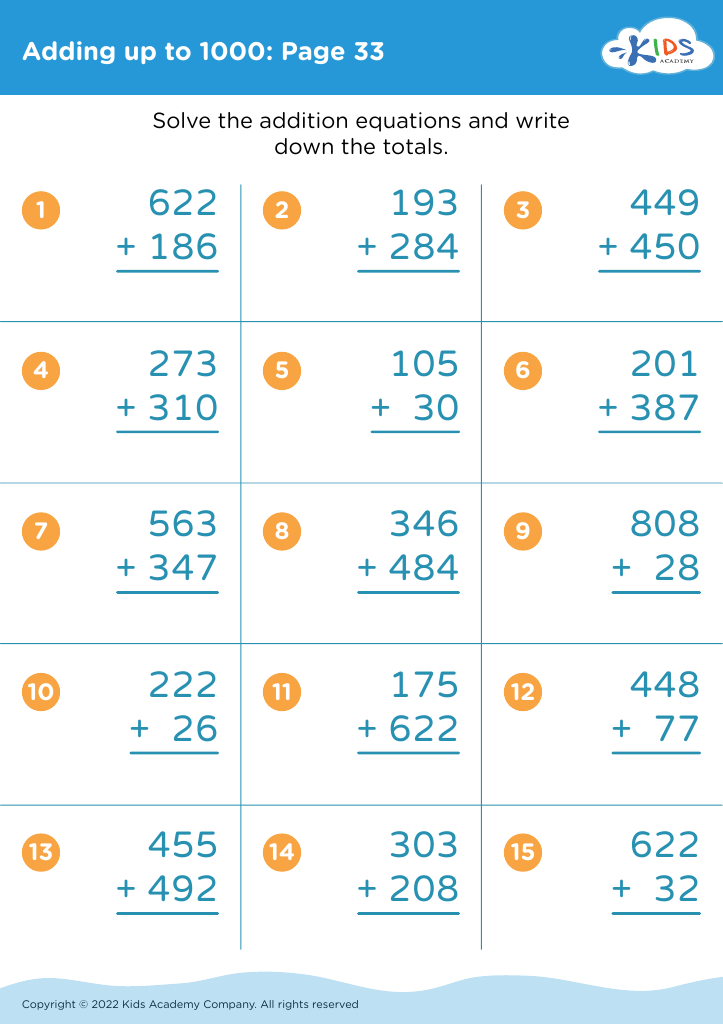
Boost your child's academic success with our "Improving Reading Skills Addition & Subtraction Worksheets for Ages 3-7" at Kids Academy. Perfectly designed to fuse fundamental math concepts with reading enhancement, these worksheets provide a dual-focus approach that keeps young learners engaged and motivated. Your child will enjoy a variety of entertaining activities that support comprehension and problem-solving skills. With vibrant illustrations and age-appropriate challenges, we cater to early learners' developmental needs, ensuring a strong foundation in both language and mathematics. Empower your child to excel academically while making learning both fun and effective!









Parents and teachers play a crucial role in nurturing early reading skills and foundational arithmetic abilities like addition and subtraction for children ages 3-7. At this developmental stage, young brains are highly receptive and form critical neural connections that lay the groundwork for future learning.
Improving reading skills enhances vocabulary, comprehension, and cognitive abilities, fostering a lifelong love of learning. Early readers are often more confident in exploring new subjects and asking questions, which cultivates curiosity and critical thinking. Moreover, recognizing letters and sounds equips children to decode words, transforming reading from a challenge into an adventure.
On the other hand, mastering basic arithmetic through addition and subtraction introduces children to the world of numbers, helping them understand the principles of mathematics. This foundation is vital for more complex concepts they will encounter later. Additionally, manipulating numbers improves logical reasoning and problem-solving abilities.
Both reading and basic math are not just academic skills but essential life skills. These early abilities lead to increased academic achievement, better opportunities, and higher self-esteem. Therefore, investing time and effort in improving these basic skills during their formative years sets children up for long-term success, making it imperative for parents and teachers to prioritize their development.








