Learning number patterns Addition & Subtraction Worksheets for Ages 3-7
3 filtered results
-
From - To
Welcome to our "Learning Number Patterns: Addition & Subtraction Worksheets" for children aged 3-7! This thoughtfully designed collection of worksheets aims to help young learners understand and recognize number patterns while developing essential addition and subtraction skills. Each worksheet features engaging activities that combine fun visuals with educational content, fostering a love for math. Designed specifically for early learners, our worksheets encourage hands-on practice and critical thinking. Parents and teachers will find these resources invaluable in supporting children's mathematical development and laying a strong foundation for future success in math. Explore our printable worksheets today to inspire your child's learning journey!
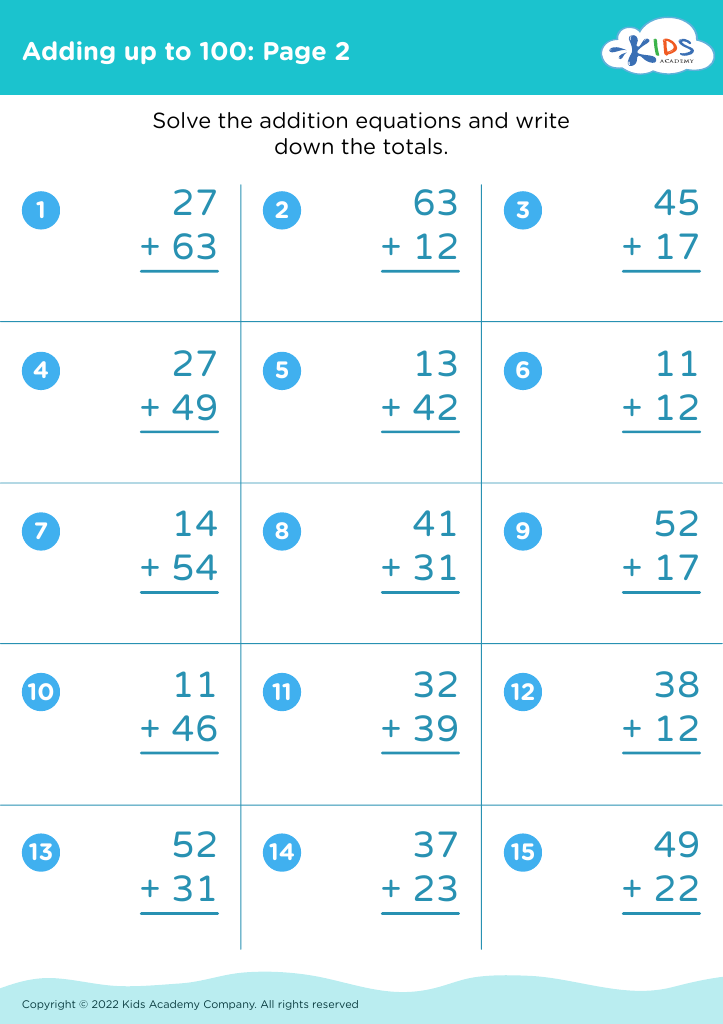
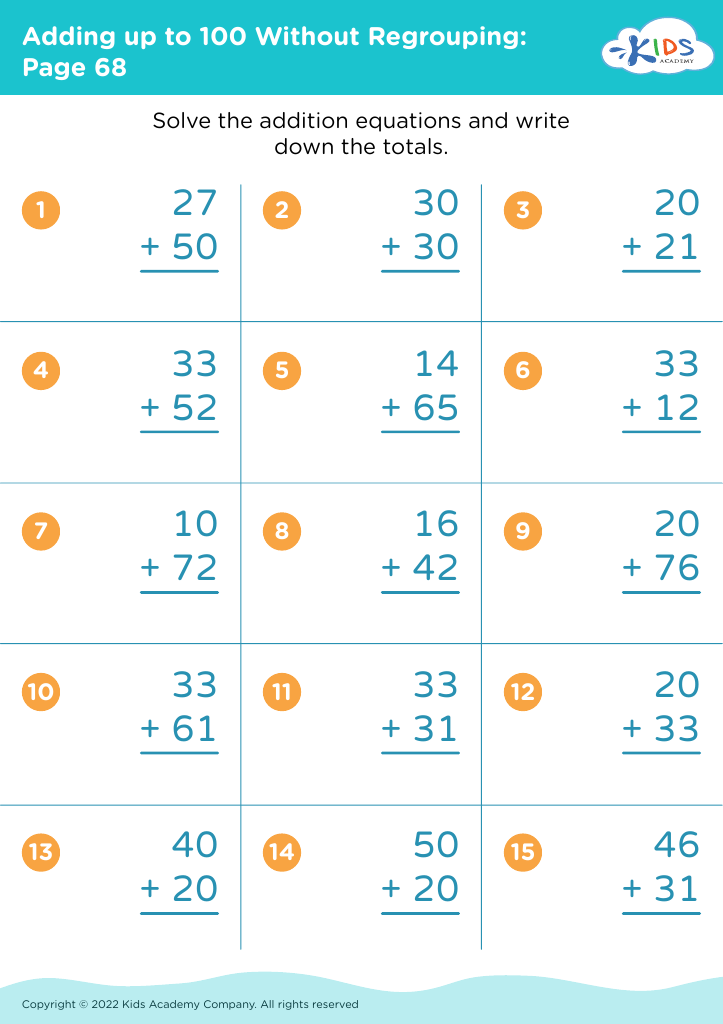
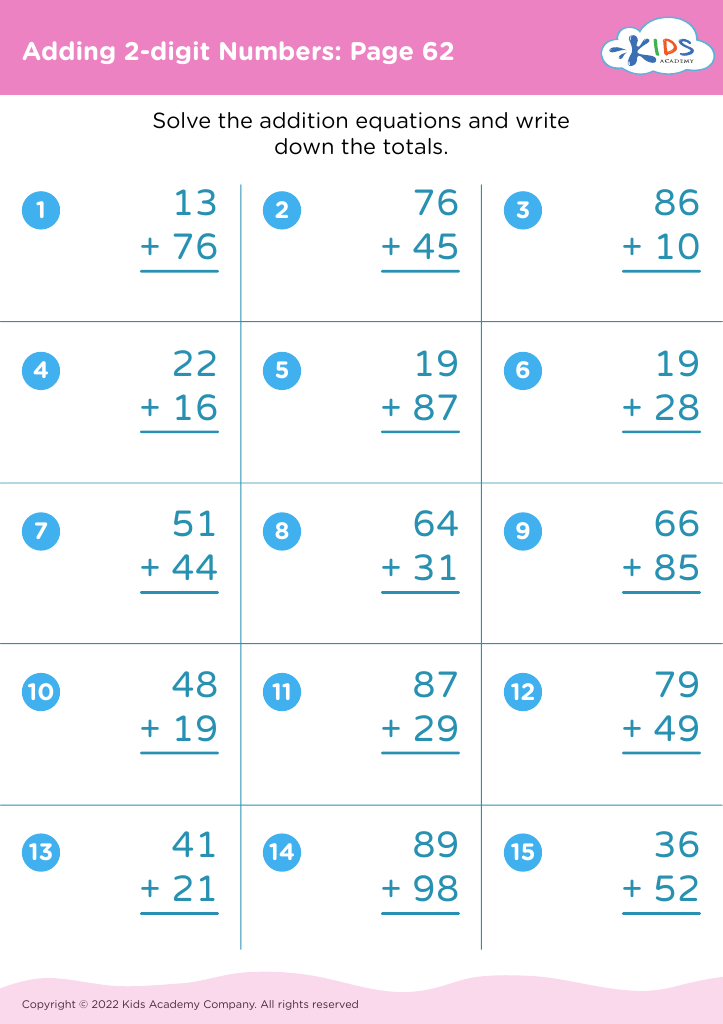








Understanding number patterns in addition and subtraction is crucial for children aged 3-7 as it lays the foundation for their future mathematical skills. During these formative years, youngsters develop essential cognitive abilities and are exposed to key mathematical concepts. Recognizing and working with number patterns helps children grasp the relationship between numbers, enhancing their problem-solving skills.
Learning number patterns fosters logical thinking and develops early numeracy skills. When children identify patterns, such as counting by twos, fives, or tens, they begin to see the structure in mathematics, making calculations intuitive, not just rote memorization. Additionally, this understanding aids in mastering the basic operations of addition and subtraction.
Moreover, a solid grip on patterns equips children for more complex mathematical concepts as they progress through school, including multiplication and division. Parents and teachers play a vital role by engaging children in playful, pattern-related activities, ensuring a comfortable understanding of numbers in various contexts.
By nurturing this foundational skill, caregivers not only enhance children's mathematical abilities but also instill confidence that will benefit them across all academic subjects and in real-life problem-solving scenarios. Hence, an emphasis on number patterns is essential in early education.








