Practical math application Addition & Subtraction Worksheets for Ages 3-7
3 filtered results
-
From - To
Discover our engaging Addition & Subtraction Worksheets designed specifically for children aged 3-7. These practical math application worksheets offer an exciting way for young learners to master fundamental math concepts through interactive activities. With a focus on real-world scenarios, kids will connect math to everyday situations, enhancing their understanding and retention. Perfect for home or classroom use, these worksheets feature colorful illustrations and age-appropriate exercises that make learning fun. Help your child build a strong foundation in math while developing critical thinking skills. Explore our collection today and watch your child's confidence and abilities grow as they tackle addition and subtraction with ease!
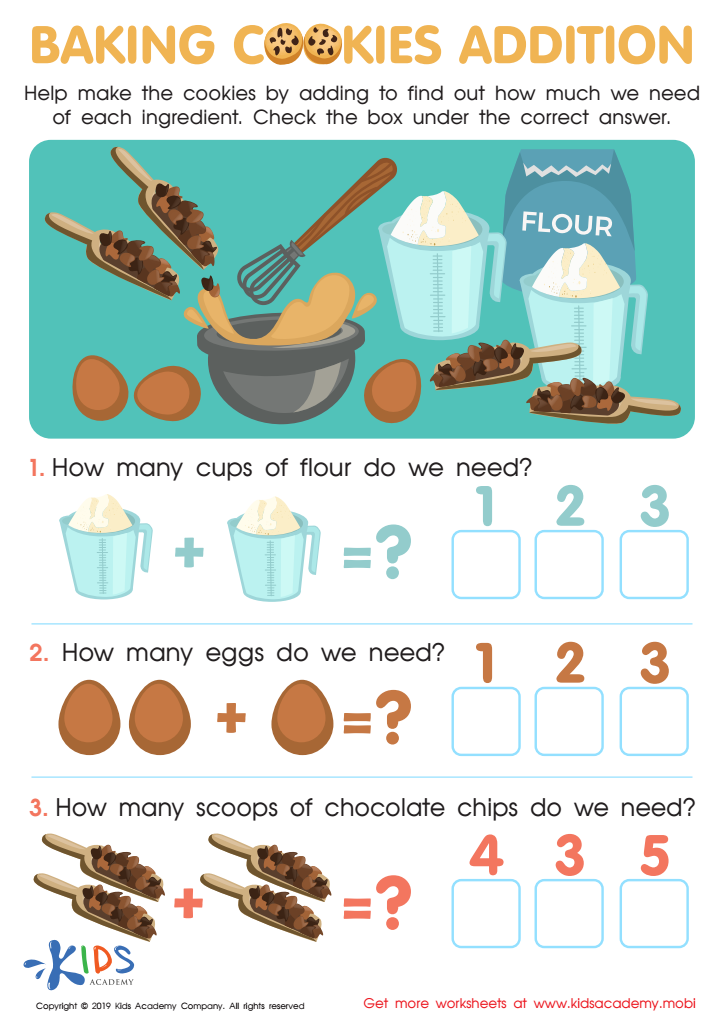
Baking Cookies Addition Worksheet
 Assign to My Students
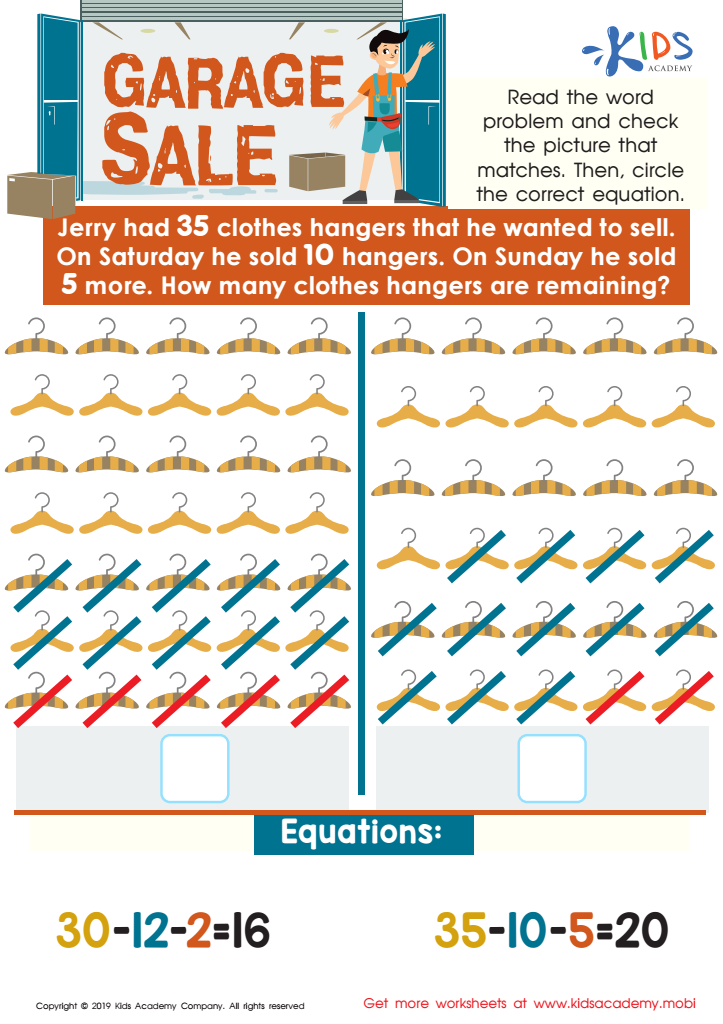
Garage Sale Worksheet
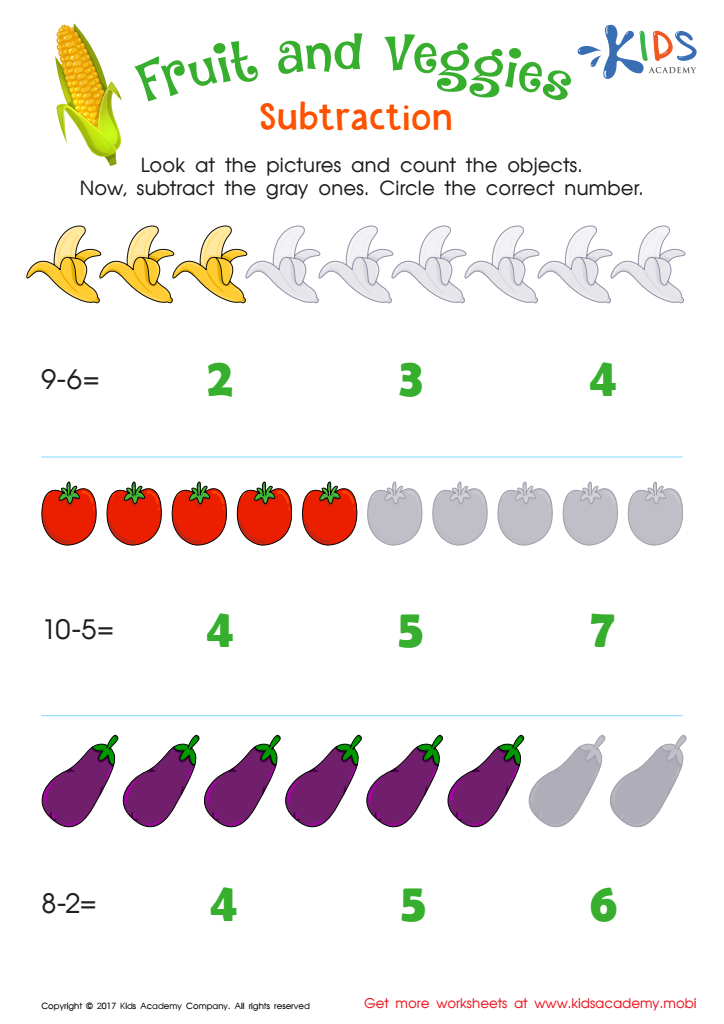
Fruit and Veggies Subtraction Worksheet








Practical math application of addition and subtraction for children aged 3-7 is crucial for several reasons. First and foremost, these foundational skills foster critical thinking and problem-solving abilities. By engaging in hands-on activities, such as counting toys, fruits, or using everyday objects, young learners can see math in action, making it more relatable and enjoyable. This practical application allows children to understand that math is not just abstract concepts but a useful tool in everyday life.
Moreover, early exposure to addition and subtraction strengthens cognitive development. Engaging with math concepts through play and real-life scenarios reinforces memory and enhances numeracy skills. Children learn to recognize patterns, quantities, and relationships, setting the stage for more advanced math in later years.
Additionally, building a positive attitude toward math early on can reduce anxiety and aversion as children progress in school. Teachers and parents who emphasize these practical applications create an environment where learning is fun and relevant. This solid foundation in basic math promotes academic success and prepares children for more complex mathematical concepts in the future. Overall, practical math experiences stimulate curiosity, encourage active learning, and empower children to apply their knowledge in meaningful ways.








