Practice inference skills Addition & Subtraction Worksheets for Ages 3-7
3 filtered results
-
From - To
Unlock your child’s potential with our "Practice Inference Skills Addition & Subtraction Worksheets for Ages 3-7". Tailored to foster early math skills, these engaging worksheets blend addition and subtraction with inference tasks, promoting critical thinking and problem-solving abilities. Colorful illustrations and fun scenarios keep young learners motivated, while carefully crafted questions ensure age-appropriate challenges. Ideal for both classroom and home use, our worksheets help kids grasp foundational concepts effortlessly. Watch your child’s confidence and skills grow as they master arithmetic and enhance their inferential thinking. Spark a lifelong love of learning with our expertly designed practice materials!
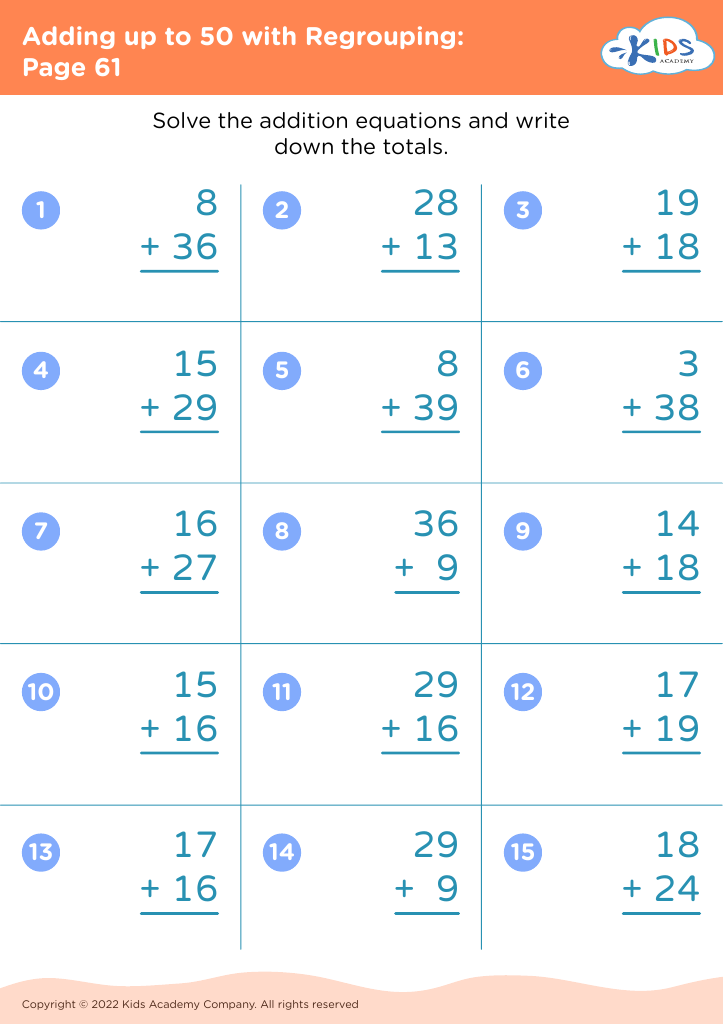
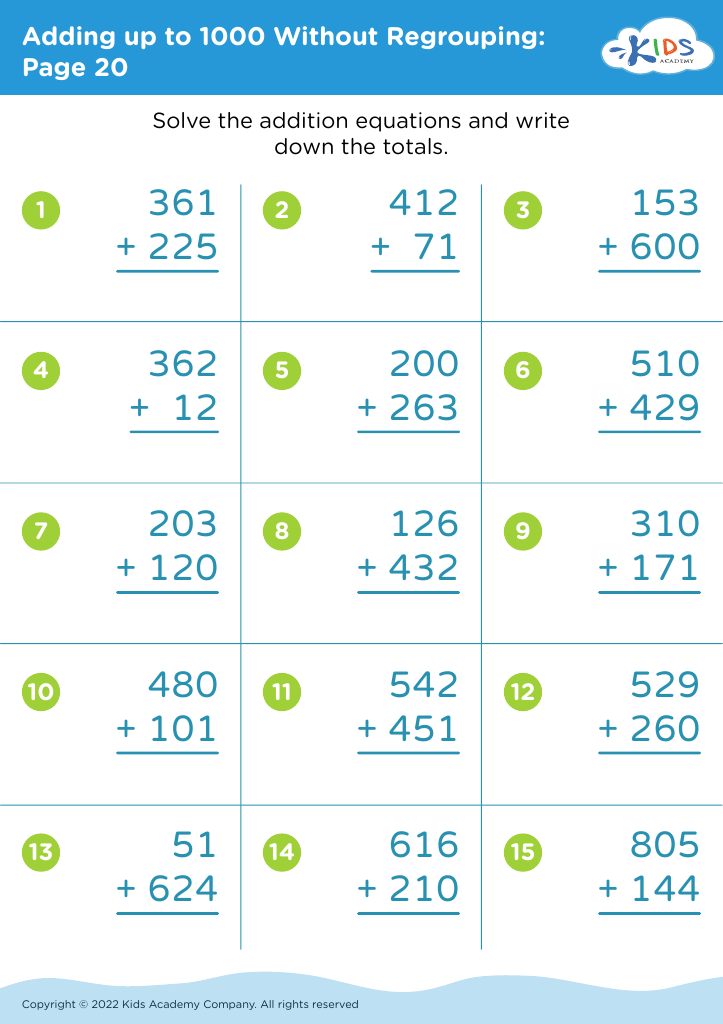
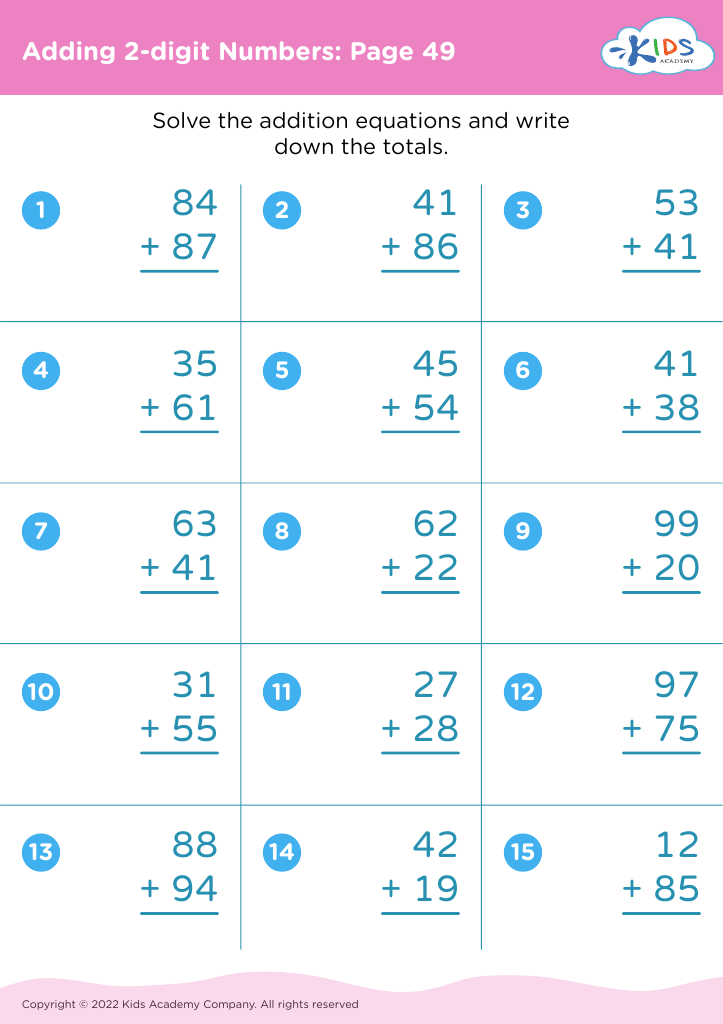








Parents and teachers should prioritize practicing inference skills in addition and subtraction for children ages 3-7 because foundational numeracy is vital for future academic success. During these early years, the brain's plasticity makes it a prime time for learning mathematical concepts. Incorporating inference skills helps children develop critical thinking and problem-solving abilities.
For instance, when children are given puzzles or stories where they need to deduce the number of objects added or taken away, it encourages them to think logically about relationships between numbers. This stimulates cognitive processes that extend beyond basic arithmetic, aiding in overall intellectual development.
Furthermore, early competence in addition and subtraction fosters confidence. When children gain accuracy and speed in these fundamental operations, they are more likely to develop a positive attitude toward math. This sense of accomplishment is critical in motivating continued interest and effort in the subject.
In a classroom setting, focusing on these skills aids in building a strong mathematical foundation. It prepares students for more complex concepts such as multiplication, division, and algebra. Additionally, collaborative activities involving these skills promote teamwork and communication, essential for social-emotional development.
Therefore, taking the time to practice and hone these skills ensures children are well-equipped both academically and socially for the challenges ahead.








