Practicing addition Addition & Subtraction Worksheets for Ages 3-7
4 filtered results
-
From - To
Introduce your young learners to the exciting world of math with our specially designed Addition & Subtraction Worksheets for Ages 3-7. Created to promote foundational skills, these engaging worksheets enable children to practice addition and subtraction. They feature colorful images and fun activities, keeping learning interactive and fun. Tailored for early learners, the worksheets help build confidence and solidify math fundamentals through a variety of exercises and challenges. Perfect for use at home or in the classroom, they provide the support needed to ensure your child excels in their early math journey. Download now and make math enjoyable!
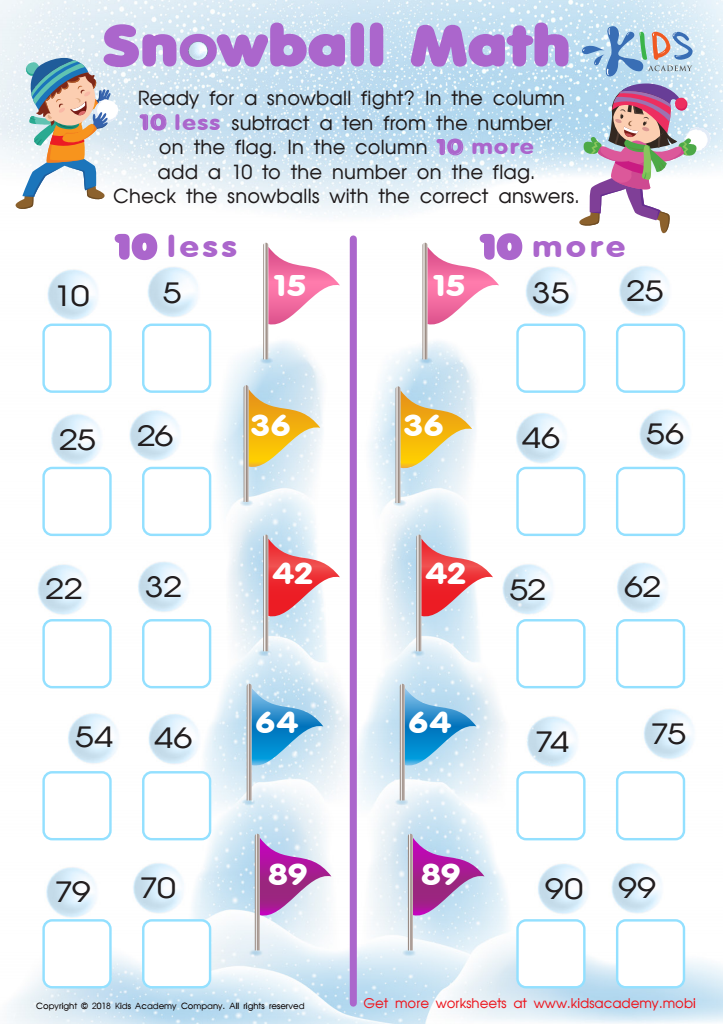
Snowball Math Worksheet
 Assign to My Students
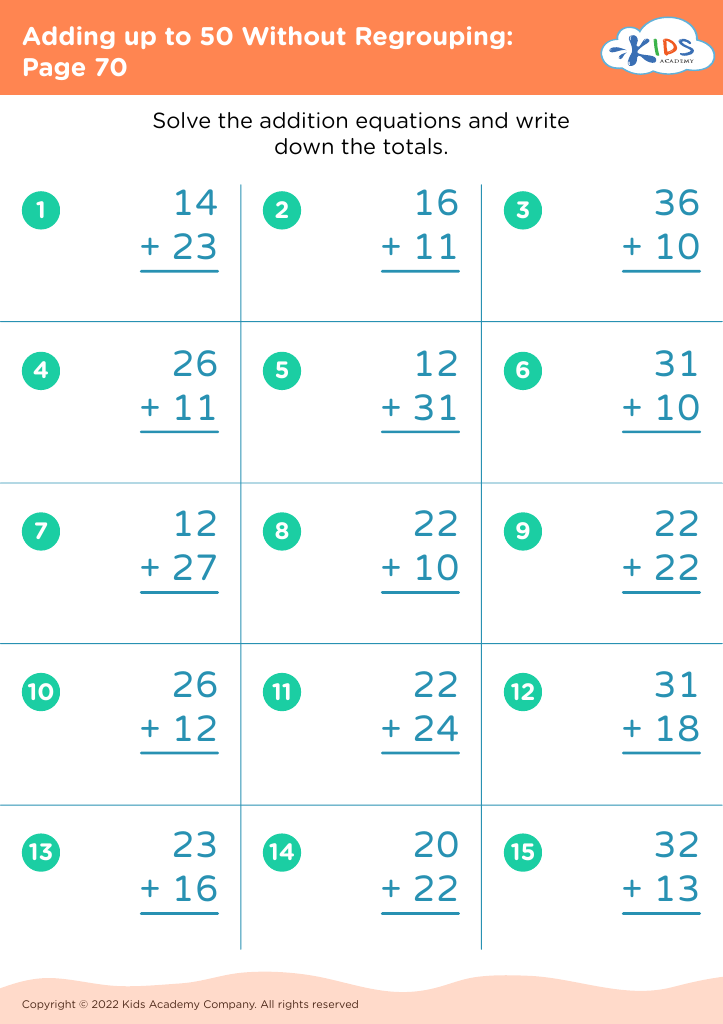
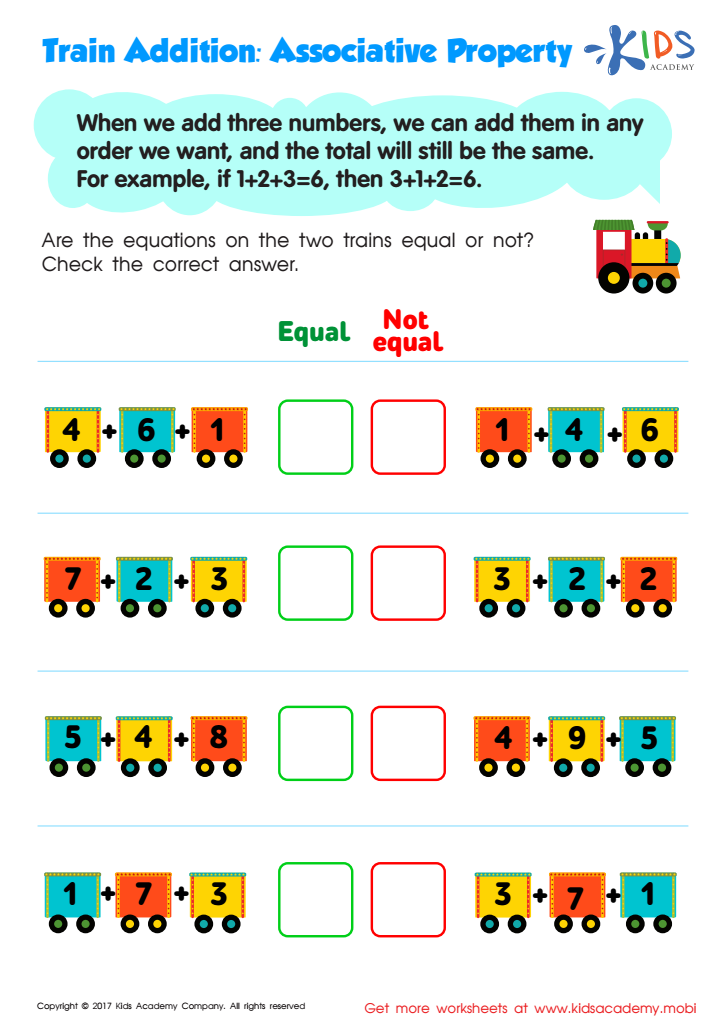
Train Addition: Associative Property Worksheet
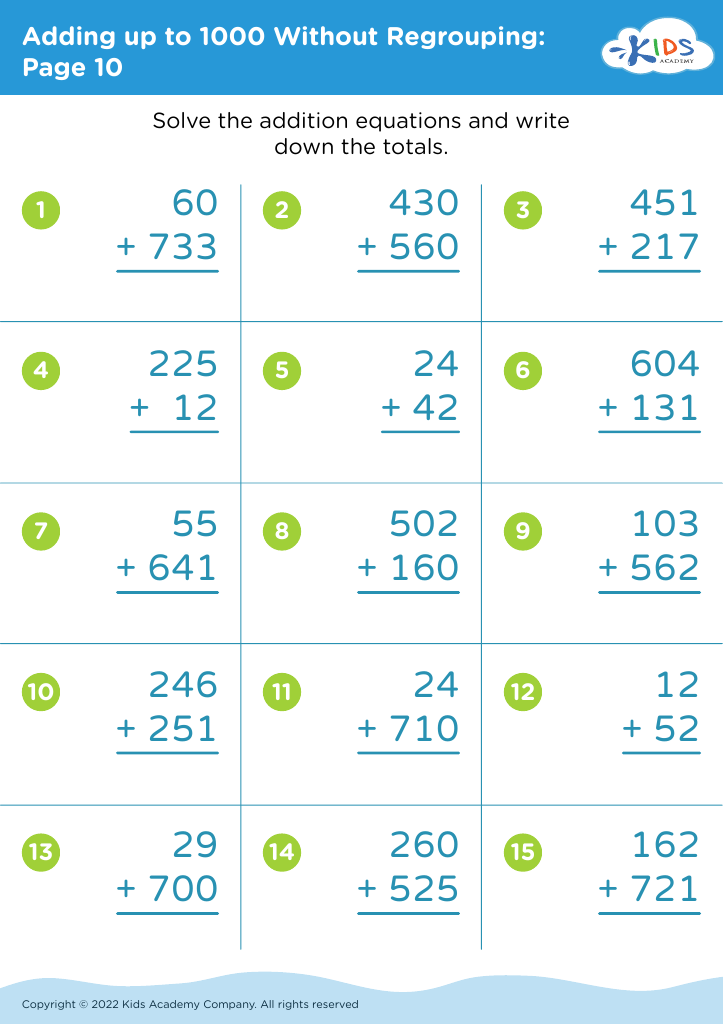








Practicing addition and subtraction for children aged 3-7 is crucial for laying a strong mathematical foundation. At this young age, children are highly receptive to learning new concepts. Introducing them to basic arithmetic helps to develop critical thinking and problem-solving skills, which are essential for their cognitive development. When children understand how to add and subtract, they are better equipped to handle more complex mathematical concepts later on.
Moreover, early proficiency in arithmetic fosters a sense of confidence and curiosity in children. They become less likely to develop a fear of math, which is a common barrier to academic achievement. According to research, early math skills are among the strongest predictors of later academic success, including literacy. As such, mastering these basics can have a positive ripple effect on other areas of learning.
On a practical level, addition and subtraction are fundamental life skills. From counting toys to understanding money, these skills help children make sense of everyday activities. Parents and teachers play a pivotal role in making math fun and engaging, using games, visual aids, and hands-on activities to teach these concepts. Thus, fostering early arithmetic skills is not just about academics—it also prepares children for real-world scenarios, ensuring they grow into capable, confident individuals.








