Problem-solving development Addition & Subtraction Worksheets for Ages 3-7
3 filtered results
-
From - To
Discover our engaging Problem-Solving Development Worksheets designed specifically for children aged 3-7, focusing on addition and subtraction skills. These interactive worksheets promote critical thinking and mathematical reasoning through fun, age-appropriate activities. Each worksheet encourages young learners to tackle real-life scenarios, enhancing their ability to solve problems while building a strong foundation in basic math. With colorful illustrations and straightforward instructions, these resources are perfect for parents and educators looking to foster confidence in young mathematicians. Download our worksheets today and watch your child's mathematical skills flourish as they learn through play!
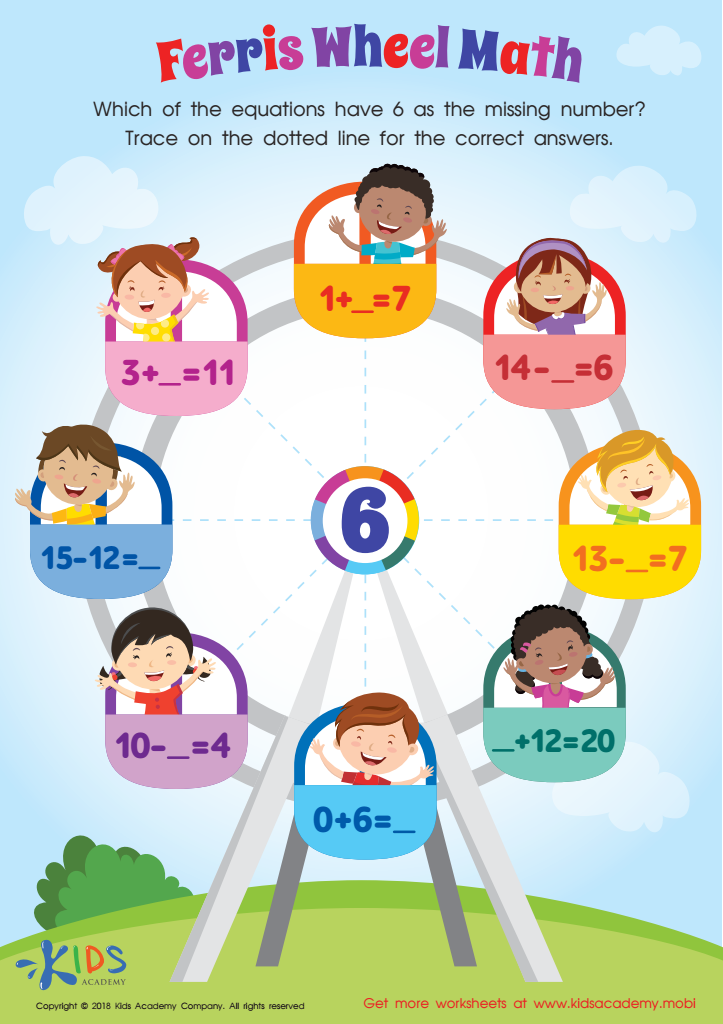
Missing Number: Ferris Wheel Math Worksheet
 Assign to My Students
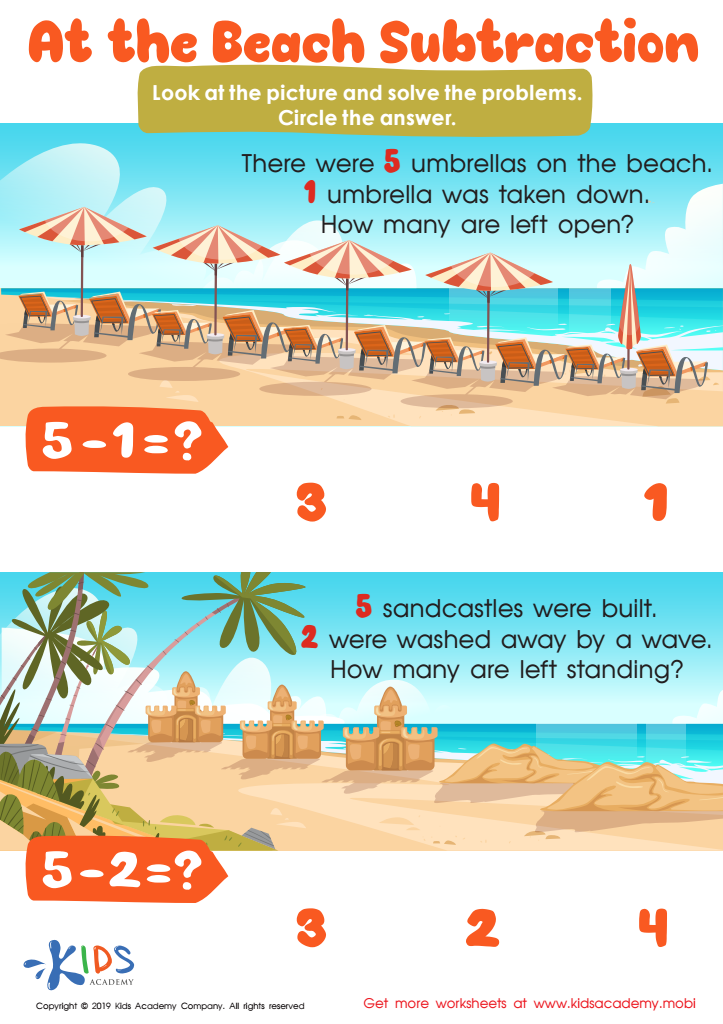
At the Beach Subtraction Worksheet
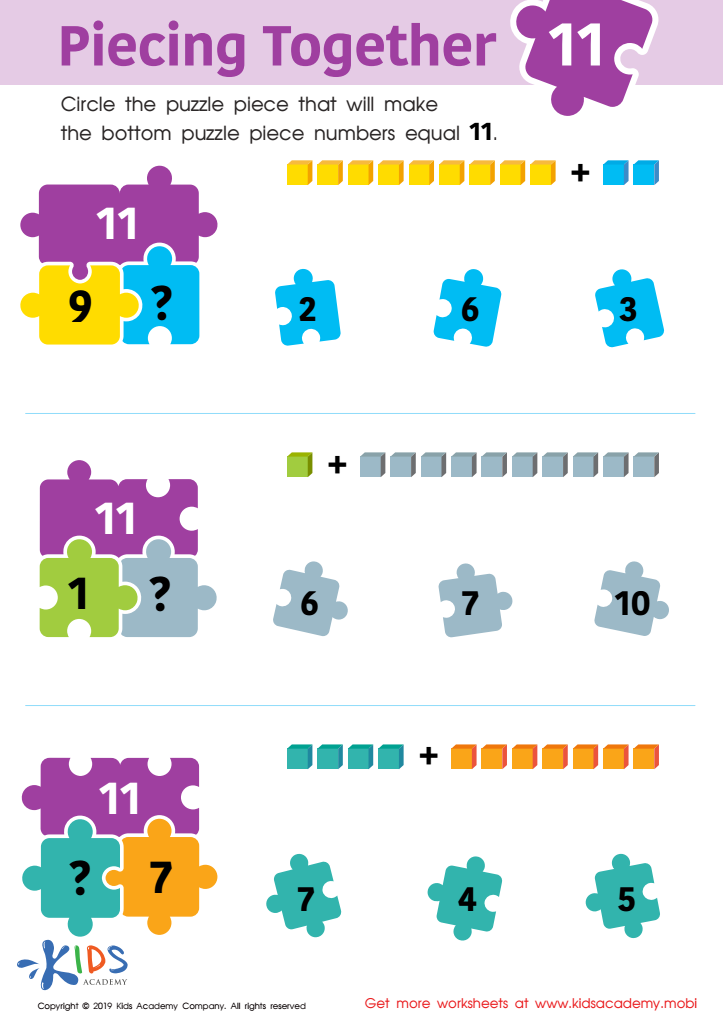
Piecing Together 11 Worksheet








Understanding problem-solving in addition and subtraction for children aged 3-7 is critical to their overall cognitive and social development. During these formative years, children are not just learning mathematical operations; they are also developing critical thinking skills. Early math experiences set the foundation for more complex problem-solving tasks in later years, enabling children to recognize patterns, make predictions, and think logically.
Incorporating addition and subtraction into daily activities helps children grasp these concepts through practical experiences, enhancing their motivation to learn. When parents or teachers engage children in hands-on activities—like counting fruits, sharing toys, or playing math games—they cultivate a positive attitude toward math and deepen their understanding of quantity and operations.
Problem-solving enhances children’s ability to approach challenges in structured ways. It promotes resilience and perseverance as they navigate through struggles and successes in math tasks. Furthermore, being proficient in these areas fosters self-confidence, which is essential as they move on to more complex academic subjects.
By prioritizing problem-solving in early math education, parents and teachers contribute significantly to building a child’s intellectual toolkit, setting them up for success in school and beyond. Recognizing the importance of these foundational skills can create lifelong learners who are equipped to tackle various life challenges.








