Shape identification Addition & Subtraction Worksheets for Ages 3-7
14 filtered results
-
From - To
Discover our engaging "Shape Identification Addition & Subtraction Worksheets" designed specifically for children aged 3-7! These worksheets combine essential math skills with fun shape recognition activities to foster a well-rounded learning experience. Your little learners will practice adding and subtracting while identifying various shapes such as circles, squares, and triangles, reinforcing their shape knowledge in a playful context. With colorful illustrations and simple instructions, these worksheets are perfect for home or classroom use. Enhance your child’s cognitive and motor skills as they explore math and shapes together, nurturing their confidence and enthusiasm for learning! Get started today and watch them thrive!
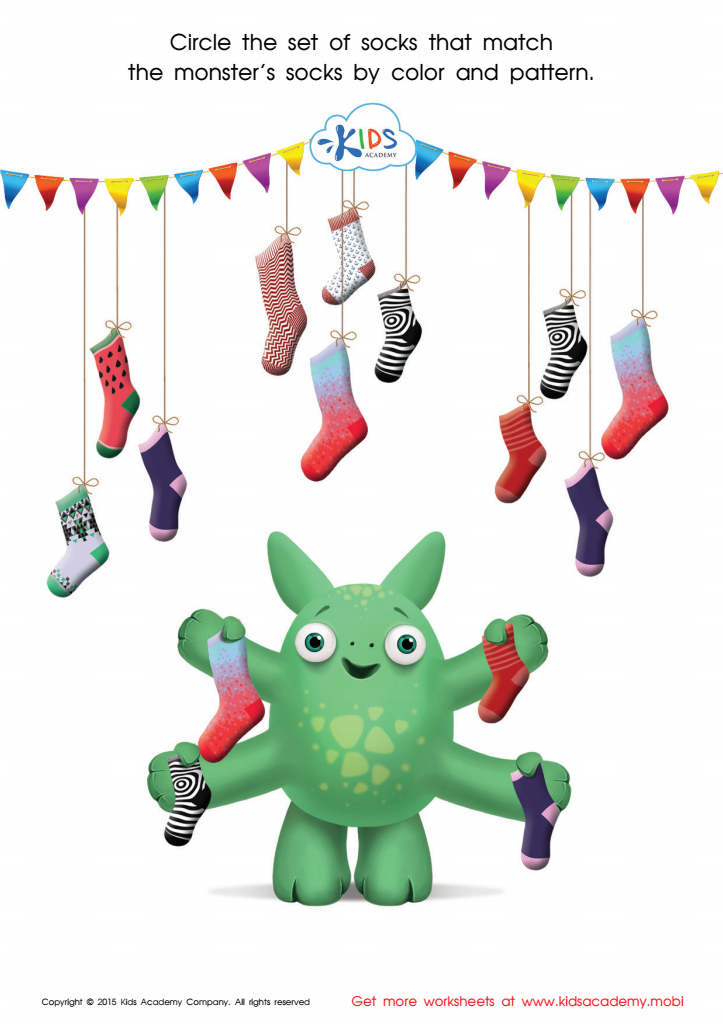
Sort the Monster's Socks Worksheet
 Assign to My Students








Shape identification and basic addition and subtraction are foundational skills for children aged 3-7 that significantly contribute to their overall development. Understanding shapes enriches a child's spatial awareness, enhancing their ability to perceive and interact with the world around them. This active engagement with shapes develops critical thinking, problem-solving, and logical reasoning skills.
Addition and subtraction are fundamental mathematical concepts that lay the groundwork for all future arithmetic learning. Early exposure to these skills fosters number sense, allowing children to comprehend quantities and relationships between numbers. These skills also boost cognitive development and encourage the use of creative strategies to solve problems.
Teachers and parents play a crucial role in nurturing these abilities through engaging activities such as shape sorting and using everyday objects for counting. By introducing shapes and basic math in a playful context, caregivers can cultivate a love of learning, making children more confident and inquisitive.
Moreover, these foundational skills facilitate better performance in school, as they foster readiness for more complex mathematical concepts and support academic success. In nurturing shape identification and early math skills, parents and educators are laying the groundwork for lifelong learning and critical thinking.








