Telling time Addition & Subtraction Worksheets for Ages 3-7
3 filtered results
-
From - To
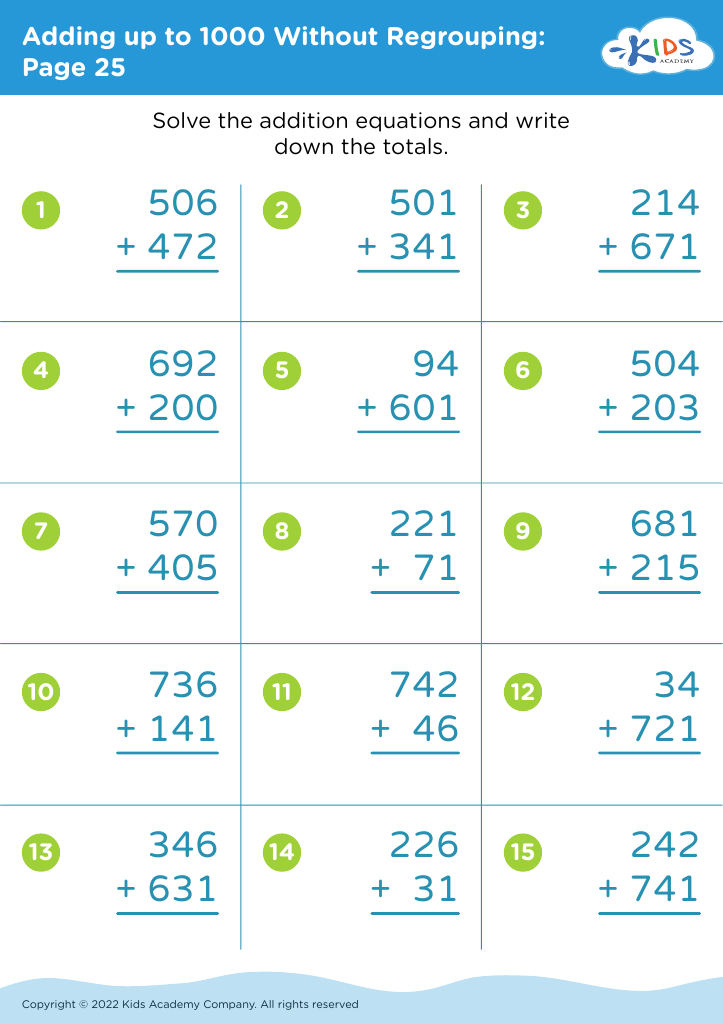
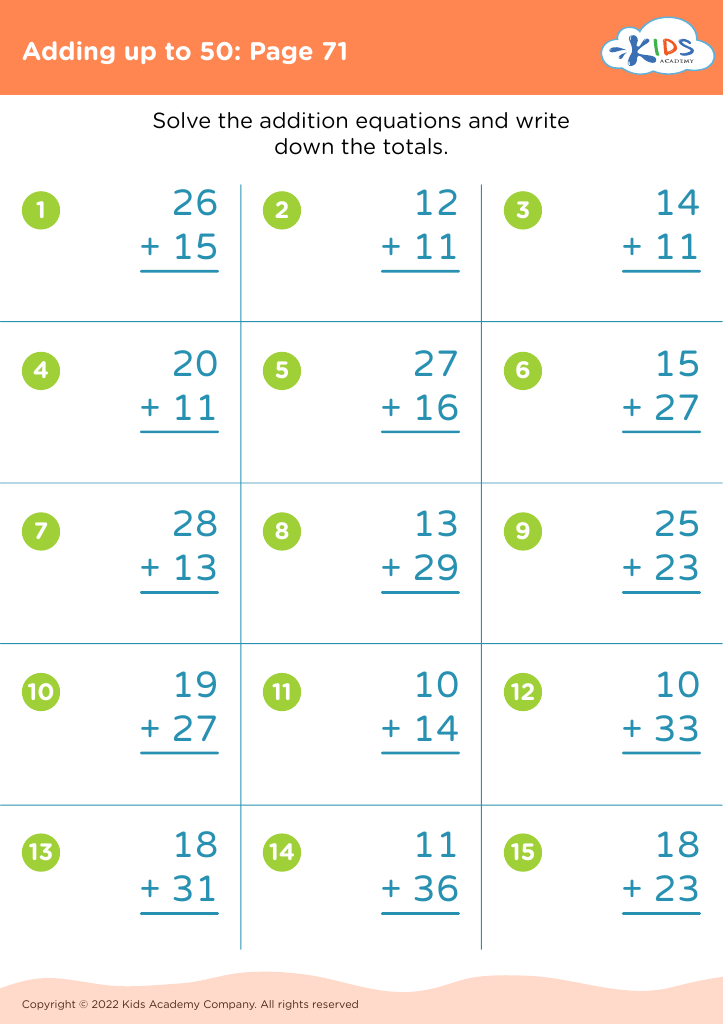
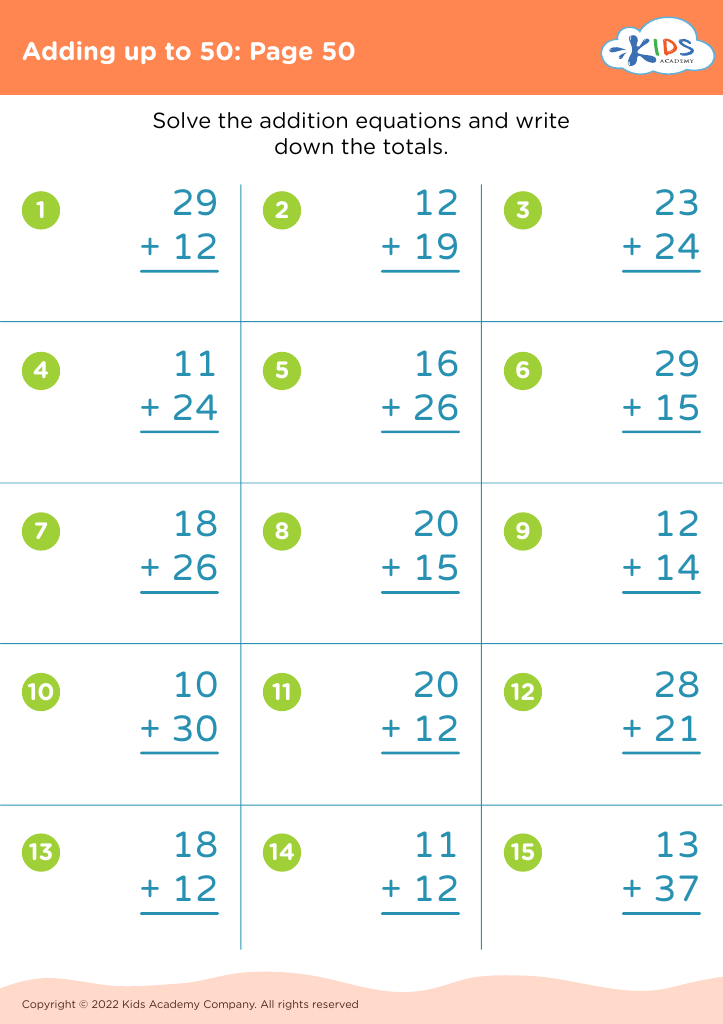
Our "Telling Time Addition & Subtraction Worksheets for Ages 3-7" are designed to enhance math skills while making learning fun and engaging for young learners. These printable worksheets help children develop critical abilities in telling time and performing basic addition and subtraction operations. Tailored for ages 3-7, the exercises blend colorful visuals with interactive problems to stimulate thinking and retention. As your child navigates through these educational worksheets, they will build a strong foundation in essential arithmetic and time-telling skills that will benefit them in everyday activities and future academic endeavors. Perfect for home or classroom use!








Teaching young children about telling time, addition, and subtraction is crucial for several reasons. For one, these foundational skills are pivotal in their cognitive development and offer a foundation for more complex mathematical concepts they'll encounter later. Understanding time helps children develop a sense of responsibility and routine, enabling them to manage daily activities, understand schedules, and grasp the concept of past, present, and future.
Addition and subtraction are the building blocks for all future mathematical learning. Mastery of these basics at an early age boosts children's confidence, allowing them to tackle more advanced problems with ease. Through simple exercises, children improve their problem-solving skills and logical thinking, which are critical for academic success and real-world scenarios.
Moreover, incorporating these lessons into playful activities ensures that learning is engaging and enjoyable. This fosters a positive attitude towards mathematics and time management, reducing any potential anxiety associated with these subjects.
Parents and teachers play a vital role in shaping these abilities through encouragement and the right resources. By investing time and effort into teaching these concepts from ages 3-7, they set children on a stronger educational path, equipping them with essential life skills that will serve them forever.








