Understand patterns Addition & Subtraction Worksheets for Ages 3-7
6 filtered results
-
From - To
Discover our "Understand Patterns: Addition & Subtraction Worksheets" designed specifically for children ages 3-7! These engaging and interactive worksheets help young learners recognize and grasp the vital concepts of patterns in mathematics. With colorful visuals and diverse activities, kids will delight in identifying numerical patterns, strengthening their addition and subtraction skills. Our thoughtfully crafted worksheets encourage critical thinking and problem-solving, laying a strong foundation for future math success. Perfect for home or classroom use, these materials make learning fun and effective. Enhance your child's mathematical journey today with our exciting and educational resources! Explore patterns and watch their confidence soar!
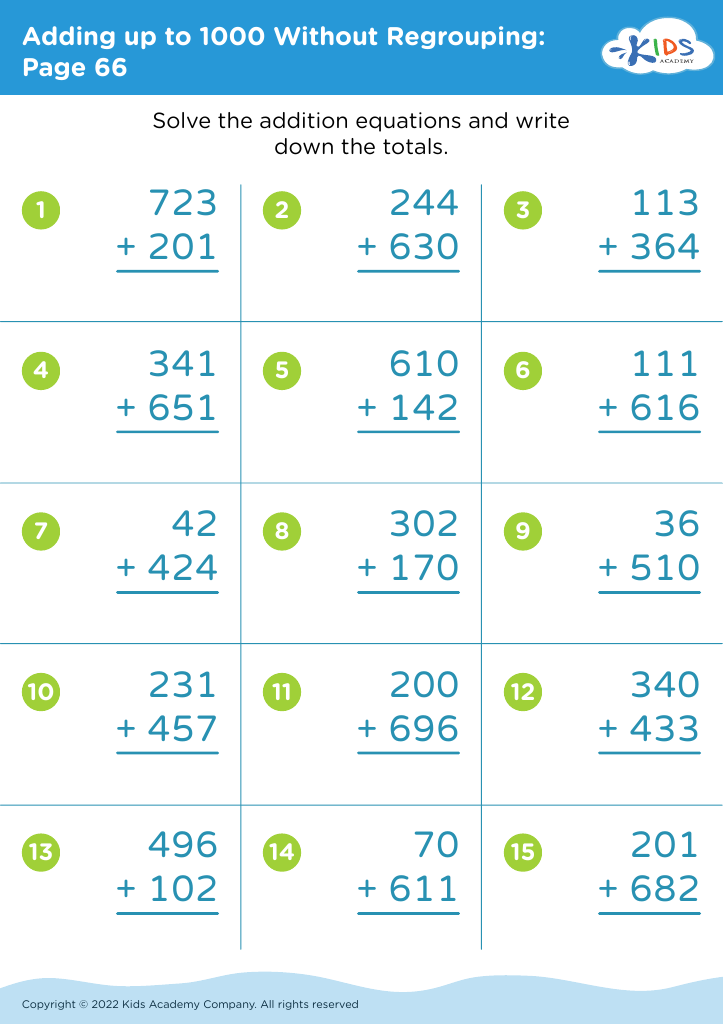
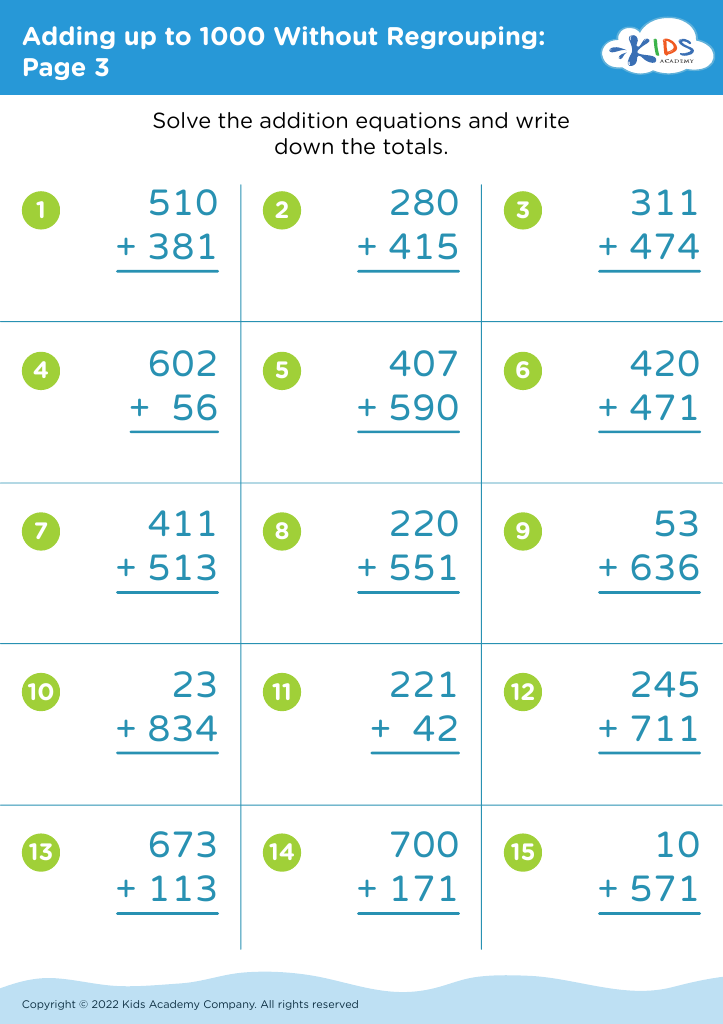
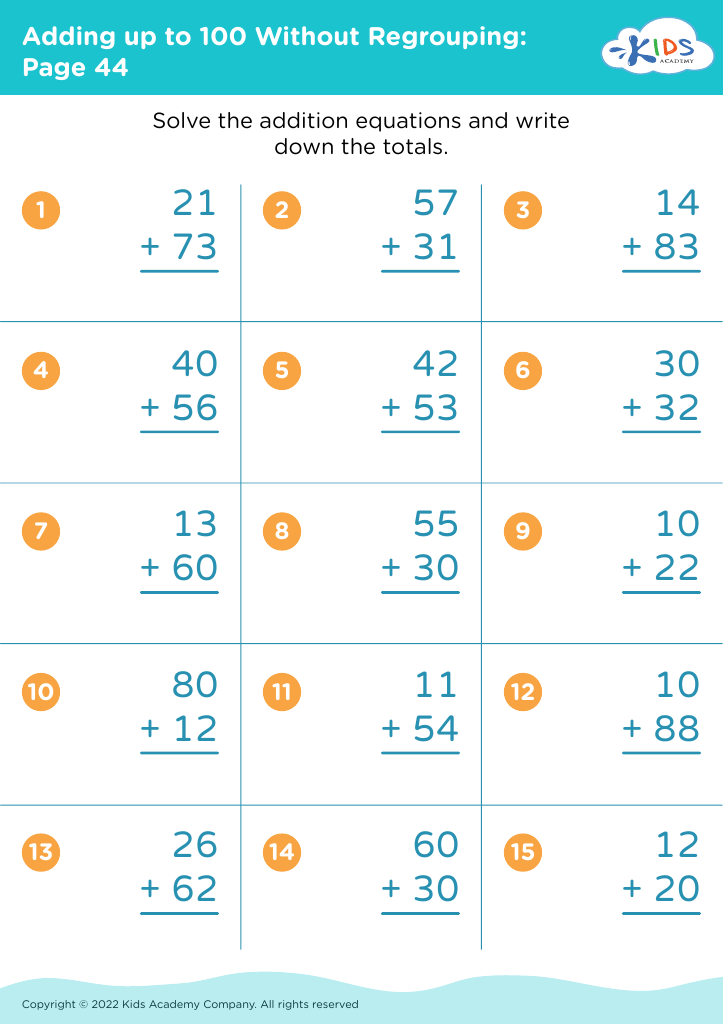
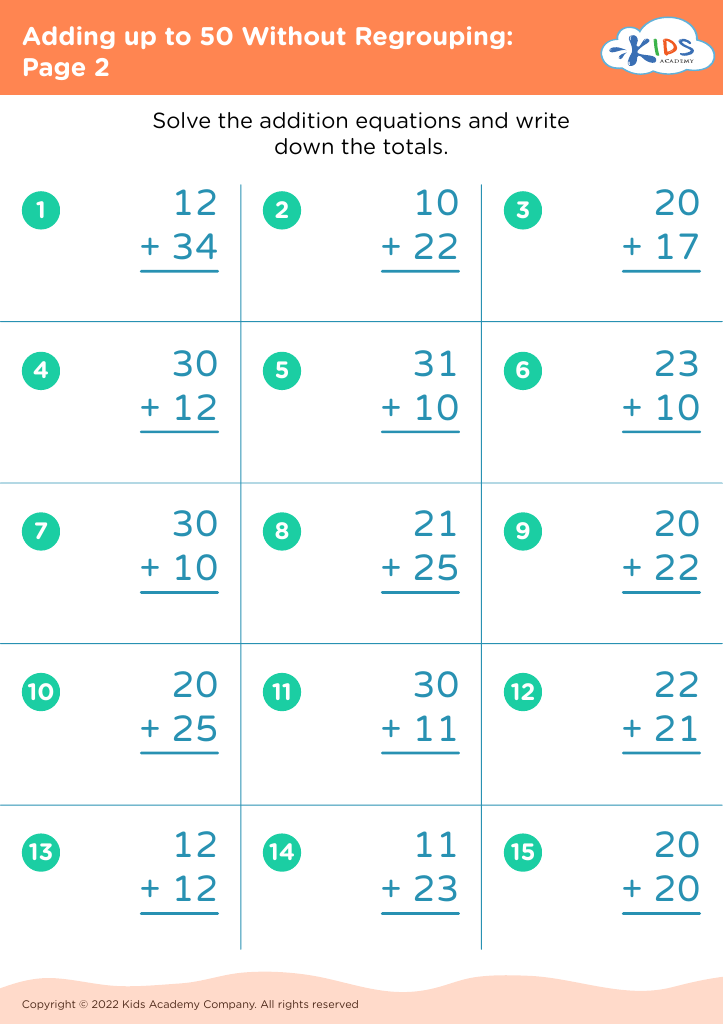
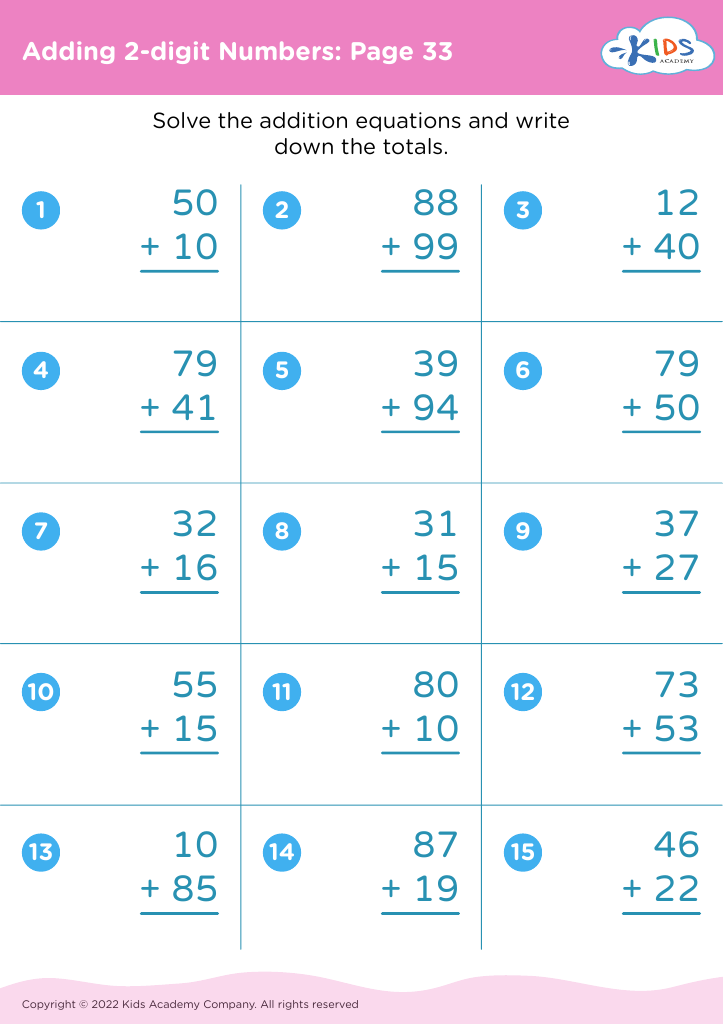
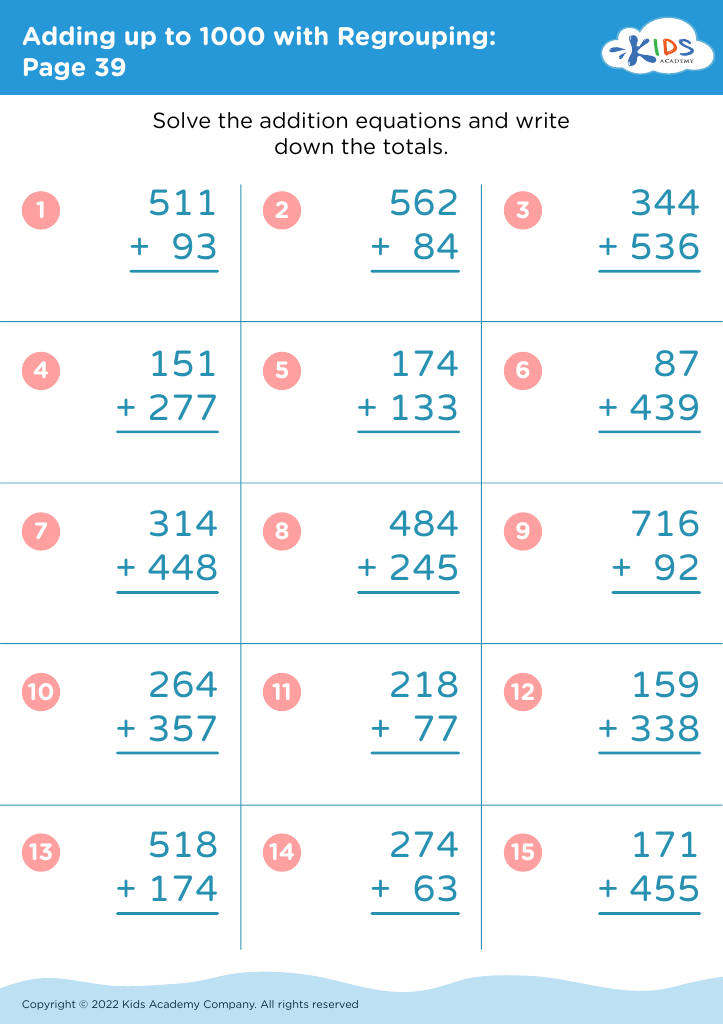








Understanding patterns in addition and subtraction is crucial for young learners aged 3-7, as it lays the foundation for mathematical reasoning and problem-solving skills. By recognizing patterns, children can make connections between numbers, which helps them grasp the concept of quantities and relationships more effectively. This foundational knowledge supports their ability to perform basic arithmetic operations.
Teaching patterns also enhances cognitive development. As children recognize and predict sequences, they learn to think critically and logically. For example, understanding that adding two is like creating a pattern (2, 4, 6, 8…) enables them to approach addition and subtraction with confidence and curiosity. Additionally, identifying patterns can introduce children to concepts of symmetry, sequences, and even basics of algebra, fostering a deeper understanding of math as they progress in their education.
Moreover, engaging with patterns through games and fun activities makes learning enjoyable and encourages positive attitudes toward math. Parents and teachers play a pivotal role in creating a supportive learning environment, making it essential for them to focus on teaching these concepts. When children become adept at recognizing patterns, they build a stronger mathematical foundation that will serve them well throughout their academic journey and beyond.








