Understand sequences Addition & Subtraction Worksheets for Ages 3-7
5 filtered results
-
From - To
Discover a collection of engaging "Understand Sequences Addition & Subtraction Worksheets" designed for children aged 3 to 7! These worksheets help young learners develop foundational math skills by introducing the concepts of addition and subtraction through sequence patterns. Featuring colorful illustrations and interactive activities, your child will explore numbers, enhance critical thinking, and build problem-solving abilities while mastering arithmetic basics. Each worksheet encourages hands-on learning and practical application, perfect for home or classroom use. Empower your little ones' mathematical journey today and watch their confidence soar as they tackle sequences with joy and enthusiasm! Perfect for early learners!
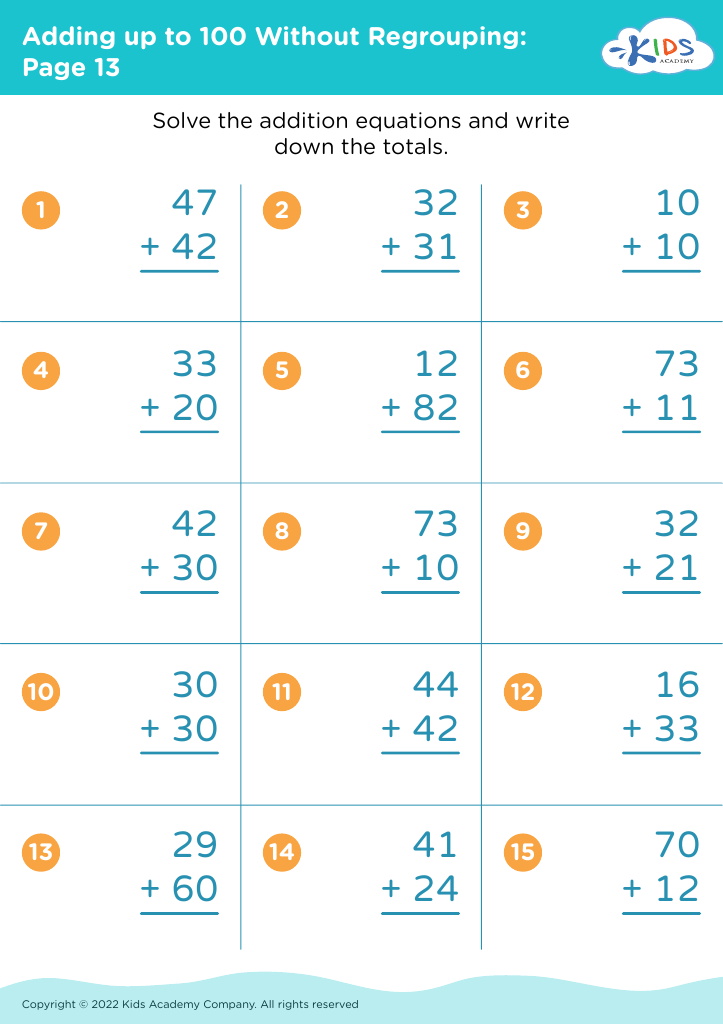
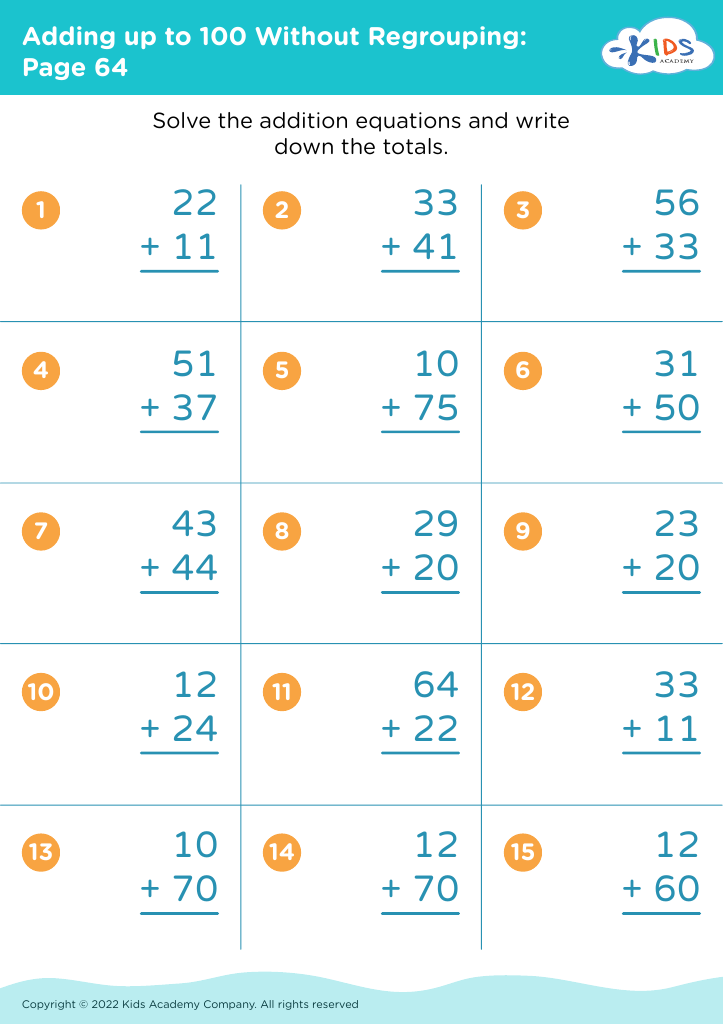
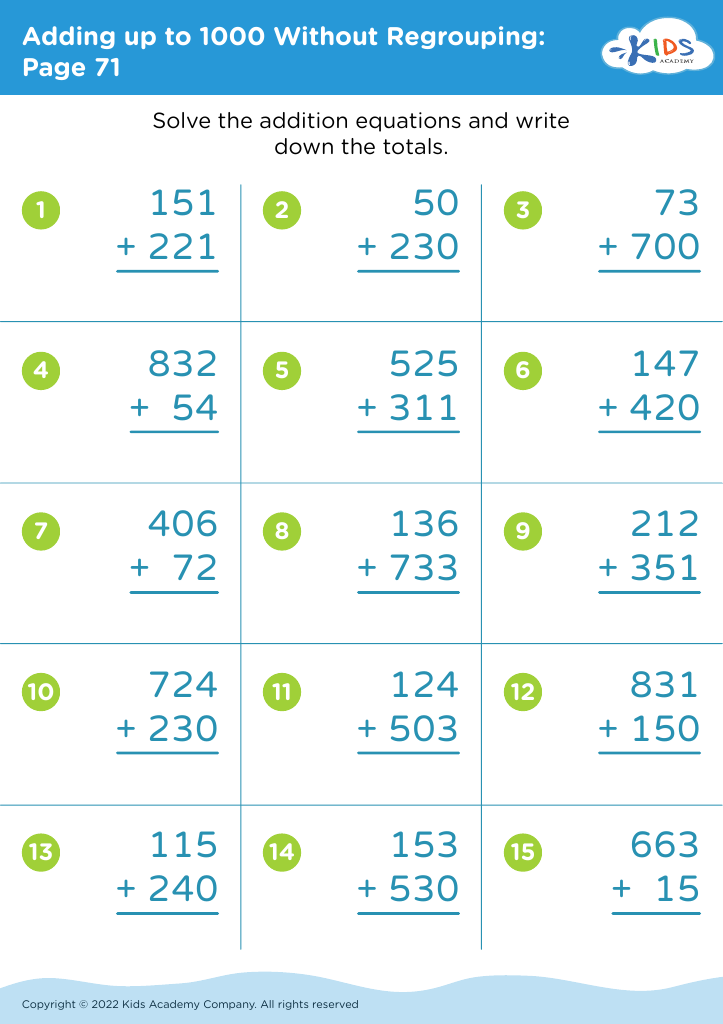
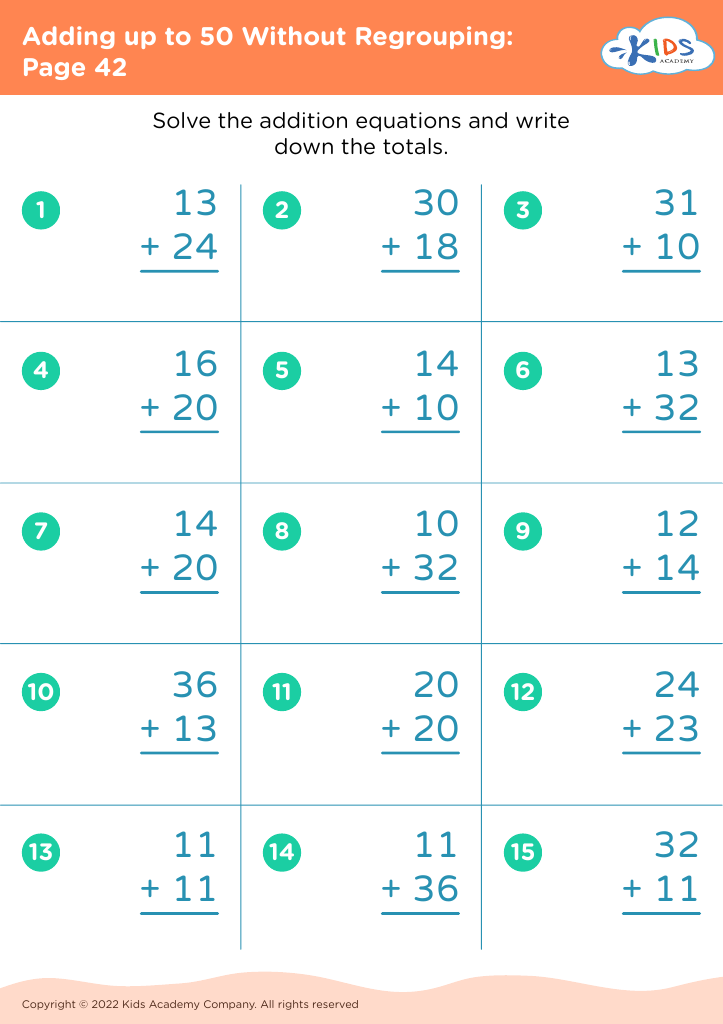
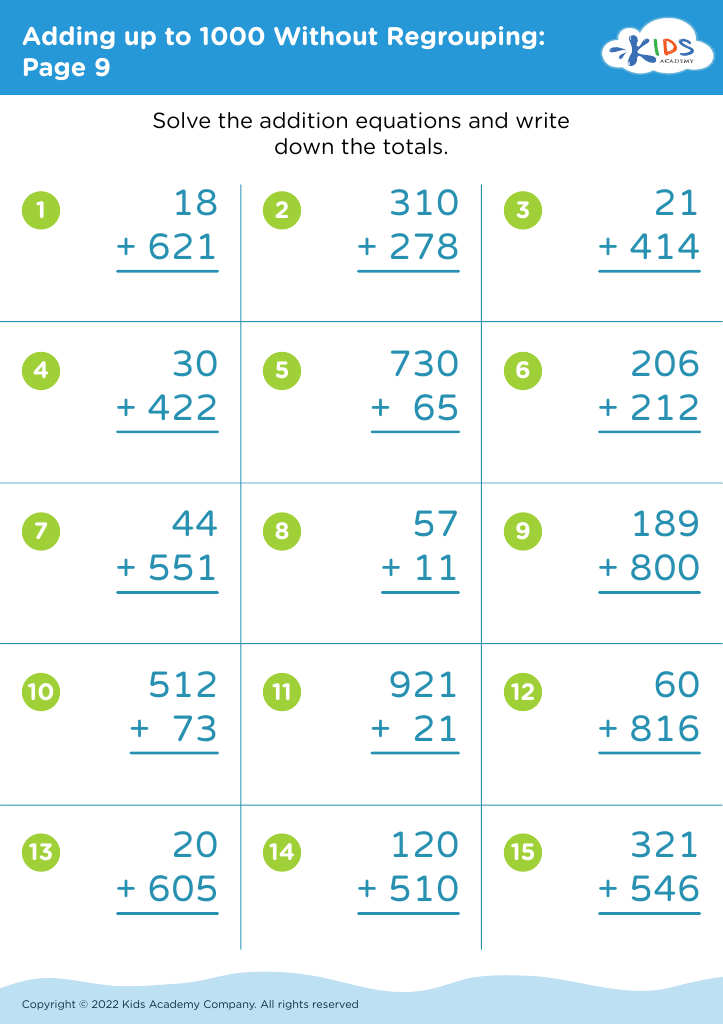








Parents and teachers should prioritize understanding sequences in addition and subtraction for children aged 3-7 because this foundational skill is crucial for building early math competence. Recognizing and manipulating sequences help children comprehend how numbers relate to one another, paving the way for more complex mathematical problem-solving. Mastery of addition and subtraction sequences equips kids with the ability to recognize patterns, which is vital not only in math but also in reading and logical reasoning.
Moreover, understanding sequences aids memory and cognitive development. For example, when children learn to add or subtract numbers in a specific order, they enhance their memory capabilities by making connections between numbers and actions. This cognitive practice lays the groundwork for higher-level reasoning in future math learning.
Additionally, building these skills early fosters confidence and a positive attitude towards mathematics. Children who grasp addition and subtraction sequences are better prepared to engage in discussions about math, leading to more enthusiastic learning experiences. Consequently, caregivers should create engaging, age-appropriate activities that integrate these concepts, as early engagement will support sustained interest and achievement in mathematics throughout their educational journey. Prioritizing these skills today is an investment in children’s future academic success.








