
Understanding money Addition & Subtraction Worksheets for Ages 3-7
4 filtered results
Difficulty Level
Grade
Age
-
From - To
Subject
Activity
Standards
Explore our "Understanding Money Addition & Subtraction Worksheets" tailored for children ages 3-7! These engaging and interactive worksheets are designed to help young learners grasp essential math concepts using fun money-themed activities. By incorporating real-life scenarios, kids will not only practice addition and subtraction skills but also develop a foundational understanding of money management. Each worksheet is filled with colorful illustrations and easy-to-follow exercises that make learning enjoyable. Whether at home or in a classroom setting, these resources make it simple to bring math to life. Start your child's financial literacy journey today with our exciting worksheets!
Favorites
With answer key
Interactive
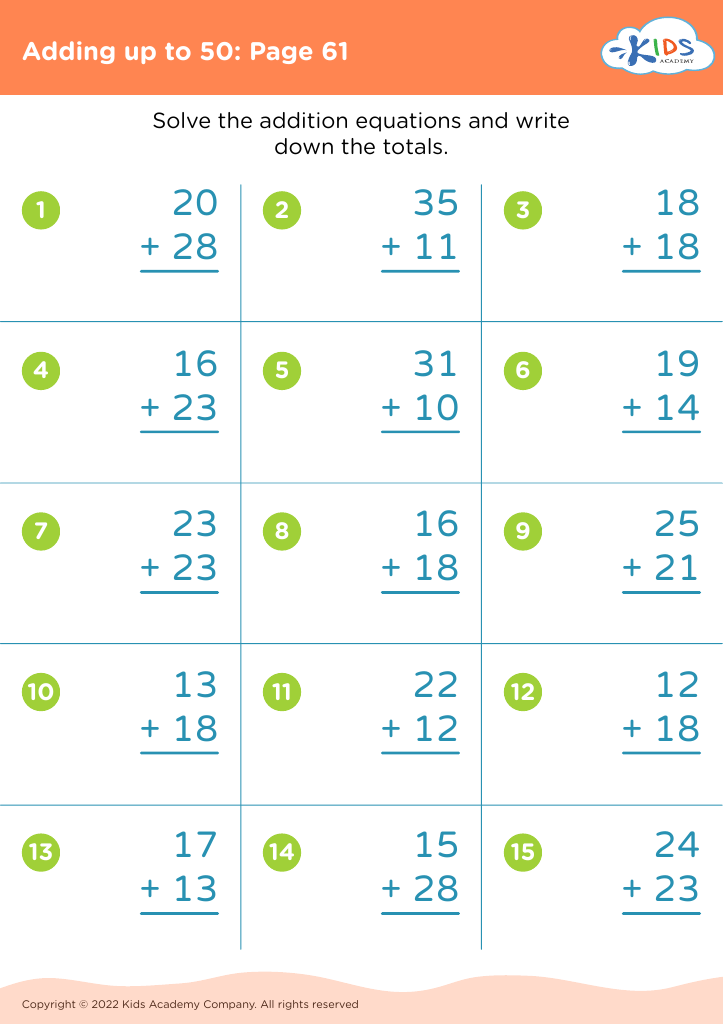
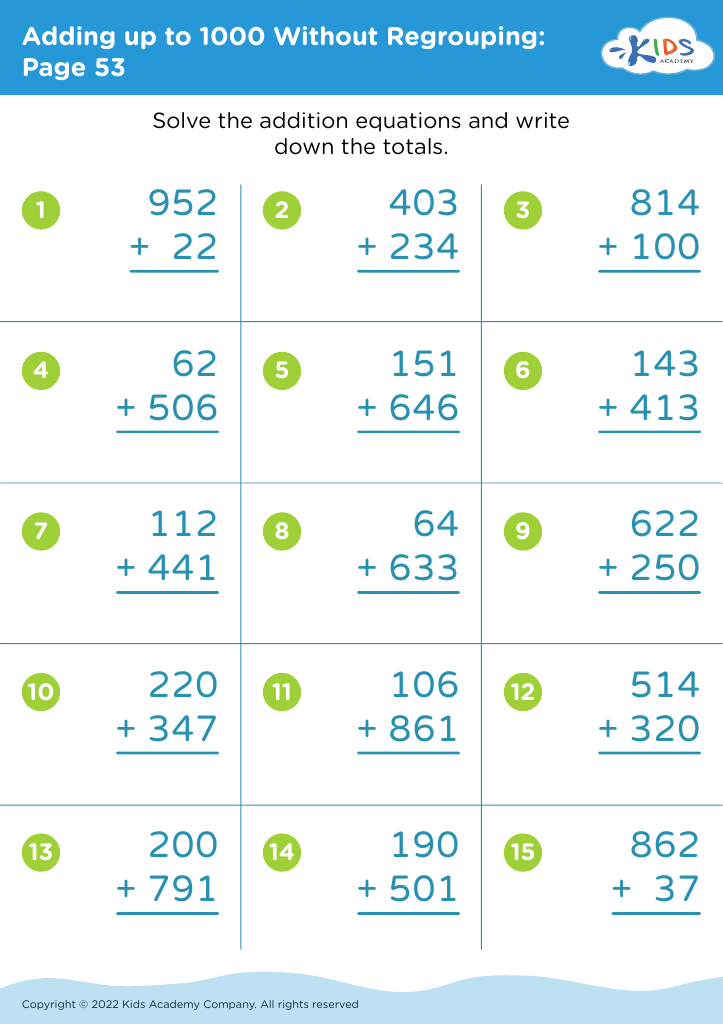
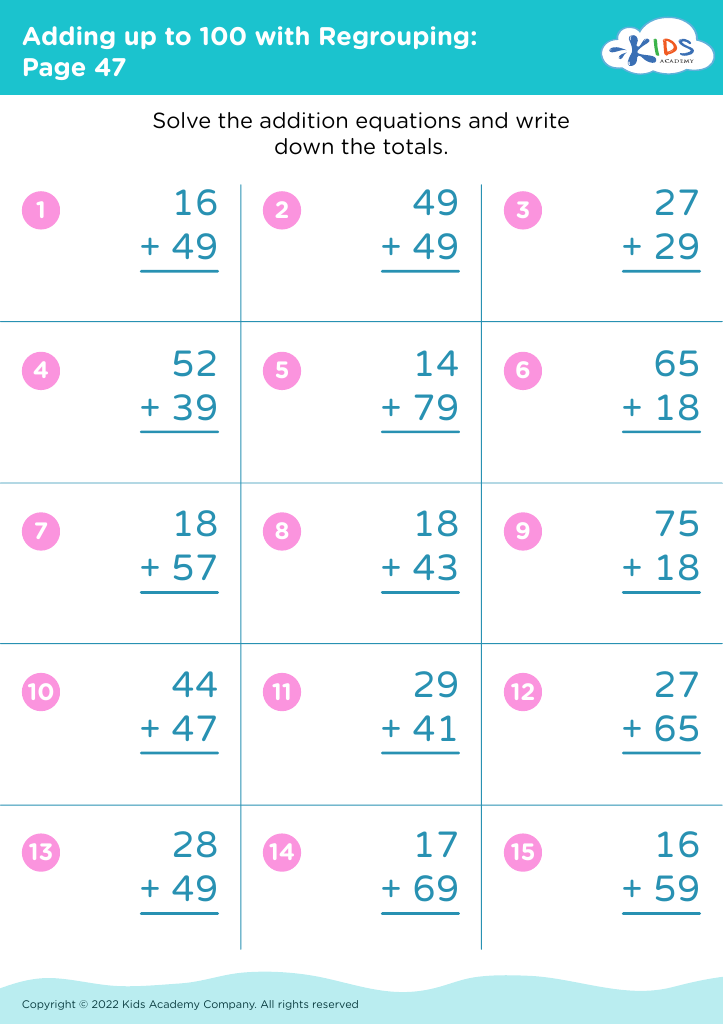
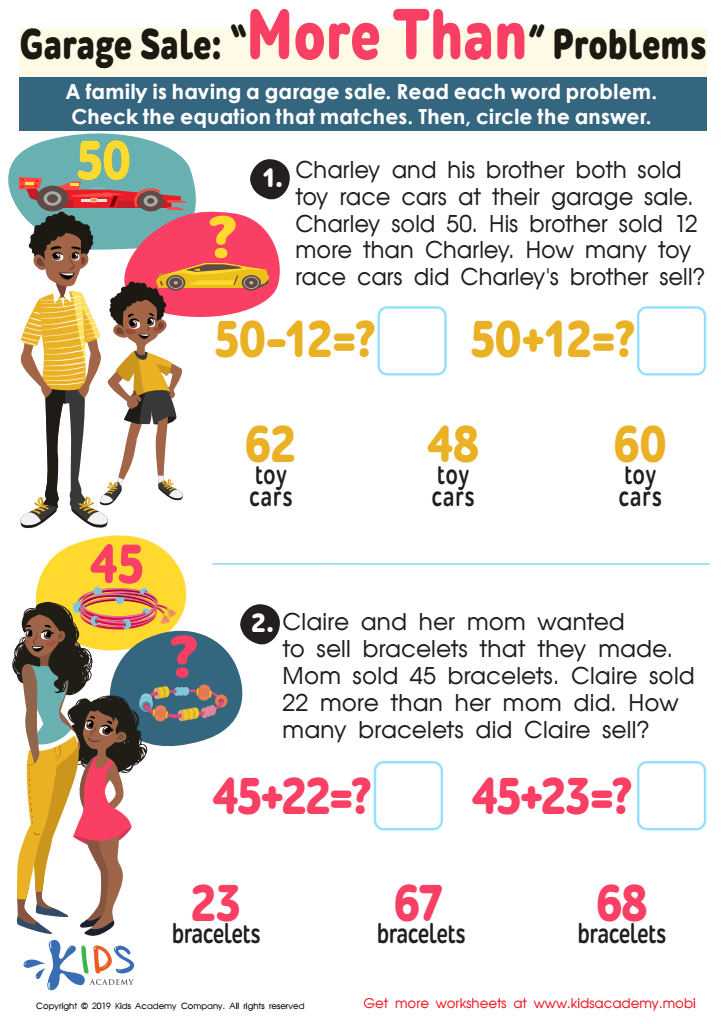
Garage Sale - More yhan Worksheet
The whole family can join in on the fun with this free worksheet! It helps kids practice math word problems while assisting their friends with a garage sale. Kids learn to identify "More Than" key words and pick the right equation, improving their order of operations skills. Download the PDF and get started!
 Assign to My Students
Garage Sale - More yhan Worksheet
Worksheet
Join Kids Academy for Free
Who is primarily going to use this learning content?








Understanding money, addition, and subtraction are fundamental skills that play a crucial role in children's early development. For parents and teachers, nurturing these skills in children aged 3-7 is vital for several reasons.
Firstly, engaging with money concepts helps children grasp basic mathematical principles. As they learn to recognize coins, count, and make simple transactions, they improve their numeracy skills, setting the foundation for more complex mathematical understanding in the future.
Secondly, money management teaches valuable life lessons about saving, spending, and budgeting. By introducing children to the idea of money at a young age, parents and teachers can instill a sense of responsibility and the importance of making informed financial decisions.
Moreover, learning through play—such as role-play markets or counting games—can make mathematics fun and engaging, fostering a positive attitude toward learning.
Finally, these skills promote problem-solving and critical thinking. As children tackle simple addition and subtraction using money, they enhance their ability to analyze situations, which is essential for their cognitive development.
In sum, by prioritizing money, addition, and subtraction for young learners, adults can provide foundational skills that are crucial for lifelong success.








