Understanding time Addition & Subtraction Worksheets for Ages 3-7
6 filtered results
-
From - To
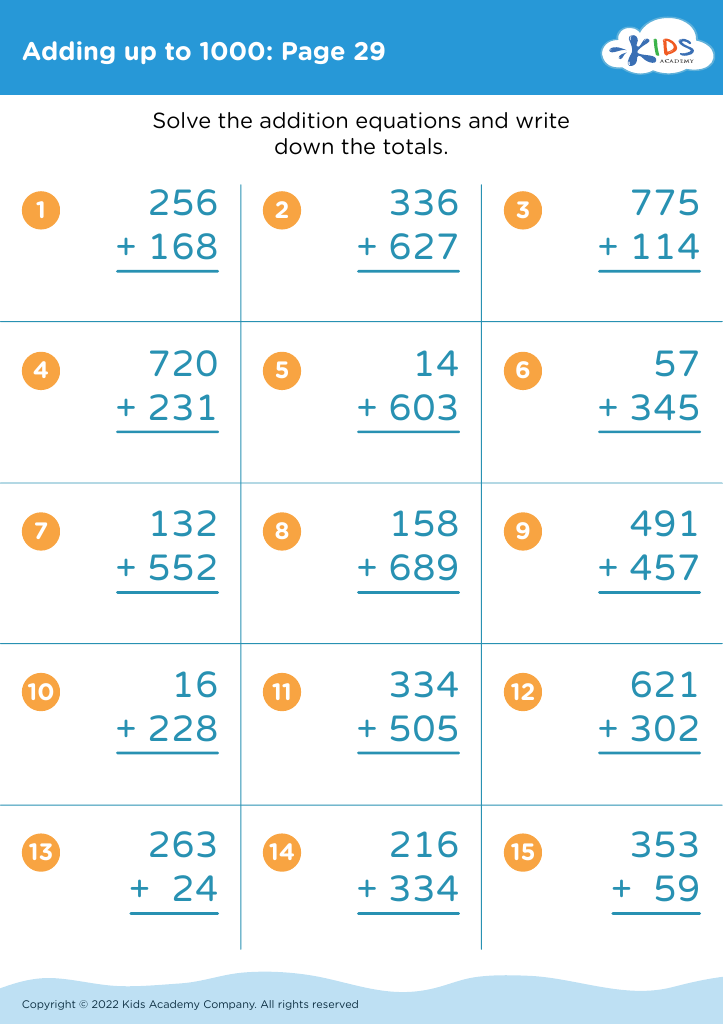
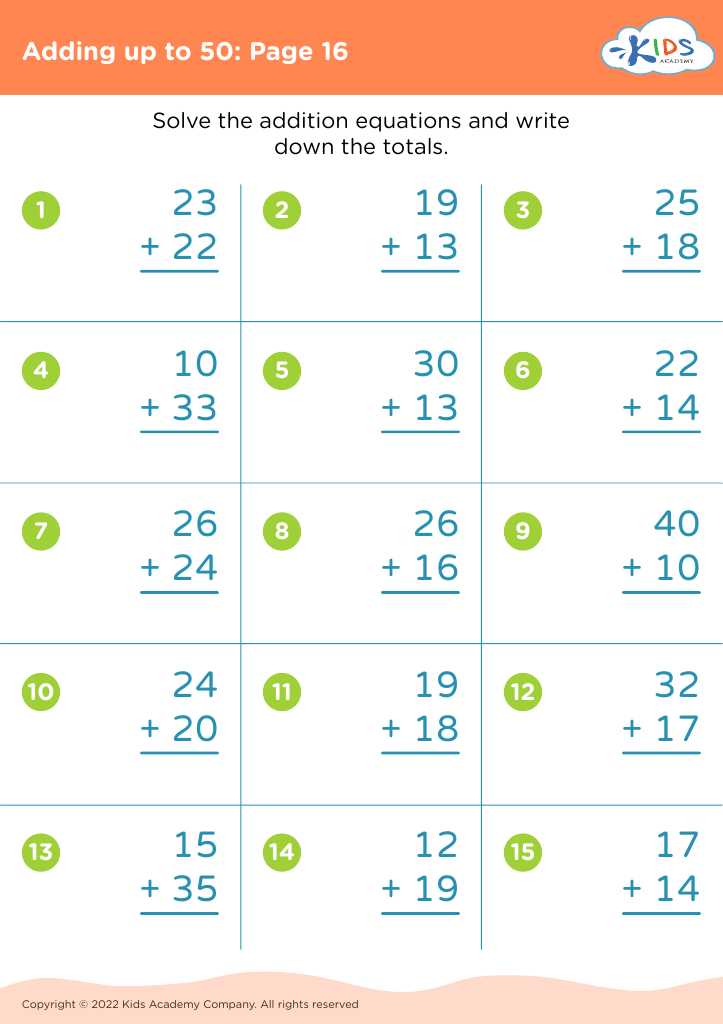
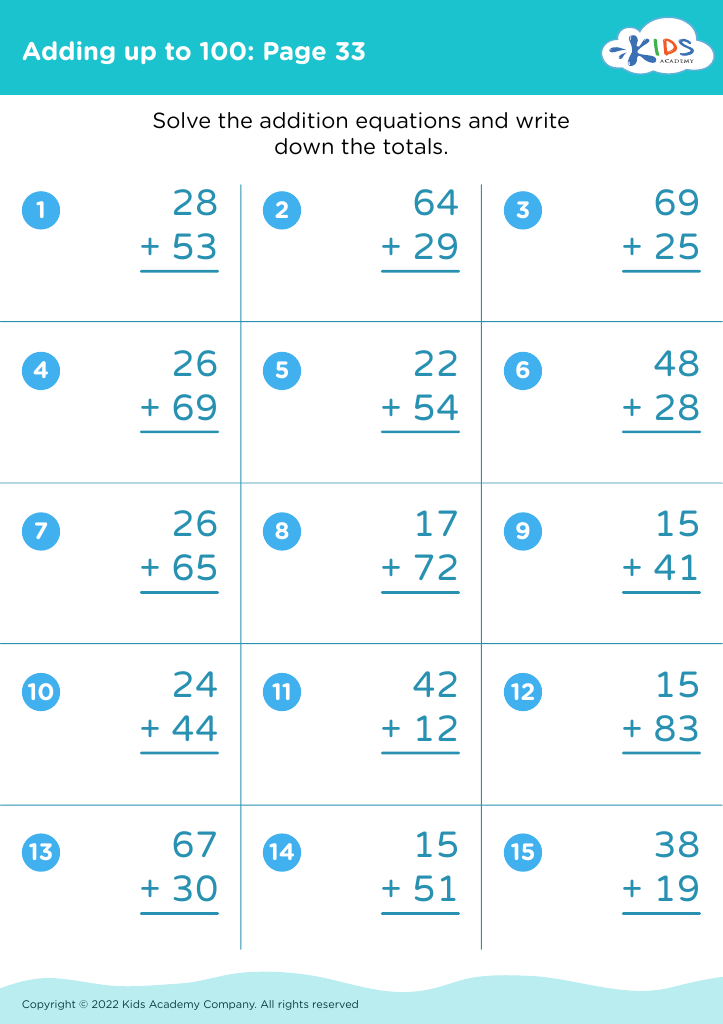
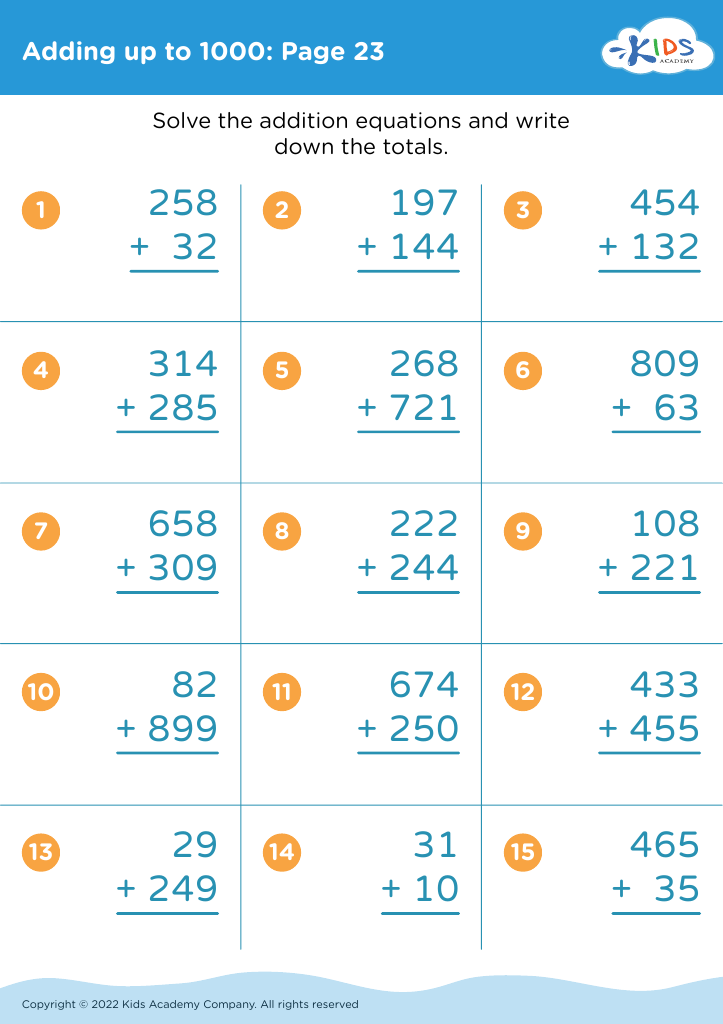
Unlock your child's potential with our "Understanding Time" Addition & Subtraction Worksheets, perfect for ages 3-7. Designed to make time concepts fun and engaging, these worksheets help kids master addition and subtraction while learning to tell time. Each sheet offers hands-on activities, illustrations, and thought-provoking prompts that cater to young learners' unique needs. By connecting math skills with real-world scenarios, children gain confidence in understanding both numbers and time. Turn learning into an exciting adventure with our expertly crafted worksheets that inspire curiosity and foster a love for mathematics. Discover the joy of learning with Kids Academy today!
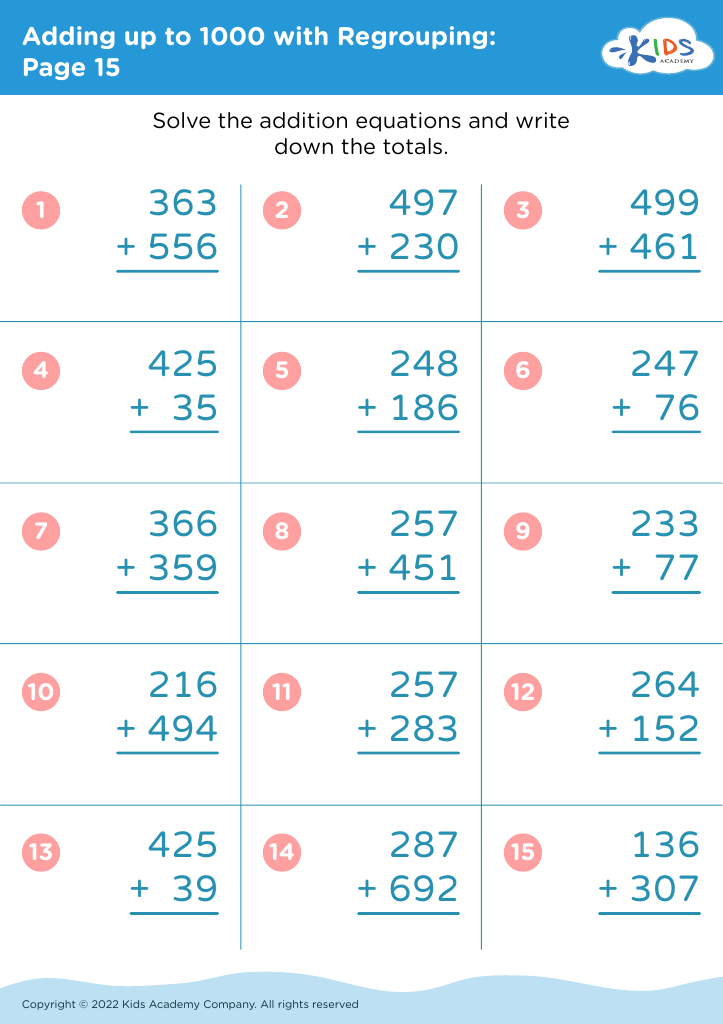
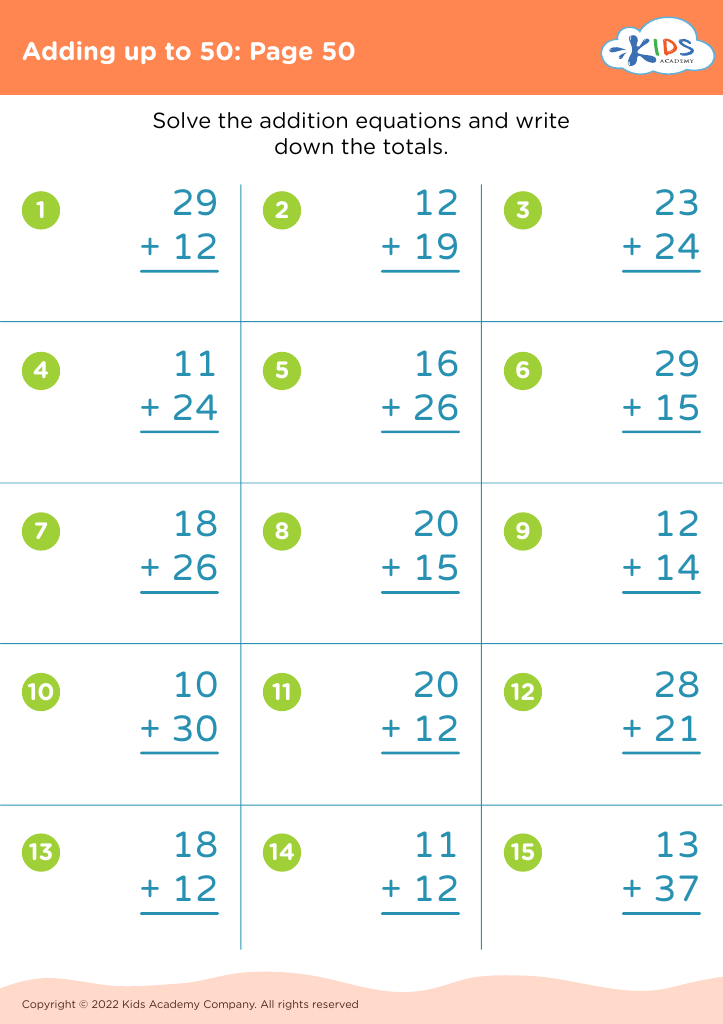








Understanding addition and subtraction is fundamental for young children, as it sets the groundwork for more advanced mathematical skills and critical thinking abilities. Parents and teachers should be invested in helping children grasp these concepts early for several reasons.
Firstly, basic arithmetic operations like addition and subtraction are pivotal in everyday life, from counting toys to sharing snacks. These skills heighten a child's ability to solve problems, allowing them to make sense of the world around them.
Secondly, early proficiency in math is linked to later academic achievement. Research shows that mathematical skills acquired in preschool wield a long-lasting impact on a child’s educational trajectory. Being comfortable with numbers fosters confidence, making it less likely they will struggle with math-related subjects in the future.
Thirdly, addition and subtraction aid in cognitive development. Engaging in these activities enhances memory, improves number sense, and develops logical thinking. By practicing with numbers, children begin to understand patterns and relationships, all essential for cognitive growth.
Lastly, developing these skills in a fun, supportive environment strengthens the teacher-student and parent-child bond. Whether using flashcards, counting games, or relatable story problems, interactive learning becomes a collaborative and enjoyable experience, cementing foundational math skills in a memorable way. This saves future anguish and sets children on the path to lifelong academic success.








