
Visual-motor skills Addition & Subtraction Worksheets for Ages 3-7
4 filtered results
Difficulty Level
Grade
Age
-
From - To
Subject
Activity
Standards
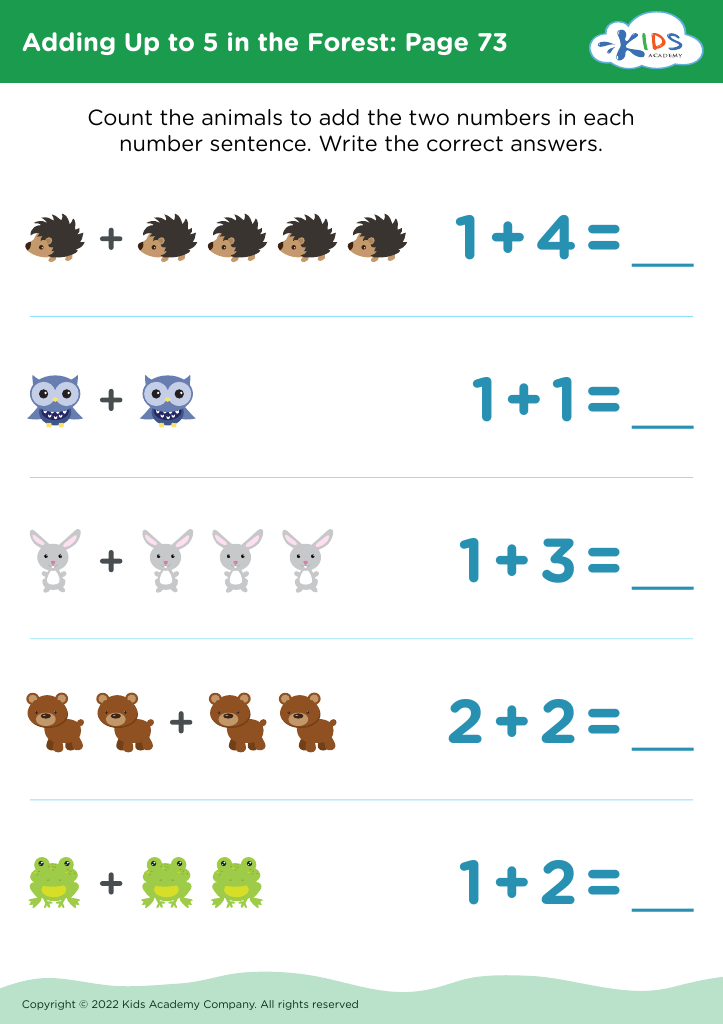
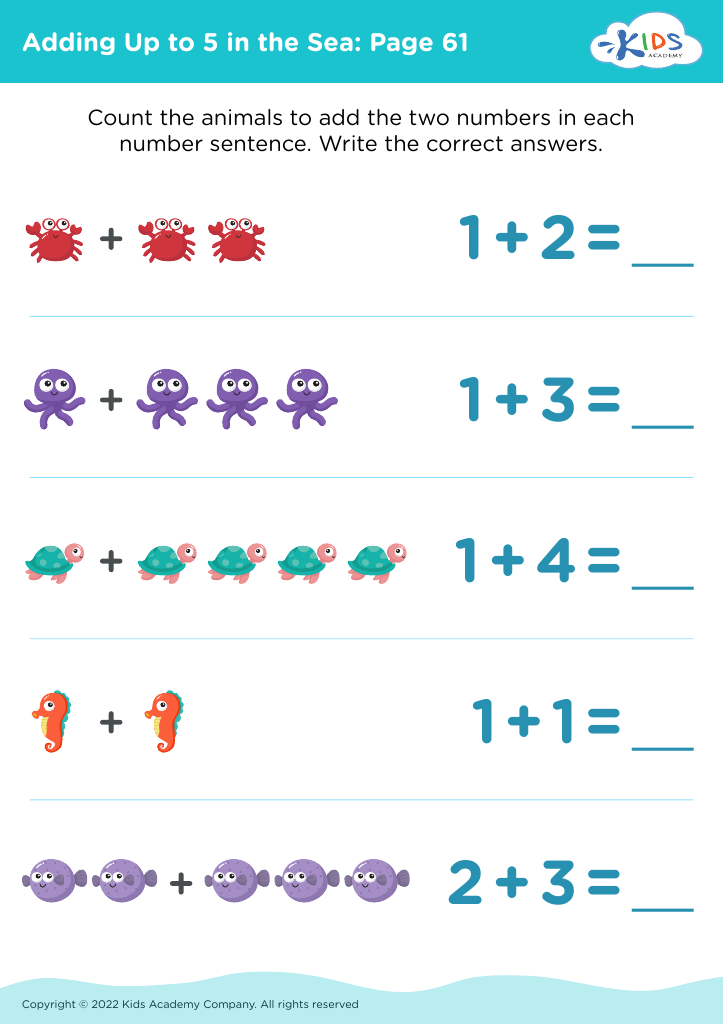
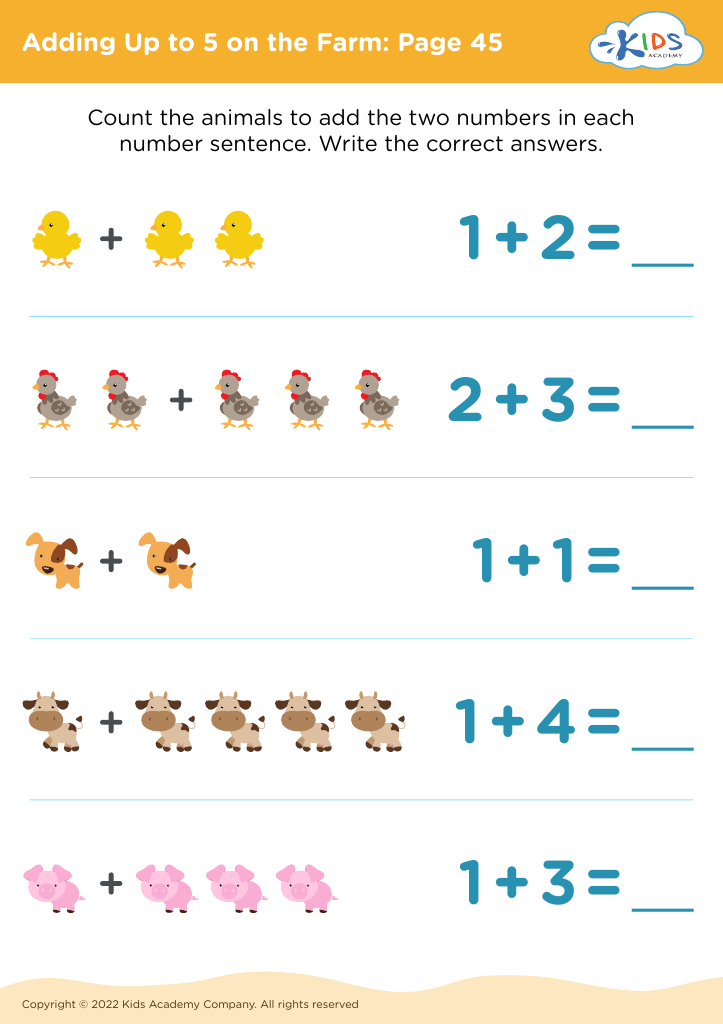
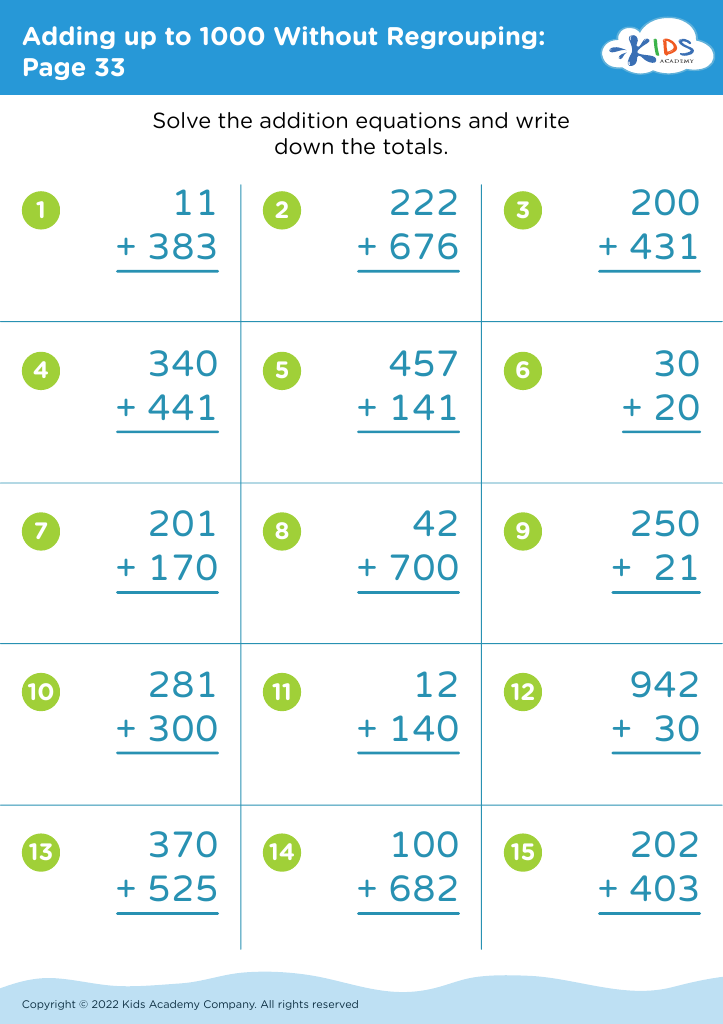
Enhance your child’s learning experience with our Visual-motor Skills Addition & Subtraction Worksheets designed for ages 3-7. These printable worksheets combine fundamental math concepts with engaging visuals to help young learners develop essential motor skills. By integrating fun activities, children can practice addition and subtraction while refining their hand-eye coordination and fine motor abilities. Each worksheet features colorful illustrations that capture children’s attention, making math practice enjoyable and effective. Perfect for home or classroom use, these worksheets support early learners in mastering math in an interactive way. Download now to give your child the tools they need for academic success!
Favorites
With answer key
Interactive
Join Kids Academy for Free
Who is primarily going to use this learning content?








Visual-motor skills play a crucial role in early mathematical development, particularly for addition and subtraction in children ages 3-7. These skills, which involve the ability to coordinate visual input with physical movement, are foundational for understanding numerical concepts and performing mathematical operations. For instance, young learners often use manipulatives like blocks or counters to visualize problems. If they struggle with tenets of visual-motor control, such as matching, sorting, or tracing, they may find it challenging to grasp addition and subtraction concepts effectively.
Parents and teachers should care about the development of these skills because strong visual-motor proficiency aids in problem-solving and application of math in real-life situations. Additionally, when children can intuitively connect their physical actions with visual representations of numbers, they become more confident in their abilities and are more likely to engage in math activities.
Furthermore, fostering these skills early can prevent future learning difficulties in mathematics, helping to build a solid foundation for later academic success. Encouraging activities such as drawing, coloring, and simple puzzles can enhance these abilities, making it important for educators and parents to prioritize and nurture visual-motor skill development in math.








