Addition Practice Addition Worksheets for Ages 3-7 - Page 2
119 filtered results
-
From - To
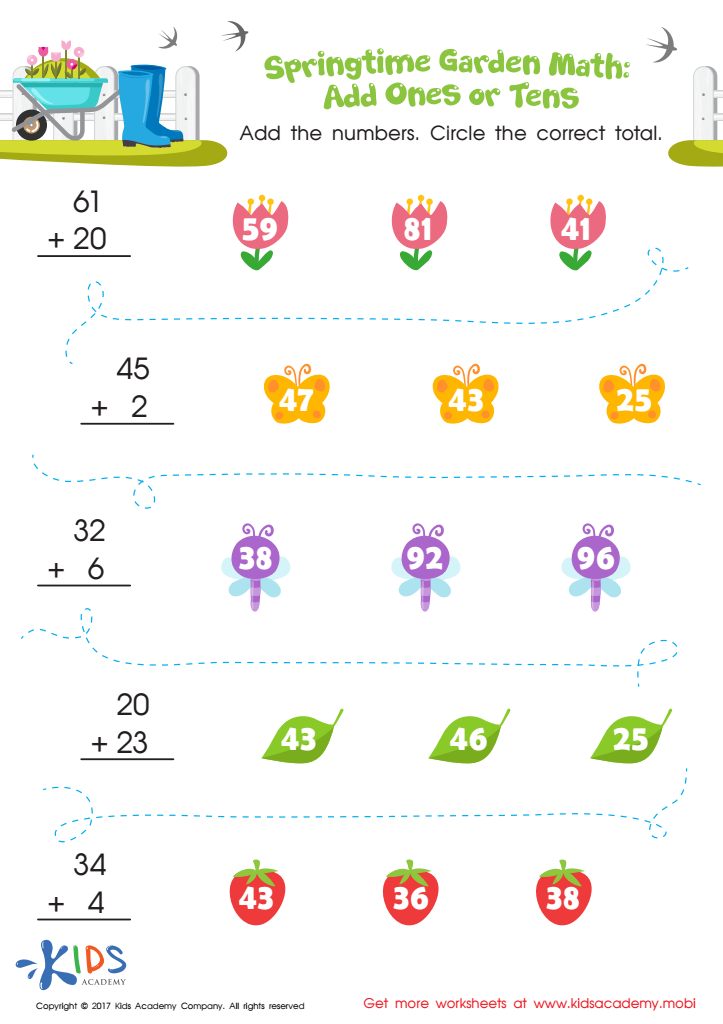
Springtime Garden Math Worksheet
 Assign to My Students
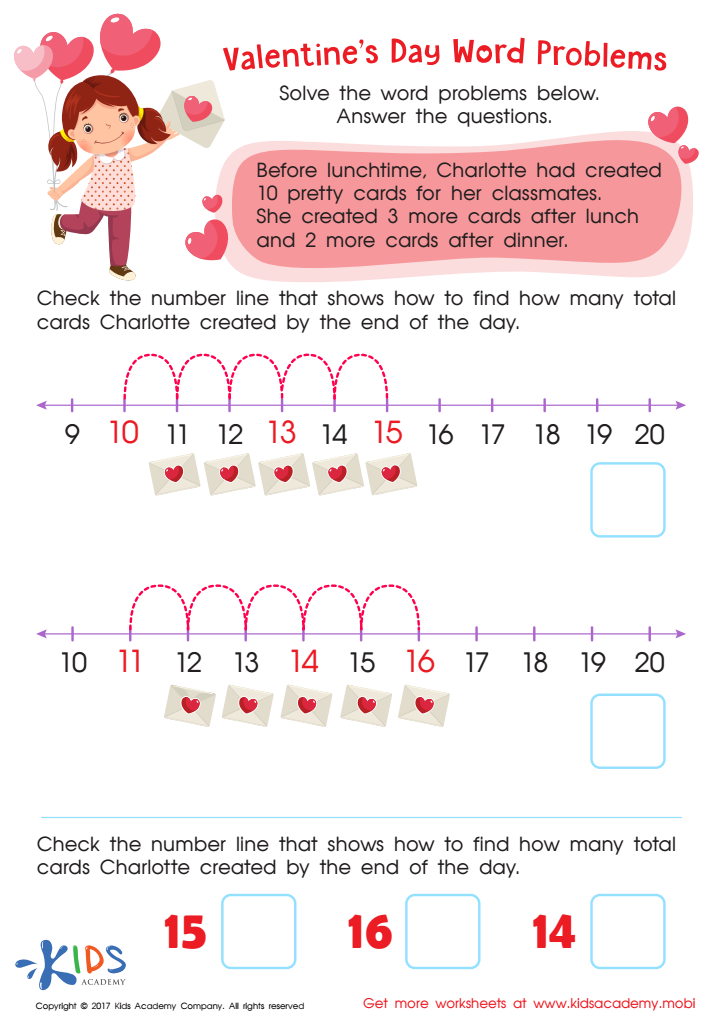
Valentines Day Word Problem Worksheet
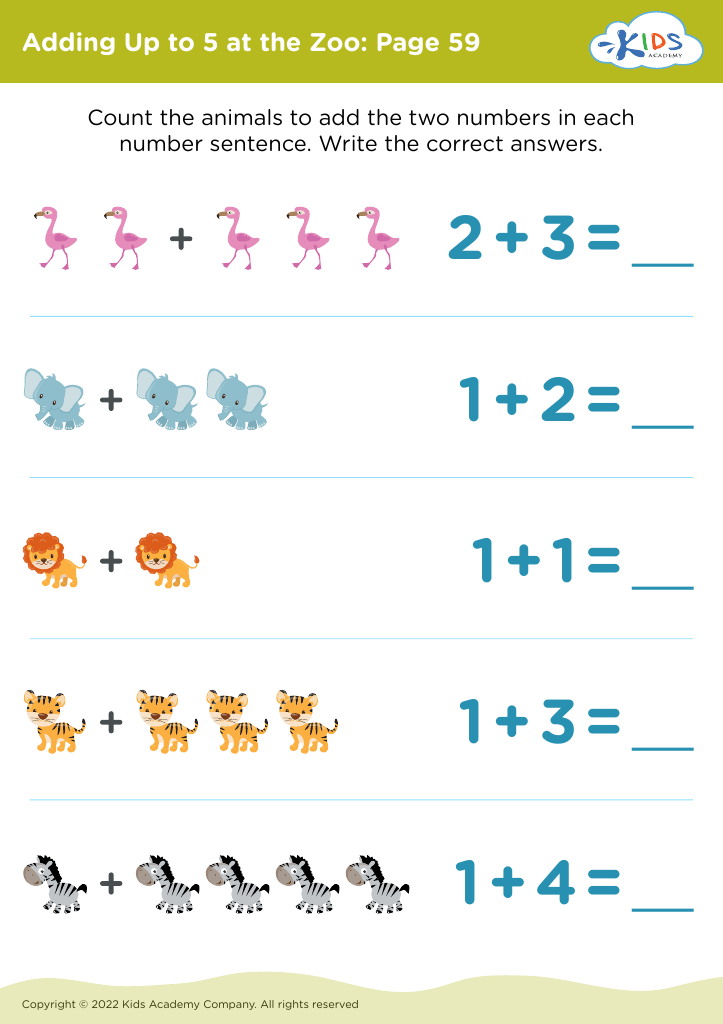
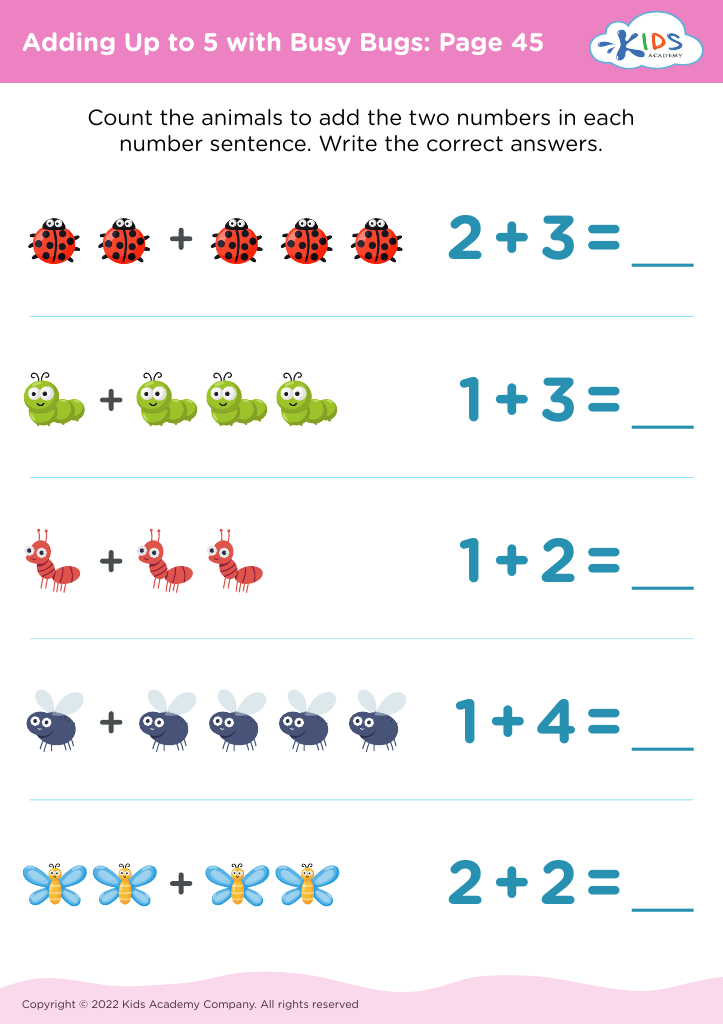
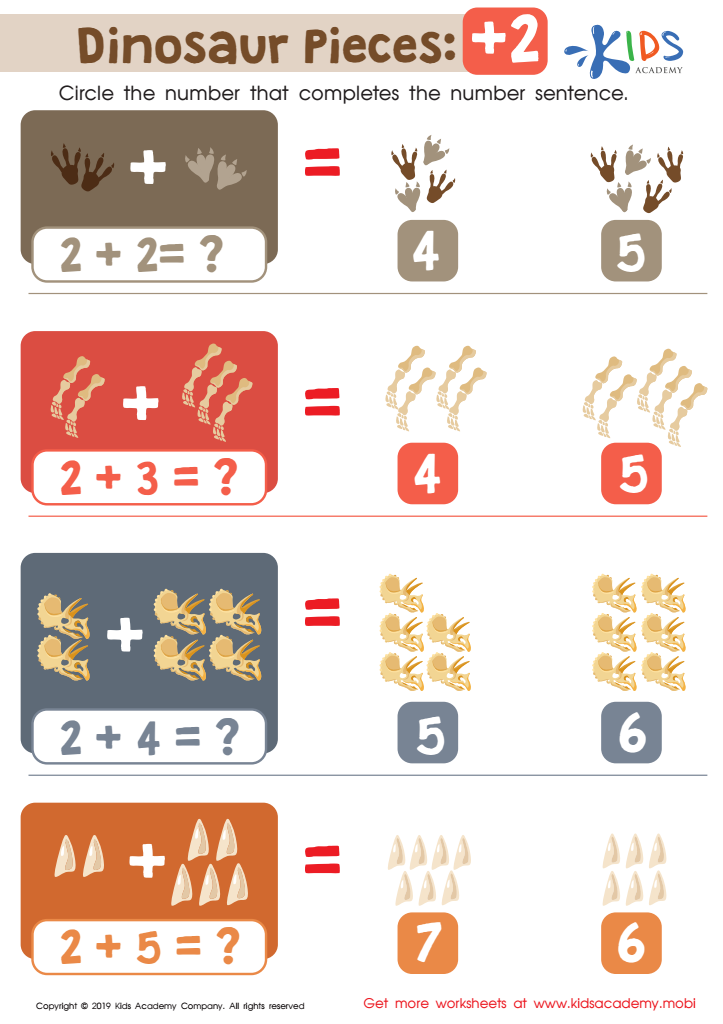
Dinosaur Pieces: +2 Worksheet
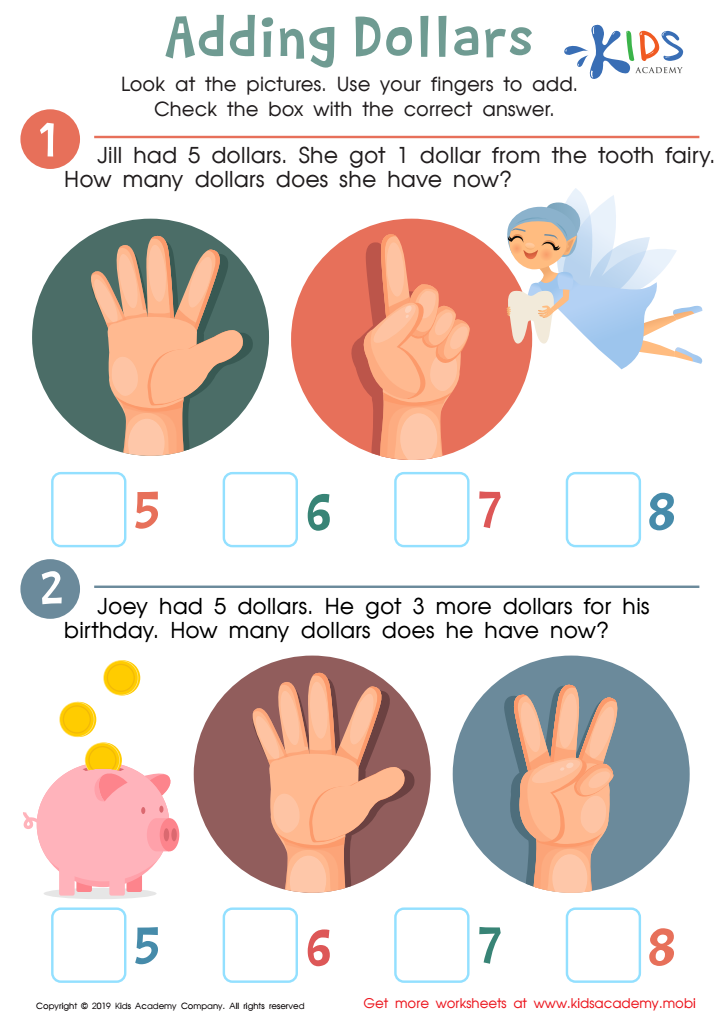
Tooth Fairy Addition Worksheet








Parents and teachers should understand the importance of addition practice for children aged 3-7 because it builds a crucial foundation for future mathematical learning and everyday functionality. During these formative years, children's brains are exceptionally receptive to new information, and early exposure to basic math concepts like addition can enhance cognitive development and problem-solving skills.
Practicing addition fosters numerical literacy, which is essential not just for future complex mathematical operations, but also for understanding everyday scenarios. For instance, knowing how to add helps children manage simple tasks like counting toys or sharing snacks, thereby reinforcing practical life skills.
Moreover, engaging in addition activities can boost a child's confidence and academic performance. Such early achievements anchor a positive attitude towards math, reducing anxiety and promoting a growth mindset. Teachers and parents can enhance practice sessions through games, manipulatives, and interactive exercises, making the learning process fun and effective.
In summary, prioritizing addition practice in early childhood education nurtures mathematical thinking, builds confidence, and equips children with essential skills for successful, lifelong learning. This prepares them to excel academically and navigate daily challenges with greater ease and confidence.








