Addition up to 5 Addition Worksheets for Ages 3-7
4 filtered results
-
From - To
Enhance early math skills with our engaging "Addition up to 5 Worksheets" designed specifically for children ages 3-7! These printable worksheets provide a fun and interactive way for young learners to grasp basic addition concepts. Filled with colorful illustrations and age-appropriate exercises, they promote essential number recognition and problem-solving skills. In just a few pages, kids will confidently practice adding numbers up to 5 through enjoyable activities that stimulate their curiosity and encourage a love for learning. Perfect for teachers, parents, and homeschooling, our worksheets make math enjoyable and accessible, laying a foundational understanding for future math success!
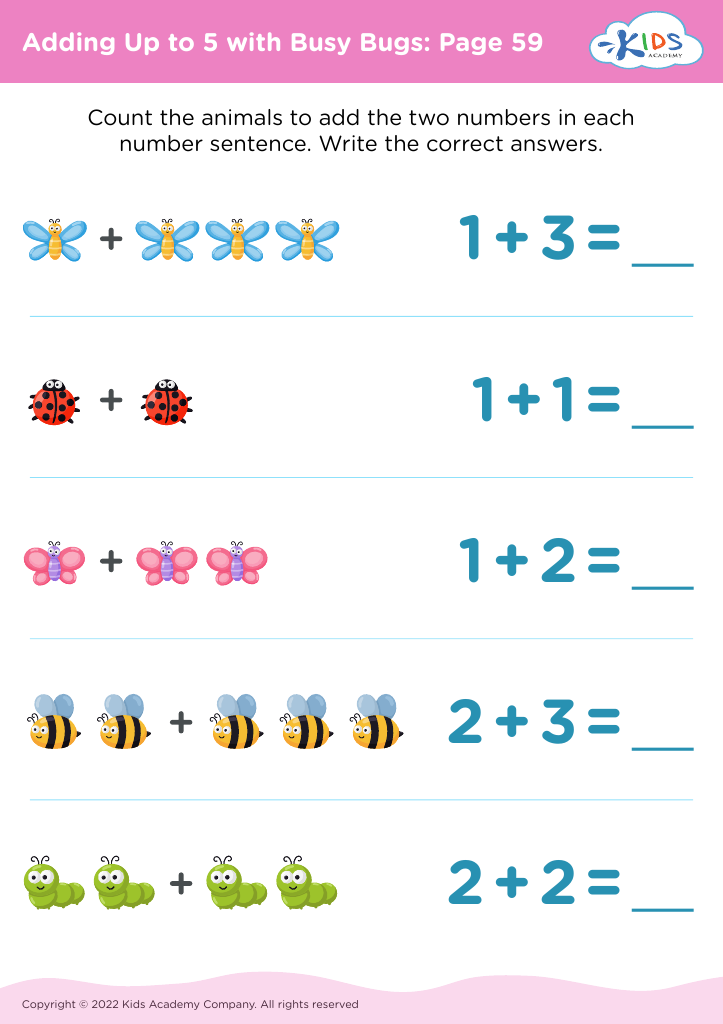
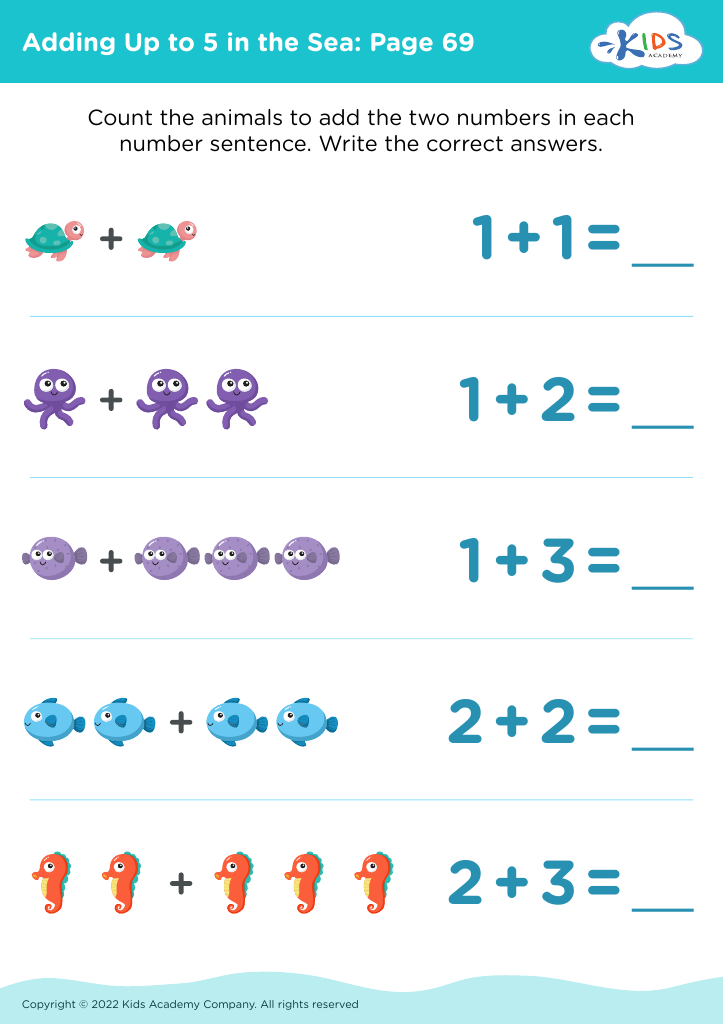
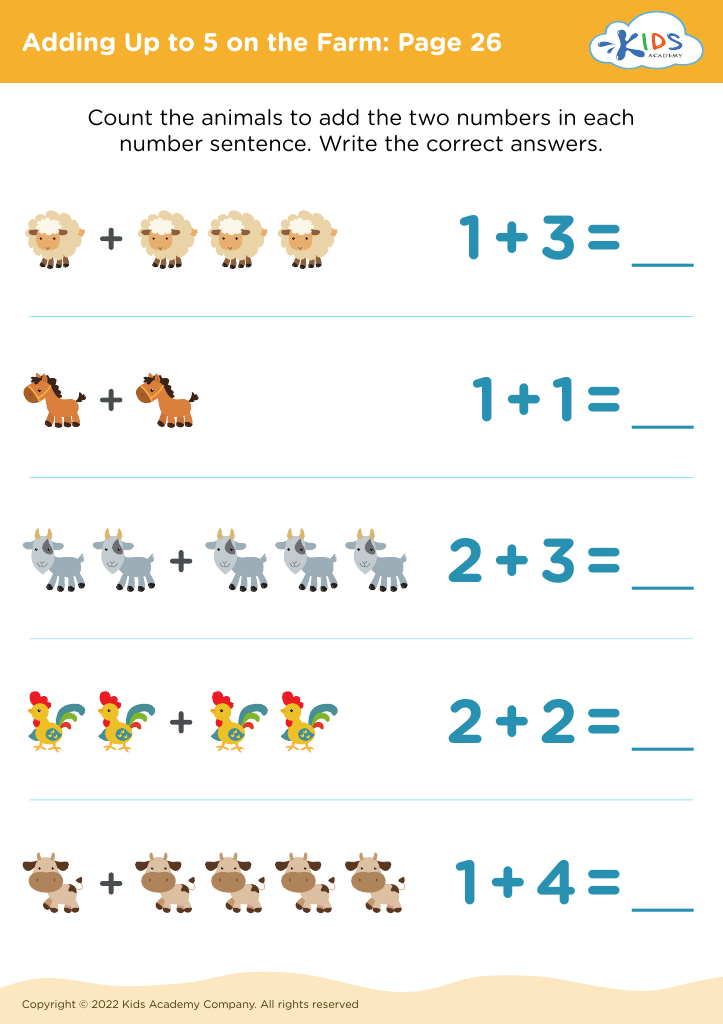
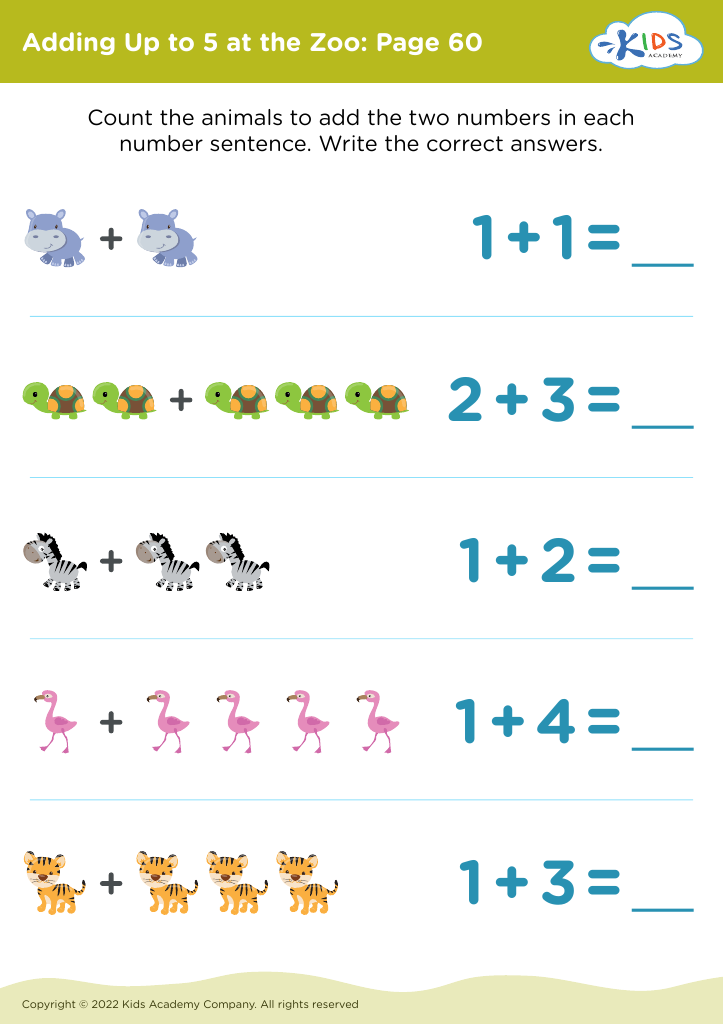








Parents and teachers should prioritize teaching addition up to 5 for children ages 3-7 as it lays the foundation for essential mathematical skills. At this age, children are naturally curious and have an incredible capacity to absorb new information. Mastering simple addition helps young learners develop number sense, which is critical for their future understanding of more complex math concepts.
Addition up to 5 introduces children to the ideas of quantity, counting, and combining sets, fostering cognitive development. This early engagement with math can enhance their problem-solving abilities, improve logical reasoning, and boost confidence in their academic skills. Moreover, these concepts often connect to real-world situations, making math relevant and relatable, thus creating a positive attitude toward learning.
Additionally, teaching these foundational skills encourages parental involvement and offers opportunities for interactive learning through games and playful activities. This collaboration strengthens the parent-child bond and supports social skills through group activities and sharing.
Ultimately, instilling a solid understanding of addition at an early age sets children on a path to success, equips them with crucial life skills, and fosters a lifelong love for learning. By nurturing these capabilities, we empower the next generation to face more challenging mathematical concepts with confidence.








