Filters

95 filtered results

Clear all filters
Favorites
With answer key
Interactive

95 filtered results

Difficulty Level

Grade


Check out this FREE Trial Lesson on Addition for age 3-7!

Sorting Objects into 3 Categories

Favorites
With answer key
Interactive
  • 3-7
  • Animal recognition
  • Addition
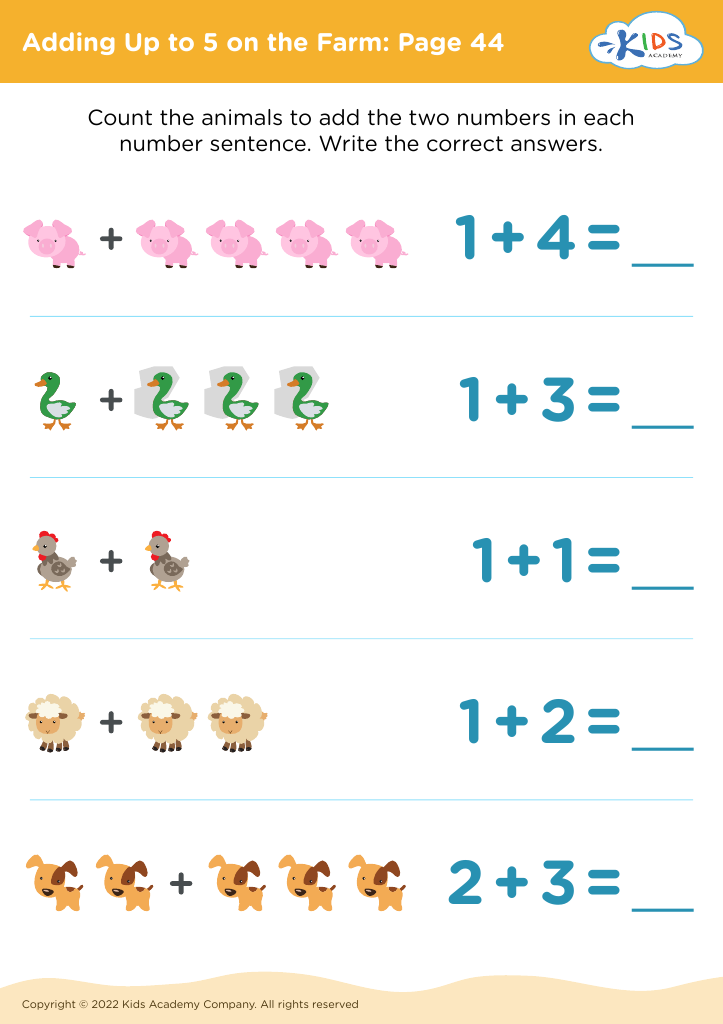
Adding Up to 5 on the Farm: Page 44
Worksheet
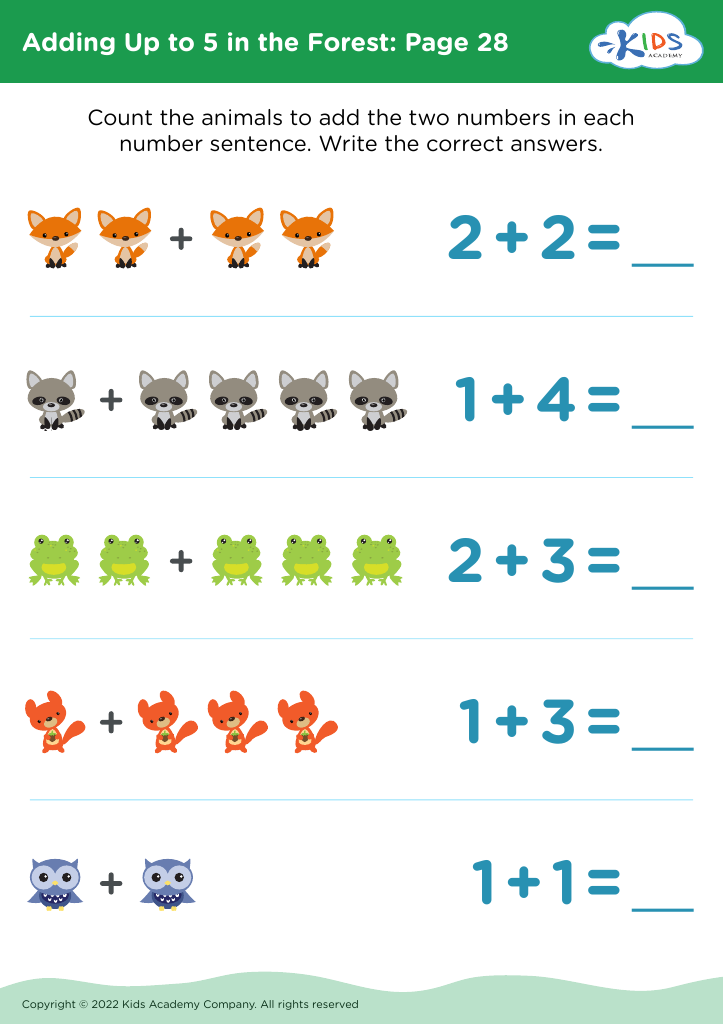
Adding Up to 5 in the Forest: Page 28
Worksheet
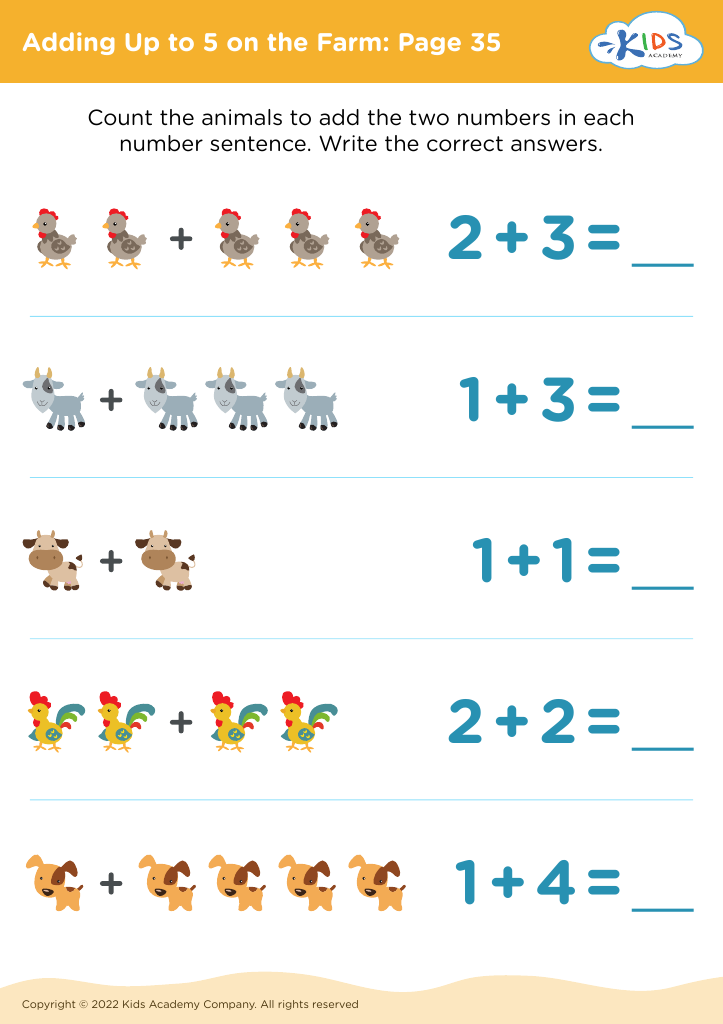
Adding Up to 5 on the Farm: Page 35
Worksheet
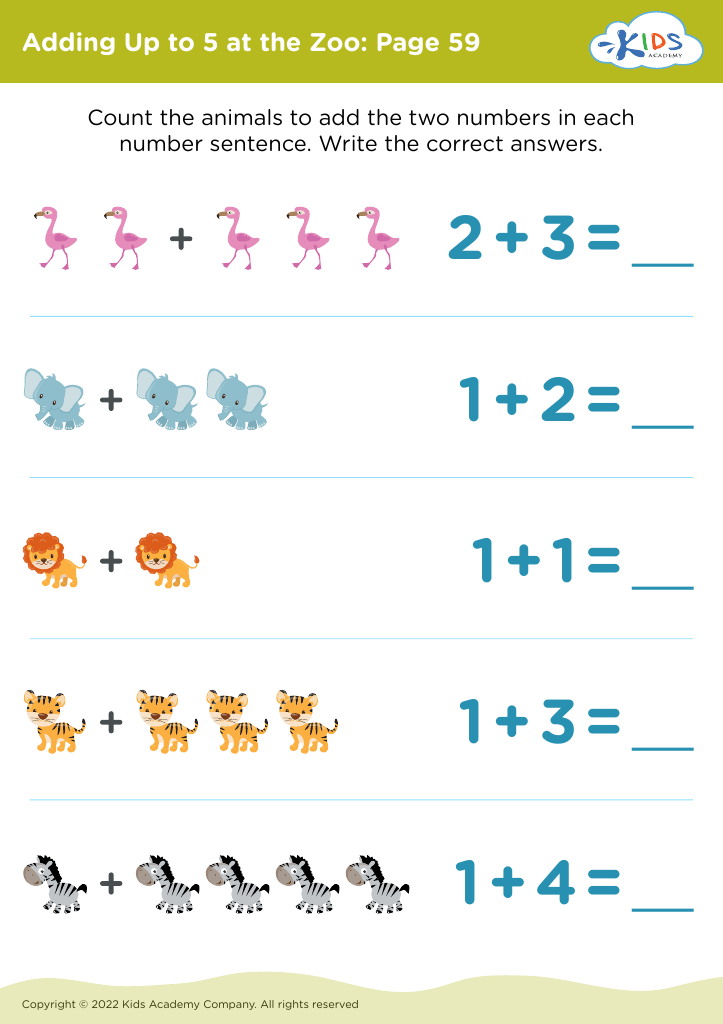
Adding Up to 5 at the Zoo: Page 59
Worksheet
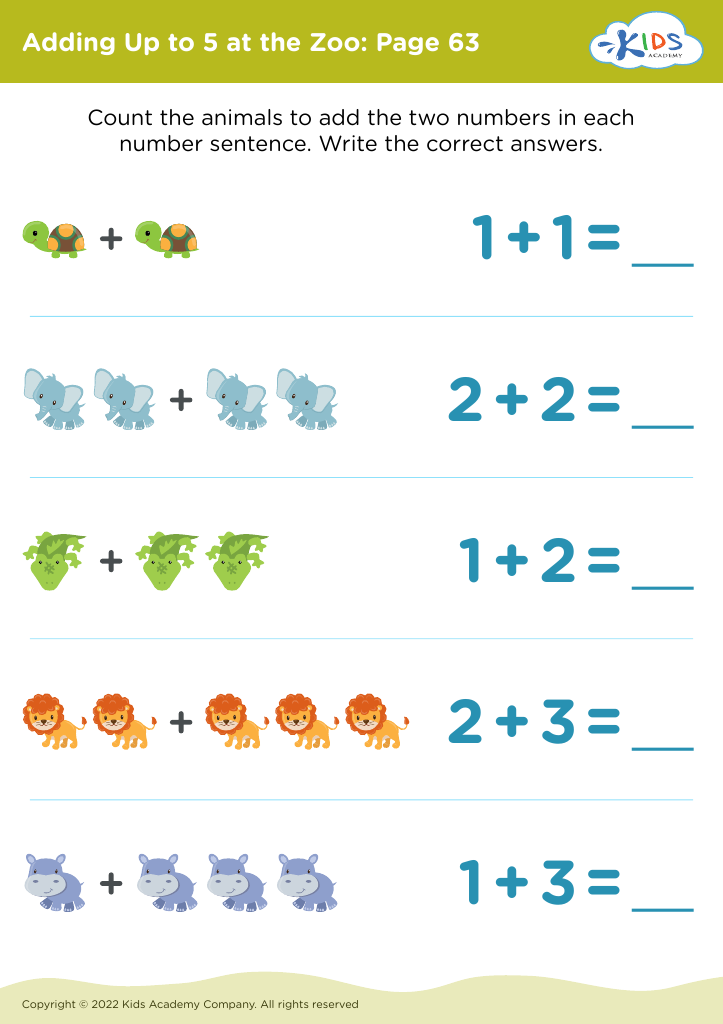
Adding Up to 5 at the Zoo: Page 63
Worksheet
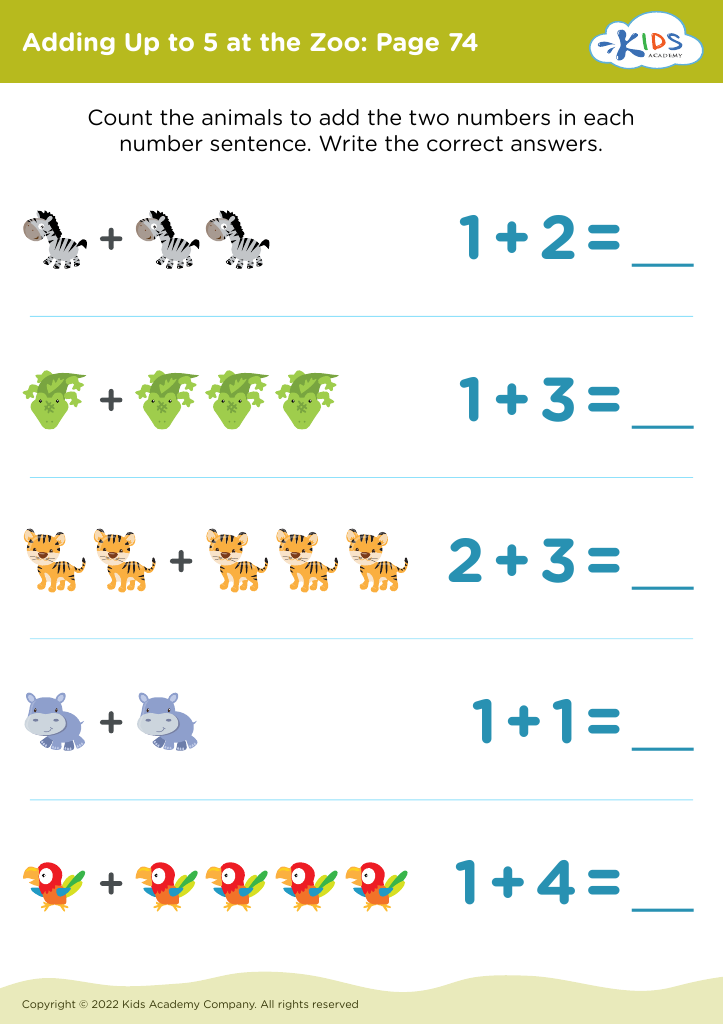
Adding Up to 5 at the Zoo: Page 74
Worksheet
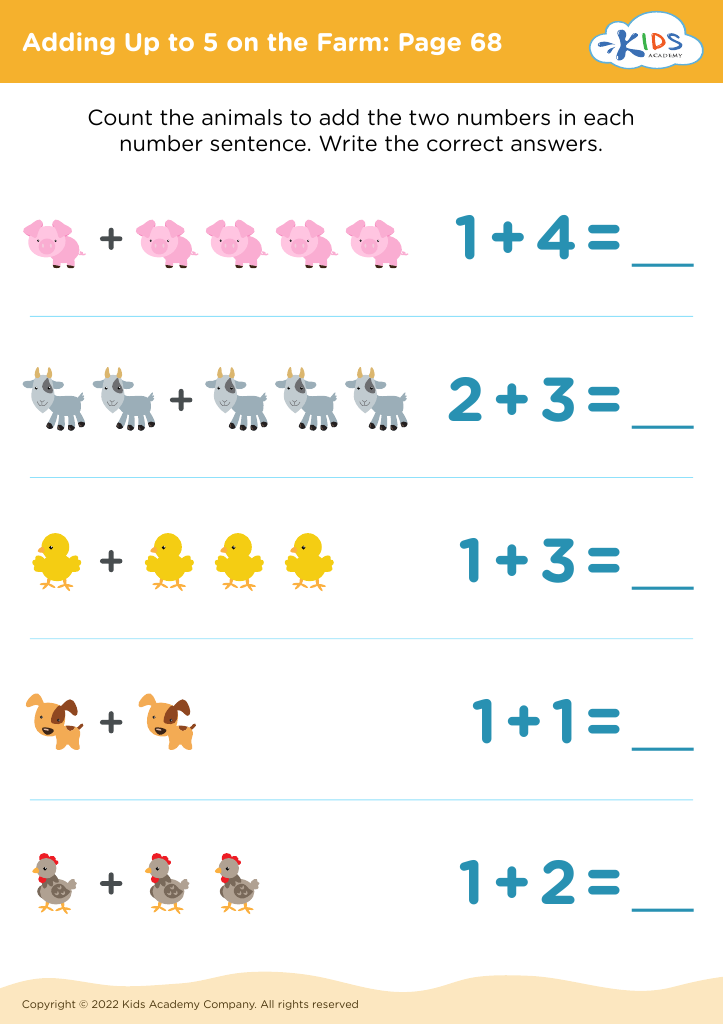
Adding Up to 5 on the Farm: Page 68
Worksheet
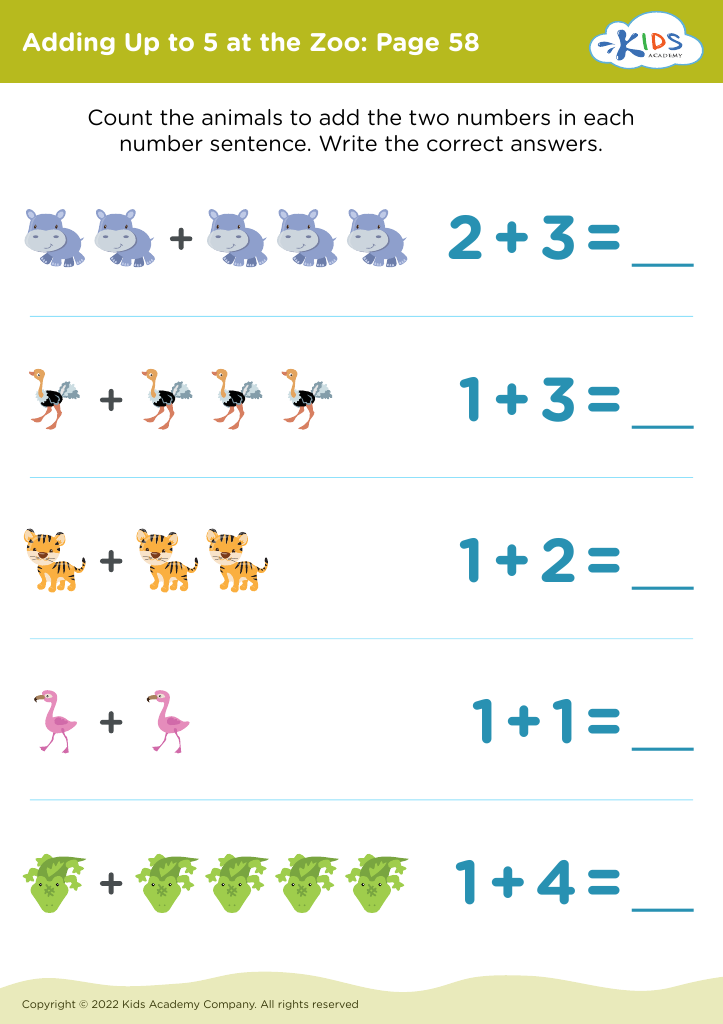
Adding Up to 5 at the Zoo: Page 58
Worksheet
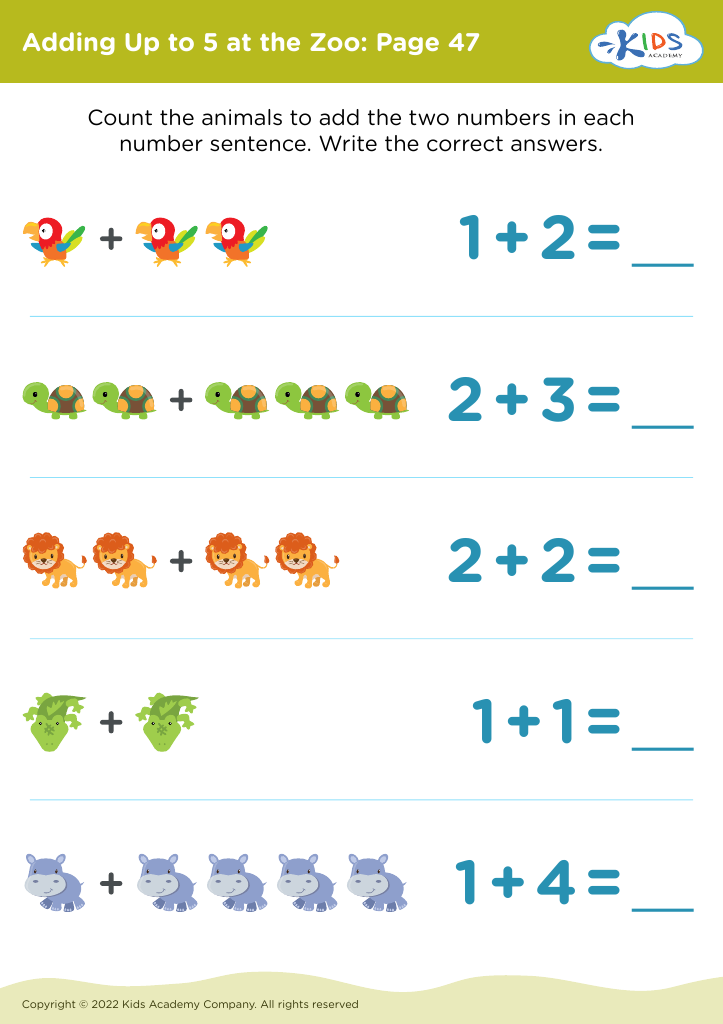
Adding Up to 5 at the Zoo: Page 47
Worksheet
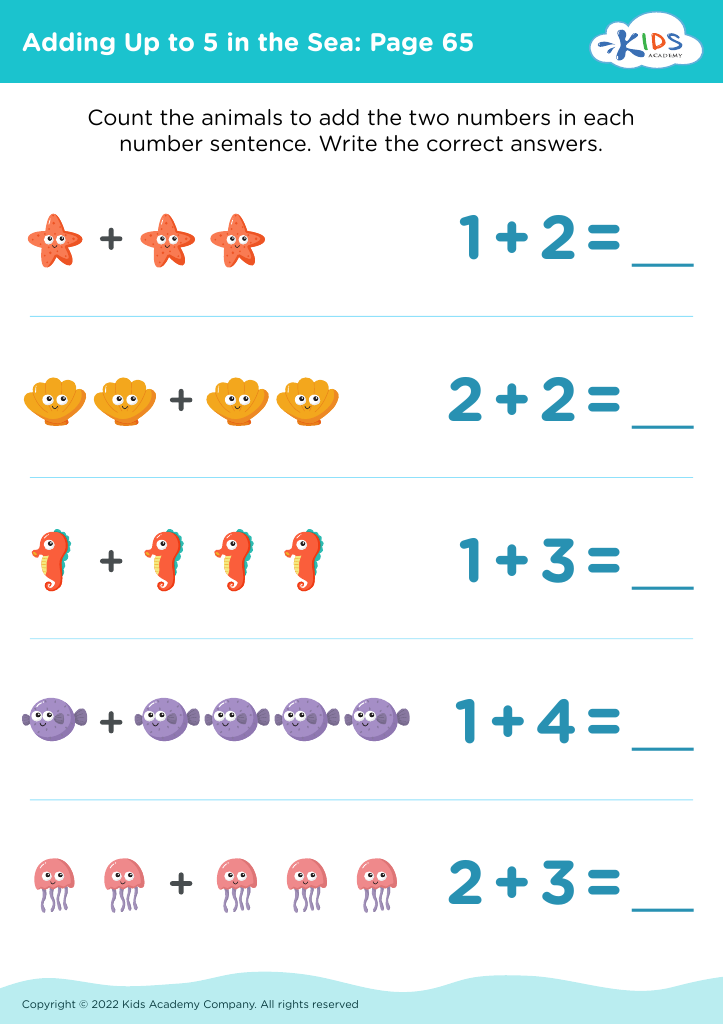
Adding Up to 5 in the Sea: Page 65
Worksheet
Help the Warthog Count the Grubs Worksheet

Help the Warthog Count the Grubs Worksheet

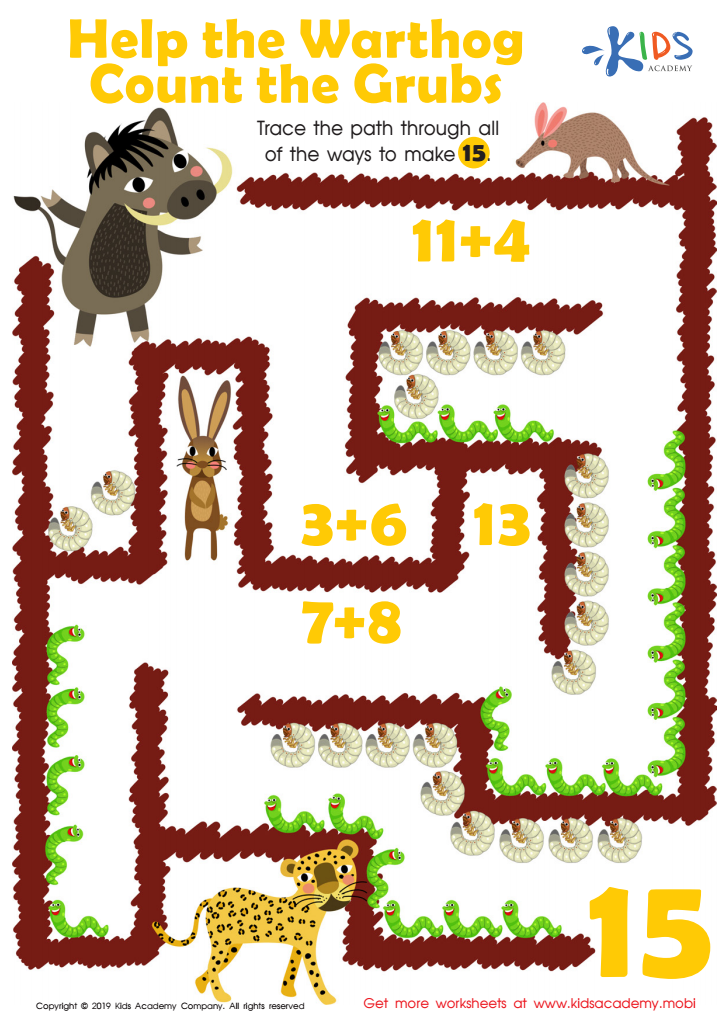
Test your kids' knowledge of wild animals. Ask them to name some they know, then have them identify the animals on this worksheet. If they can't, take the time to tell them the names. Finally, trace the warthog's path through the maze by solving the equations and going through paths that make 15.
Help the Warthog Count the Grubs Worksheet
Worksheet
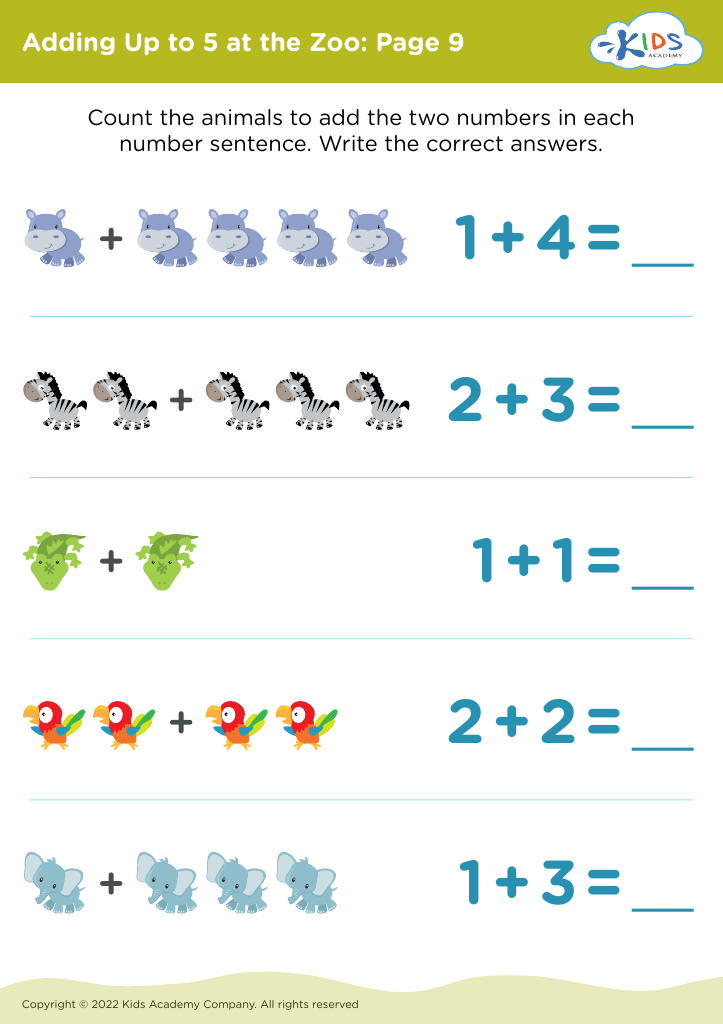
Adding Up to 5 at the Zoo: Page 9

Adding Up to 5 at the Zoo: Page 9

Adding Up to 5 at the Zoo: Page 9
Worksheet
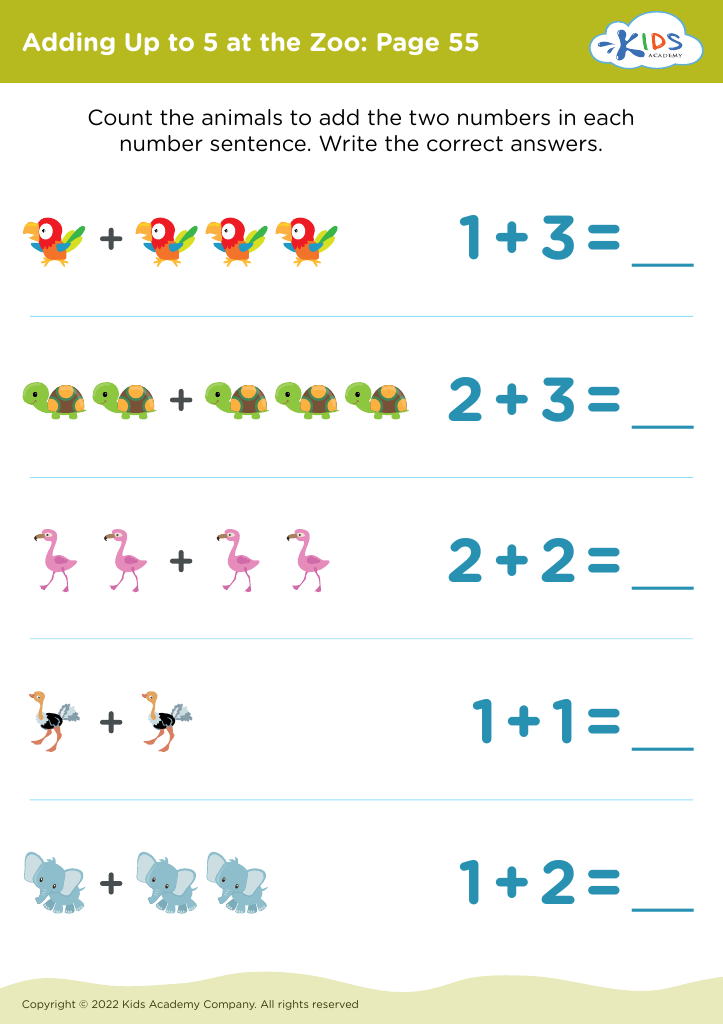
Adding Up to 5 at the Zoo: Page 55
Worksheet
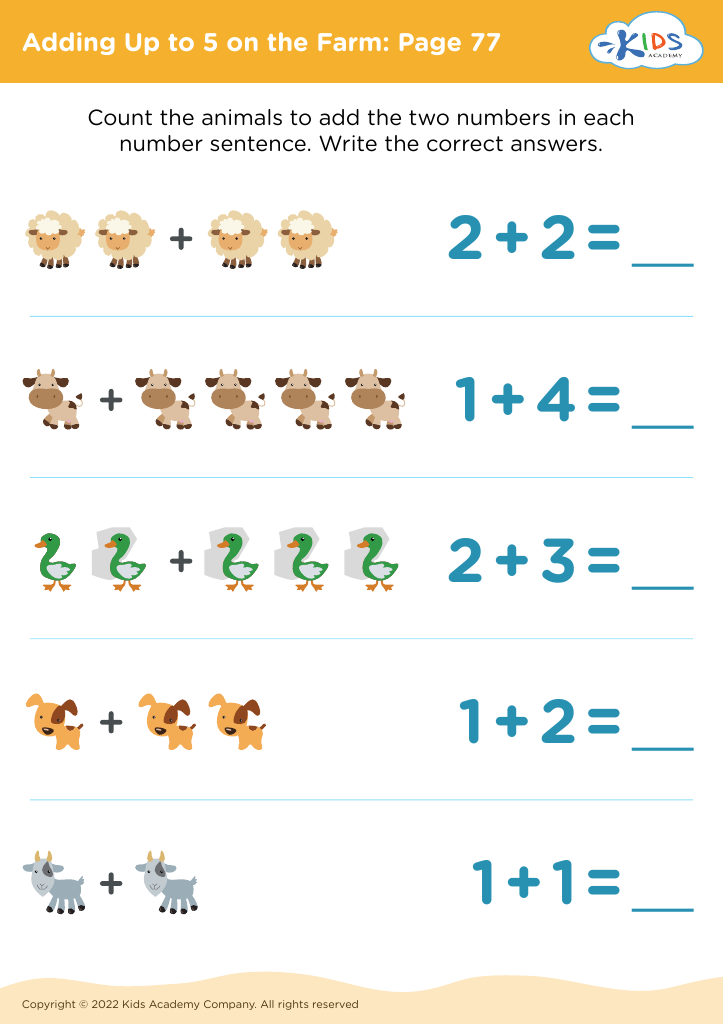
Adding Up to 5 on the Farm: Page 77
Worksheet
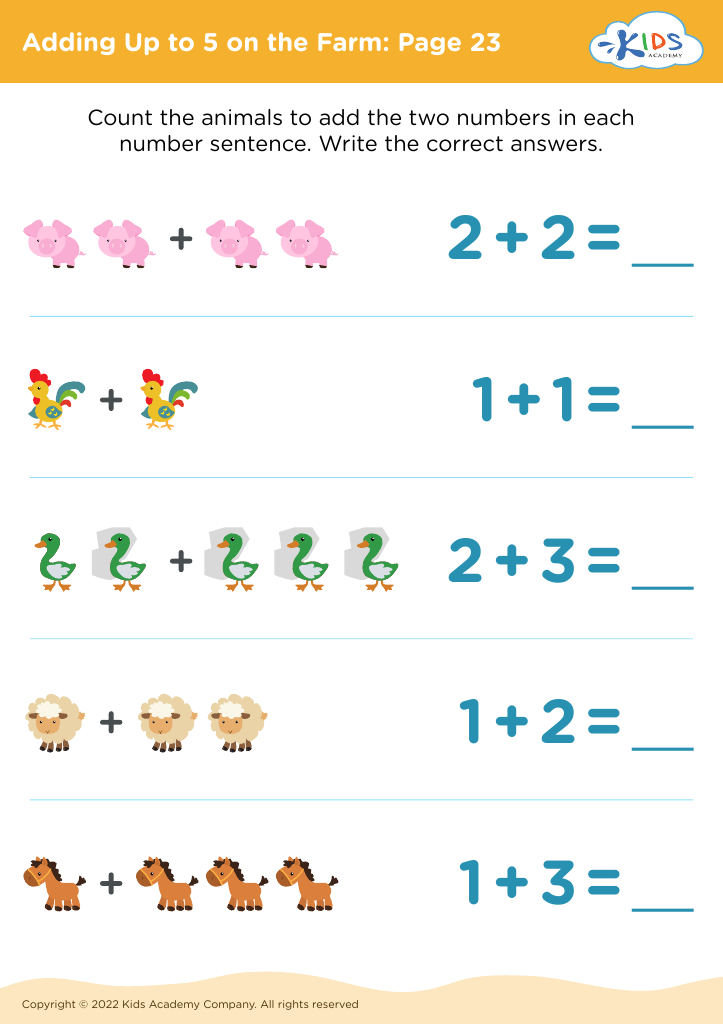
Adding Up to 5 on the Farm: Page 23
Worksheet
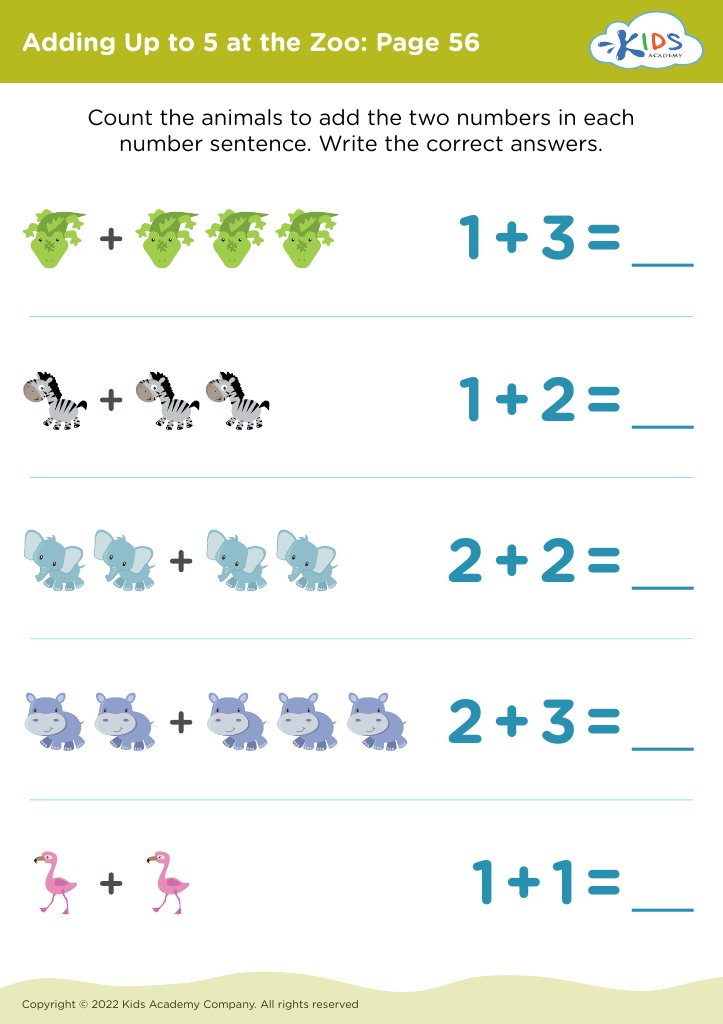
Adding Up to 5 at the Zoo: Page 56
Worksheet
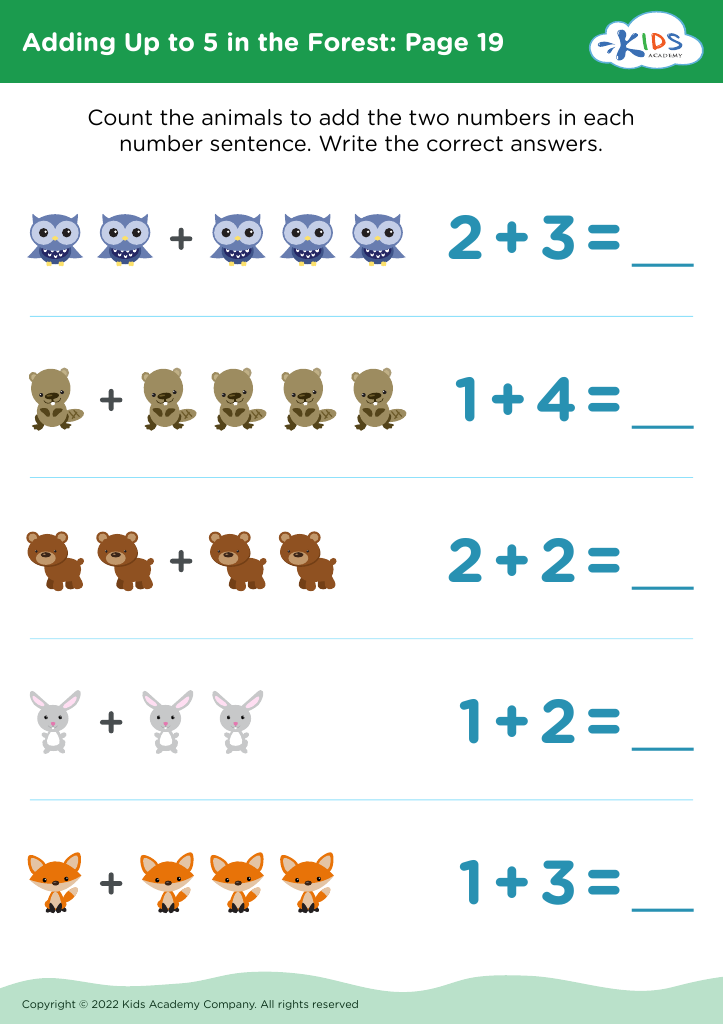
Adding Up to 5 in the Forest: Page 19
Worksheet
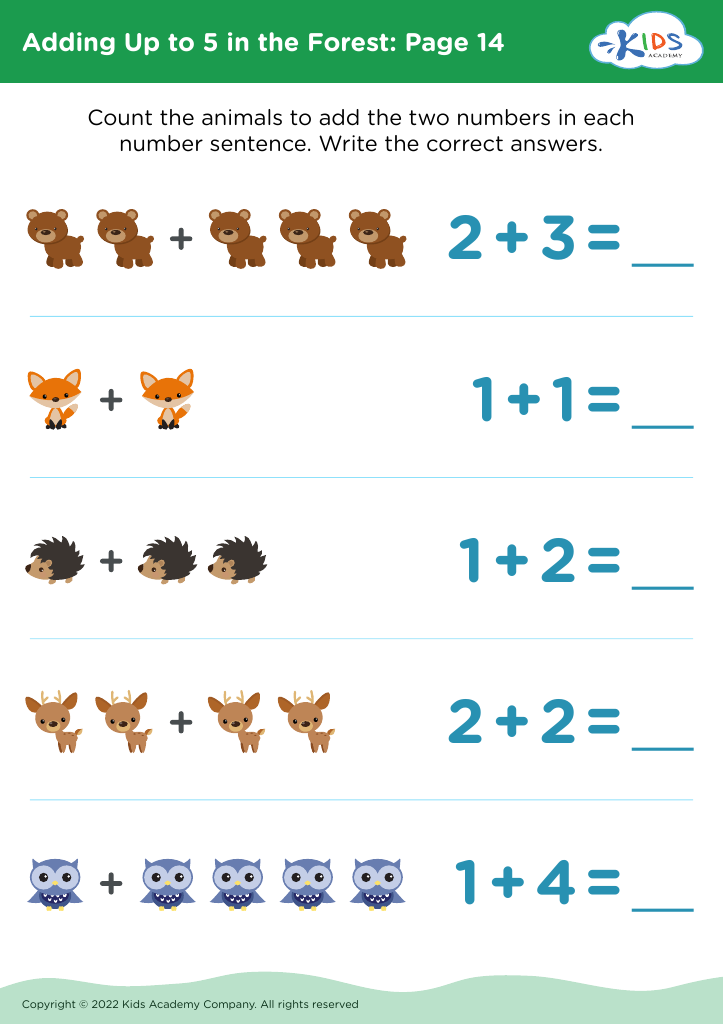
Adding Up to 5 in the Forest: Page 14
Worksheet
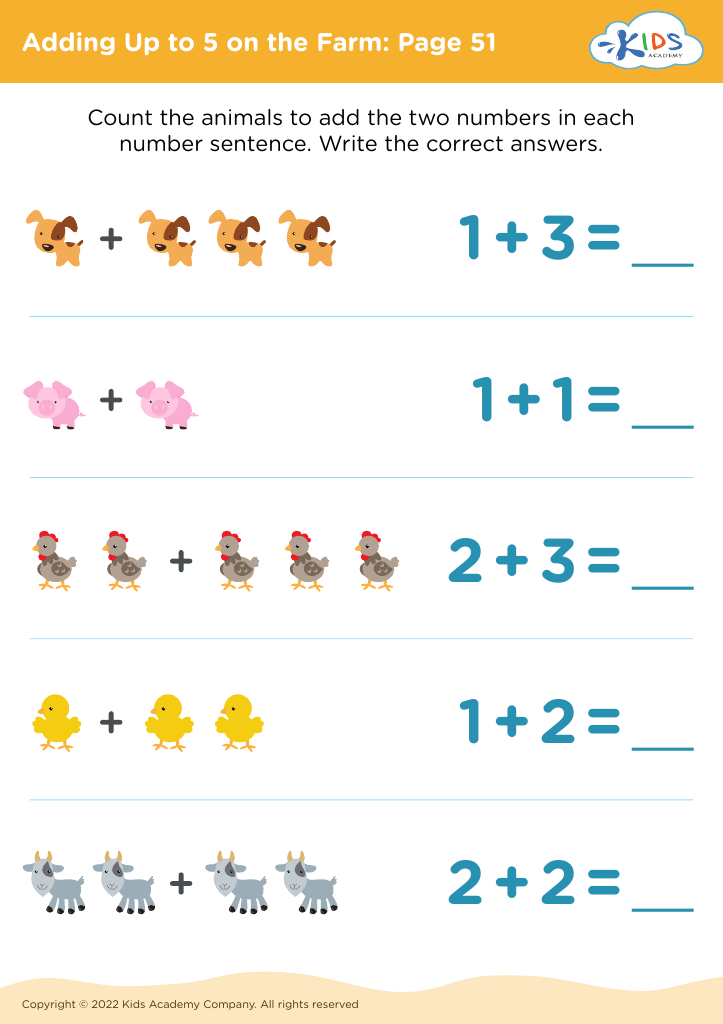
Adding Up to 5 on the Farm: Page 51
Worksheet
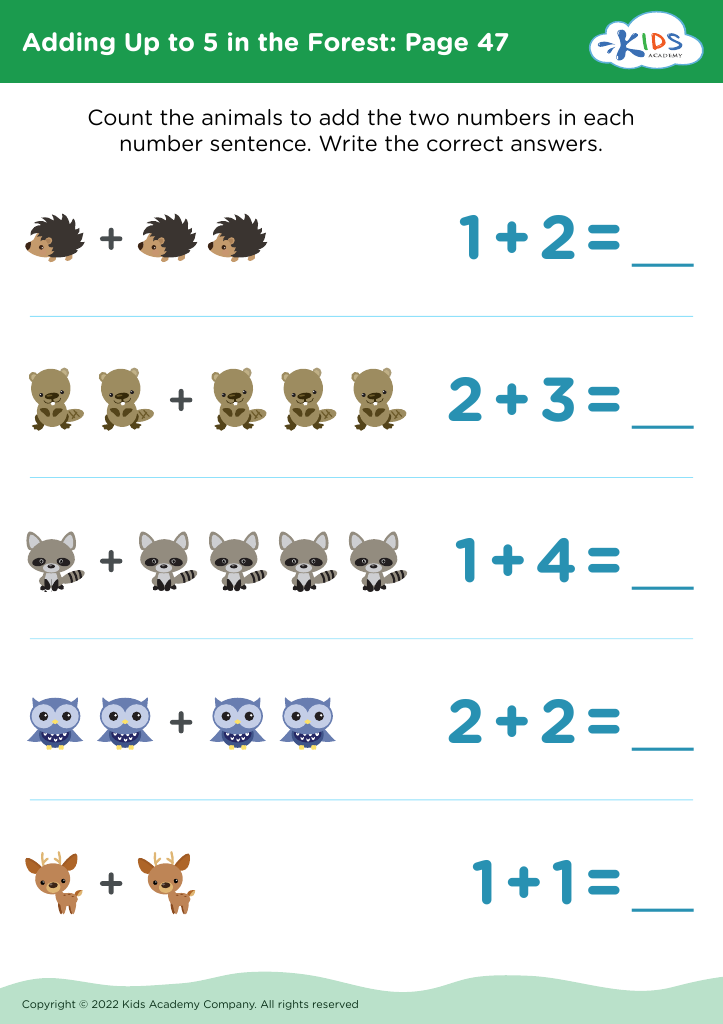
Adding Up to 5 in the Forest: Page 47
Worksheet
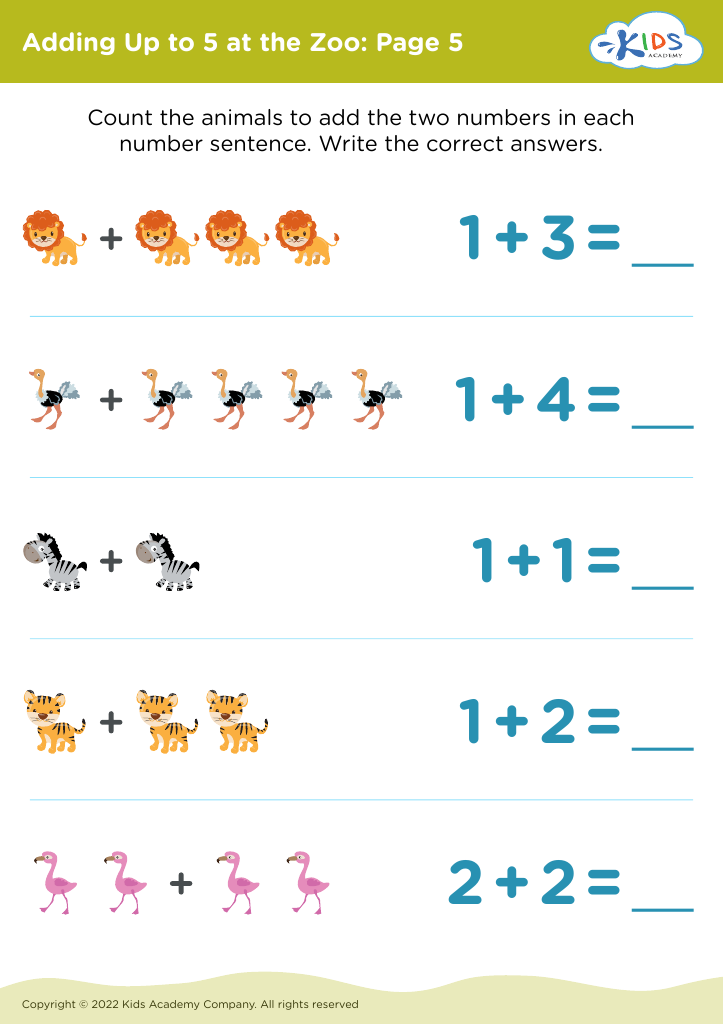
Adding Up to 5 at the Zoo: Page 5

Adding Up to 5 at the Zoo: Page 5

Adding Up to 5 at the Zoo: Page 5
Worksheet
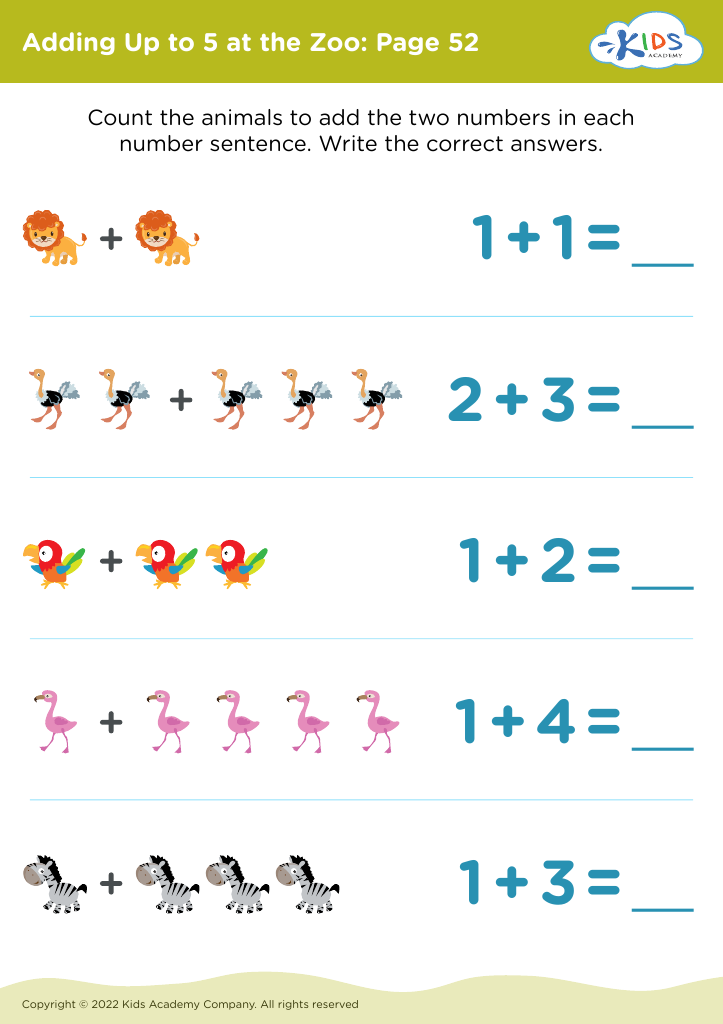
Adding Up to 5 at the Zoo: Page 52
Worksheet
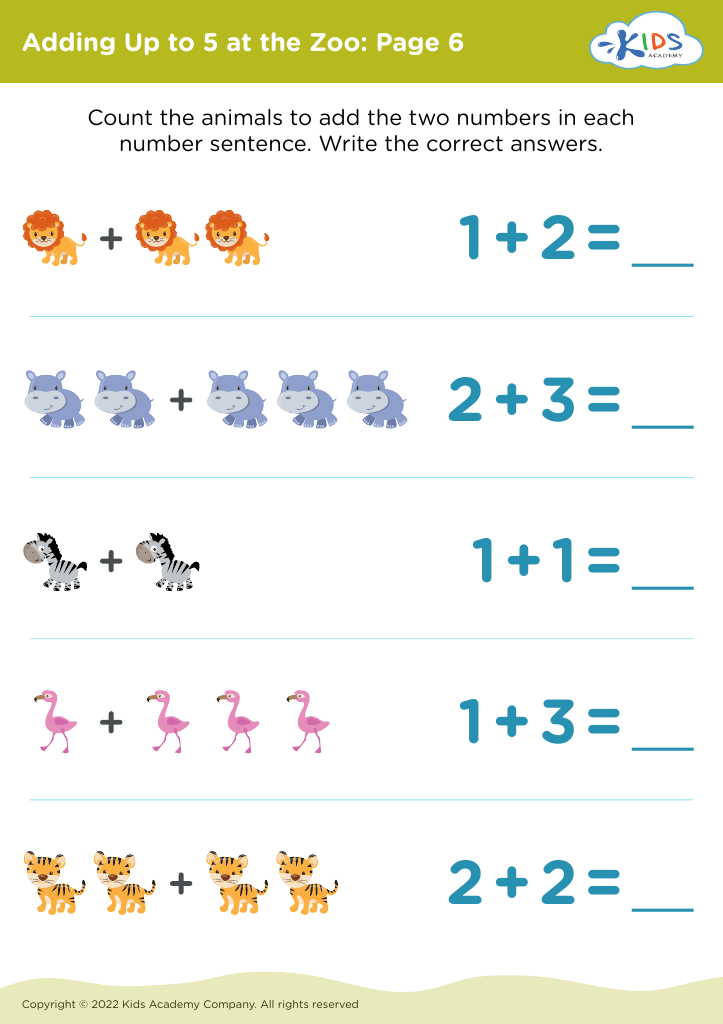
Adding Up to 5 at the Zoo: Page 6

Adding Up to 5 at the Zoo: Page 6

Adding Up to 5 at the Zoo: Page 6
Worksheet
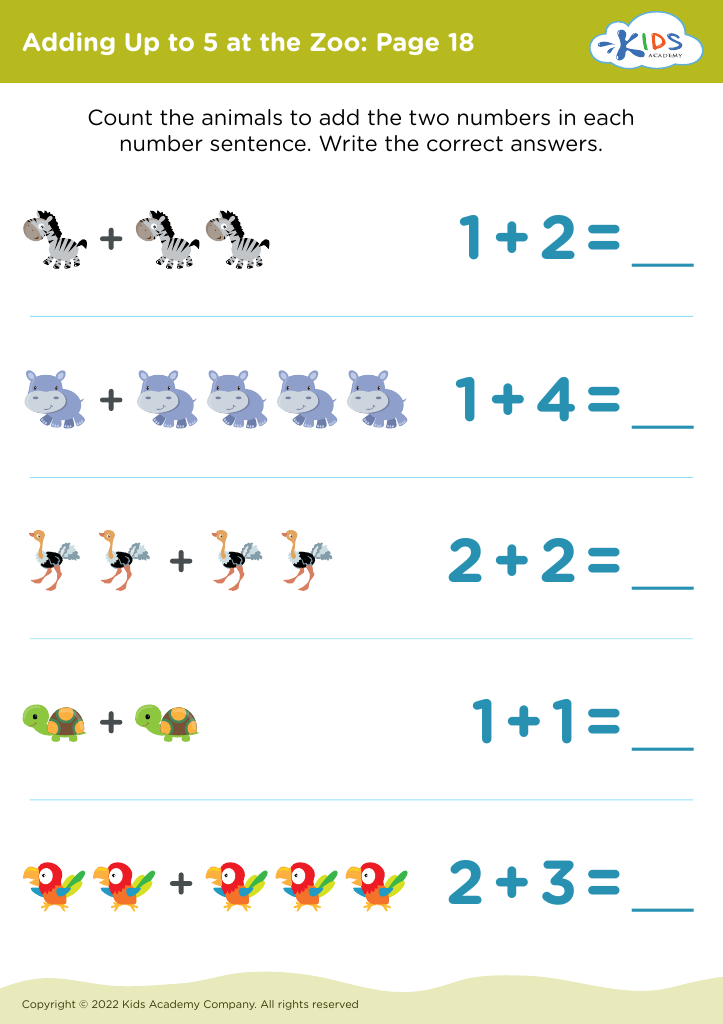
Adding Up to 5 at the Zoo: Page 18
Worksheet


Animal recognition and addition activities are crucial for children between the ages of 3-7 because they harness both cognitive and emotional development in young learners. At this critical stage, brains are rapidly developing, and introducing fundamental skills like recognizing animals combined with basic arithmetic fosters a multi-sensory learning experience that deepens understanding.

From a cognitive perspective, animal recognition taps into children’s innate curiosity and love for the natural world, making learning more engaging and memorable. Pairing this with simple addition encourages critical thinking, problem-solving, and numeracy skills. Integrating familiar, relatable content like animals helps to anchor abstract concepts in something concrete, making it easier for young minds to grasp basic math principles.

Emotionally, such activities build confidence as kids experience success and mastery over new material. The joy of identifying animals they love and accurately performing additions boosts their self-esteem and augments their enthusiasm for further learning. This positive reinforcement is key in developing a lifelong love for education.

For parents and teachers, focusing on such interdisciplinary exercises ensures a holistic learning approach, catering not only to academic growth but also to emotional and social aspects of development. Ultimately, blending animal recognition with addition is a strategy that fosters rounded, eager, and confident young learners.