Animal recognition Addition Worksheets for Ages 3-7 - Page 4
95 filtered results
-
From - To
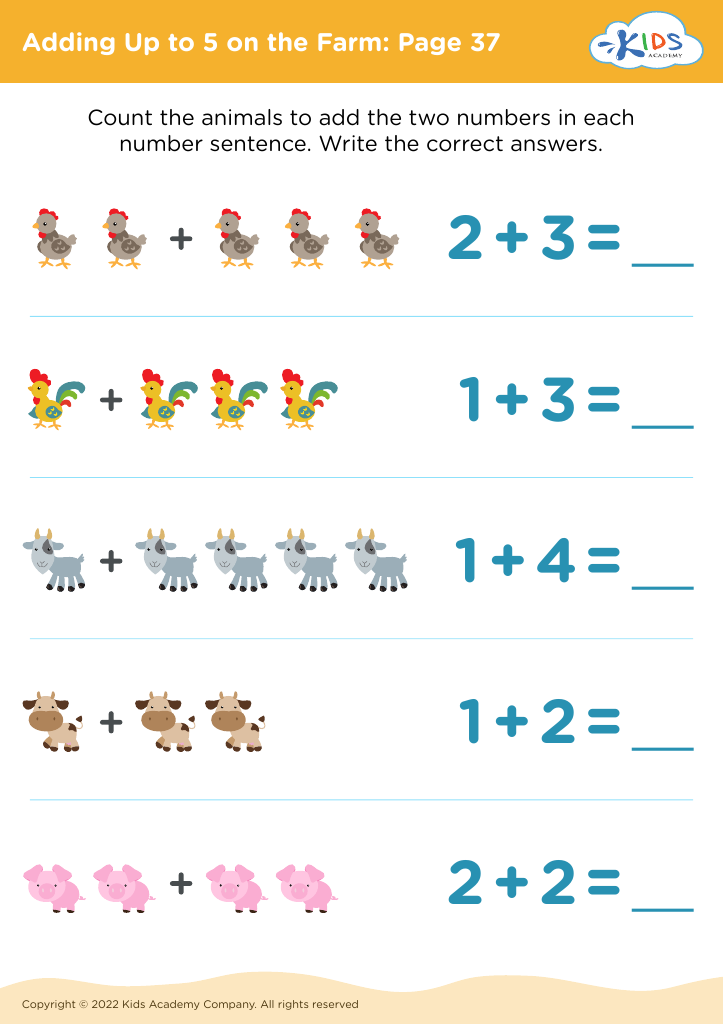
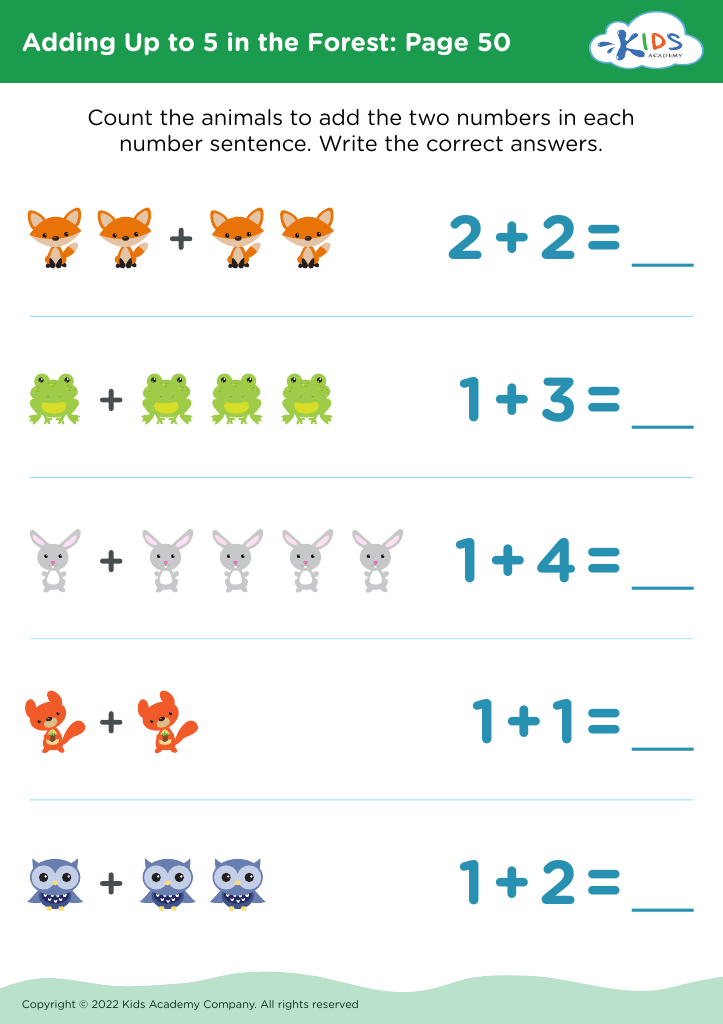
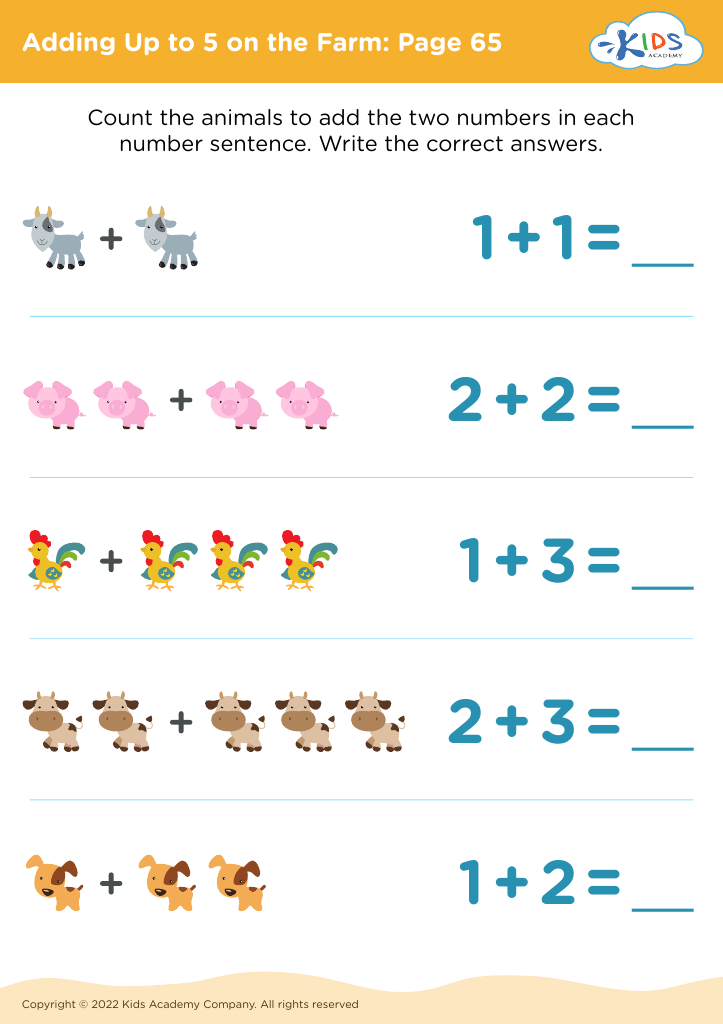
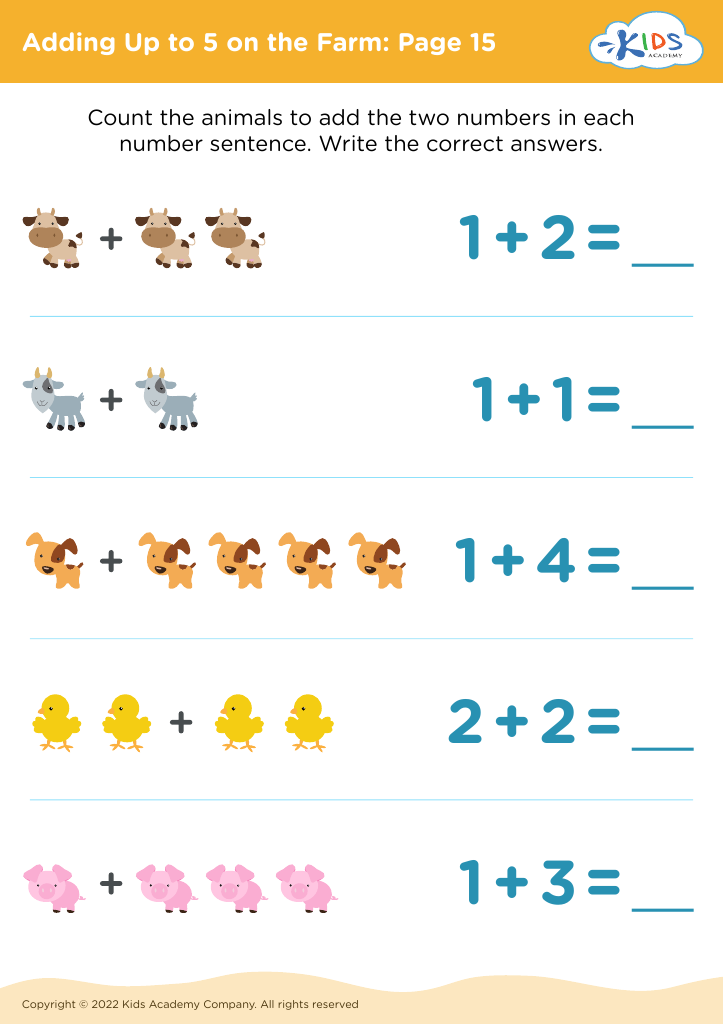
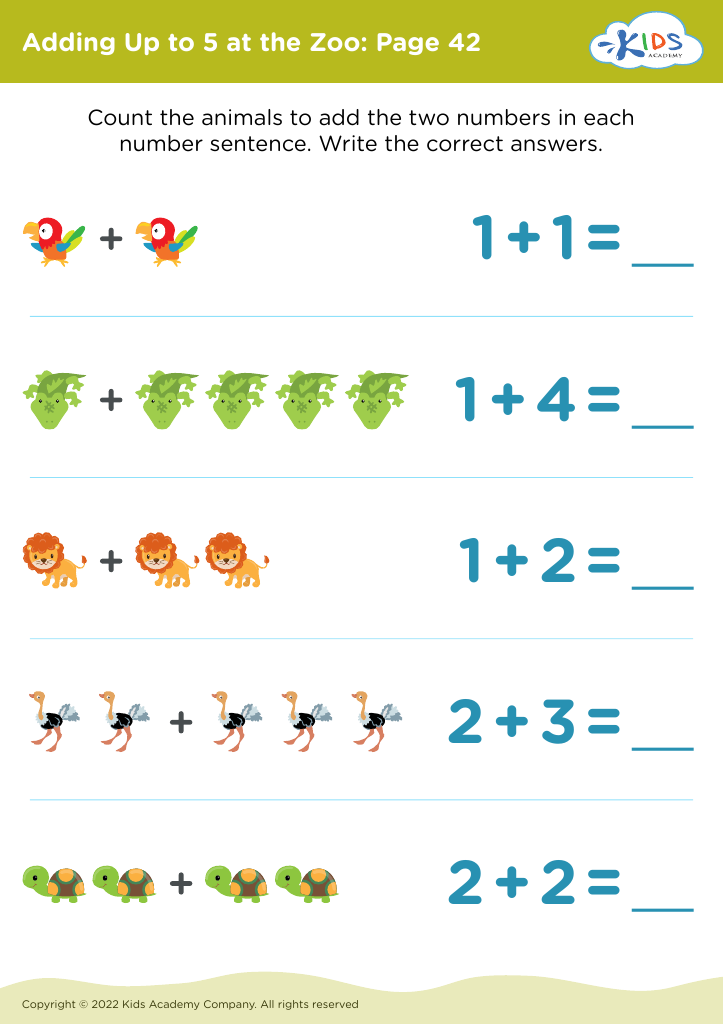
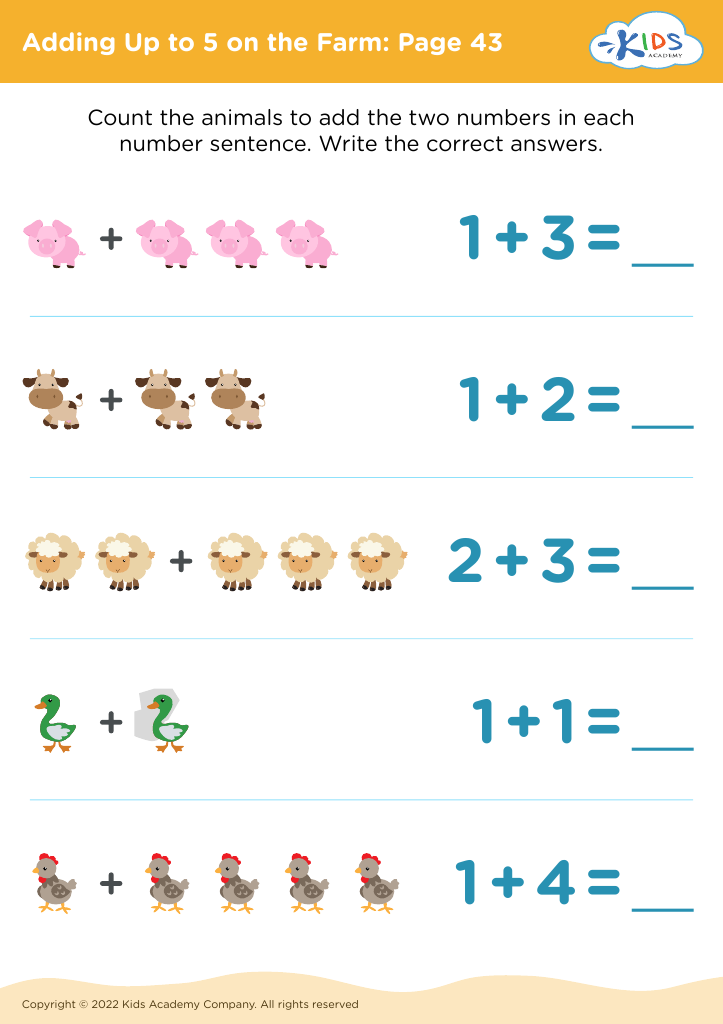
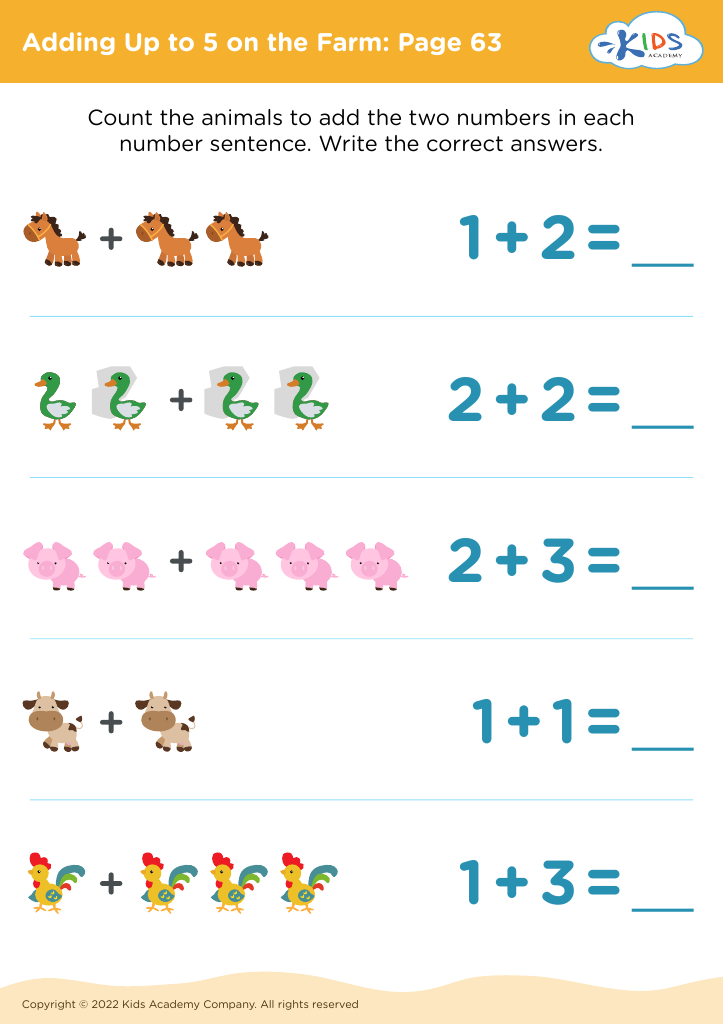
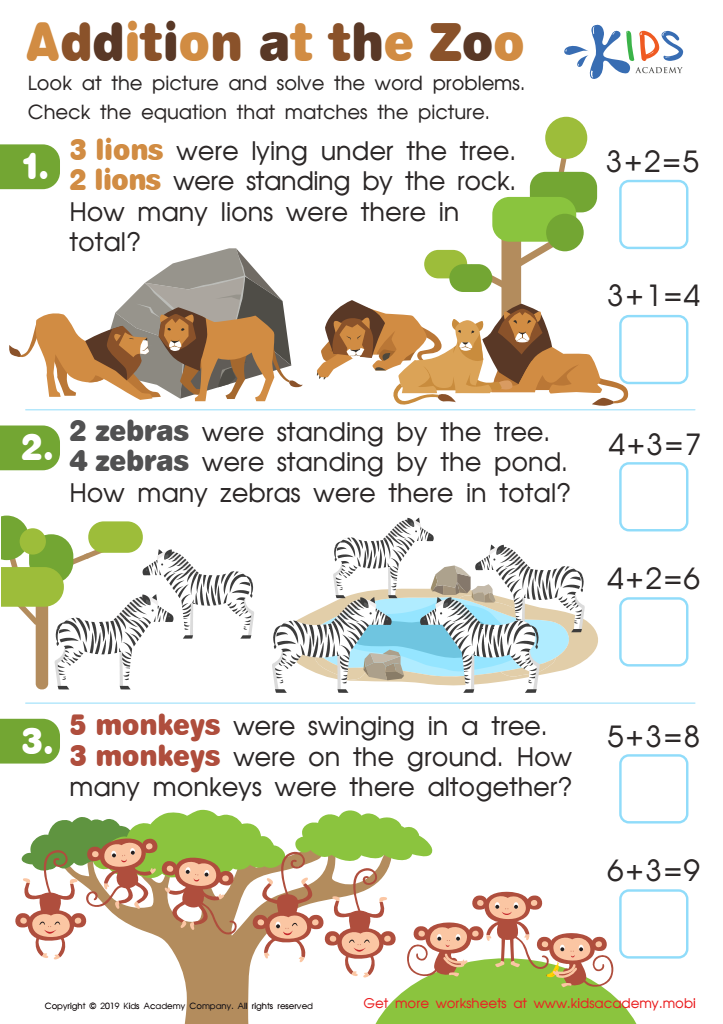
Addition at the Zoo Worksheet
 Assign to My Students





.jpg)


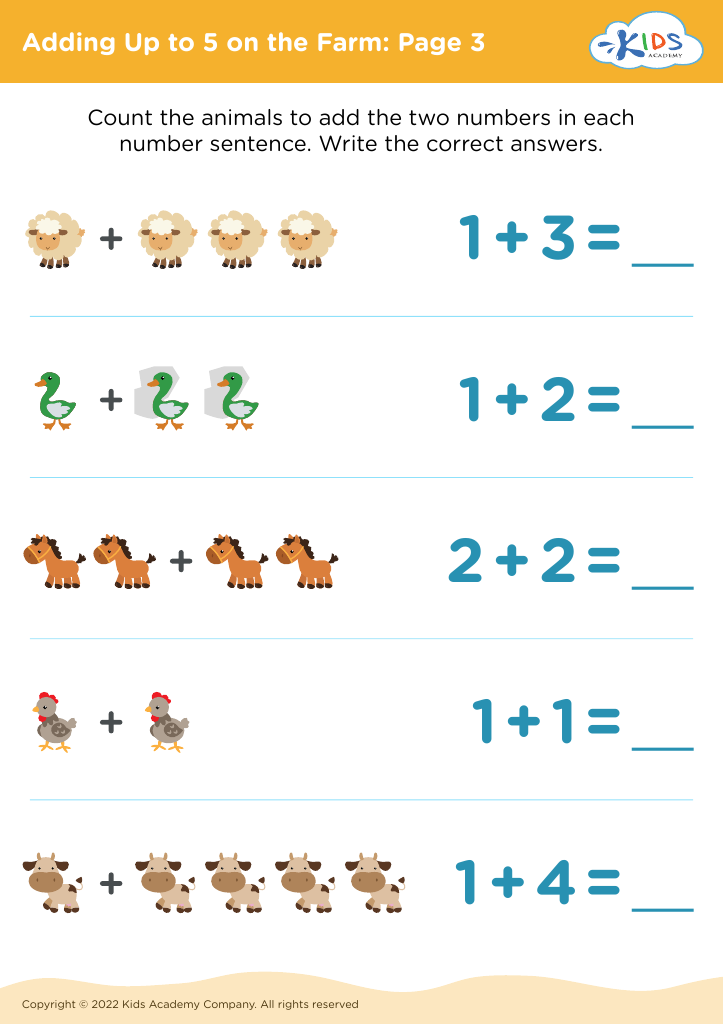
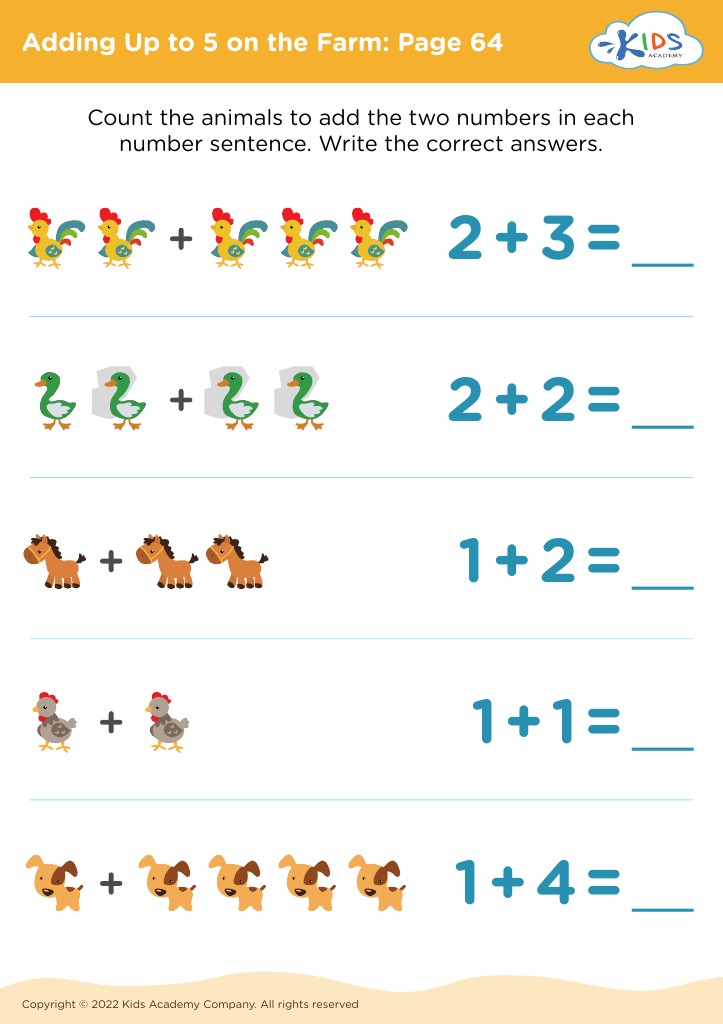
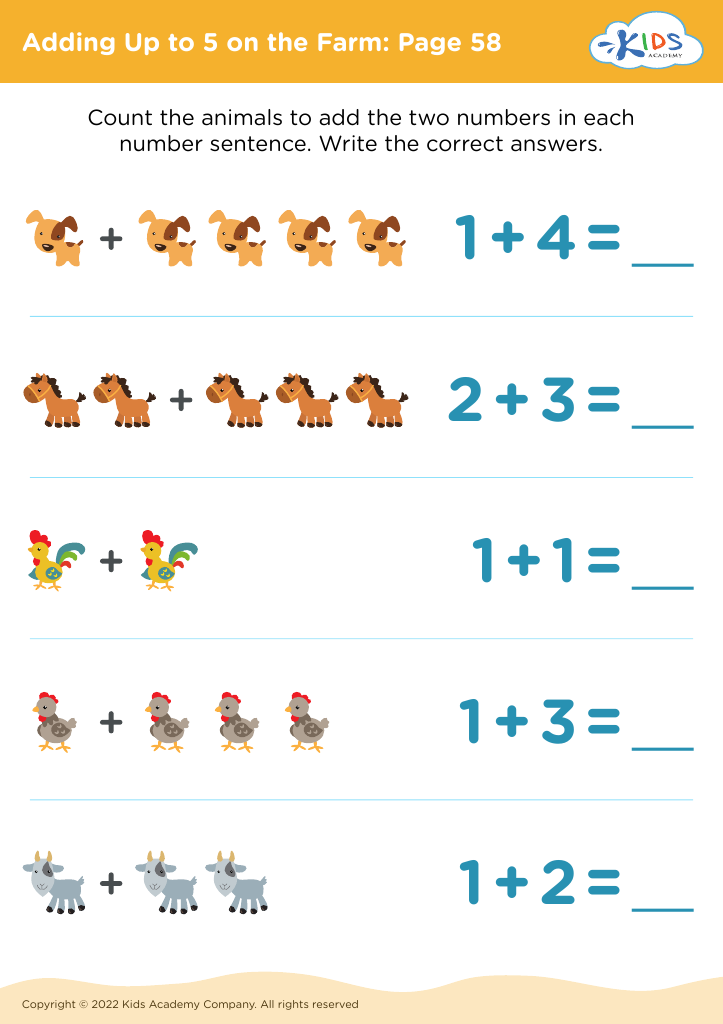
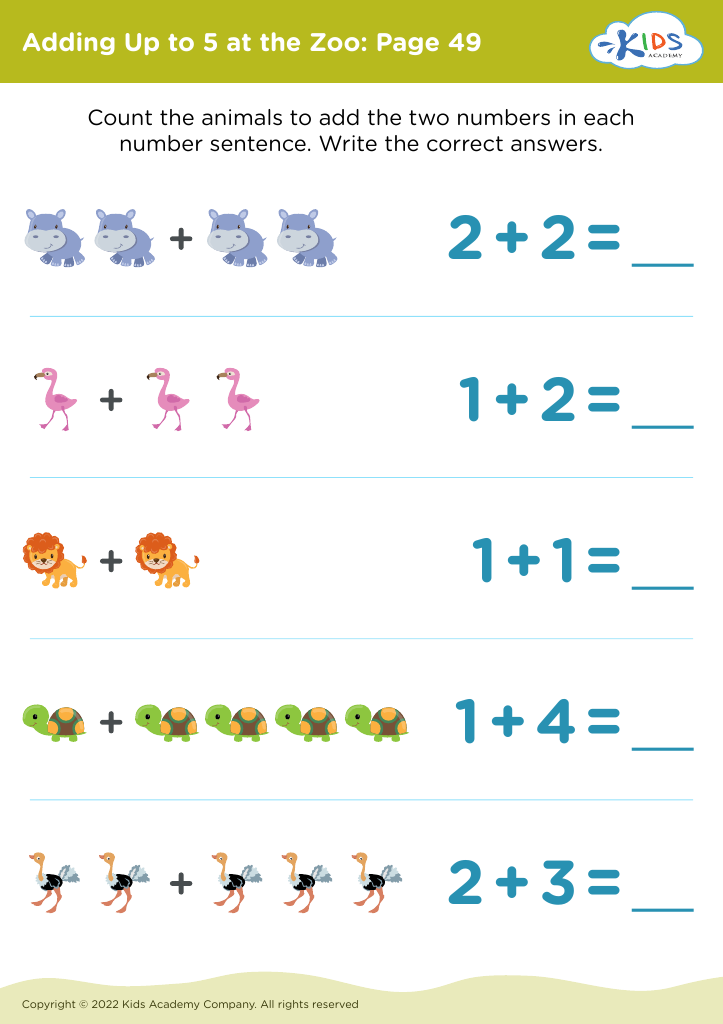
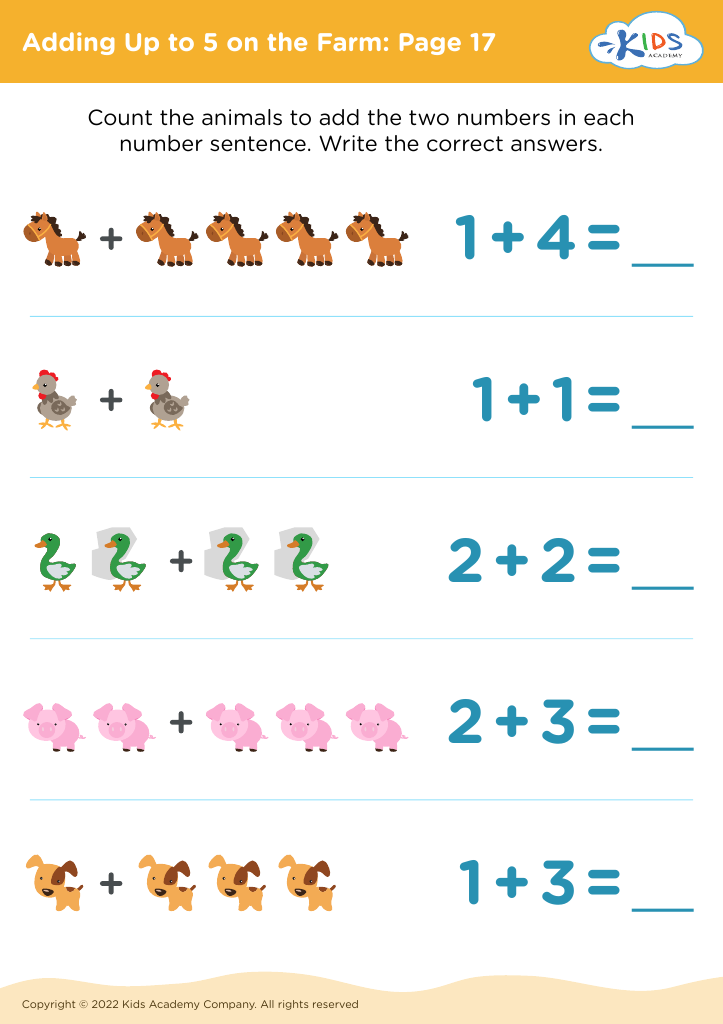
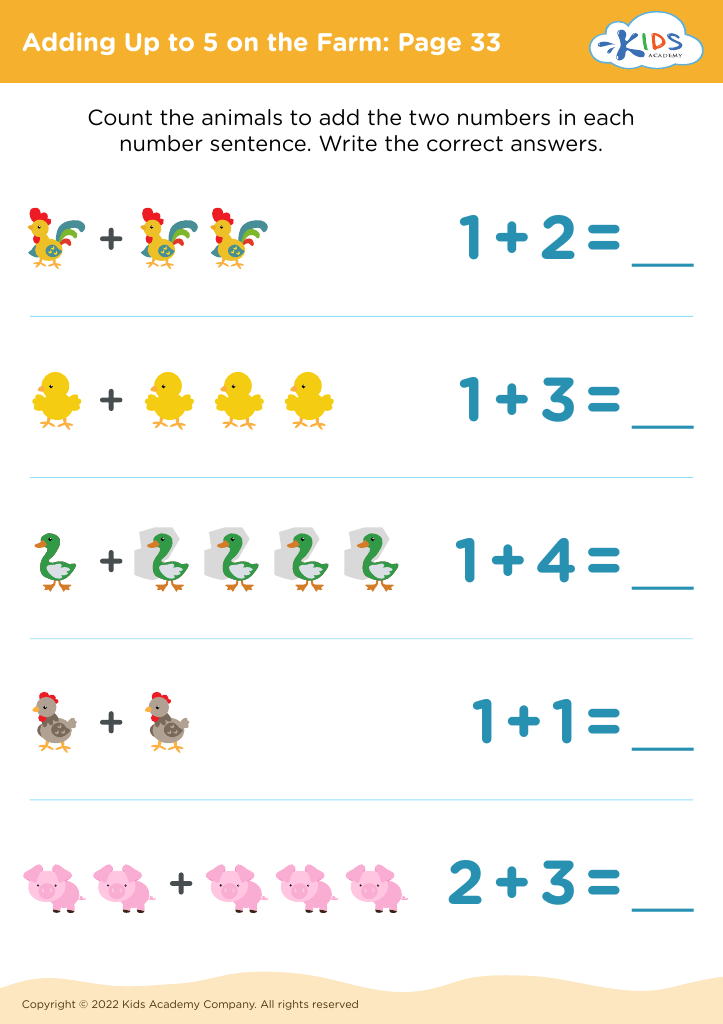
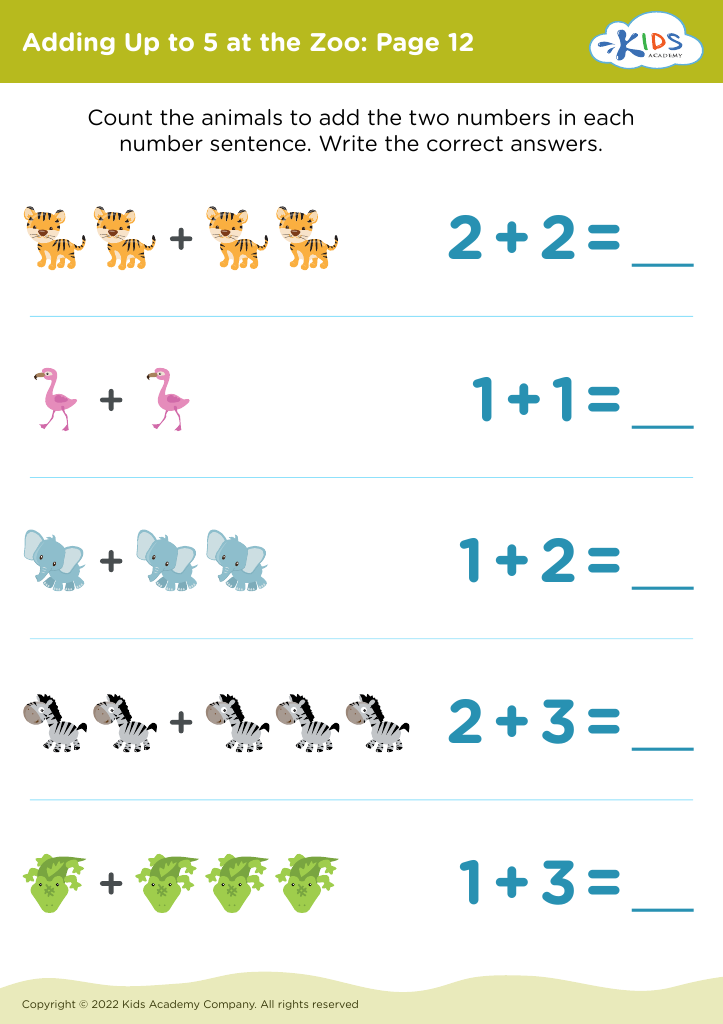
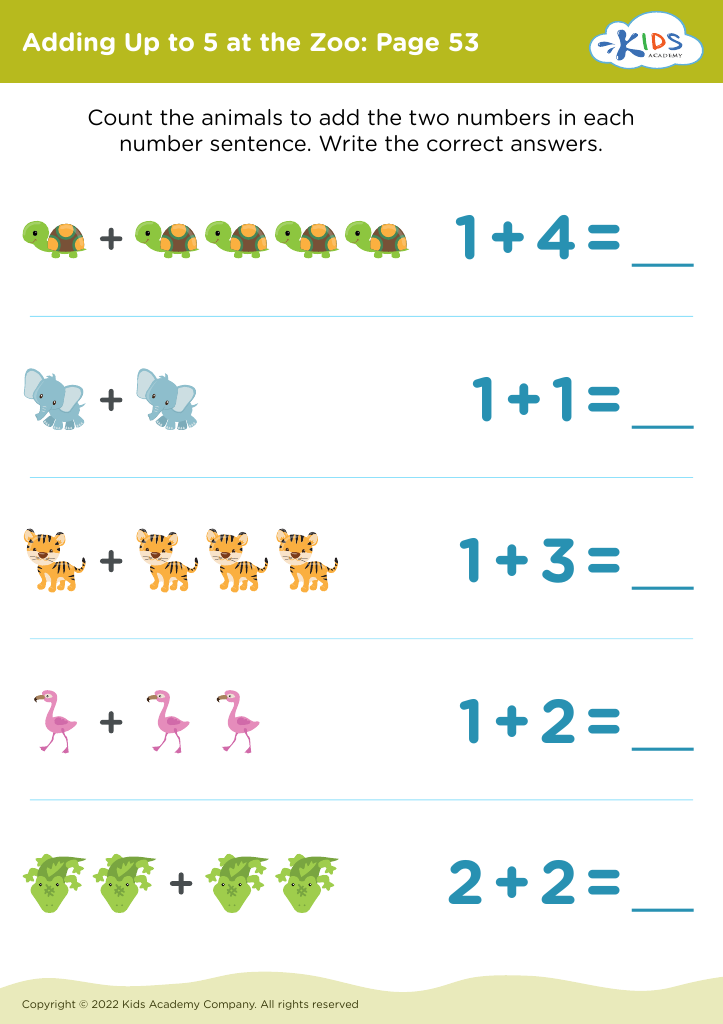
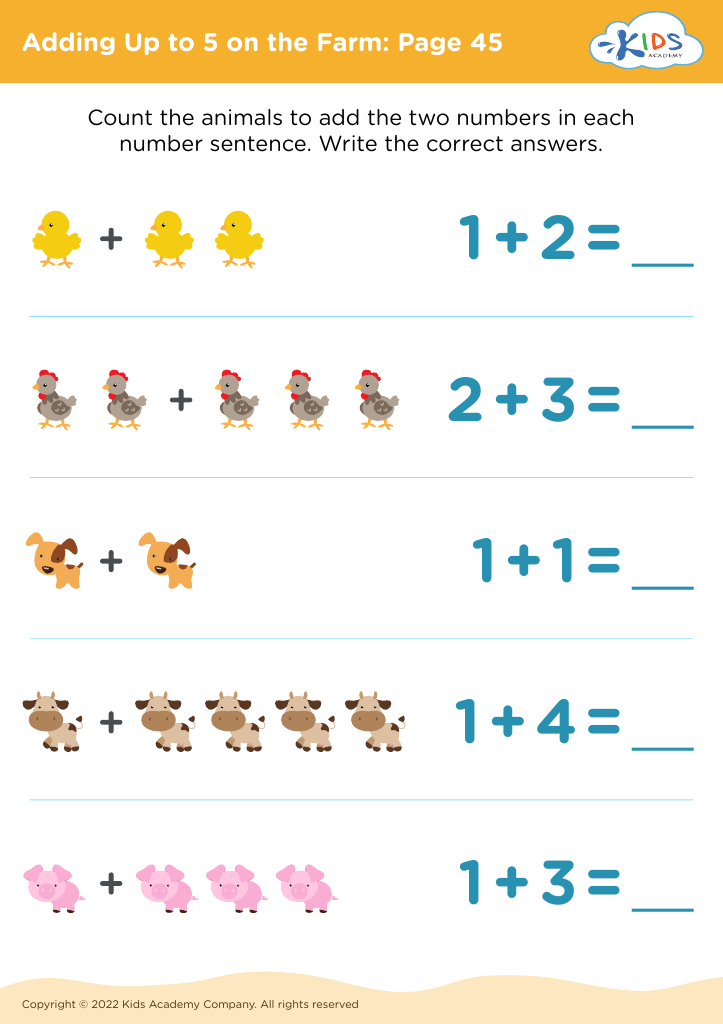
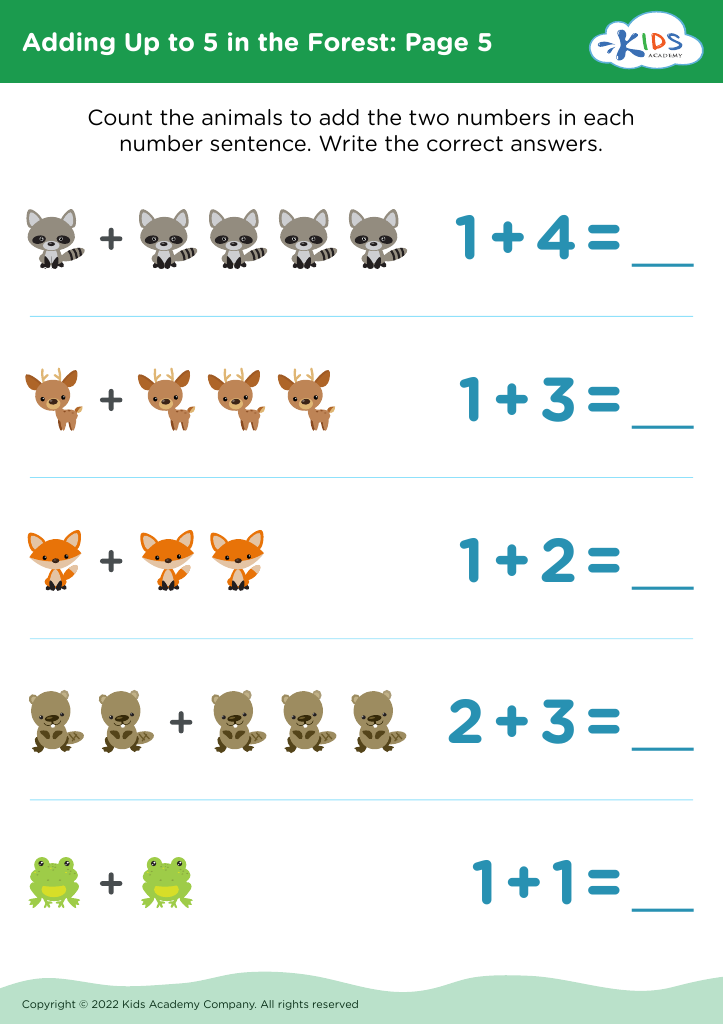
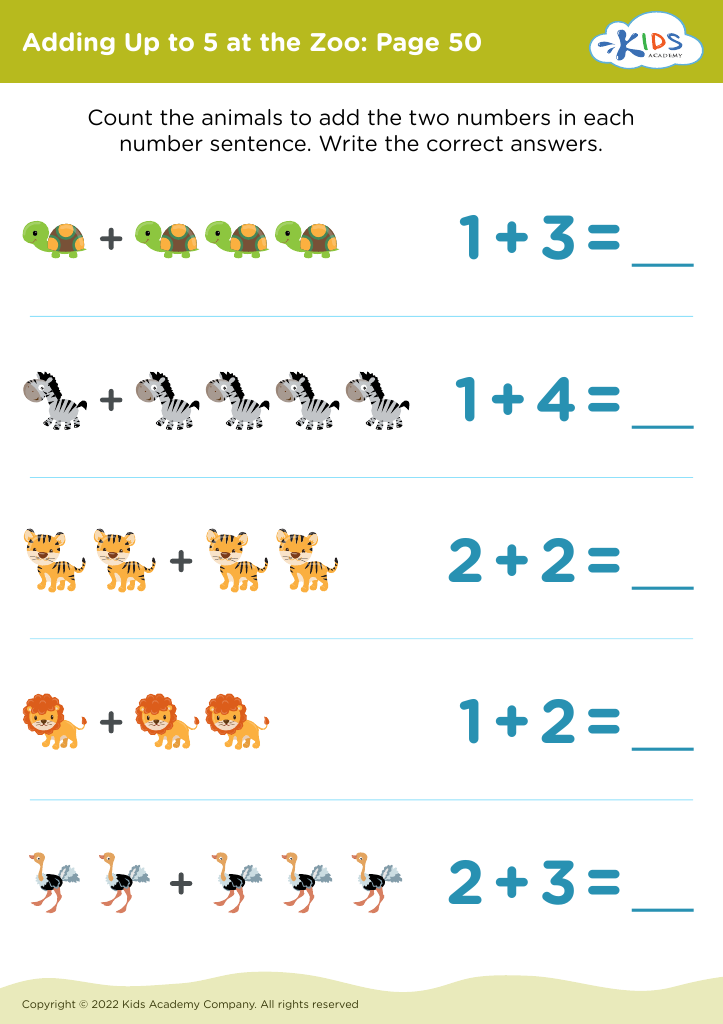
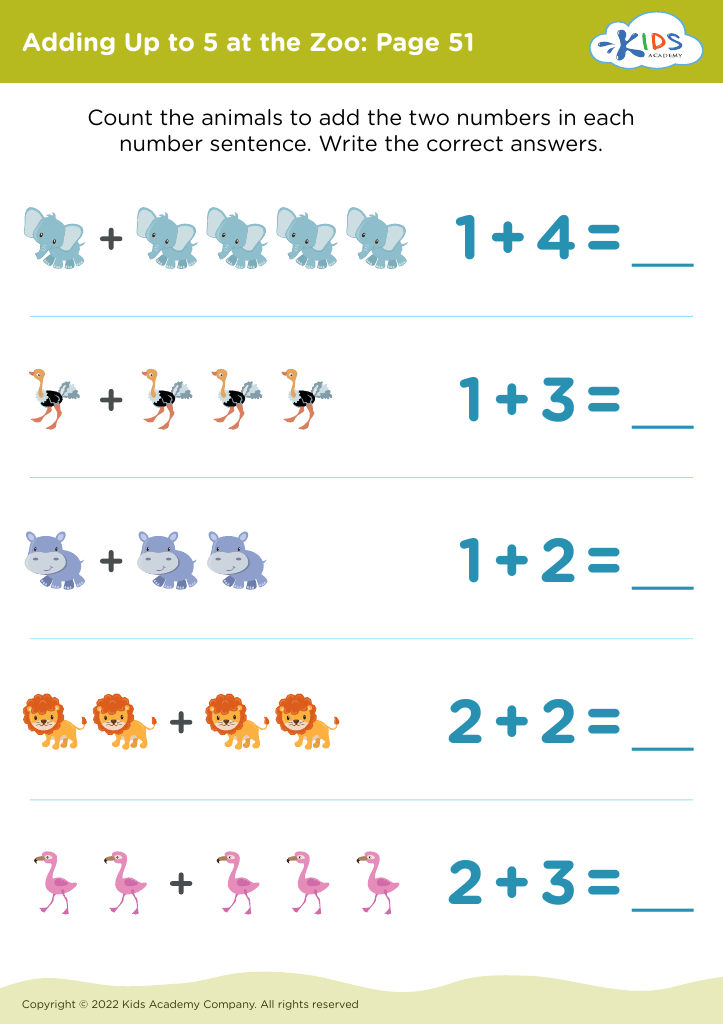
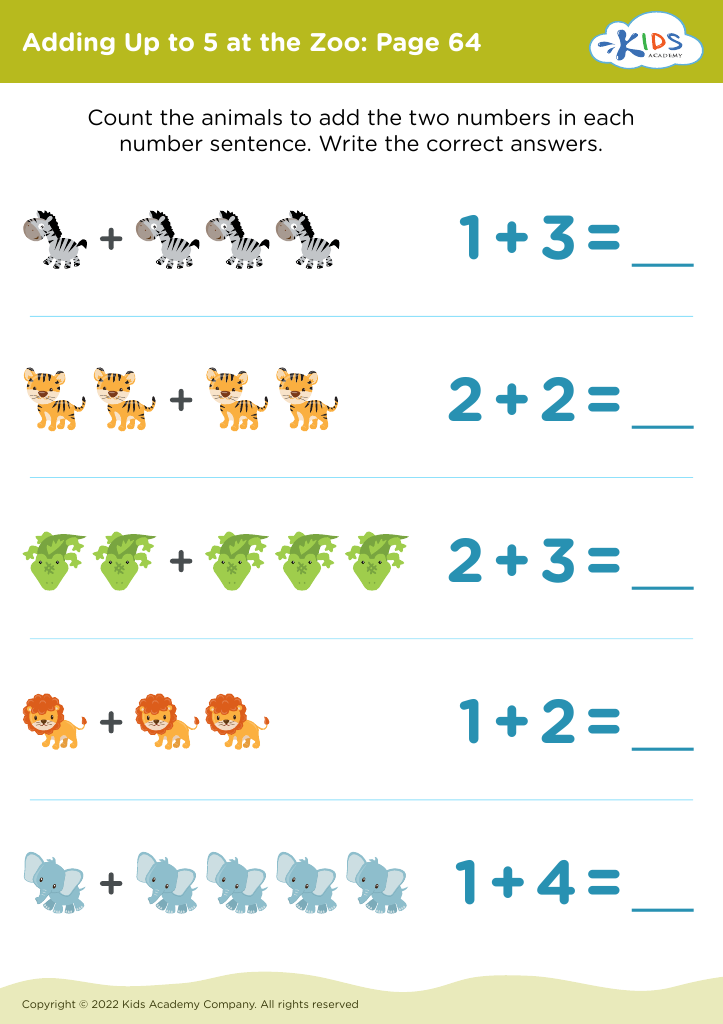
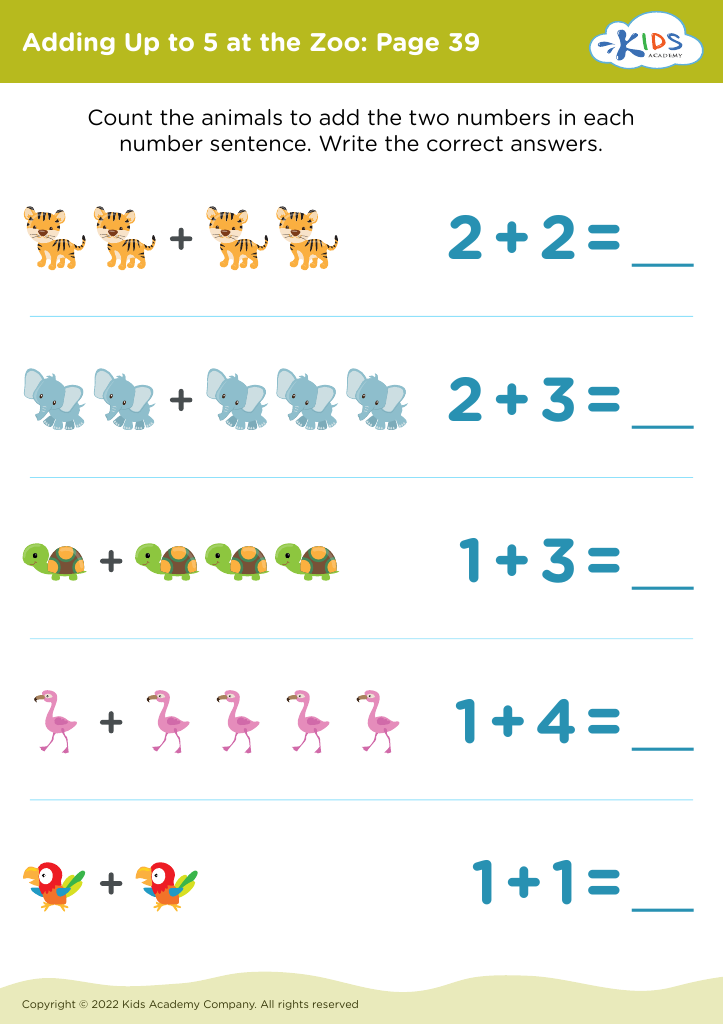
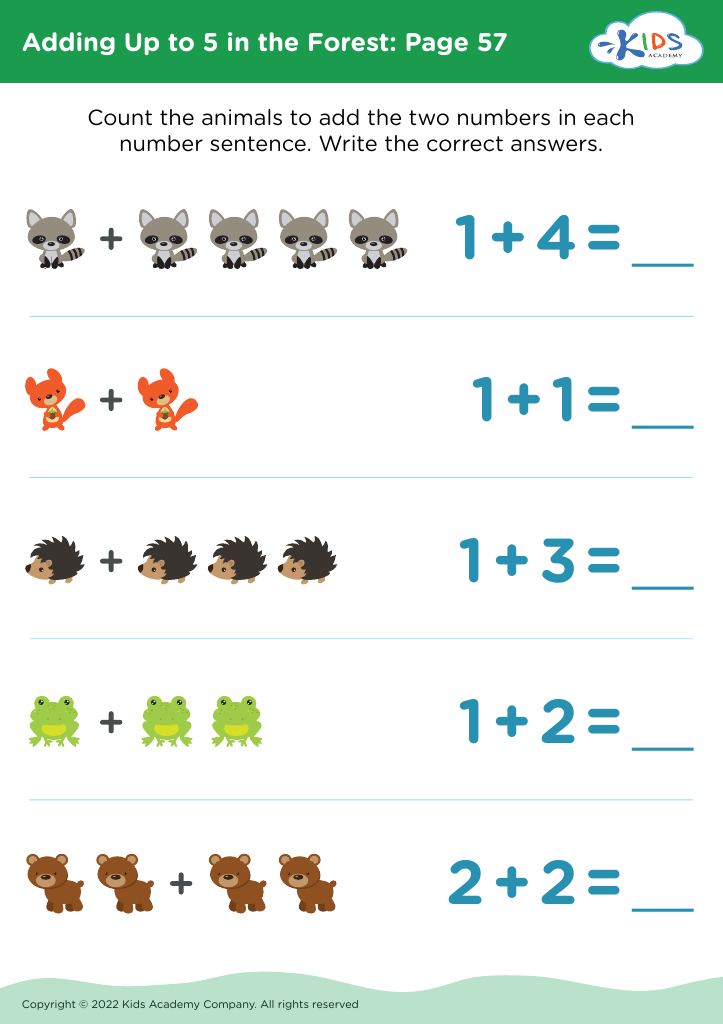
Animal recognition and addition activities are crucial for children between the ages of 3-7 because they harness both cognitive and emotional development in young learners. At this critical stage, brains are rapidly developing, and introducing fundamental skills like recognizing animals combined with basic arithmetic fosters a multi-sensory learning experience that deepens understanding.
From a cognitive perspective, animal recognition taps into children’s innate curiosity and love for the natural world, making learning more engaging and memorable. Pairing this with simple addition encourages critical thinking, problem-solving, and numeracy skills. Integrating familiar, relatable content like animals helps to anchor abstract concepts in something concrete, making it easier for young minds to grasp basic math principles.
Emotionally, such activities build confidence as kids experience success and mastery over new material. The joy of identifying animals they love and accurately performing additions boosts their self-esteem and augments their enthusiasm for further learning. This positive reinforcement is key in developing a lifelong love for education.
For parents and teachers, focusing on such interdisciplinary exercises ensures a holistic learning approach, catering not only to academic growth but also to emotional and social aspects of development. Ultimately, blending animal recognition with addition is a strategy that fosters rounded, eager, and confident young learners.








