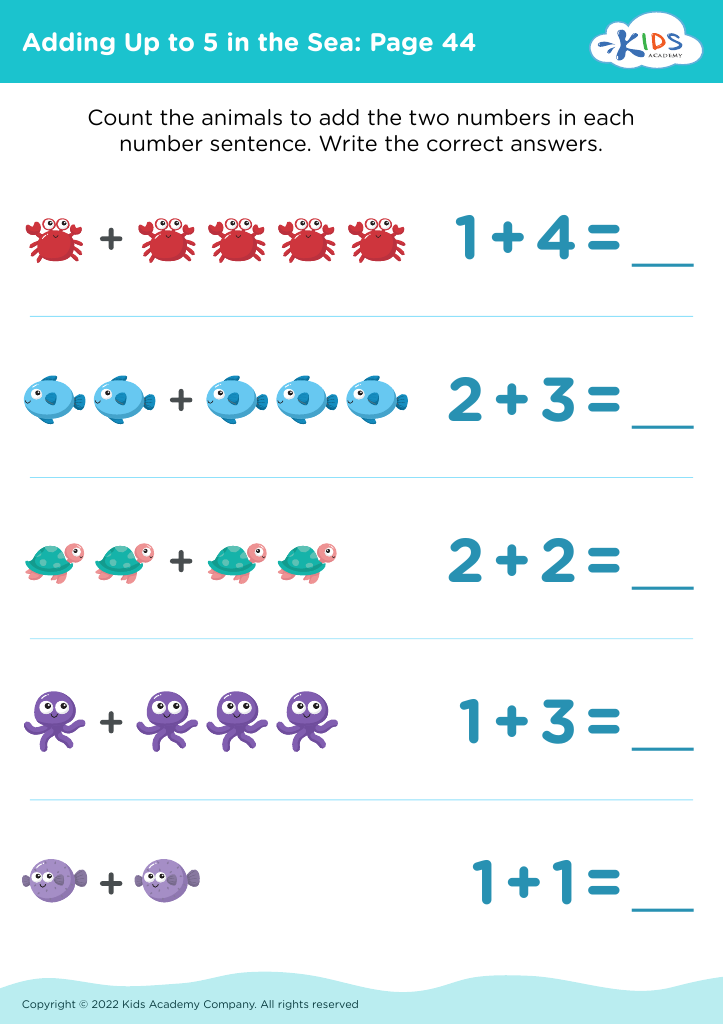
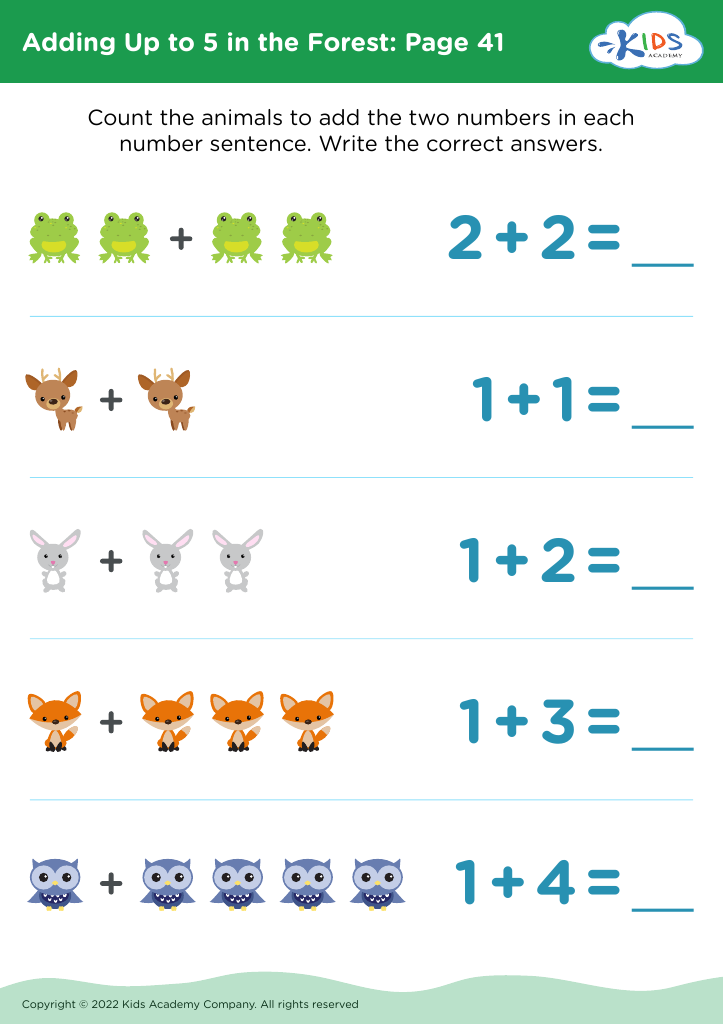








Understanding basic addition skills from ages 3 to 7 is crucial for several reasons. Early childhood is a formative period where children develop foundational skills that will influence their future learning and confidence in mathematics. Mastering addition helps boost cognitive development and critical thinking abilities, as children learn to recognize patterns, relationships, and quantities.
For parents and teachers, fostering these skills lays the groundwork for more complex mathematical concepts. Engaging children in fun and interactive activities can make learning enjoyable, helping to build a positive attitude towards math at an early stage. When children grasp addition concepts early on, they gain a sense of accomplishment, which can lead to increased motivation and curiosity about math.
Furthermore, addition is not only foundational in math but also reinforces skills like problem-solving and logical reasoning, integral for overall academic success. Early math skills are linked with later proficiency in mathematics, significantly affecting a child’s educational trajectory. By nurturing an understanding of addition through games, stories, and hands-on activities, parents and teachers can equip children with the tools they need to succeed both in school and in everyday life. Creating a solid math foundation early on fosters resilience, critical thinking, and a lifelong love for learning.








