Comparing numbers Addition Worksheets for Ages 3-7
4 filtered results
-
From - To
Our "Comparing Numbers Addition Worksheets for Ages 3-7" are designed to make early math learning engaging and fun. These worksheets help young learners develop crucial skills in recognizing, comparing, and adding numbers. With colorful illustrations and kid-friendly exercises, children practice comparing quantities and understanding the concept of addition through hands-on activities. These worksheets are perfect for building a strong math foundation, ensuring kids grasp essential principles while enjoying the learning process. Ideal for both classroom and home use, they cater to different learning styles, guaranteeing that each child progresses at their own pace. Start your child's math journey today!
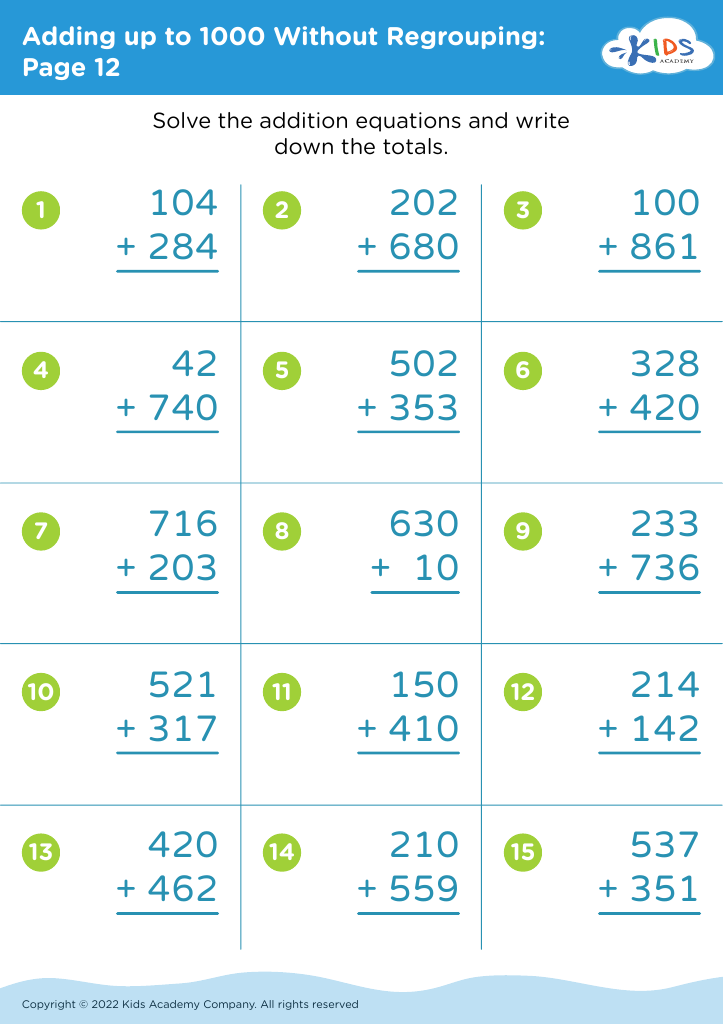
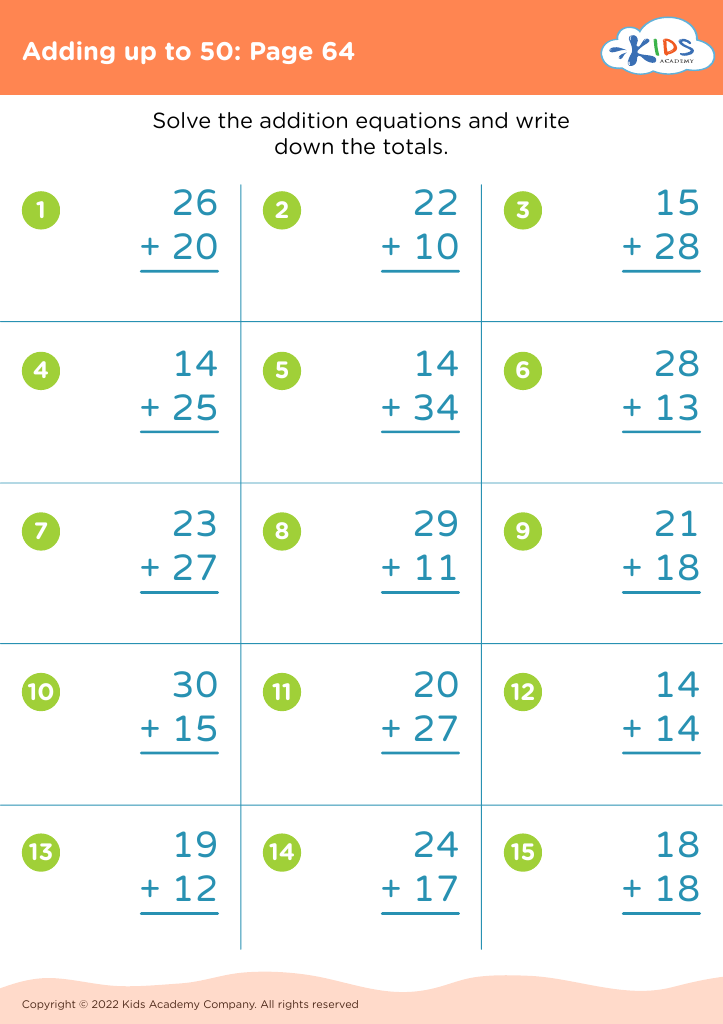
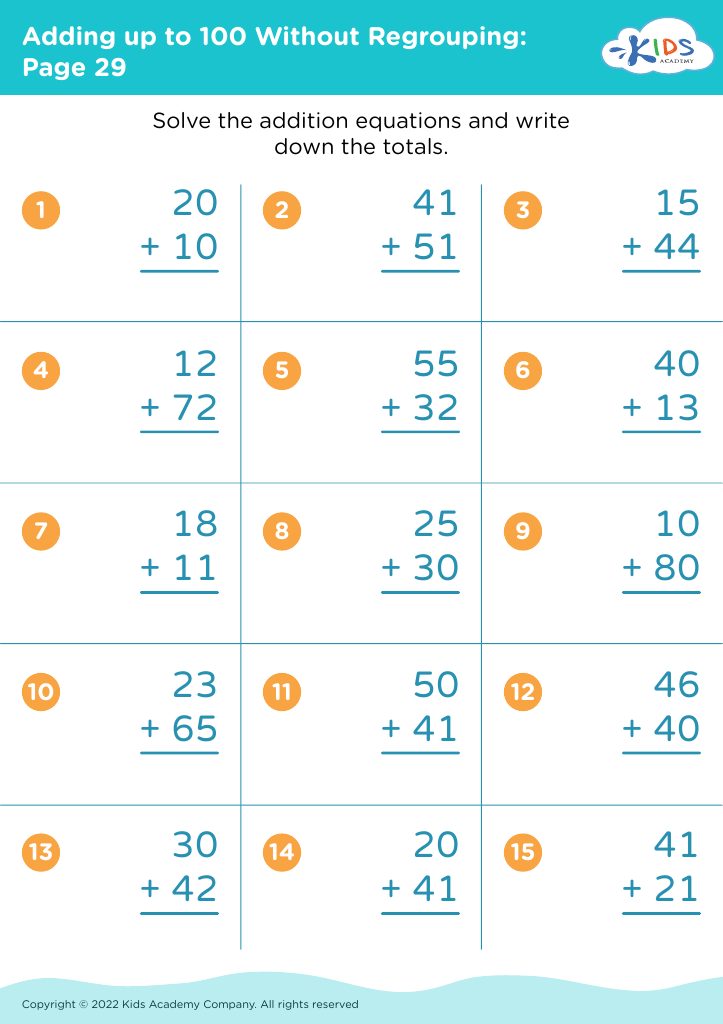
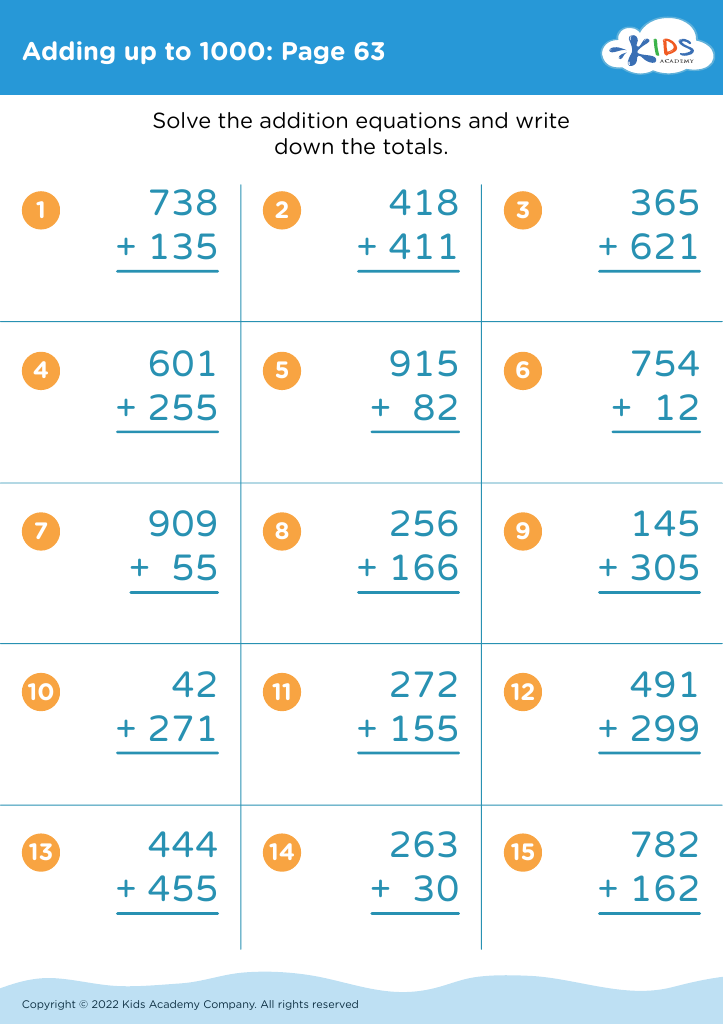








Parents and teachers should care deeply about teaching young children, particularly those ages 3-7, to compare numbers and grasp the basics of addition because these foundational skills significantly shape their future academic success. In early childhood, brains are uniquely primed for learning, making it an optimal time to introduce fundamental mathematical concepts. Understanding how to compare numbers—knowing which is bigger or smaller—helps children develop critical thinking and reasoning skills. These skills surface often in daily activities, empowering children to make informed decisions and solve everyday problems.
Addition goes hand-in-hand with comparison. Basic addition enhances a child's ability to perform more complex tasks later on, like algebra and higher-level mathematics. But it isn’t only about numbers: addition fosters skills such as counting, pattern recognition, and memory enhancement. These are transferable to many other learning areas including literacy and problem-solving tasks.
Moreover, learning in these formative years often happens through playful and engaging activities. Combining fun games with learning creates a positive attitude towards mathematics and builds confidence. Early exposure also diminishes math anxiety, setting a positive trajectory for future STEM learning. Therefore, parents and teachers have a vital role in nurturing these skills early on to build a robust academic foundation and overall intellectual development.








